Kosmos 2612 and ICEYE-X36: What happens when a satellite gets too close?

8 min read
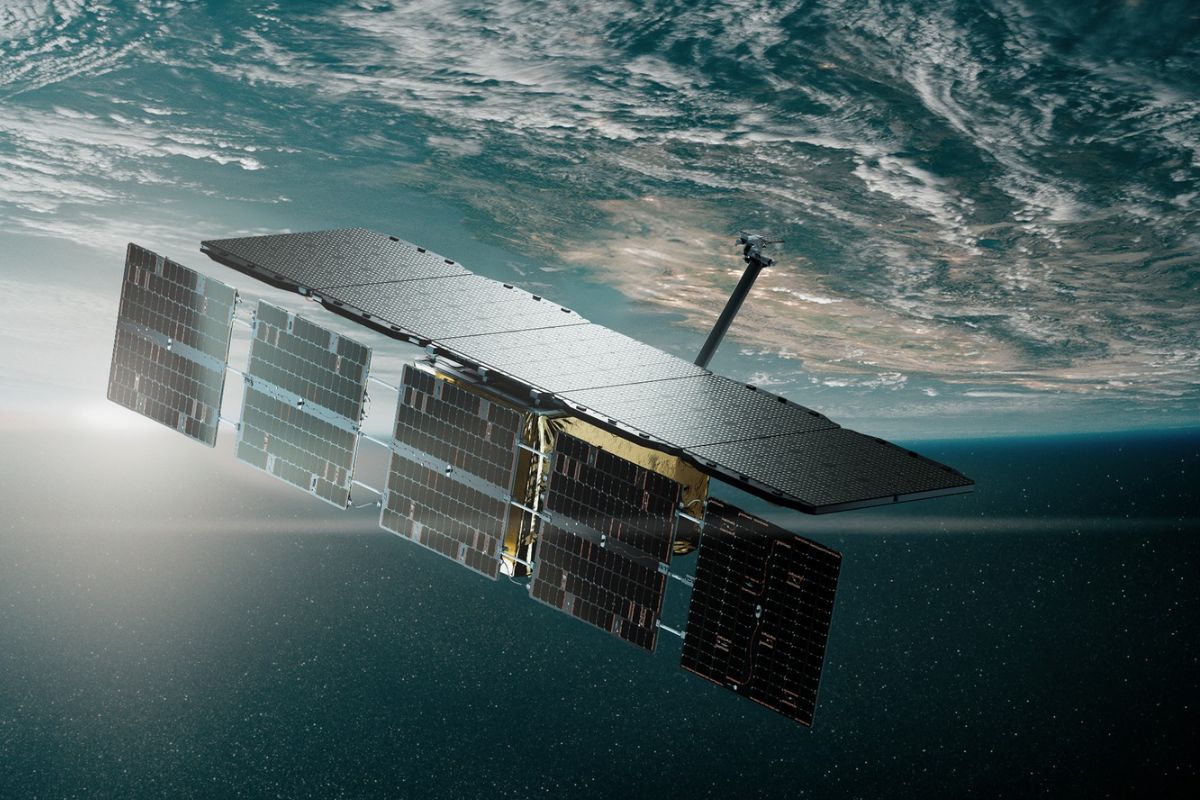
A Russian military satellite’s unusually close approach to a commercial spacecraft supporting Ukraine has raised fresh concerns about the vulnerability of satellites to interference or attack in orbit.
Russia’s Kosmos 2612 carried out a series of manoeuvres near ICEYE-X36, a radar imaging satellite operated by Finnish-founded company ICEYE, between 15 and 19 October.
Satellite tracking specialist Marco Langbroek, who monitored the encounter, described it as “a worrisome cat-and-mouse-game”.
On 17 October, he calculated that the spacecraft were already within one to two kilometres of each other and warned that they could come within a few metres in the following hours.
“That is very worrisome,” Langbroek wrote, describing the rendezvous and proximity operation as “completely non-consensual”. He questioned whether the manoeuvres might signal an anti-satellite attack.
The encounter was also photographed by US spatial intelligence company Vantor, which said an image captured by its WorldView Space system on 17 October showed Kosmos 2612 approximately one kilometre from ICEYE-X36.
Subsequent orbital observations suggested a close approach on 18 October, although the precise separation remains uncertain. There is no confirmed evidence that an attack took place.
A rare view of concerning activity in orbit. From Oct. 16–18, a Russian satellite made several close approaches to a U.S. commercial satellite. This image, collected by Vantor’s WorldView Space capability on Oct. 17, shows Russian Cosmos 2612 at an estimated distance of about 1 km from ICEYE-X36. “This image captures a reality long recognized by our national security leaders—space is becoming increasingly contested. Seeing one spacecraft repeatedly maneuver close to another raises serious concerns about capability and intent.”—Dan Smoot, Vantor CEO. With WorldView Space, Vantor’s non-Earth imaging capability lets us collect images of other spacecraft in orbit, helping us better understand how they’re operating and spot activity that warrants a closer look. Read @axios’s exclusive coverage: https://t.co/oix2OaIEwt Explore WorldView Space: https://t.co/FmXyUumK21
— Vantor (@vantortech) October 22, 2026
The incident highlights a problem confronting satellite operators. A spacecraft may be able to detect another satellite approaching, but that does not mean it can escape or defend itself. Most satellites carry no weapons and have limited fuel for manoeuvring.
So what could a hostile satellite actually do? Could it disable another spacecraft without destroying it? And what protection is available when the threat is already hundreds of kilometres above Earth?
When getting close becomes a threat
Satellites routinely pass near other objects in orbit. Operators track those encounters to assess collision risks and, when necessary, adjust their spacecraft’s trajectory.
But Kosmos 2612’s movements were different from an ordinary close pass.
According to Langbroek, the Russian spacecraft began making a series of orbital adjustments on 30 September, followed by further manoeuvres on 12, 15 and 16 October. These brought its altitude, orbital period and other characteristics increasingly close to those of ICEYE-X36.
The Russian satellite had been launched from Plesetsk in April. Its subsequent movements suggested a deliberate effort to approach the ICEYE spacecraft rather than a chance encounter between two objects travelling through space.
In an updated analysis published on his SatTrackCam blog, Langbroek estimated that the closest approach occurred early on 18 October, possibly within a few hundred metres or less. He cautioned that uncertainties in the available orbital data made a precise calculation difficult.
The encounter was also captured from space. US spatial intelligence company Vantor said its WorldView Space system photographed Kosmos 2612 on 17 October, when the Russian spacecraft was estimated to be about one kilometre from ICEYE-X36.
Space is becoming “increasingly contested” warn experts
The image was collected using Vantor’s non-Earth imaging capability, which allows its satellites to photograph other spacecraft in orbit. Such observations can complement ground-based tracking and help analysts examine unusual orbital activity.
“This image captures a reality long recognized by our national security leaders – space is becoming increasingly contested. Seeing one spacecraft repeatedly maneuver close to another raises serious concerns about capability and intent,” said Vantor CEO Dan Smoot.
LeoLabs, which tracks spacecraft and orbital debris using a network of ground-based radars, later reported that Kosmos 2612 had been drifting away from ICEYE-X36 since 18 October.
However, the company cautioned that the Russian spacecraft could resume its rendezvous and proximity operations, or RPO, and that other recently launched Russian satellites might undertake similar activity.
“Usually these events don’t just end on one,” LeoLabs’ Adam Marsh told The New York Times, according to a statement subsequently shared by the company.
By 21 October, Langbroek reported that Kosmos 2612 had manoeuvred back towards ICEYE-X36’s orbital altitude after initially moving away. The spacecraft were then approximately 480 kilometres apart.
The episode is particularly sensitive because ICEYE’s radar satellites can produce images of the Earth’s surface in darkness and through cloud cover, making their services valuable for monitoring military activity.
But a deliberate approach does not, by itself, prove an intention to attack.
How satellites can be attacked
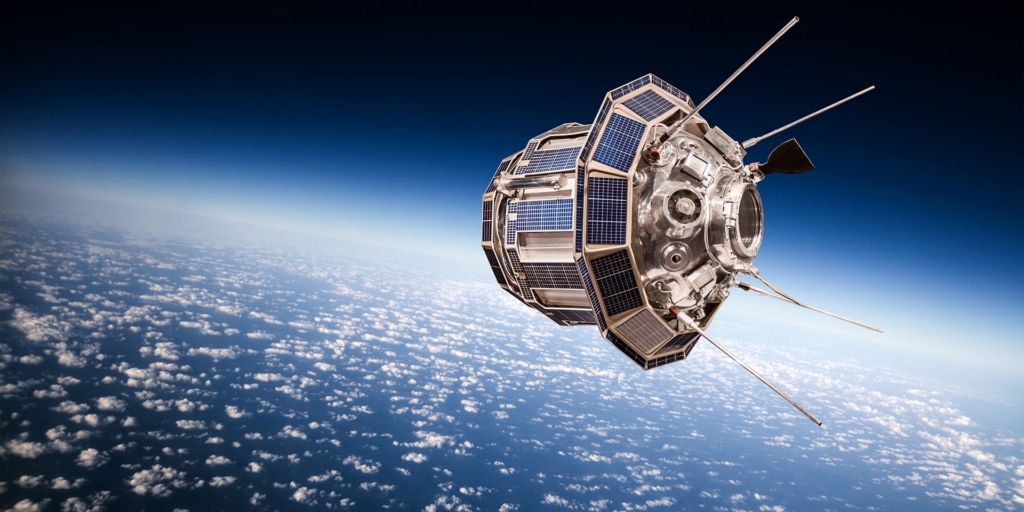
Anti-satellite weapons, commonly known as ASAT weapons, are designed to damage, disable or destroy spacecraft, or interfere with their ability to perform a mission.
The most direct method is a missile launched from Earth to intercept a satellite. Such weapons have already been demonstrated by several countries.
China destroyed one of its own weather satellites in 2007. India carried out an anti-satellite missile test in 2019.
In November 2021, Russia destroyed its defunct Kosmos 1408 satellite, creating more than 1,500 pieces of trackable debris, according to US Space Command.
The problem with destroying a satellite is that the fragments do not simply fall harmlessly to Earth. Many remain in orbit, travelling fast enough to damage other spacecraft. A single interception can therefore create hazards for satellites belonging to countries that had nothing to do with the attack.
There are also less destructive ways to interfere with spacecraft.
Electronic jamming can disrupt the radio signals used for communications or navigation. Spoofing involves transmitting misleading signals, potentially causing a receiver to calculate an incorrect position or accept false information. Cyberattacks may target ground stations, communications links or spacecraft control systems.
These attacks do not necessarily require another satellite to be nearby. Some can originate from equipment on Earth.
A spacecraft operating in close proximity presents a different kind of risk. Depending on its design and capabilities, it could inspect another satellite, interfere with its operations or potentially cause physical damage through contact.
The difficulty is determining what an approaching spacecraft is equipped to do. A satellite capable of inspecting another vehicle may use some of the same manoeuvring technologies needed for an attack.
That overlap between peaceful servicing and potentially hostile activity makes behaviour and intent difficult to judge.
Can a satellite get out of the way?
A satellite cannot simply turn around and fly in another direction.
Spacecraft travel in carefully calculated orbits, often at several kilometres per second. Changing that path requires propulsion, and the result may not be immediately obvious.
Depending on the manoeuvre, a satellite may need to move into a slightly higher or lower orbit to alter its speed relative to another object.
Many satellites carry thrusters for routine orbital adjustments and collision avoidance. Others have little or no ability to manoeuvre.
Even those with propulsion have limited fuel. Repeated evasive manoeuvres could shorten a satellite’s useful life, while moving away from one threat might create a new collision risk or interrupt its normal operations.
There is another complication. Collision avoidance normally involves an object whose future path can be predicted with reasonable confidence.
A satellite deliberately changing course to follow another spacecraft is a different challenge.
The threatened operator must decide whether to move, when to act and whether the approaching spacecraft is likely to respond with another manoeuvre.
ICEYE’s response to the October encounter illustrates the importance of resilience. The company told Aviation Week that it was aware of the situation and monitoring it closely, while emphasising that its constellation was designed to maintain service continuity. It did not disclose the operational status of ICEYE-X36.
For companies operating large constellations, distributing services across many satellites can reduce the consequences of losing one spacecraft. That does not prevent an attack, but it can make the overall network harder to disable
A growing problem for commercial operators
The Kosmos 2612 encounter also raises a question that extends beyond spacecraft technology: what happens when a privately operated satellite becomes involved in a military confrontation?
Commercial satellites now provide imagery, communications and other services that armed forces depend upon. ICEYE-X36 is particularly significant because of the role radar imagery can play in supporting Ukraine.
In an assessment published on 21 October, US intelligence and surveillance company Integrity ISR argued that the Russian satellite’s manoeuvres demonstrated the ability to approach, remain near and then withdraw from another spacecraft.
But the company also warned against drawing conclusions about intent from orbital movements alone.
The distinction matters. There is no confirmed evidence that Kosmos 2612 damaged ICEYE-X36. Yet the encounter demonstrated how closely one spacecraft can approach another without the targeted operator necessarily having an effective means of stopping it.
Space law offers no straightforward equivalent of the rules governing encounters between military aircraft or ships. The Outer Space Treaty establishes important obligations for states, but it does not prescribe a universal minimum separation distance between satellites.
For operators, the immediate priorities remain better tracking, secure communications, reliable collision avoidance and spacecraft networks that can continue functioning when individual satellites are lost or disrupted.
The latest encounter has shown why those precautions matter. A satellite does not have to be destroyed for its operator to face a serious security problem.
Sometimes the challenge begins when another spacecraft comes close enough to make its next move impossible to ignore.