Japan prepares world-first mission to bring back samples from Mars moon Phobos

5 min read
Japan is preparing to launch a spacecraft on 20 October to collect rocks and dust from Phobos, one of Mars’s two moons, and bring them back to Earth in 2031.
It’s hoped the mission could finally explain how the Martian moons formed and reveal new clues about the planet’s ancient environment.
The Japan Aerospace Exploration Agency (JAXA) has scheduled its Martian Moons eXploration (MMX) spacecraft to lift off aboard an H3 rocket from Tanegashima Space Center at 4:41:03 am Japan time on Tuesday.
The latest launch plan provides backup opportunities from 21 October to 9 November.
If successful, MMX will become the first mission to return samples from the Martian system, extending Japan’s experience with asteroid exploration to a destination hundreds of millions of kilometres away.
The spacecraft will spend approximately five years travelling to Mars, observing its moons, making two landings on Phobos and returning at least 10 grams of material to Earth.
For JAXA, the mission is about more than collecting samples. Scientists want to understand how Mars acquired its moons, how water and organic materials moved through the early Solar System, and what caused the planet to lose much of the atmosphere and water it once possessed.
Why scientists are targeting Phobos
Mars has two small, irregularly shaped moons, Phobos and Deimos.
Their origins remain uncertain despite decades of exploration of the planet itself.
One possibility is that they were once asteroids captured by Mars’s gravity. Another is that they formed from debris thrown into space when a large object struck the planet.
The distinction matters because the two explanations tell very different stories about the early Solar System.

If the moons are captured asteroids, their composition could reveal how water-bearing and carbon-rich material travelled between planets. If they formed from a collision, they may preserve evidence of Mars’s early history.
MMX principal investigator Kiyoshi Kuramoto explained the broader scientific question in a message published by JAXA.
“In ancient times, Mars was a world shrouded in a thick atmosphere. Rivers flowed across the planet’s landscape into vast oceans.”
He asked how Mars acquired such a water-rich environment in the first place, arguing that the answer may lie in the composition and history of its moons.
Phobos is particularly attractive because it is much easier to retrieve material from than Mars itself. Its weak gravity allows a spacecraft to land and depart without the powerful propulsion system required for a return journey from the Martian surface.
The moon may also contain fragments of Mars ejected by asteroid impacts, offering scientists another way to investigate the planet’s past.
How MMX will reach the Martian moons
The spacecraft will launch aboard H3 Flight No. 10, using the H3-24L configuration with two LE-9 main engines, four solid rocket boosters and an extended payload fairing.
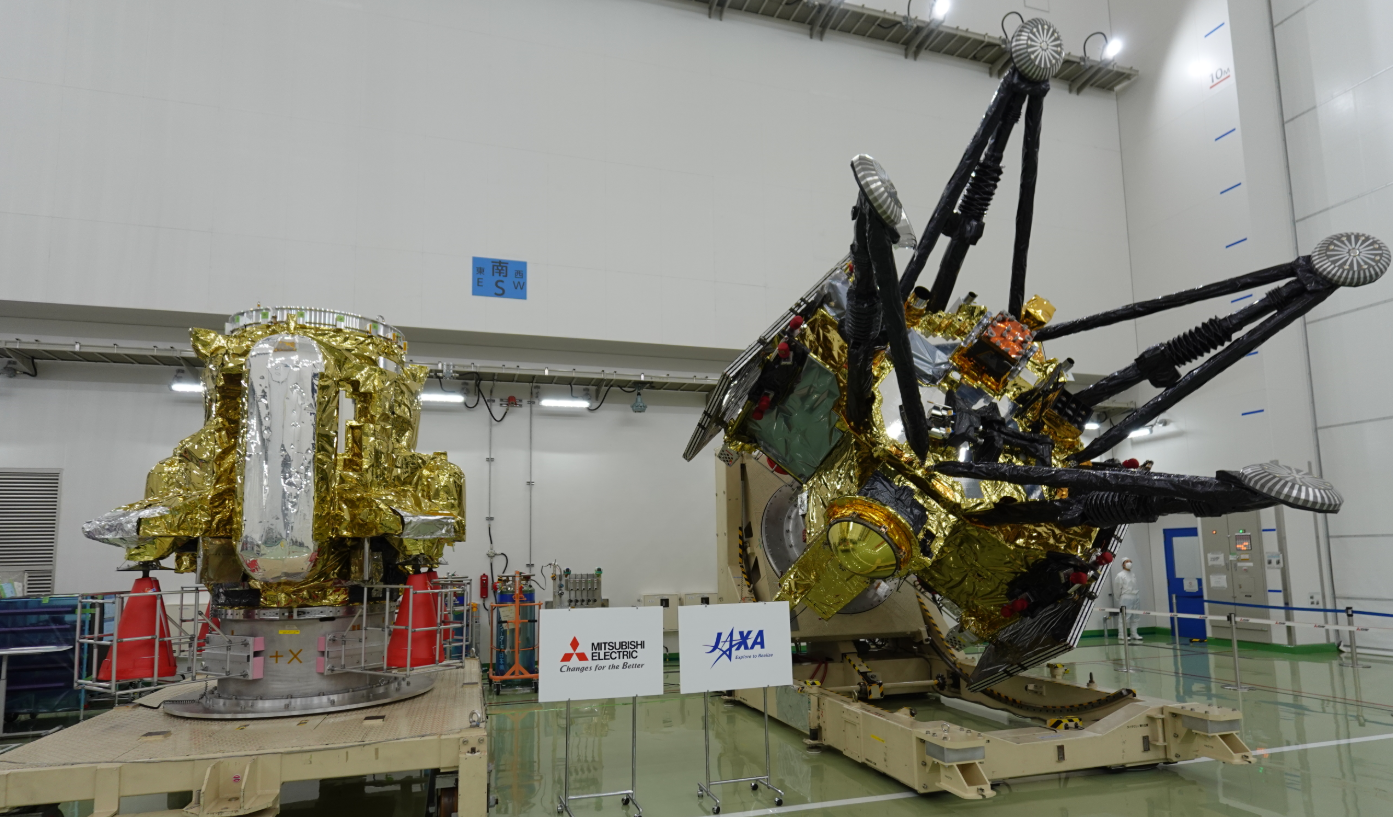
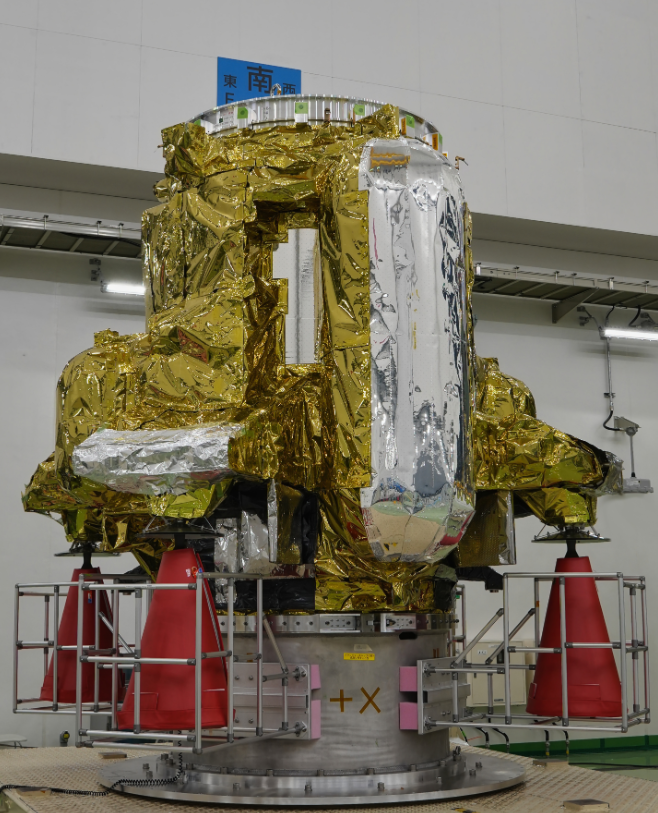
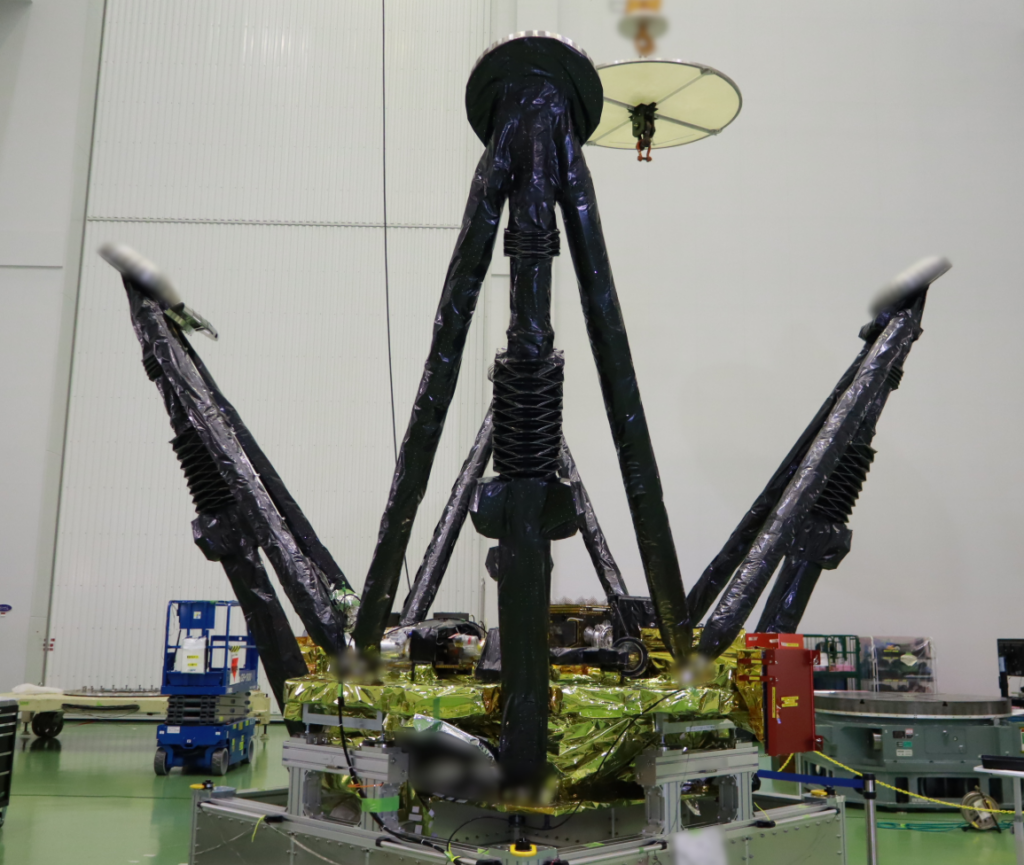
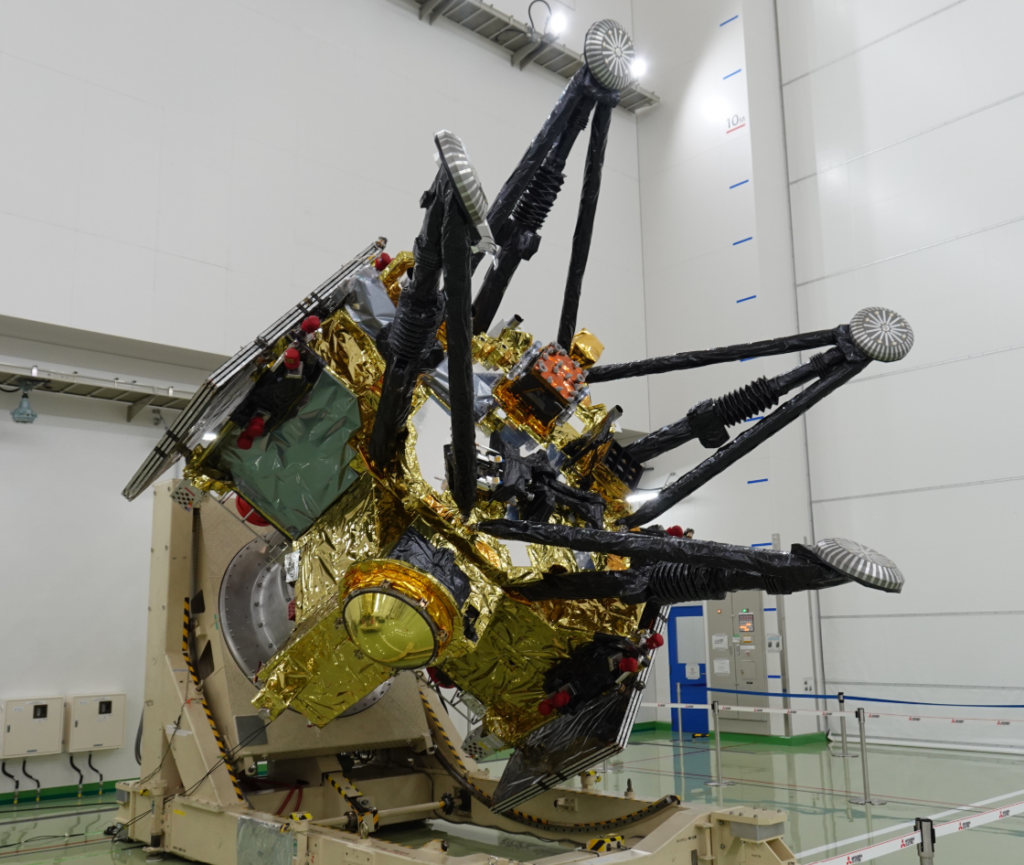
MMX has a launch mass of approximately 4,480 kilograms and consists of three modules.
The propulsion module will help carry the spacecraft towards Mars. The exploration module contains the instruments and landing equipment needed to study Phobos. The return module will bring the collected samples back to Earth.
The journey to Mars is expected to take about a year, with arrival planned for 2027.
MMX will then enter a quasi-satellite orbit, following a path around Mars that keeps it close to Phobos. This will allow the spacecraft to examine the moon repeatedly from different distances and identify safe landing sites.
High-resolution cameras, spectrometers and a laser altimeter will map the surface, measure its height and examine the minerals present. The spacecraft will also investigate the environment around Mars and observe Deimos.
Landing on a moon with almost no gravity
The most demanding part of the mission will be collecting samples from Phobos.
Unlike a conventional planetary landing, MMX must touch down on a body with extremely weak gravity, where even a small rebound could send the spacecraft away from the surface.
Four shock-absorbing landing legs are designed to help stabilise the spacecraft during touchdown.
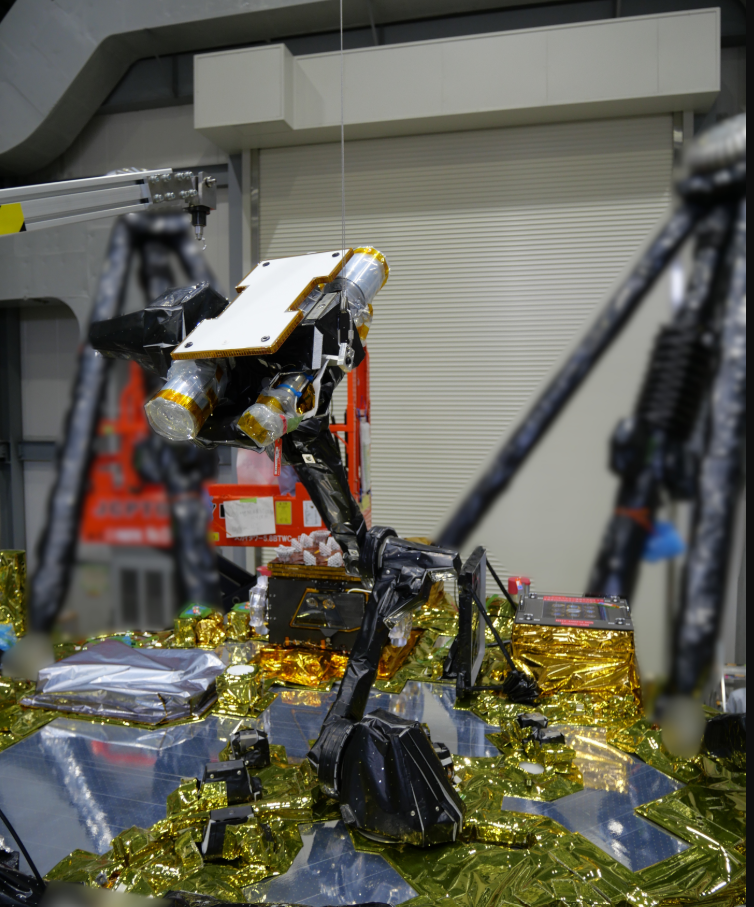
JAXA plans two landings at different locations, collecting samples through two complementary methods.
A Japanese coring sampler will retrieve material from beneath the surface, while a NASA-supplied pneumatic sampler will use pressurised gas to lift loose particles into a collection chamber.
Collecting material from different depths and locations should help scientists distinguish the moon’s original composition from material deposited on its surface over time.
Before the main spacecraft lands, a small rover named Idefix, developed jointly by France’s CNES and Germany’s DLR, will explore the terrain and examine conditions on the surface.
The rover is designed to operate in extremely low gravity, using specialised wheels to maintain traction while moving across loose material.
International partners contribute key instruments
Although Japan leads the mission, MMX involves several international partners.
NASA is supplying the pneumatic sampler and the MEGANE instrument, which will use gamma rays and neutrons to identify elements present on Phobos.
France is contributing the MIRS near-infrared spectrometer, which will study minerals by analysing reflected sunlight. CNES and DLR are jointly providing the Idefix rover.
The European Space Agency is contributing deep-space communications support.
Other instruments will measure dust, radiation and charged particles, while cameras will provide detailed images of the Martian moons.
The mission will also test technologies relevant to future human exploration, including long-distance communications, autonomous operations and sample recovery.
Returning the samples to Earth
MMX is scheduled to complete its work around Mars and depart in 2030.
The return journey will take approximately a year. In 2031, a protective capsule containing the samples will separate from the spacecraft and enter Earth’s atmosphere, with recovery planned in Australia.
The material will then be taken to laboratories, where scientists can examine individual grains using instruments too large and sensitive to carry aboard a spacecraft.
Japan has considerable experience in this field. Its Hayabusa mission returned asteroid material in 2010, followed by Hayabusa2 in 2020.
MMX will take that capability considerably farther from Earth.
Project manager Yasuhiro Kawakatsu said the mission had taken almost a decade to prepare.
“This exploration project began almost ten years ago,” he said in a message published by JAXA. “From the engineering perspective, this is an ambitious plan and the mission has gained much international attention.”
The five-year journey will test Japan’s ability to conduct complex operations far from Earth, where communication delays prevent engineers from controlling every manoeuvre in real time.
But its greatest contribution may come after the spacecraft returns. A few grams of material from Phobos could help settle the debate over the origins of Mars’s moons and offer a new perspective on how the Red Planet evolved.
Sign up for our newsletter and get our latest content in your inbox.


More from


October 17, 20264 min read