

Could a 2,000 ft altitude change transform aviation’s climate impact? UK researchers think so

4 min read
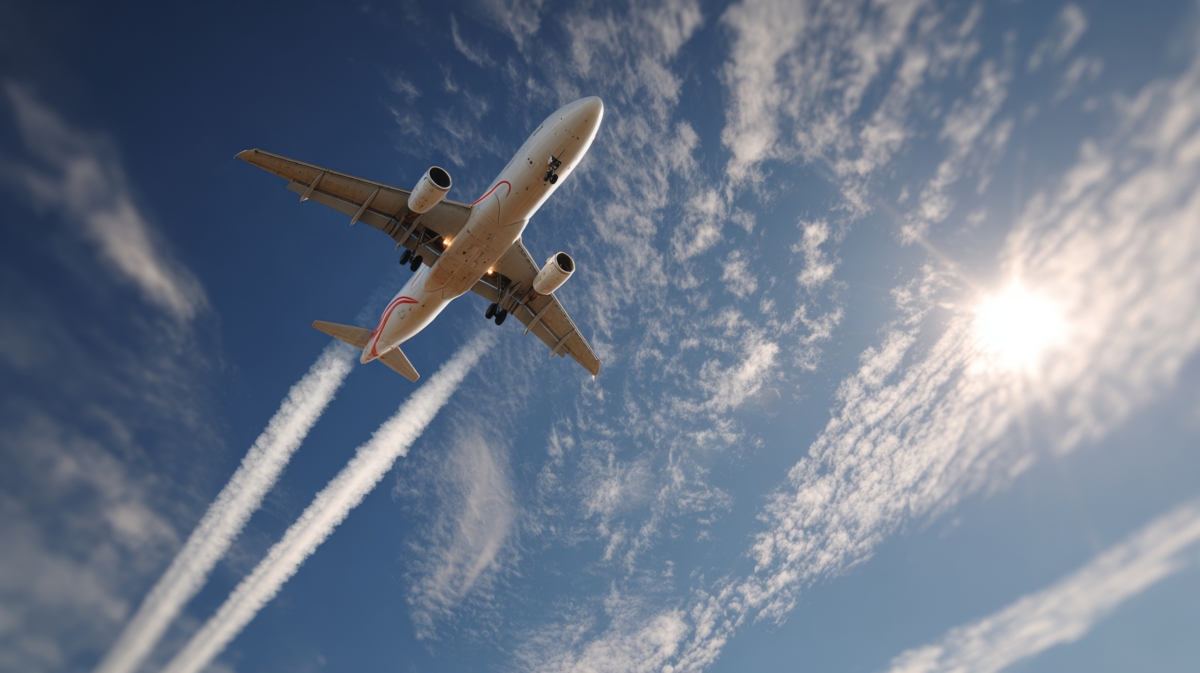

University of Cambridge researchers say climbing or descending by around 2,000ft could let some flights avoid forming persistent contrails. These ice clouds account for a substantial share of aviation’s warming.
The researchers set out a plan to make such adjustments routine in UK-administered airspace in a policy briefing released during COP31 on 18 November.
The Aviation Impact Accelerator (AIA) estimates that 2–5% of flights cause 80–90% of contrail warming. Airlines would only need to adjust the flights forecast to produce the most warming, and the researchers say around 2,000 ft in either direction would be enough in most cases.
Why 2,000 ft can make a difference
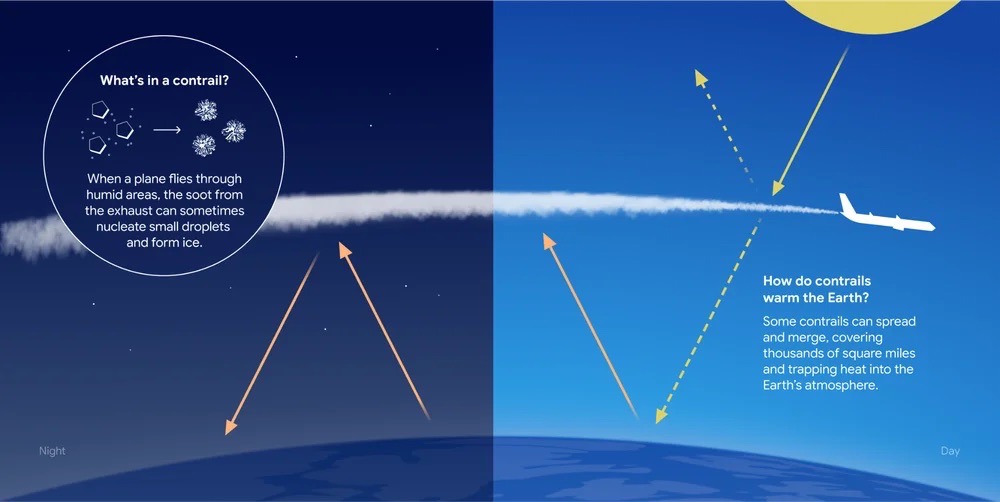
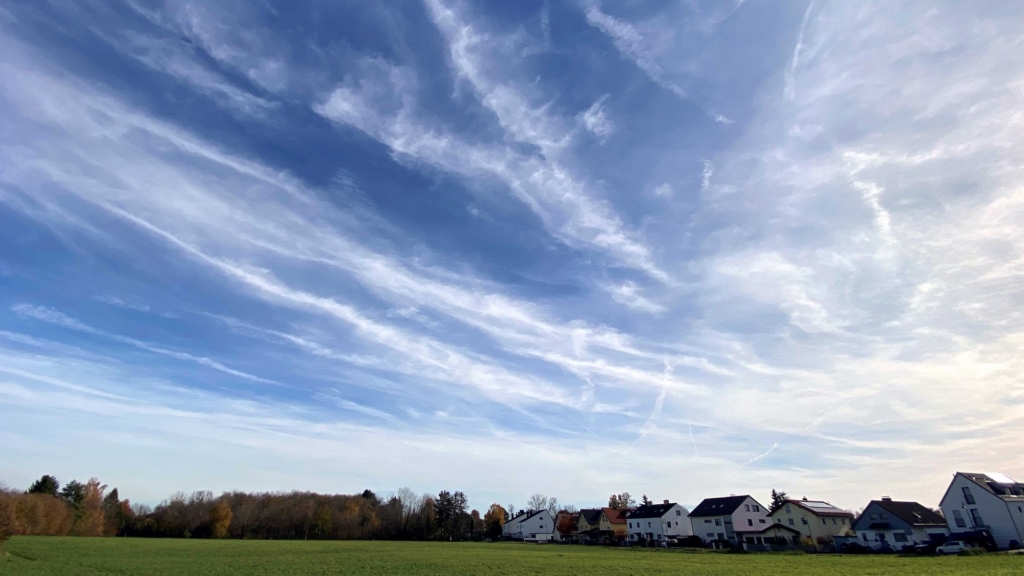
Contrails form when water vapour in hot exhaust meets sufficiently cold air and freezes into ice crystals. In drier air, the crystals disappear quickly. In cold, humid layers, they can survive for hours and spread into thin clouds. Those clouds can reflect sunlight, but they also trap heat. Their net effect depends on where and when they form.
A flight can pass above or below one of those layers without changing its destination or making a long diversion. The difficulty is accurately forecasting the layer’s depth and position, then finding an alternative flight level that air traffic controllers can clear.
Cambridge estimates that targeted avoidance could increase fuel burn by about 0.1% averaged across an airline’s fleet. An individual flight could burn more if it leaves its most efficient cruising level.
The authors argue that avoided warming can outweigh the extra CO₂ on carefully selected flights. They estimate that avoiding persistent contrails could almost halve aviation’s climate impact, though the outcome depends on forecast accuracy and how widely avoidance can be used.
Eliot Whittington, Cambridge Institute for Sustainable Leadership, said: “Aeroplane contrails significantly warm our planet, but the science and technology of how we can stop this is getting increasingly clear. We need to be prepared with practical routes to implement contrail avoidance at scale as soon as we’ve successfully completed the necessary trials, which is why we developed this policy brief. This is one of the simplest and easiest actions we can take on climate change, and we’ve found that there’s a huge amount of willingness from industry and regulators to act on a well-designed plan. The key will be making sure there is clear leadership and commitment to drive this forward.”
What Operation Blue Skies will test
As ADS Advance reported in August, the UK’s Operation Blue Skies also aims to reduce contrails by adjusting aircraft altitude. The £5 million, 30-month programme includes £2.65 million from the Department for Transport.
Its flight trials are scheduled for the winters of 2026–27 and 2027–28 in Shanwick oceanic airspace over the eastern North Atlantic. NATS expects about 20–40 test days each winter, during periods of lighter traffic. Modelling cited by NATS puts Shanwick’s share of global contrail warming at around 5%.

Google is developing AI models to flag where warming contrails are likely to form and using satellite imagery to help assess what happened. The Met Office is developing a contrail forecast capability.
NATS will coordinate altitude changes using normal air traffic control procedures, and researchers at Imperial College London and Cambridge will evaluate the results. The programme will assess whether the changes can be made safely in regular traffic and whether they deliver a measurable climate benefit.
From winter trials to routine flight planning
The roadmap calls for the Met Office to make contrail forecasts available as standard aviation data and for flight-planning software to use them to propose workable alternatives before departure. Cambridge also suggests a fee and rebate tied to existing airspace charges, with a possible start in Shanwick from 2030.
“Contrail avoidance represents one of the most exciting opportunities we have to halve aviation’s climate impact. By making small adjustments to just a fraction of flights, we have the potential to make a very significant difference to global warming, quickly and at remarkably low cost,” Dr Samuel Gabra, Director, Aviation Impact Accelerator, said in the Cambridge announcement of its report, describing it as “a practical policy pathway to make this happen.”
“The UK has a unique opportunity to lead the world in turning this science into action,” Gabra added. “Operation Blue Skies is an important first step, but our ambition must be much bigger: to make contrail avoidance routine across UK airspace and ultimately around the world.”
Sign up for our newsletter and get our latest content in your inbox.