


Embraer E195-E2 tested with low-sulphur fuel to tackle contrails

4 min read
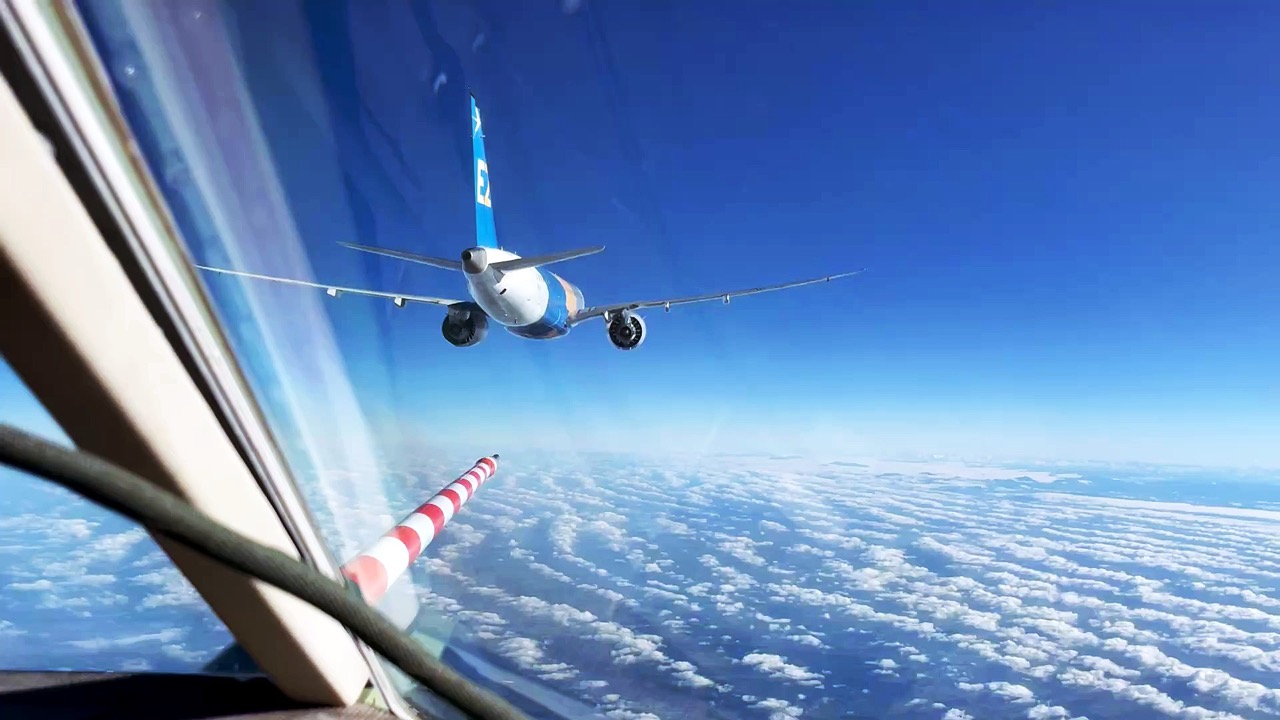
An Embraer E195-E2 has operated a series of research flights over Germany to investigate whether low-sulphur jet fuel, combined with modern engines, can reduce the formation of climate-warming contrails.
The IGNITE-X campaign, led by the German Aerospace Centre (DLR), used a Falcon 20E research aircraft to fly behind the E195-E2 and sample its exhaust plume.
DLR’s Falcon 20E followed the E195-E2 over test areas in Bavaria and Saxony, collecting samples at different stages of plume development.
Embraer announced its participation in the tests, which took place in October and November 2026. Researchers are now analysing the data gathered to establish whether changes in fuel composition translate into fewer ice crystals in contrails.
Why sulphur content matters
Contrails form when hot, moist engine exhaust meets cold air, creating ice crystals. Some crystals can linger and spread into clouds that trap heat and contribute to global warming.
As conventional jet fuel cools in the exhaust, its sulphur content forms sulphuric acid particles that can form ice crystals. While soot is still the main source of the crystals which create contrails, researchers are testing whether low-sulphur fuel can reduce contrails, especially in modern engines that produce little soot.
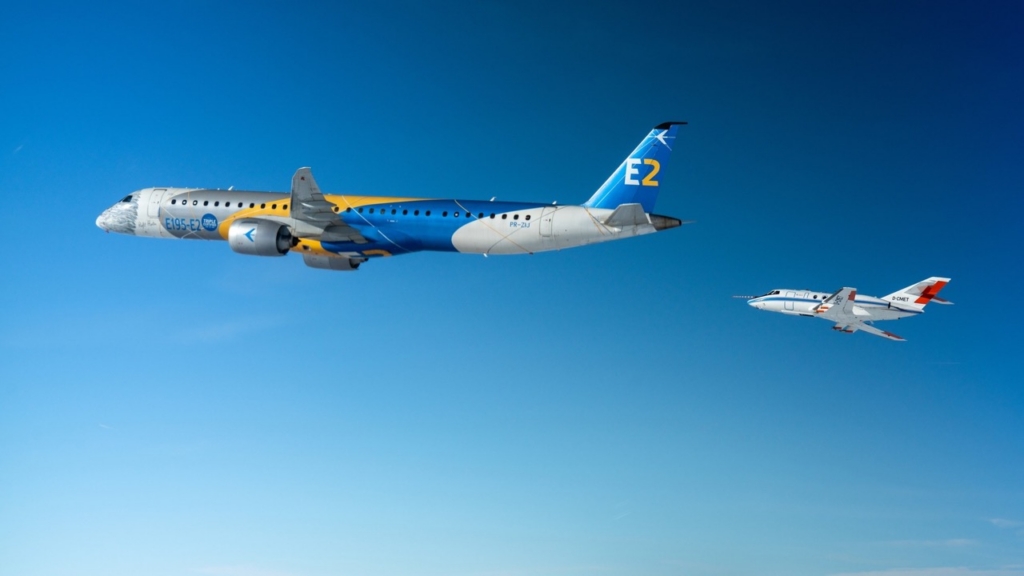
The research used an Embraer E195-E2 equipped with Pratt & Whitney PW1900G geared turbofan engines. The aircraft flew with conventional kerosene and a specially manufactured, certified low-sulphur fuel to allow comparisons under operational flight conditions.
Research aircraft measures emissions in flight
DLR’s Falcon 20E followed the E195-E2, taking exhaust measurements. During close-range measurements, the Falcon flew within 30 metres of the Embraer jet, while other measurements were taken at distances of 10 to 30 kilometres.
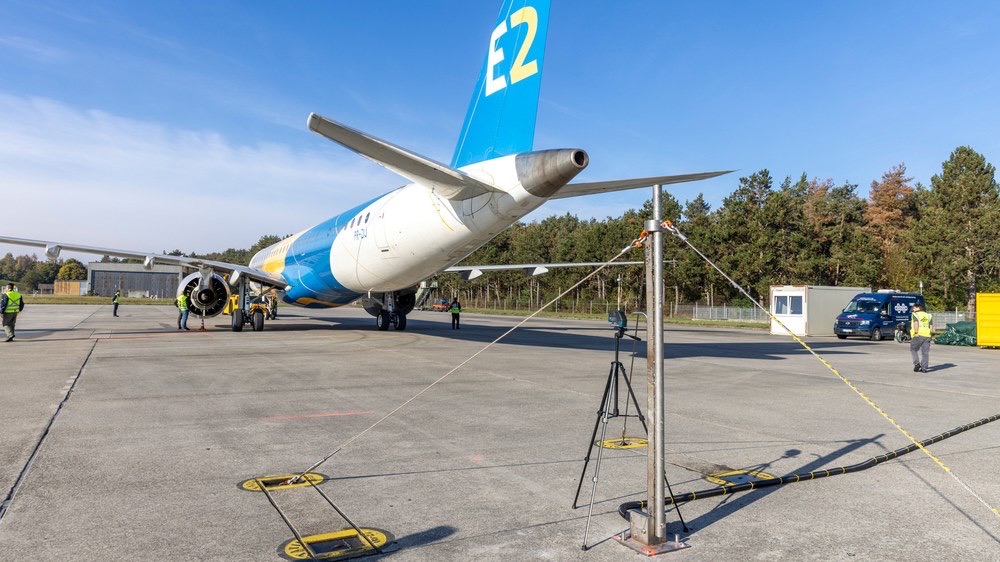
The campaign included about four weeks of ground and flight tests. At Manching military airfield, researchers tested each engine separately at settings ranging from idle to take-off power. A probe measured tiny exhaust particles, allowing researchers to compare emissions from both engines under different conditions.
“We are measuring the emissions directly within the exhaust plume – this is both scientifically and operationally extremely challenging. The test procedure provides unique insights into the potential for reducing emissions. These innovative and, at the same time, challenging tests with our international stakeholders are the result of an exceptionally committed, trusting and inspiring collaboration between applied research and industry,” said Markus Fischer, DLR Divisional Board Member for Aeronautics.
The international project also involved Pratt & Whitney, Aerodyne Research and Missouri University of Science and Technology. Embraer says its participation will help researchers understand the relationship between fuel characteristics, engine performance and contrail formation.
“The E195-E2 was designed to deliver outstanding efficiency and lower emissions, making it an ideal platform for advancing research into the future of sustainable aviation,” said Cleiton Silva, Vice President of Technology Development and Eletronic Equipments at Embraer. “Through our participation in IGNITE-X, we are working alongside leading research institutions and industry partners to better understand the relationship between fuel characteristics, engine performance, and contrail formation. This collaboration reinforces Embraer’s commitment to supporting science-based solutions that contribute to a more sustainable and environmentally responsible aviation sector.”
Early emissions findings are not yet a contrail result
DLR researchers have reported preliminary indications of low soot emissions from the engines and fewer sulphur-containing liquid particles when the low-sulphur fuel was used. However, the team has not yet completed its assessment of how these changes affect ice-crystal numbers or the climate impact of contrails.
Fewer particles in exhaust do not necessarily mean fewer persistent contrails or less warming. The results also depend on temperature, humidity and how the exhaust plume develops.
This research may help identify ways to reduce contrails, supporting other efforts to cut aviation’s carbon dioxide emissions. If it shows a clear benefit, changes to fuel and engine technology could help limit aviation’s climate impact.
DLR says the flight and ground measurements are now being evaluated.
How IGNITE-X fits into wider contrail research
IGNITE-X is part of a growing effort to understand and reduce aviation’s non-CO₂ climate effects. Earlier research has examined whether changing the fuel itself can reduce the particles around which contrail ice crystals form. In the ECLIF3 programme, Airbus, DLR, Rolls-Royce and Neste tested 100% sustainable aviation fuel on an Airbus A350 and found reductions in both soot particles and contrail ice crystals.
Other studies are looking at where aircraft fly rather than what they burn. In March 2026, AGN reported that American Airlines and Google had tested AI-assisted contrail avoidance across transatlantic operations. Of 2,400 flights assessed, 112 followed suggested avoidance routes and produced 62% less contrail formation than a control group, with no statistically significant difference in fuel burn.
The potential benefit is significant. A September 2026 study by Klima Consulting for Transport & Environment (T&E) estimated that cutting contrail warming by half could prevent around 0.025°C of global warming by 2050 and 0.049°C by 2070. The same research suggested that a small share of flights accounts for most contrail warming, making targeted interventions potentially more effective than trying to prevent every visible trail.


