


SpaceX catches Starship in historic Flight 15 recovery, Musk says spacecraft could fly again within weeks

6 min read
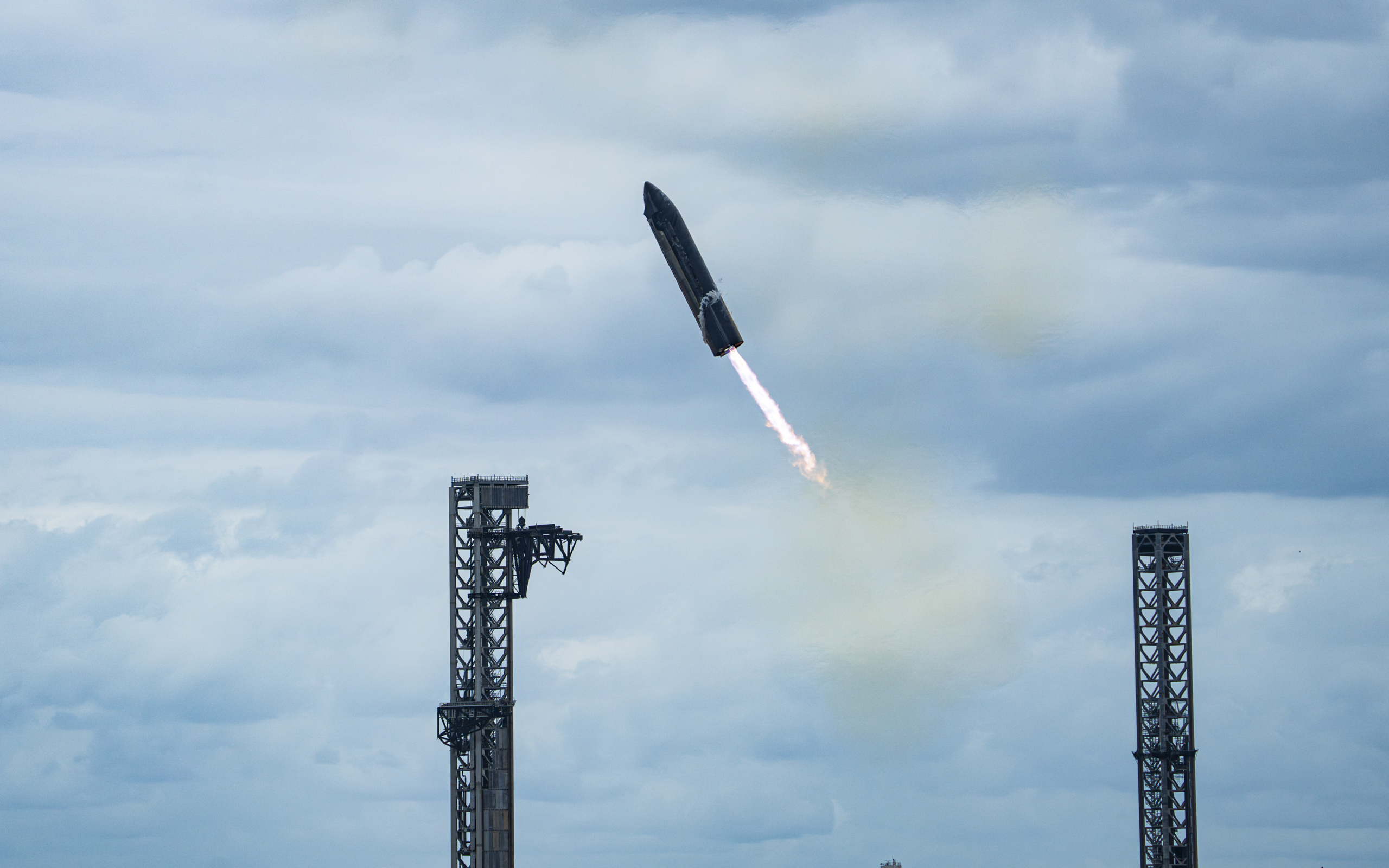
SpaceX has successfully caught a Starship spacecraft returning from orbit for the first time, bringing its 15th test flight to a historic conclusion just a day after the mission’s Super Heavy booster was diverted into the Gulf of Mexico.
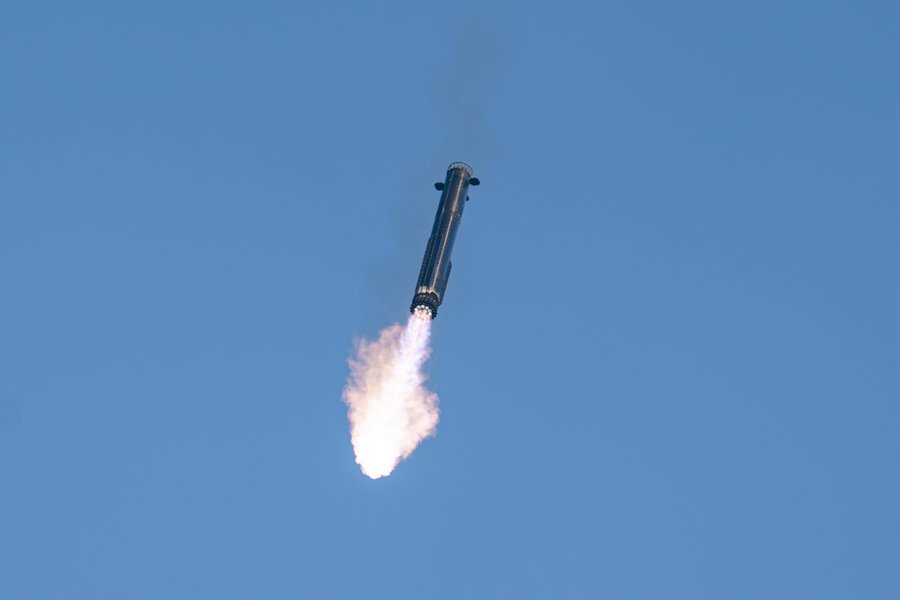
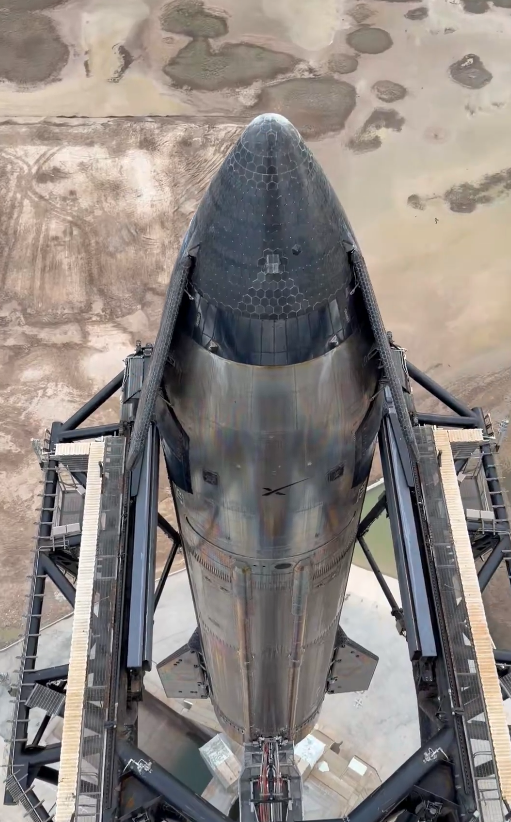
The spacecraft, Ship 42, returned to the launch tower at Starbase, Texas, on Saturday, 14 November, after spending 22.5 hours in space, completing 14 orbits of Earth and deploying 26 Starlink satellites.
Three Raptor engines slowed the descending spacecraft before two giant mechanical arms on the launch tower closed around it, completing a manoeuvre SpaceX had never previously attempted with an orbital Starship.
SpaceX founder and CEO Elon Musk congratulated his “incredible team” and later inspected the recovered spacecraft and suggested it might be capable of another flight after relatively limited refurbishment.
The catch demonstrates Starship’s full reusability, crucial for rapid, low-cost recycling.
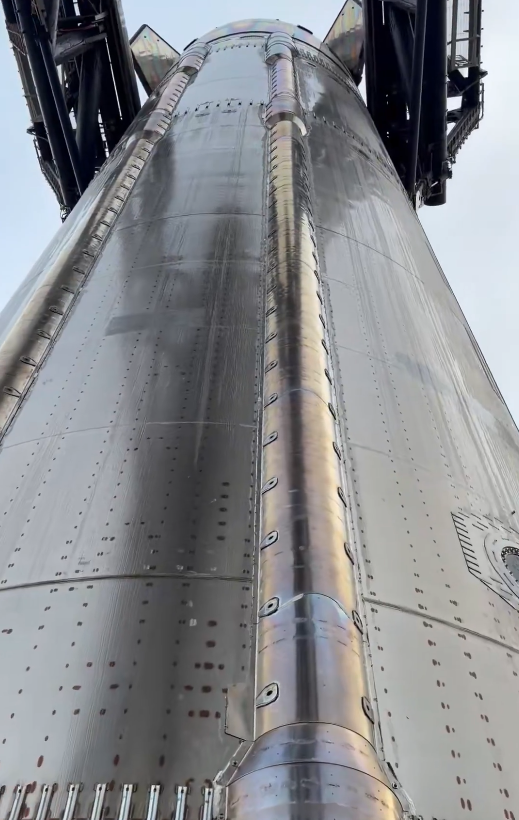
“I was going over the whole Starship heat shield earlier today. Overall, it looks great. The engines look great too. Ship 42 could probably be reflown with a few weeks of refurbishment,” Musk wrote on X.
However, he acknowledged that achieving rapid, aircraft-like reuse remains a challenge.
“Many small fixes are needed to achieve immediate reusability (like an airplane), which requires zero expected refurbishment, apart from scheduled maintenance,” he said.
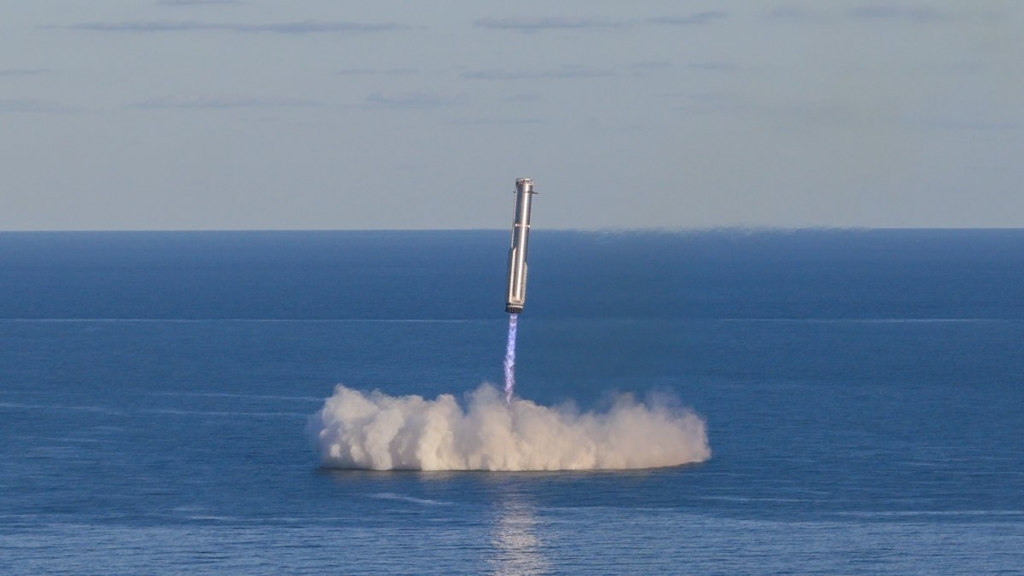
The successful recovery gives SpaceX an intact spacecraft to inspect after a full orbital mission. It also marks an important advance towards the company’s objective of recovering and reusing both stages of its giant rocket.
From booster setback to historic recovery
Flight 15 lifted off from Starbase on 13 November, powered by the booster’s 33 Raptor engines.
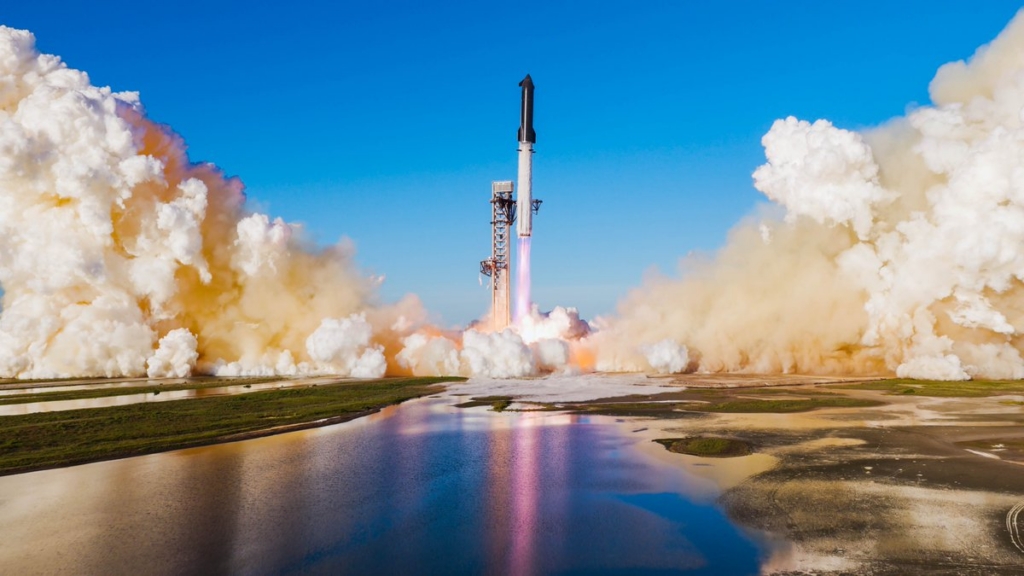
The initial ascent proceeded as planned, followed by hot-staging, in which Starship ignited its six engines before separating from Super Heavy.
After separation, the booster turned around and began its return towards the launch site.
However, the burn ended prematurely because of low fuel mass.
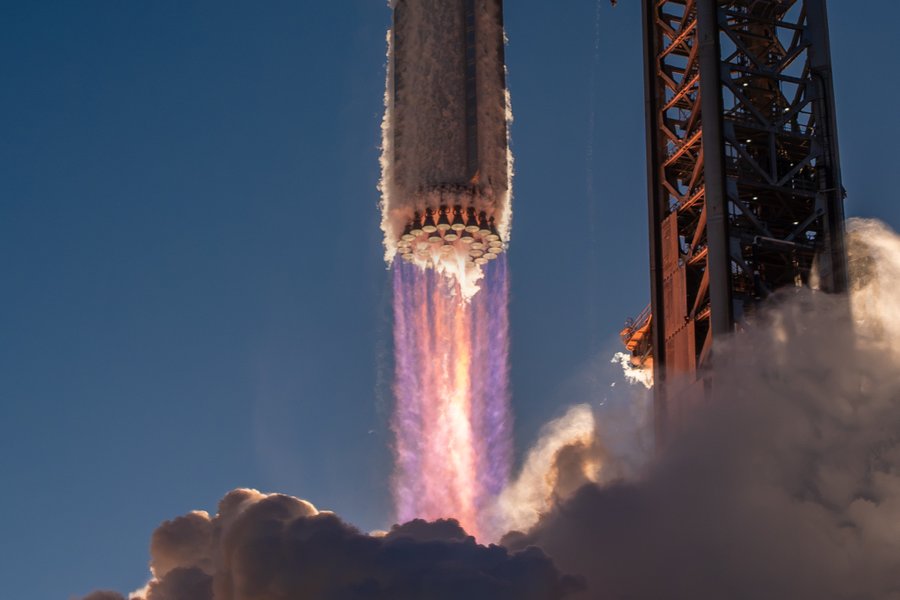
The booster’s guidance, navigation and control system subsequently triggered an automatic abort, directing the vehicle towards a designated offshore landing area rather than allowing it to approach the launch tower.
According to SpaceX’s post-flight statement, the booster performed a landing burn and shut down its engines while hovering over the Gulf of Mexico. Its flight termination system was then activated.
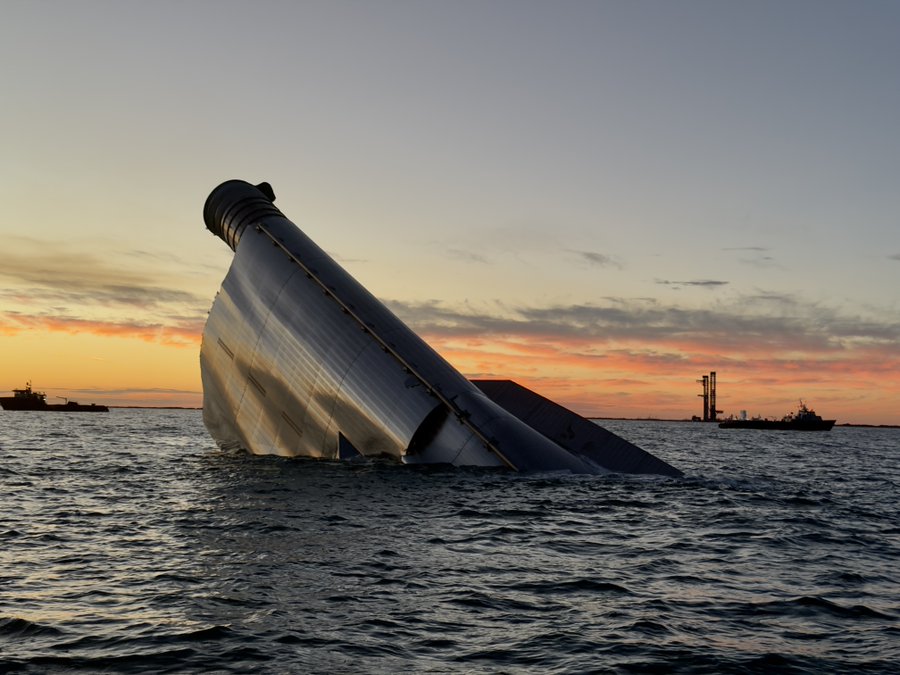
The company is investigating the cause of the shortened boostback burn.
SpaceX had hoped to catch both the booster and spacecraft during the same mission. Although the booster was lost, the upper stage continued towards orbit.
Starship completes its orbital mission
Starship’s six engines completed the initial ascent burn before the spacecraft briefly coasted through space.
It then restarted a single Raptor engine to complete orbital insertion.
Once in orbit, Starship deployed 26 Starlink V3 satellites, the latest generation of spacecraft being developed for SpaceX’s satellite broadband network.
SpaceX said contact was established with all 26 satellites shortly after deployment and that they had begun raising their orbits to join the constellation.
The mission was Starship’s second successful orbital flight, following Flight 14 in September.
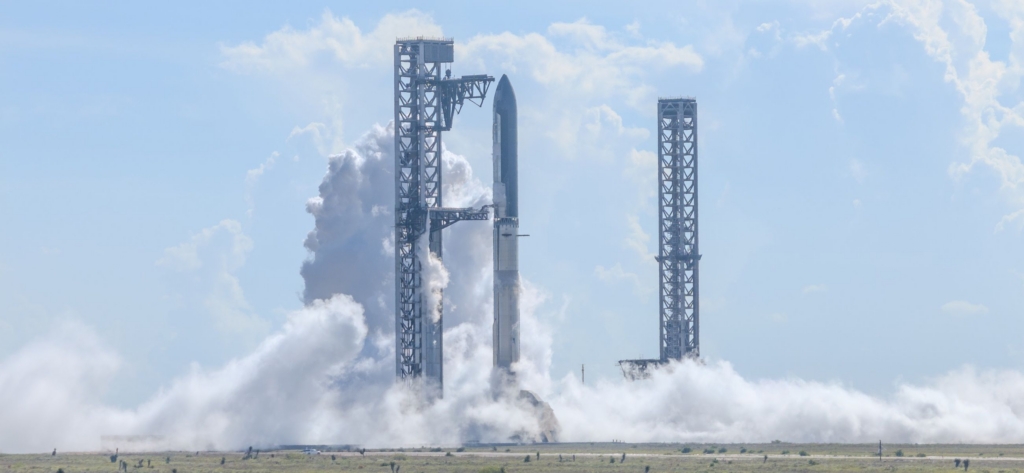
The spacecraft then remained in orbit while engineers monitored its systems and assessed its condition ahead of the planned return to Starbase.
After more than 20 hours in space, flight controllers prepared Ship 42 for its descent.
A single sea-level Raptor engine restarted successfully for the deorbit burn, slowing the spacecraft enough to leave orbit and begin its return through Earth’s atmosphere.
The V3 ship that flew on Flight 15 stands about 52 meters tall with six Raptors, three built for sea level and three for vacuum.
Musk also laid out how much bigger the next version will get. “Starship V4 will be ~70m long, which is roughly a 40% length increase and allows >60% more propellant load,” Musk wrote on X. “Engine count will be raised to 9, with 3 more Raptor-Vacuum engines added, and these will be higher thrust V4 engines.”
How SpaceX brought Starship home
Recovering Starship is more demanding than catching its Super Heavy booster.
The booster separates relatively early in the flight and returns without reaching orbital velocity. Starship, by contrast, must survive the intense heating generated as it re-enters the atmosphere after travelling around Earth.
Its heat shield, made up of thousands of protective tiles, is designed to prevent extreme temperatures from damaging the spacecraft’s structure and internal systems.
During re-entry, Starship uses four movable flaps to control its orientation and descent.
On Saturday, Ship 42 crossed back towards the Texas coast before flying out over the Gulf of Mexico for its final approach.
The spacecraft then manoeuvred towards the same launch site it had left almost a day earlier.
After descending through the clouds, three Raptor engines ignited to slow the vehicle and rotate it into a vertical position.
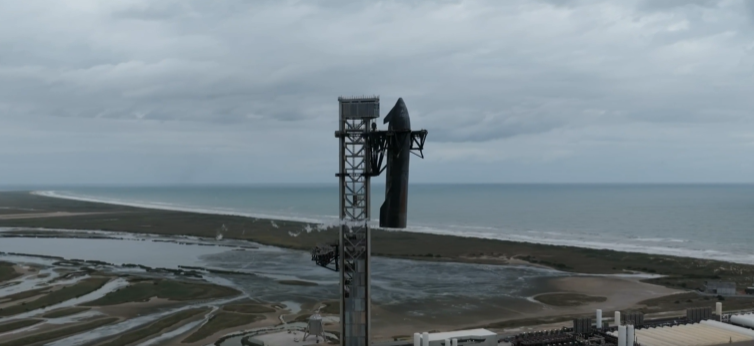
The engines brought Starship into position between the two mechanical arms of the launch tower, known as Mechazilla.
The arms closed around the spacecraft and supported it above the launch pad.
SpaceX had previously caught Super Heavy boosters using the same system, beginning with Flight 5 in October 2024. Saturday’s recovery was the first successful catch of a Starship upper stage returning from orbit.
Musk celebrated the achievement, writing: “The epic day has arrived, thanks to the incredibly talented team at SpaceX!”
He later added a more personal comment: “I hugged ship 42 upon its return.”
The next challenge is flying the same spacecraft again
Although SpaceX has now demonstrated that an orbital Starship can return to its launch tower, it has not yet shown that the spacecraft can be flown repeatedly.
The distinction matters because recovery alone does not establish that a rocket is economically or operationally reusable.
Engineers must determine how much work is needed to prepare the spacecraft for another launch.
That includes inspecting the heat shield, engines, propellant systems, structural components and equipment exposed to the stresses of launch and re-entry.
Musk’s comments suggest the condition of Ship 42 is encouraging, but SpaceX has not announced a firm plan or date for another flight using the recovered spacecraft.
The company has previously reflown Super Heavy boosters, although months separated those missions.
Its Falcon 9 rocket has demonstrated repeated first-stage reuse, but Falcon 9’s upper stage is normally discarded after completing its mission.
Starship is intended to go further by recovering both stages and reducing the work needed between flights.
Musk’s stated ambition is to make Starship reusable with little more than scheduled maintenance, similar to the way commercial aircraft operate.
Why the achievement matters for NASA and future missions
Starship is central to SpaceX’s plans to expand its Starlink satellite network and eventually conduct missions to the Moon and Mars.
The company is developing the rocket to transport substantially larger payloads than Falcon 9, while using reusable stages to support more frequent launches.
NASA has also selected a modified version of Starship as a lunar lander for its Artemis programme.
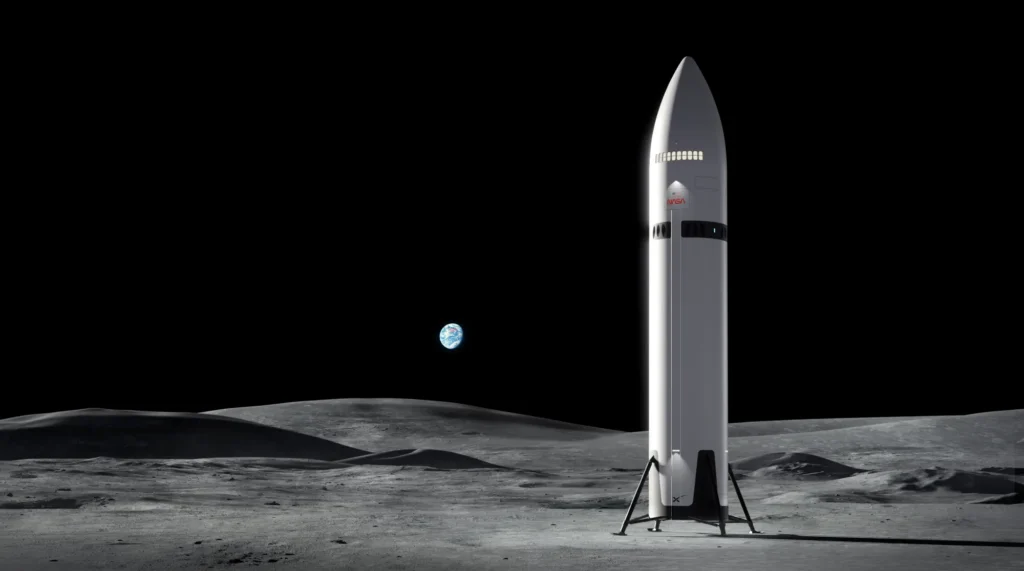
The spacecraft will need to demonstrate several additional capabilities before it can transport astronauts to the lunar surface.
These include transferring large quantities of cryogenic propellant between spacecraft in orbit, supporting crew operations and carrying out controlled lunar landings.
Flight 15 did not test orbital refuelling or lunar landing systems, but the successful recovery of Ship 42 provides important information about how Starship performs during a complete orbital flight and return.


