


New legislation sets Amsterdam Schiphol Airport flight cap at 478,000 annual movements

4 min read
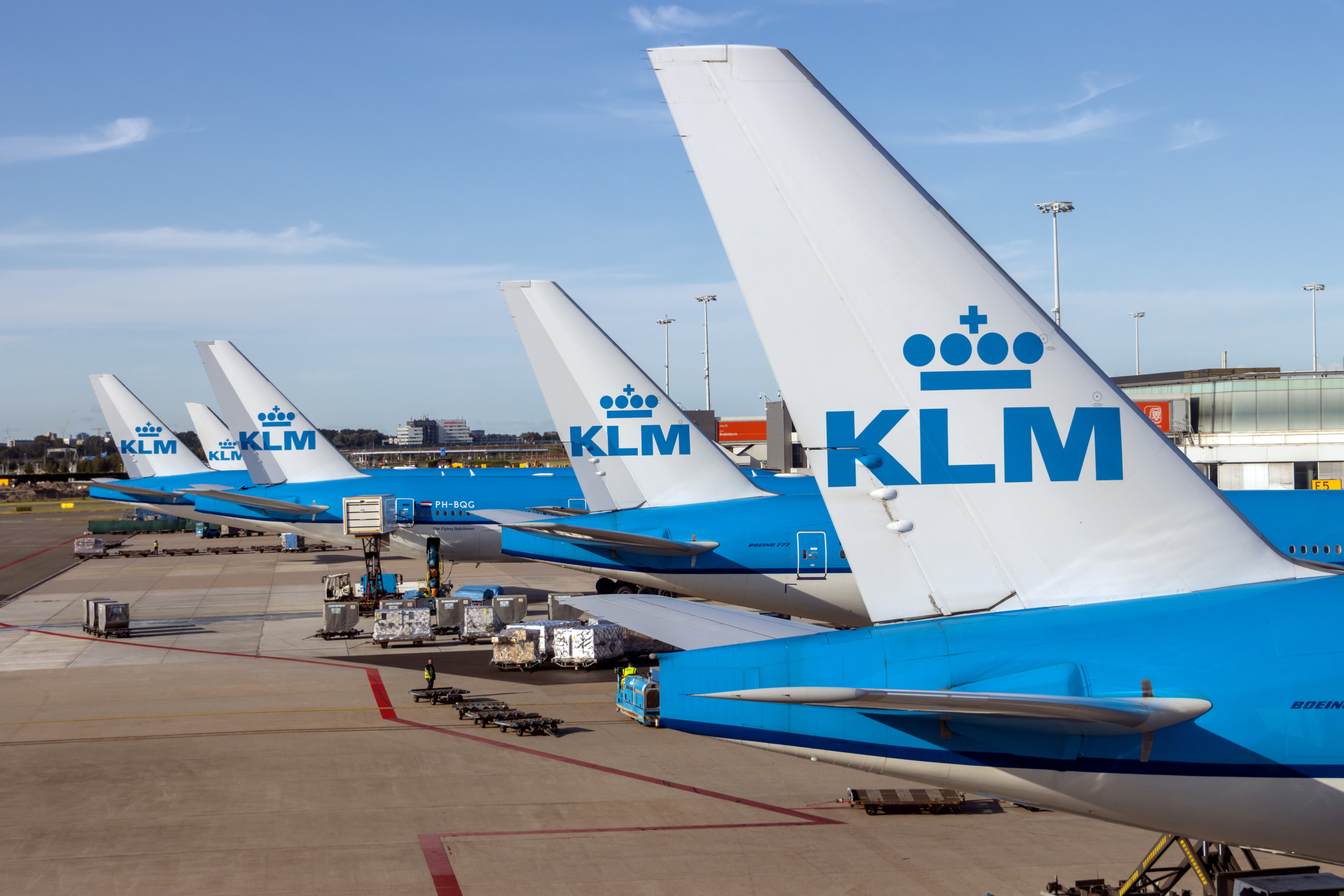
The new Airport Traffic Decree (LVB) for Amsterdam Schiphol Airport was introduced on Sunday following more than a decade of debate. Ultimately, the new legislation provides clarity on the airport’s overall capacity restriction moving forward, while also providing protections for local residents.
The legislation itself has been in the works since 2022, and is a crucial step in clarifying Amsterdam Schiphol’s real limits after years of oscillating between different flight movement caps, court rulings and appeals, and considerable criticism from environmental groups and industry actors.
A clear cap on movements and night restrictions
The decree indicates that AMS’ flight movements are capped at 478,000 per year with the possibility of expanding that to 500,000 should it meet noise and emissions targets. At Routes World 2026, Royal Schiphol Group Head of Aviation Partnerships Joery Strijtveen told the conference that he was confident they would meet them.

The new legislation also limits nighttime (23:00-07:00) movements to 27,000. Compared to pre-COVID levels, the airport was handling approximately 500,000 flight movements, of which 32,000 were at night. The rules are intended to balance AMS’ key hub position while also considering environmental and noise concerns, the airport operator says.
Pieter van Oord, CEO of AMS says: “Schiphol is of great value to the Netherlands as an international hub. That is precisely why there must be clear rules surrounding the airport.”
“This is important for everyone: for the Netherlands, for local residents, and for airlines. After years of uncertainty, the new LVB provides a legal basis,” he adds. “This allows us to build an airport that is ready for the future, becomes increasingly quiet, and retains its function for the Netherlands.”
The legislation has alarmed environmental groups, who claim it effectively legalises years of unlawful noise and health damage. They are currently contesting the law before the Council of State.
Impact on KLM, Transavia and Amsterdam Schiphol’s position as a hub
KLM and Transavia will be most affected by the new legislation as they control the vast majority of flight movements to and from the airport. According to data from aviation analytics firm Cirium, of the 460,000 scheduled flight movements this year, about 290,000 are KLM and its low-cost arm Transavia.
Partners Air France and Delta account for a further 15,000 movements, and newly-acquired SAS an additional 6,000. easyJet will also be affected as it plans on offering roughly 32,000 movements this year.
Professor of Air Transport Management and Economics and Dean of the Antwerp Management School, Wouter Dewulf, argues that airlines will have to optimise their networks accordingly at a granular level. This will result in some routes being prioritised over others given slot restrictions.
“The first candidates for rationalisation will be marginally profitable routes, overlapping destinations and frequencies with relatively low yields,” he told Aerospace Global News on Sunday.

“Some short-haul routes, particularly where rail alternatives exist, could disappear. Amsterdam–Brussels is one possible example.” KLM will offer four daily flights between the two cities in November with its Embraer fleet, a route operated almost exclusively for feeder traffic.
“However, we should distinguish between an individual route’s profitability and its contribution to the entire hub network,” Dewulf continued. “A short-haul feeder flight may generate relatively low yields but still be extremely valuable because it feeds profitable intercontinental services. KLM will therefore protect its most strategically important feeder connections and profitable long-haul routes.”
Regarding Transavia, Dewulf argues that higher-yielding leisure destinations will be prioritised over those generating lower profits. Other bases may also see growth. Seats at its ever-growing Brussels base have nearly doubled since 2023.
Night restrictions can affect both KLM and Transavia
True to its low-cost business strategy, Transavia tries to maximise utilisation on its aircraft by beginning its daily operations very early in the morning. The more rotations the aircraft can fly, the more money the plane makes.
“Early departures and late arrivals allow an aircraft to operate more rotations per day, spreading fixed aircraft ownership and crew costs over more passengers,” Dewulf says. “Losing one rotation per aircraft per day can be considerably more expensive than simply losing one flight, because the airline still has to pay for the aircraft.”

KLM has a wave of intercontinental arrivals early in the morning in order to feed its departures to Europe and the Americas. Between 05:00 and 07:00, it typically has a number of arrivals particularly from Africa, Asia and a couple of destinations in North America.
“Consequently, the impact extends beyond individual flights to the efficiency of the hub network.”
Naturally, although the restrictions have come into force, current schedules are not impacted. Moving forward, growth will have to consider the restrictions imposed by the decree.
“I expect gradual network restructuring and scheduling adjustments rather than an immediate wave of cancellations,” Dewulf concludes. “The main economic challenge will be maintaining network connectivity and aircraft productivity within a more restrictive operating environment.”
Sign up for our newsletter and get our latest content in your inbox.


More from

October 31, 20263 min read


