

From ‘bonkers’ flying scooter concept to crewed flight tests: CoolFly’s next steps

6 min read

CoolFly Aircraft tells Aerospace Global News its seated Dream ST personal electric vertical take-off and landing (eVTOL) aircraft is ready for delivery, following a series of crewed demonstrations in China and overseas.
The Hangzhou-based company attracted attention at CES 2026 with its Urban solo stand-up flying scooter. At the time, Aerospace Global News described the stand-up flying machine as a bit “bonkers”, with some possibly useful applications in emergency response and an appeal to daredevil racing.
The company took the critique well, calling it “fair.” They also reached out with a ten-month update that caught our attention. CoolFly supplied new performance figures, details of its safety testing, and a clearer picture of who it expects to buy its aircraft.
Seated Dream ST advances
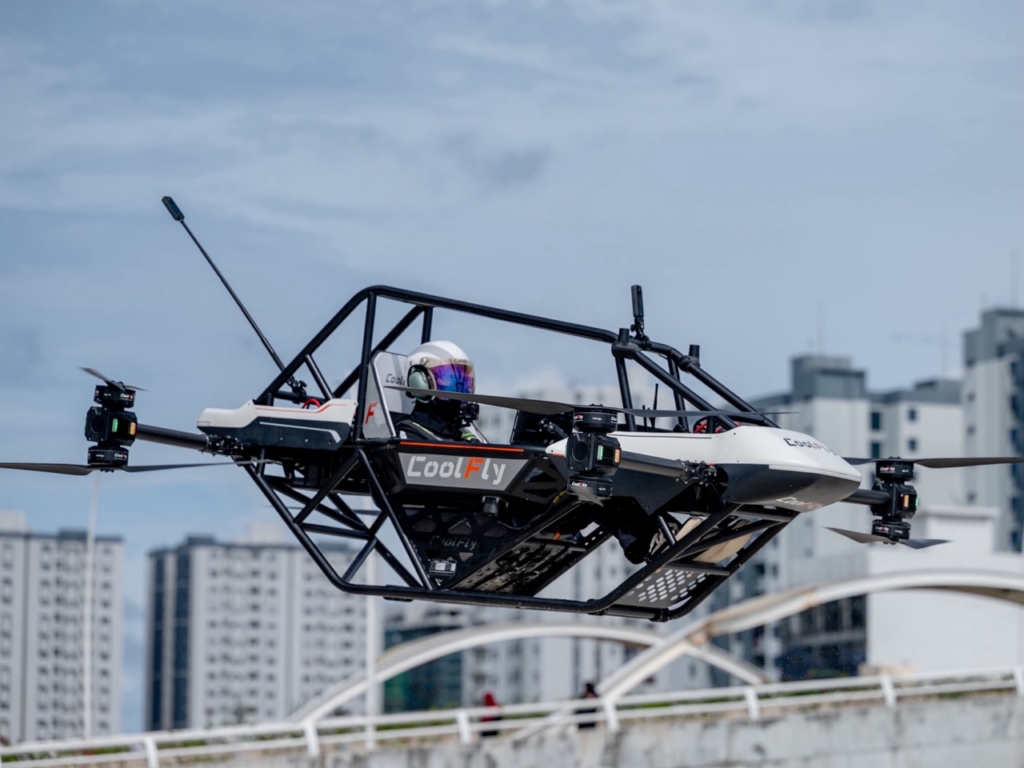
CoolFly has returned with updates on its somewhat less harrowing Dream ST seated personal eVTOL. Dream ST is a single-seater open cockpit aimed at the ultralight market.
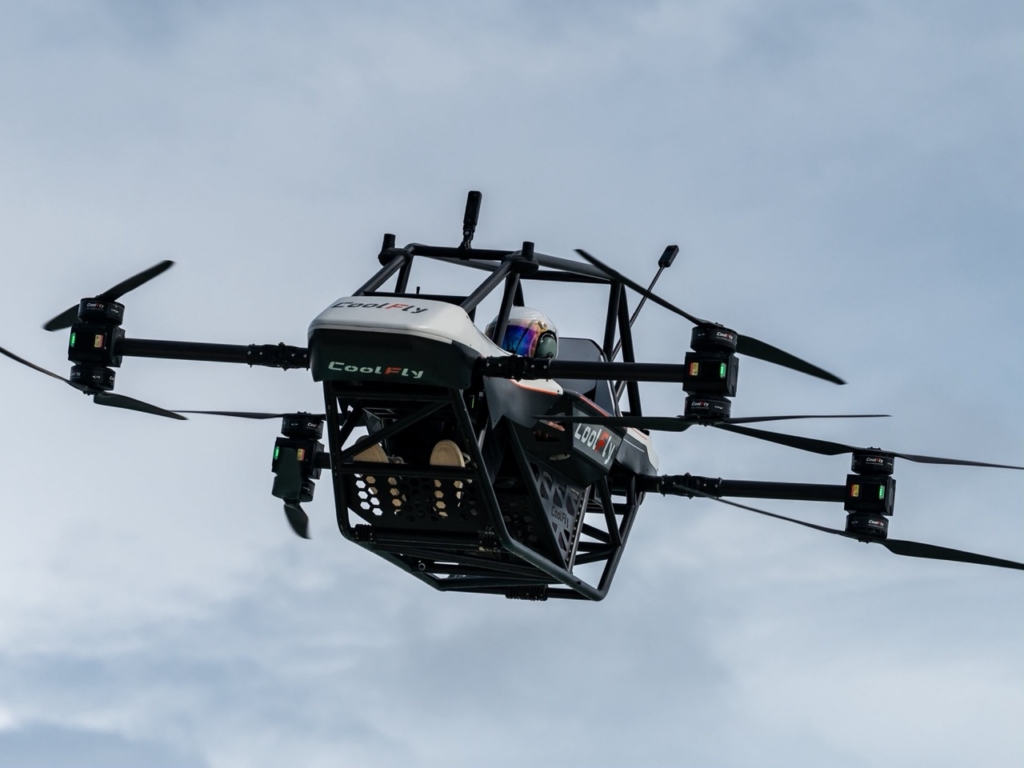
“Today, Dream ST is ready for delivery,” Alex Chen, CoolFly’s brand marketing lead, told AGN.
The company’s more intrepid stand-up Urban aircraft, meanwhile, is undergoing further development. “Urban is moving to its next version: we’re still optimising some parameters and expect to roll it out to all markets after that update,” Chen said.
From CES display to crewed demonstrations
CoolFly launched Urban, the seated Dream ST and Dream Pro, and its NA80 flight-control system at an event in Hangzhou on 13 August. Chen said the launch included crewed flights.
The company performed crewed Dream ST flights in France, as well as Dream ST and Dream Pro test flights in Canada.
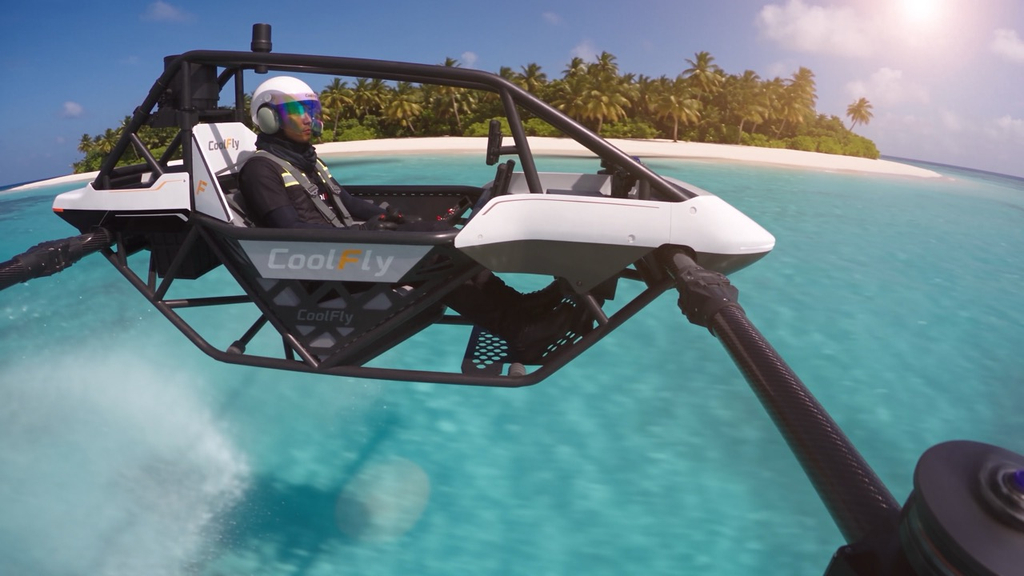
In October, the company said Dream ST completed a crewed island-to-island flight in the Maldives.
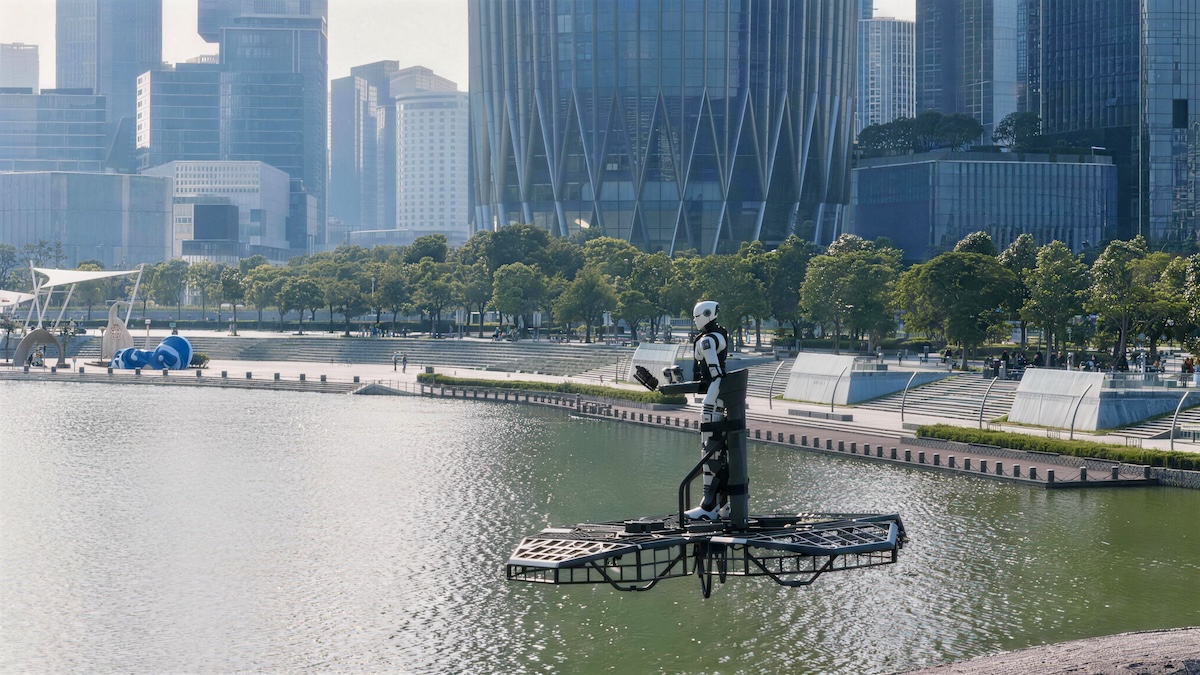
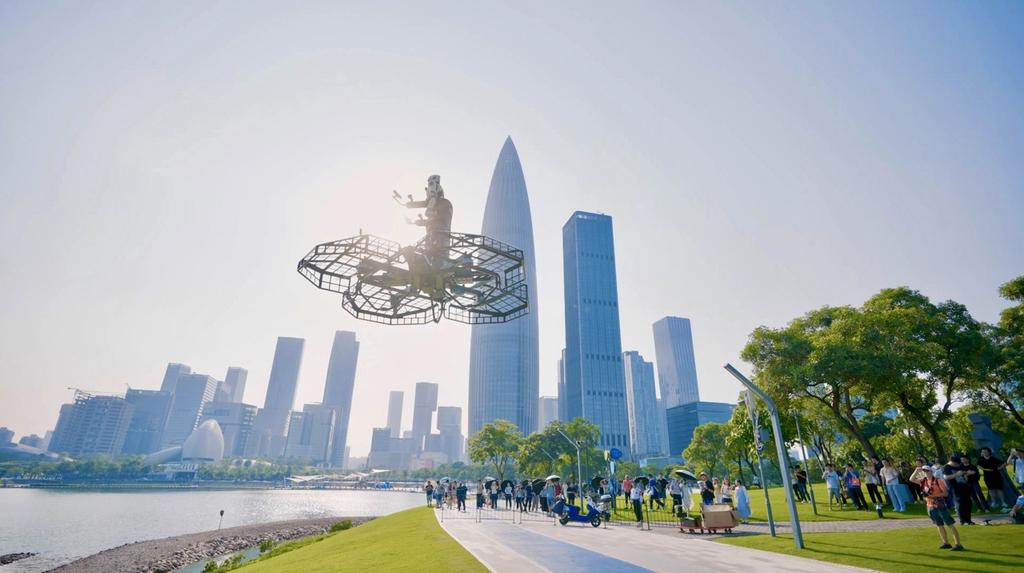
Urban also performed demonstrations carrying humanoid robots in Zhuhai and Dongguan.
The company had additional static display appearances at EAA AirVenture Oshkosh and IFA Berlin.
Chen said CoolFly has flown all its models with pilots in China.
An earlier version of Urban also flew with a pilot in Harbin in February, in temperatures of –30°C. According to Chen, the chilly demonstration led CoolFly to rethink its batteries.
“Harbin pushed us hard on batteries. At –30 °C, battery output drops sharply,” Chen said. “We developed a new ultra-low-temperature battery thermal management system for that flight, and it’s now used across all of our models.”
What the aircraft can do
CoolFly puts Dream ST’s empty weight below 115kg (approximately 253lb), with a maximum payload of 95kg, a top speed of 100km/h and 16 minutes of flight with a 70kg pilot.
Dream Pro has a claimed 120kg payload, the same top speed and 40 minutes of flight with a 70kg pilot.
CoolFly has not released updated Urban specifications, as some parameters are under development.
Chen said all three eight-motor aircraft use independent propulsion units, main and backup batteries and dual flight controllers, each with three inertial measurement units. CoolFly says it has tested controller switchover and single-motor and propeller failures, with the aircraft remaining controllable.
“Safety is built in three layers,” Chen said, specifying redundancy, active assistance and passive protection. On the dual control system, he said: “If one detects a fault, the system can switch within milliseconds.” CoolFly said it has verified that switchover in testing, alongside simulated or actual single-propeller and motor failures.
Active safety includes “an extensive sensor suite for perception and obstacle avoidance, plus intelligent features that lower pilot workload, such as one-key takeoff and landing and intelligent hover.”
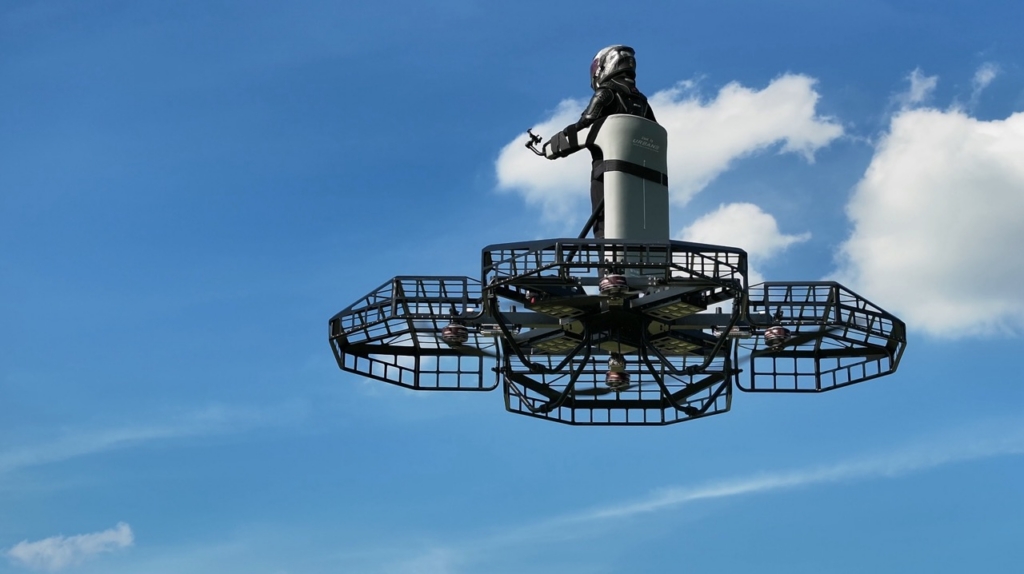
Urban also features enclosed propellers, a protective structure, and foot grips to keep the standing pilot somewhat more stable. Dream Pro incorporates airbags. Chen said pilots are supplied with a helmet and airbag suit. Those measures may address the differences between an open personal eVTOL and a conventional enclosed light aircraft, but their effectiveness would depend on the circumstances of an incident.
Can it fly in the US without a pilot’s licence?
Technically, yes. CoolFly is designing Dream ST for US ultralight rules under FAA Part 103. Those rules permit qualifying single-occupant recreational aircraft to operate without aircraft registration, an airworthiness certificate or a pilot certificate. In effect, the FAA is saying, if you are willing to try it, go for it, but the agency makes no guarantees of airworthiness or your ability to control the craft. Powered ultralights must weigh less than 254lb empty and meet other operating and performance limits.
Dream ST’s listed empty weight (253 lb) is close to that threshold. Its stated top speed of 100km/h is also close to the Part 103 limit of 55 knots (approximately 102km/h).
However, Part 103 is not an FAA type approval, and the recreational-use restriction limits potential commercial applications.
“Outside the US, ultralight rules are set country by country,” Chen said. CoolFly works with dealers on national requirements in Europe and said its aircraft have CE and FCC certifications. Neither designation, by itself, establishes compliance with aviation operating rules or substitutes for any approval that a particular country may require.
Chen said that Dream Pro is not being positioned as a Part 103 ultralight, and added: “We’ll share Urban’s regulatory approach closer to its wider rollout.”
Dealers, deliveries and CES 2027
CoolFly expects recreational flyers to be its first customers, followed by tourism and event operators. Chen said discussions about emergency-response applications have taken place, but no agreements have been finalised.
“Our first and largest group of users is people who are passionate about flying sports and outdoor recreation,” Chen said. Tourism sites and event organisers are the next market CoolFly wants to reach, with trained staff on hand.
CoolFly described Dream ST as ready for delivery, but did not disclose order numbers or confirm delivery dates.
“We sell through local dealers, who handle sales, delivery, training and support,” Chen said. “In the US, we’re currently selecting dealer partners, and pricing will follow once they’re in place.” The company is also recruiting dealers in Europe, Australia and the Middle East.
Chen identified three hurdles that CoolFly must clear to take off: navigating differing national rules, obtaining local support and “earning public trust in personal flight, which is why we fly in public.”
CoolFly will exhibit Dream ST and Dream Pro at CES 2027 (LVCC North Hall, Booth #15927).
“We’ll have Dream ST and Dream Pro on the stand, and visitors can sit in Dream,” Chen said.
For the flying scooter that first caught attention at CES 2026, the next test will be whether revised Urban specifications, regulatory requirements and customer deliveries can meet the promise of the public demonstrations. If nothing else, CoolFly will likely draw crowds again in Vegas.
Sign up for our newsletter and get our latest content in your inbox.