NASA Crew-12 astronauts return to Earth after 237 days in space

8 min read
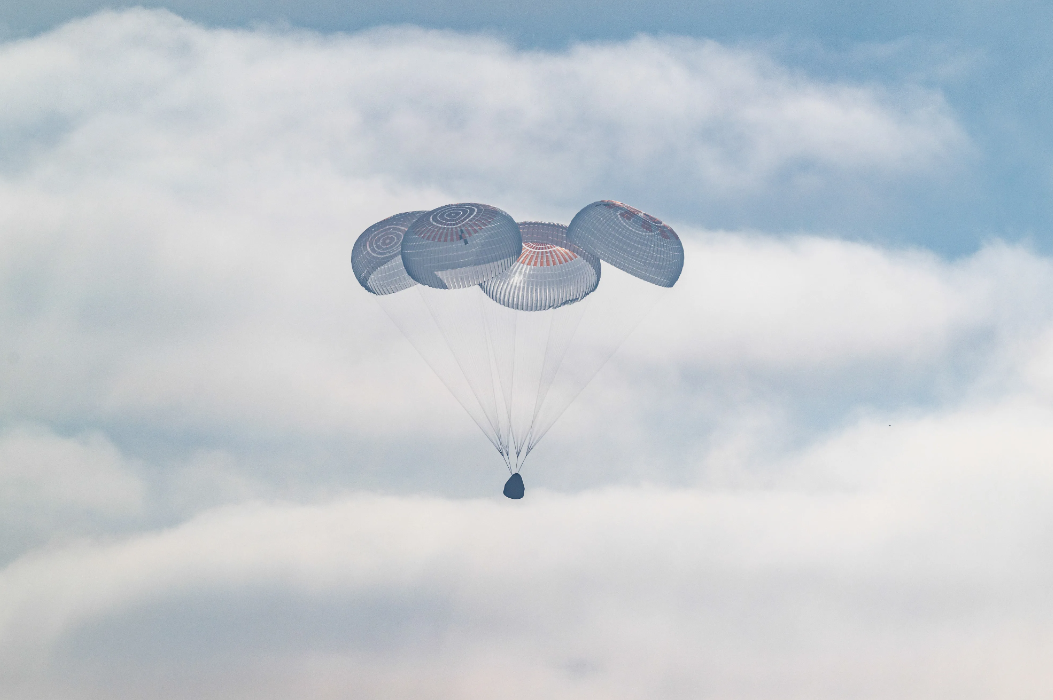
Four astronauts returned to Earth on 8 October after spending 237 days in space, their SpaceX Crew Dragon capsule descending beneath parachutes before splashing down in the Pacific Ocean off the coast of Los Angeles in California.
The vehicle’s drogue parachutes deployed at 11:30 EDT (15:30 GMT), followed shortly by the main chutes, and splashdown took place at 11:34 EDT (15:34 GMT) as per the set clock.
Dragon’s return followed a journey of about 27 hours after it undocked from the orbiting laboratory on Wednesday. The spacecraft fired its engines to slow down and leave orbit before plunging into Earth’s atmosphere, where its heat shield protected the crew from the extreme temperatures of re-entry.
Teams aboard the recovery ship, including two fast boats, secured the SpaceX Dragon and ensured the spacecraft was safe for the recovery effort. As the fast boat teams completed their work, the recovery ship moved into position to hoist Dragon onto the main deck with the astronauts inside.

Once on the main deck, the crew exited the spacecraft. Following standard postflight medical screenings, the crew will fly to shore before returning to NASA’s Johnson Space Center in Houston.
The capsule brought home NASA astronauts Jessica Meir and Jack Hathaway, European Space Agency (ESA) astronaut Sophie Adenot and Russian cosmonaut Andrey Fedyaev, ending a mission that began in February and included months of scientific research aboard the International Space Station (ISS).
“Jessica, Jack, Sophie, and Andrey spent 237 days living and working in orbit, travelled more than 100 million miles, advanced important science, and returned safely home because of the extraordinary expertise and competence of thousands across NASA, SpaceX, and our international partners,” said NASA Administrator Jared Isaacman. “Building the capability, experience, and confidence to do this repeatedly is exactly what will allow us to go farther, and I am grateful to Crew-12 and their families for their service to humanity’s greatest adventure.”
“NASA’s activities supporting the International Space Station — transporting crew, conducting impactful research, and maintaining critical national assets — enable the science, engineering, and risk‑reduction needed for future missions across the solar system,” said Dana Weigel, manager of NASA’s Low Earth Orbit Program at the agency’s Johnson Space Center.
“We’re grateful for the dedication across the human spaceflight team that makes this possible, and we’re thrilled to welcome Jessica, Jack, Sophie, and Andrey home.”
The landing marked the end of more than seven months of living and working in weightlessness. For the returning crew, however, it also marked the beginning of another challenge: getting their bodies accustomed to Earth’s gravity again.
A mission that began in February
Crew-12 launched aboard a SpaceX Falcon 9 rocket from Cape Canaveral Space Force Station in Florida on 13 February. Their Dragon spacecraft docked with the ISS the following day.
During their 237-day mission, the four crew members travelled more than 100 million miles and completed more than 3,792 orbits around Earth. The mission was the second for Meir and Fedyaev and the first for Hathaway and Adenot.
Meir commanded the mission, with Hathaway serving as pilot and Adenot and Fedyaev as mission specialists. It was the second spaceflight for Meir and Fedyaev, but the first for Hathaway and Adenot.
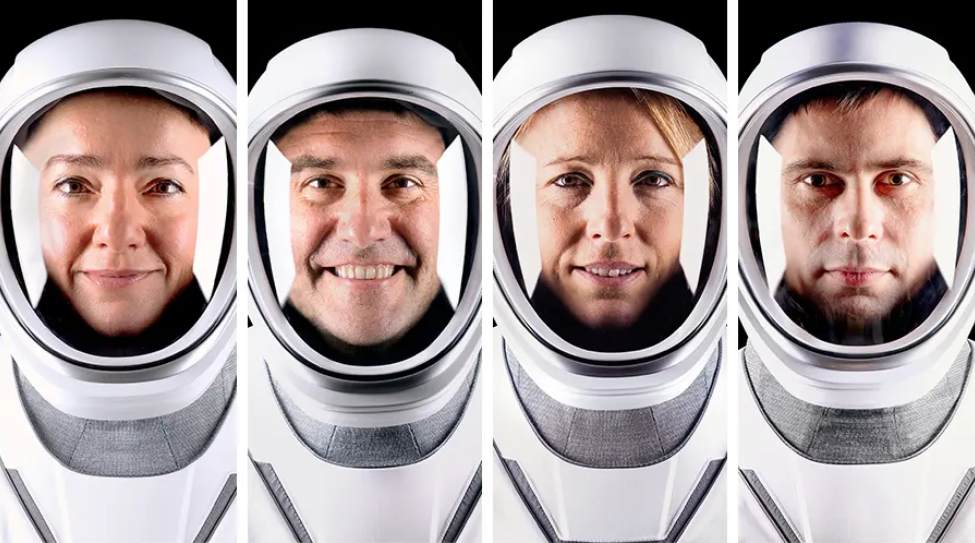
Meir had previously spent 205 days aboard the ISS during 2019 and 2020 and participated in the first all-female spacewalk, alongside fellow NASA astronaut Christina Koch.
Hathaway, a US Navy aviator selected by NASA in 2021, was making his first journey into orbit. Adenot, a French engineer and former military helicopter test pilot, was also experiencing spaceflight for the first time.
The four worked across two ISS expeditions, conducting experiments, maintaining equipment and supporting scientific investigations that could benefit people on Earth and future astronauts travelling farther into space.
Among the experiments was research into growing pharmaceutical crystals in microgravity. Hathaway worked with equipment used to study crystal formation, including investigations involving cancer-targeting treatments. Scientists hope that understanding how these crystals form without gravity could help improve medicines.
Meir worked with NASA’s Cold Atom Laboratory, which uses extremely low temperatures to study the behaviour of atoms. The unusual conditions aboard the station allow researchers to observe quantum phenomena that are difficult to examine on Earth.
Adenot helped test a system for producing intravenous fluids in space. Such a capability could become important on long missions to the Moon or Mars, where carrying large quantities of medical supplies would take up valuable space and regular deliveries from Earth would not be possible.
She also worked with the station’s metal 3D printer, which could eventually allow astronauts to manufacture replacement parts instead of waiting for supplies from Earth.
Other investigations examined bone regeneration, cartilage development and the growth of stem cells. These experiments could contribute to treatments for conditions on Earth while helping scientists understand the health risks of prolonged spaceflight.
Back on Earth, gravity becomes a challenge
For the astronauts, splashdown was only the beginning of their physical recovery.
After almost eight months in microgravity, even standing upright can be difficult. The human body adapts remarkably well to weightlessness, but those adaptations can become a problem when gravity returns.
On Earth, muscles work constantly to support body weight. Bones also respond to the everyday stresses of standing, walking and running. Aboard the ISS, astronauts float through their daily routines, and their muscles and bones no longer experience the same demands.
Over time, muscles can weaken and bones can lose density, particularly in the legs, hips and lower back.
Astronauts spend around two hours a day exercising on specialised equipment, including a treadmill, stationary bicycle and resistance training machine. These workouts help preserve strength and fitness, but they cannot completely reproduce the effects of gravity.
After landing, some astronauts experience weakness, dizziness or difficulty maintaining their balance. They may need assistance walking until their bodies begin adjusting.
The inner ear plays an important part in this process. It contains organs that help the brain detect movement and maintain balance. During prolonged weightlessness, the brain learns to interpret those signals differently.
When astronauts return to Earth, their balance systems must adjust once again. Japan’s space agency, JAXA, explains that this can produce symptoms similar to motion sickness, including nausea and dizziness.
Recovery varies from person to person. Some astronauts regain their balance relatively quickly, while others require more time and physical rehabilitation.
Why astronauts take salt tablets before returning
Another challenge is the way blood circulates through the body.
On Earth, gravity draws blood and other bodily fluids towards the lower body. The heart and blood vessels work continuously to maintain circulation and ensure that enough blood reaches the brain.
In space, fluids shift towards the upper body. This is why astronauts sometimes develop puffy faces during the early stages of a mission. The body gradually adapts to the change, including by reducing the volume of circulating fluid.
When astronauts return to Earth, gravity once again pulls blood towards their legs. Their cardiovascular systems may initially struggle to compensate, causing blood pressure to fall when they stand. This can produce dizziness, light-headedness or even fainting. Crew-12’s preparations included a measure intended to reduce that risk.
According to NASA’s 6 October mission update, the astronauts prepared drinks containing salt tablets to consume before re-entering Earth’s atmosphere.
The procedure, known as fluid loading, helps the body retain fluid and better tolerate the return to gravity. NASA identifies it as a standard part of preparing crews for landing after long-duration missions.
At the Johnson Space Center in Houston, scientists will also investigate changes to astronauts’ vision, immune systems and nervous systems. Some effects resolve relatively quickly, while others can require longer monitoring.
One condition which will receive particular attention is spaceflight-associated neuro-ocular syndrome, or SANS, which involves changes affecting the eyes and vision during spaceflight.
Understanding these problems is important for future missions to Mars, where astronauts may have to function after months in space without the immediate medical assistance available on Earth.
Seven astronauts continue work aboard the ISS
Crew-12’s departure came less than a week after four replacement astronauts arrived at the station. NASA’s Crew-13 mission docked on 1 October, bringing NASA astronauts Jessica Watkins and Luke Delaney, Canadian Space Agency astronaut Joshua Kutryk and Roscosmos cosmonaut Sergey Teteryatnikov.
During their 237-day mission, the four crew members travelled more than 100 million miles and completed more than 3,792 orbits around Earth.
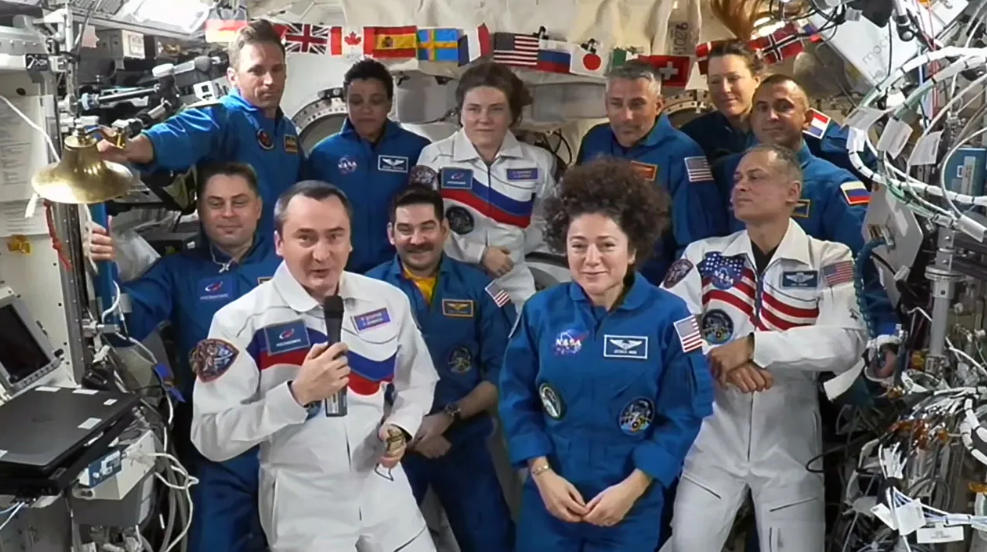
They joined NASA astronaut Anil Menon and Russian cosmonauts Pyotr Dubrov and Anna Kikina, who arrived in July.
The seven remaining crew members are continuing experiments involving human health, blood circulation, sleep, breathing and exercise, alongside routine maintenance of the orbiting laboratory.
The ISS has been continuously occupied since November 2000, providing scientists with a laboratory in which to study biological and physical processes under conditions that cannot be reproduced fully on Earth.
Crew-12’s return also marks another completed flight under NASA’s Commercial Crew Programme, which uses privately developed spacecraft to transport astronauts to and from the station.
For Meir, Hathaway, Adenot and Fedyaev, the immediate priorities are medical examinations, recovery and reunions with family and colleagues.
There was a personal side to leaving the station after so many months together. During a change-of-command ceremony before departure, Meir described the farewell as a “bittersweet” moment, according to CBS News.
“But we know that we are going home to our friends, to our families, to all of our team members on the ground, so it’s a lot of mixed, swirling emotions for all of us when one leaves a home like this up on the space station,” Meir said during a streamed video of the crew’s farewells on 4 October.