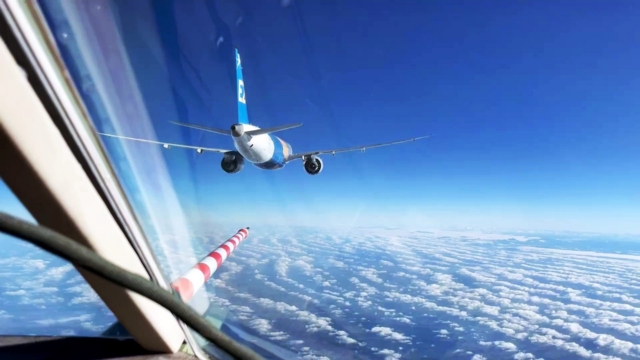


Bell completes first MV-75 fuselage as US Army’s next-gen tiltrotor takes shape

7 min read
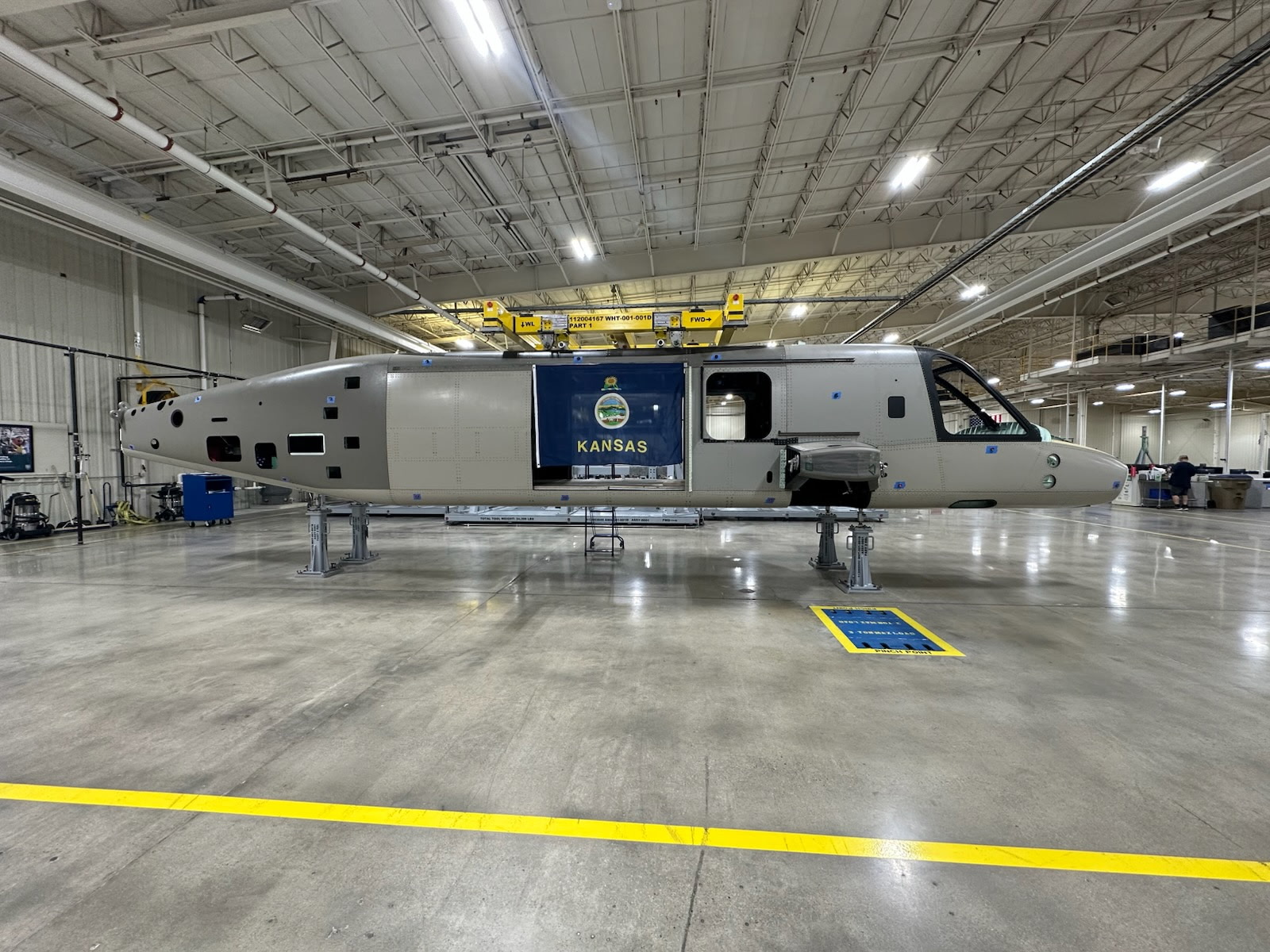

Bell Textron has completed the first fuselage of the US Army’s MV-75 Cheyenne II, bringing the next-generation tiltrotor a step closer to flight testing.
Designed to fly twice as fast and twice as far as existing Army helicopters, the aircraft is being developed to carry troops and supplies over much greater distances.
The fuselage was built at Bell’s Wichita Assembly Center in Kansas and has been delivered to its Amarillo facility in Texas, where it will be joined with the aircraft’s completed wing structure and engine nacelles.
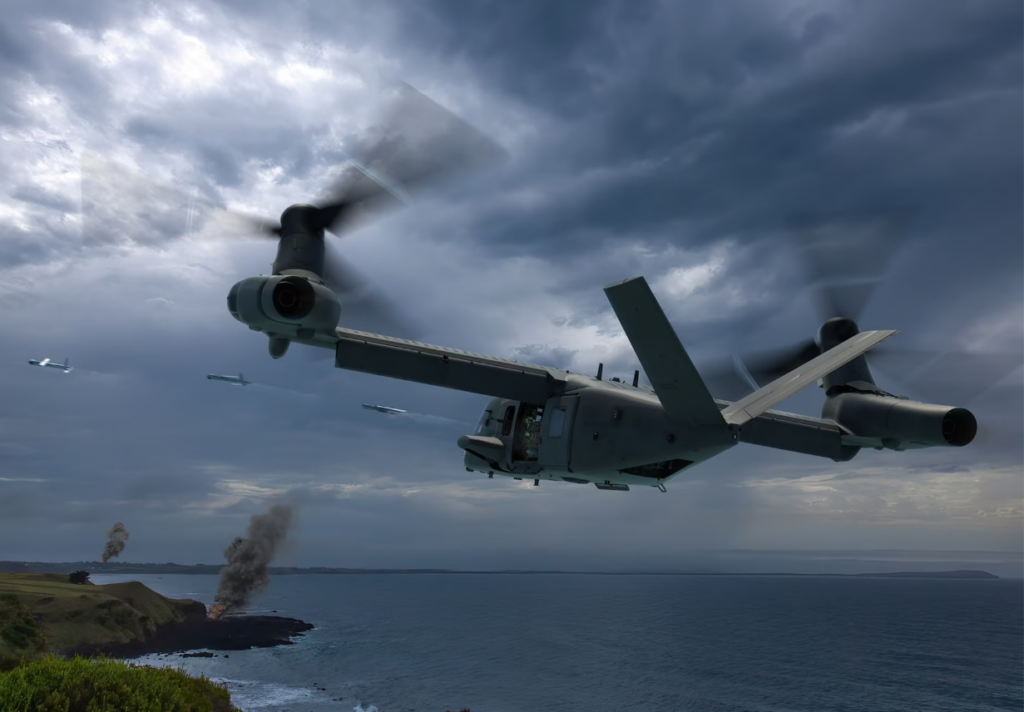
The milestone, announced on 16 November, comes two years after Bell selected Wichita as the manufacturing centre for the fuselage of the MV-75, which is being developed under the US Army’s Future Long Range Assault Aircraft (FLRAA) programme.
The aircraft is intended to transform how the Army moves troops, equipment and supplies across large distances, particularly in areas where conventional helicopters face limitations in speed and range.
Bell said the fuselage was assembled in four major sections covering the forward, middle and rear portions of the aircraft, followed by the joining of the structures and installation of the outer skins.
The Wichita facility uses advanced drilling and manufacturing equipment intended to shorten production times while maintaining structural accuracy.
“This achievement is a testament to the dedication and agility of Bell and the entire MV-75 team, who rapidly established infrastructure and moved with purpose to design and assemble the first fuselage,” said Adam Blackford, general manager of Bell’s Wichita Assembly Center.
“The completion of this fuselage reflects our unwavering commitment to delivering the MV-75 Cheyenne to our warfighters,” Blackford said.
What happens next?
The completed fuselage will be joined with the wings and nacelles at Amarillo before being placed in a purpose-built structural test fixture.
Bell will use the fixture to calibrate strain gauges and apply controlled loads to the aircraft’s structure. These tests are intended to establish whether the airframe can withstand the forces it will encounter during operation. The work is an essential step before flight testing begins.
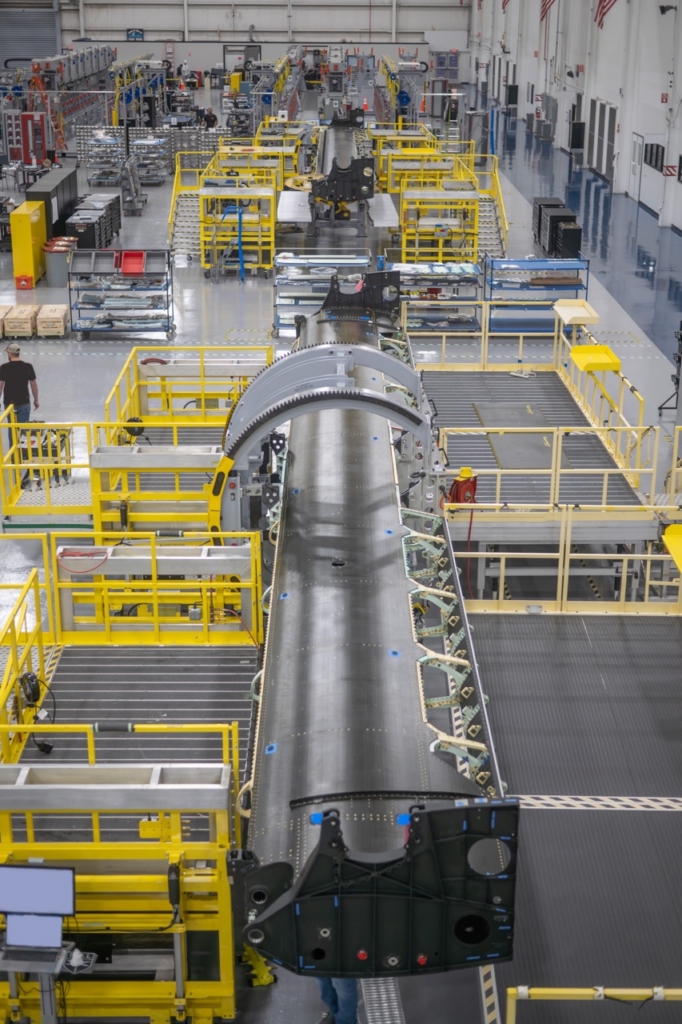
Other parts of the aircraft have also been progressing through manufacturing and testing. In October, Bell announced that the first nacelle structures had been completed and successfully fitted to the wings.
The company also began testing the MV-75’s gearboxes at its Drive System Test Lab in Grand Prairie, Texas.
The gearboxes form part of the aircraft’s drive system and support electrical generators, hydraulic pumps and cooling equipment for the engines and nacelles.
Meanwhile, Bell is testing flight-control computers, electronic components, displays and other systems at its Weapon System Integration Lab in Arlington, Texas.
These ground tests allow engineers to identify problems with the aircraft’s software and electronic systems before they are installed in a flying prototype.
Why the US Army wants the MV-75
The MV-75 is being developed to address a longstanding limitation of military helicopters as their ability to take off and land vertically comes at the expense of speed and long-distance performance.
The US Army’s UH-60 Black Hawk has served as the backbone of its assault and utility helicopter fleet for decades. It carries troops, transports supplies, evacuates casualties and supports a wide range of military operations.
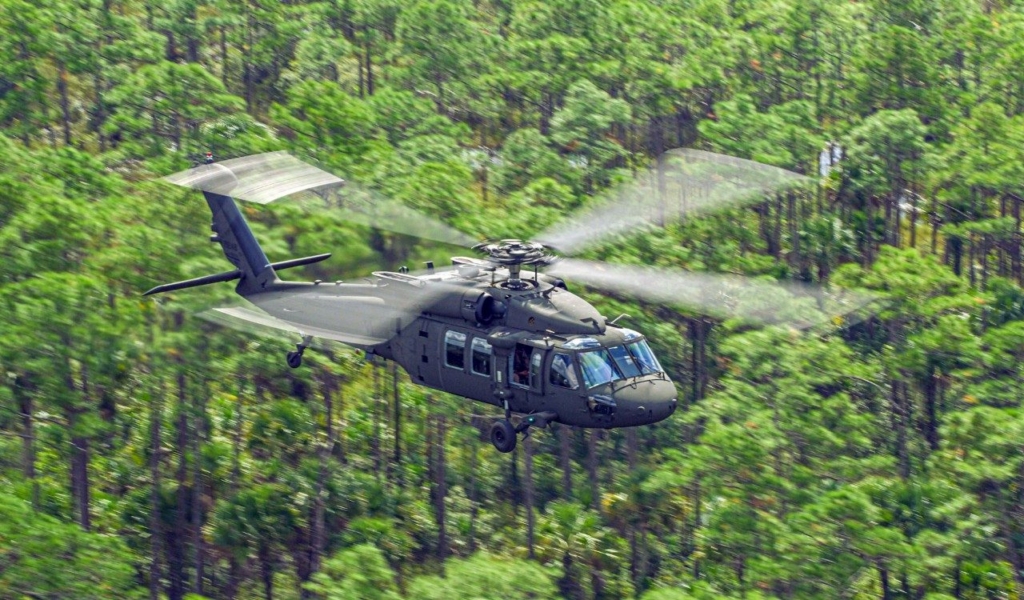
The MV-75 is designed to perform many of those missions over substantially greater distances.
Unlike a conventional helicopter, the MV-75 uses a tiltrotor configuration, with large propellers mounted at the ends of its wings.
During take-off and landing, the propellers face upwards, allowing the aircraft to operate much like a helicopter.
Once airborne, they tilt forwards, enabling the aircraft to fly like a fixed-wing aeroplane.
This arrangement allows it to combine vertical take-off capability with the higher cruising speeds and longer range associated with conventional aircraft.
Bell says the MV-75 will offer more than twice the speed and range of existing Army rotorcraft.

The aircraft is derived from Bell’s V-280 Valor demonstrator, which was developed to prove the tiltrotor concept for future military operations.
The V-280 was designed around a cruising speed of approximately 280 knots, significantly faster than the Black Hawk.
The Army has also cited a range of approximately 2,440 nautical miles for the MV-75. The greater range is intended to allow military units to operate from bases farther away from hostile forces, reducing their dependence on forward airfields and refuelling points.
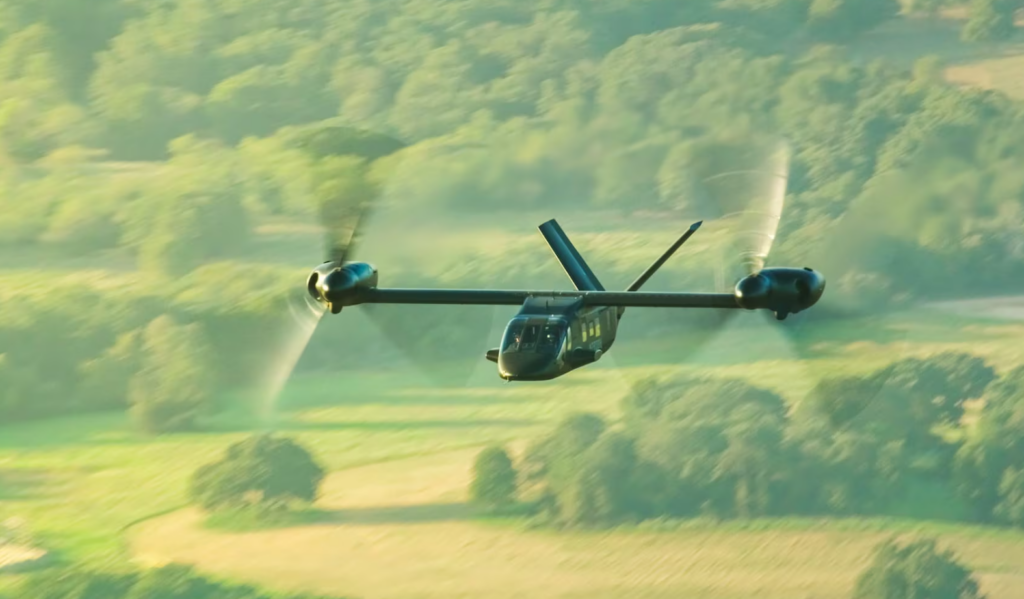
It could also enable commanders to move troops rapidly between widely separated locations without relying on the same number of intermediate stops required by conventional helicopters.
How the MV-75 differs from the Osprey
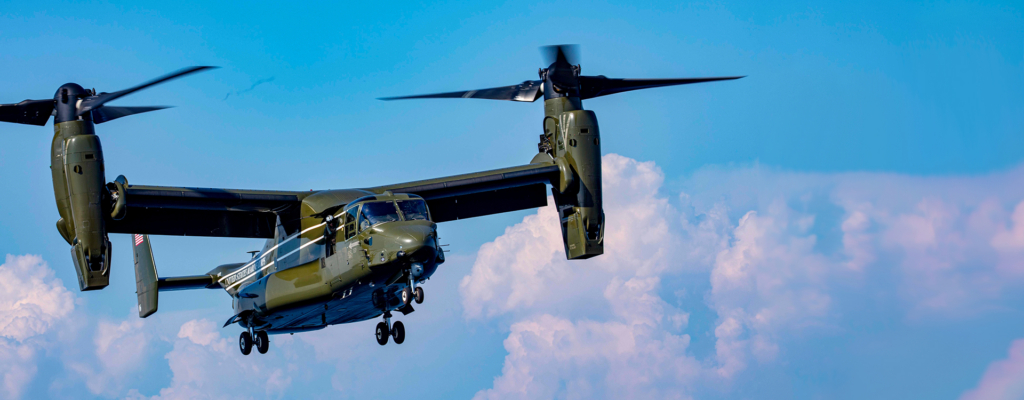
The MV-75 follows the same basic tiltrotor principle as the Bell Boeing V-22 Osprey, which has served with the US Marine Corps and Air Force for years.
However, the two aircraft use different designs. On the V-22, the engines and propellers tilt together, while the MV-75 keeps its engines fixed and tilts only the rotor assemblies. The newer aircraft is also being developed specifically for the Army’s long-range assault missions, rather than as a direct replacement for the Osprey.
From V-280 Valor to MV-75 Cheyenne II
The programme has its origins in the US Army’s Future Vertical Lift initiative, which was established to develop aircraft capable of replacing several existing helicopter types.
The Army launched the FLRAA competition in 2019, seeking an aircraft that could provide a substantial improvement in speed, range and operational flexibility.
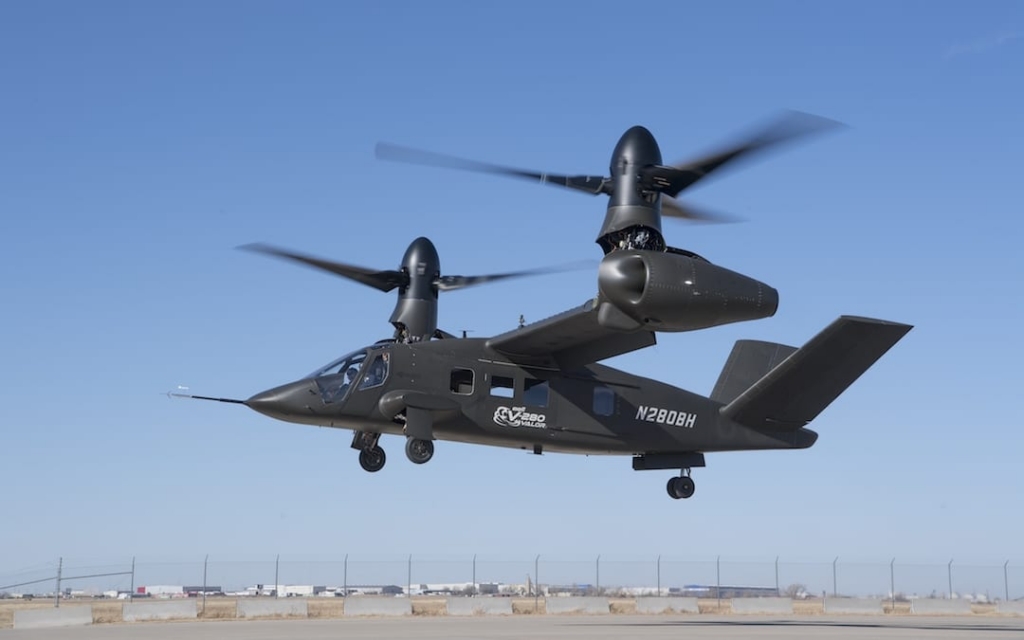
Bell competed against a Sikorsky-Boeing team offering the Defiant X compound helicopter.
In December 2022, the Army selected Bell’s V-280-based design, awarding the company the contract to develop the future aircraft.
The decision represented one of the most significant changes in US Army aviation procurement in decades.
Rather than adopting another conventional helicopter, the Army chose a tiltrotor design intended to operate across much larger battlefields.
The MV-75 is not expected to replace every Black Hawk. Instead, it will take over part of the assault and utility mission while existing helicopters continue to serve in other roles.
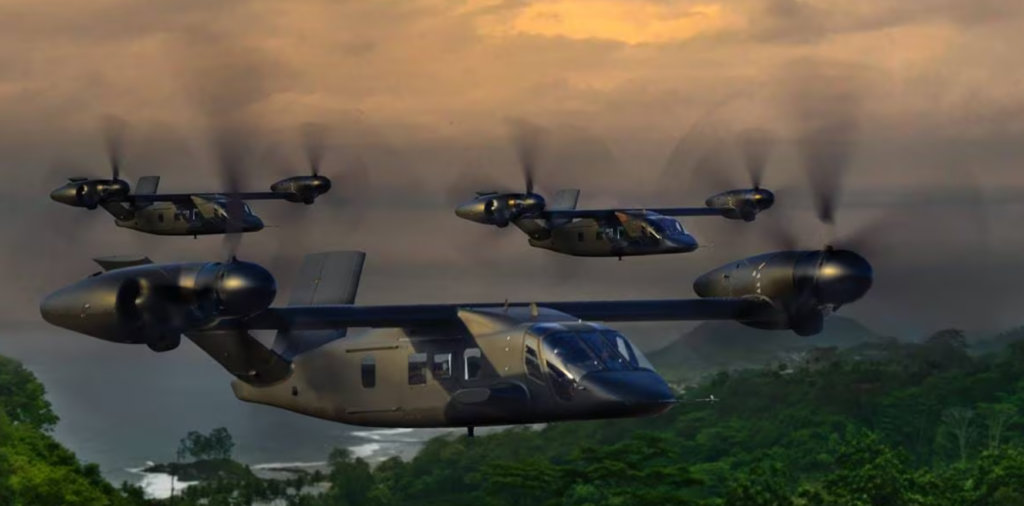
The 101st Airborne Division (Air Assault) has been identified as the first Army division scheduled to field the new aircraft.
The division specialises in moving troops by air and is expected to be among the first formations to develop operational tactics around the MV-75’s greater speed and range.
Why is it called Cheyenne II?
600The Army formally named the aircraft MV-75 Cheyenne II in April 2026, continuing its tradition of naming helicopters after Native American tribes.
The name honours the Northern Cheyenne Tribe in Montana and the Cheyenne and Arapaho Tribes in Oklahoma.
The number 75 refers to 1775, the year the US Army was established.
The Cheyenne II designation also recalls the Lockheed AH-56 Cheyenne, an advanced attack helicopter developed for the Army during the 1960s.
That earlier programme was cancelled before the aircraft entered operational service.
“In naming the MV-75 Cheyenne II, we honour the enduring contributions of the Cheyenne people to our Nation – both their distinguished service in uniform and their legacy as steadfast protectors of their way of life,” said Colonel Jeffrey Poquette, the Army’s FLRAA project manager, when the name was announced.
“The name also reflects a connection to the bold vision of the AH-56 Cheyenne, while ‘II’ signifies a new era of innovation and capability.”
A different approach to Army aviation
Beyond its flight performance, the MV-75 is being designed with a modular electronic architecture intended to make future upgrades easier.
Bell says the MV-75’s open-system architecture will allow new equipment and capabilities to be integrated without extensive redesign of the aircraft.
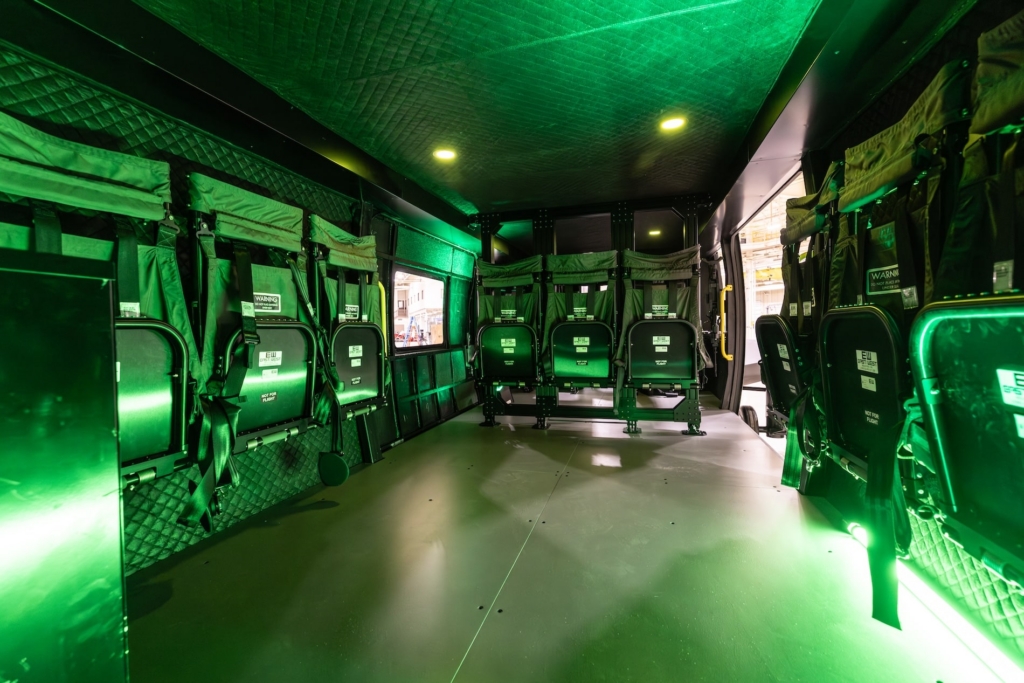
The Army also expects the platform to undertake medical evacuation, tactical resupply and humanitarian assistance missions in addition to transporting assault troops.
Its ability to operate over longer distances could be particularly useful in regions where military units are dispersed across islands, remote terrain or areas with limited infrastructure.
Sign up for our newsletter and get our latest content in your inbox.




More from

November 20, 20263 min read