US Army names next-generation MV-75 tiltrotor Cheyenne II as Bell pushes towards first delivery

6 min read
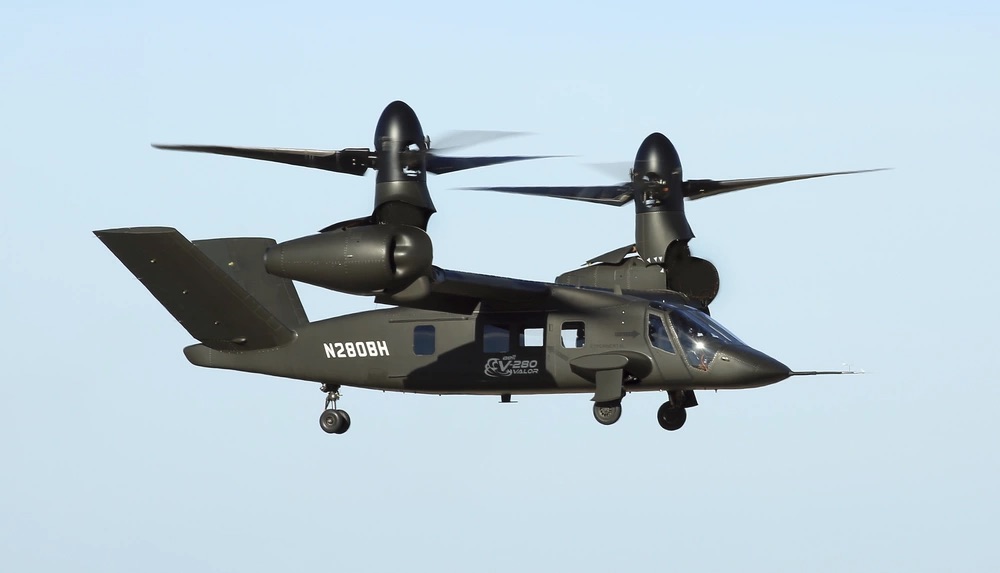
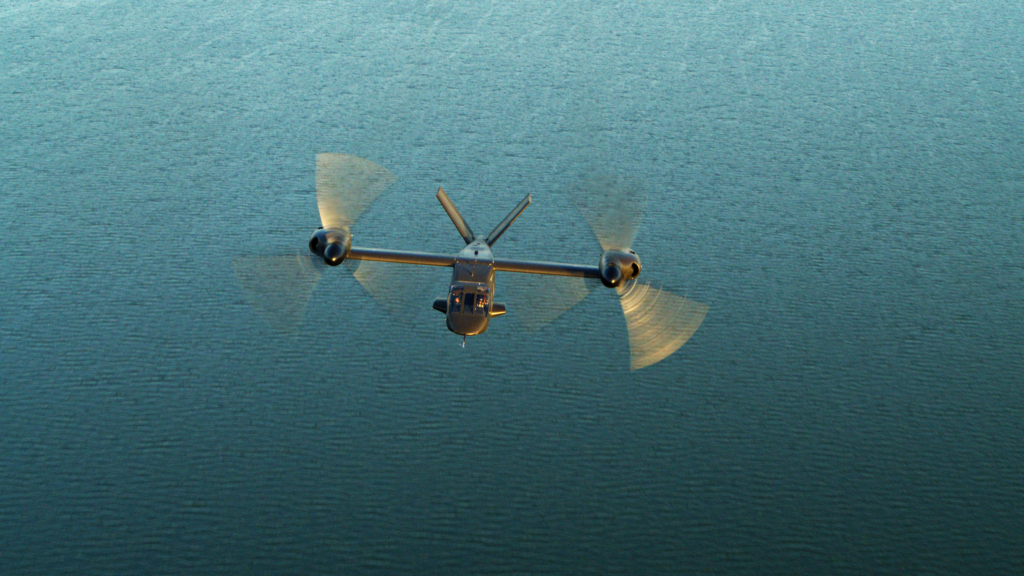
The US Army has formally named its next-generation Future Long Range Assault Aircraft the MV-75 Cheyenne II, giving its future Black Hawk successor both an operational identity and a symbolic link to the service’s long-standing tradition of naming frontline rotorcraft after Native American tribes.
But beyond the name, the announcement is the clearest sign yet that one of the Army’s most important aviation modernisation programmes is moving steadily from concept into hardware.
Bell Textron announced that the Army had selected Cheyenne II as the aircraft’s official common name, honouring the Northern Cheyenne Tribe in Montana and the Cheyenne and Arapaho Tribes in Oklahoma.
The naming also deliberately echoes the AH-56 Cheyenne, the Lockheed Martin-made first attack helicopter for the Army in the late 1960s, which provided armed escort for transport helicopters such as the Bell UH-1 Iroquois.
For the Army, however, the bigger story is not heritage but timing. The naming comes as Bell and the service accelerate assembly of the first test aircraft, with the programme still aiming for initial operational fielding in 2031.
MV-75 Cheyenne II naming marks next phase for US Army FLRAA programme
The MV-75 is the centrepiece of the Army’s Future Long Range Assault Aircraft (FLRAA) programme, which was launched to replace a significant portion of the ageing UH-60 Black Hawk fleet and give commanders a platform better suited to the distances and threat environments expected in future conflicts.
Formerly designated as Bell’s V-280 Valor, the tiltrotor was selected in December 2022 after a closely watched competition, beating Sikorsky and Boeing’s Defiant X proposal.
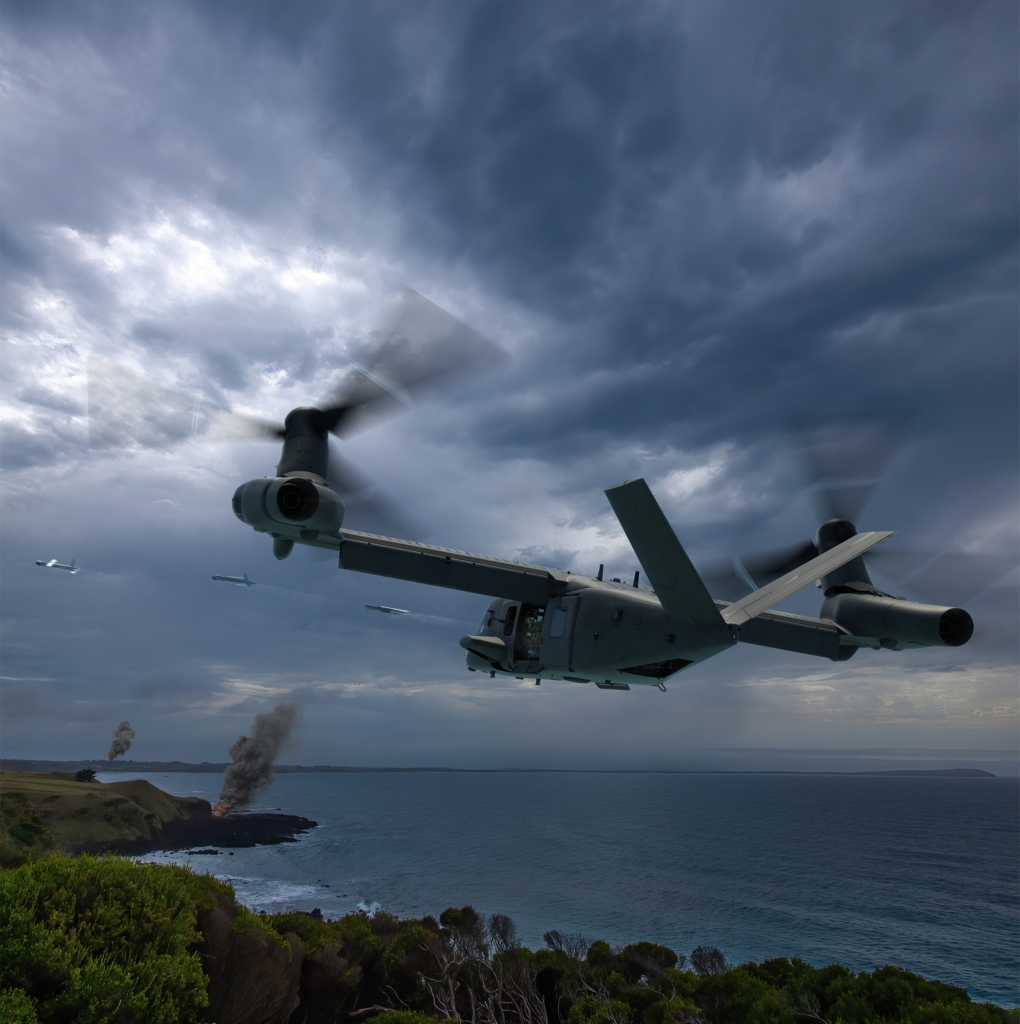
Since then, the programme has moved through design maturation and into early integration work, with the first prototype aircraft designated YMV-75A due to support testing later this decade.
The Army formally revealed the Mission Design Series MV-75 in 2025. The “MV” stands for multi-mission vertical take-off aircraft, while “75” marks the Army’s founding year of 1775. The new Cheyenne II name now gives the aircraft the kind of identity traditionally associated with major frontline Army aviation platforms.
Colonel Jeffrey Poquette, the Army’s FLRAA project manager, said the name was intended to reflect both history and capability.
“In naming the MV-75 Cheyenne II, we honour the enduring contributions of the Cheyenne people to our Nation, both their distinguished service in uniform and their legacy as steadfast protectors of their way of life,” he said. “The name also reflects a connection to the bold vision of the AH-56 Cheyenne, while ‘II’ signifies a new era of innovation and capability.”
That symbolism matters in Army culture, but it also comes at a practical moment. Naming an aircraft at this stage is often a sign that the programme has moved beyond broad concept work and into a more concrete delivery path.
Why the US Army needs the MV-75 to replace the Black Hawk
At the heart of FLRAA is a simple operational problem: the Army believes its current helicopter fleet can no longer move troops fast enough or far enough for the kind of conflicts it expects to face.
That concern is especially acute in theatres such as the Indo-Pacific, where the distances between islands, bases and contested operating areas are far greater than those seen in the Army’s post-9/11 wars.
Army Futures Command chief General James Rainey has previously said FLRAA must be able to fly twice as far and twice as fast as current rotorcraft if the service is to remain effective in the Pacific. The MV-75 has been designed around exactly that requirement.
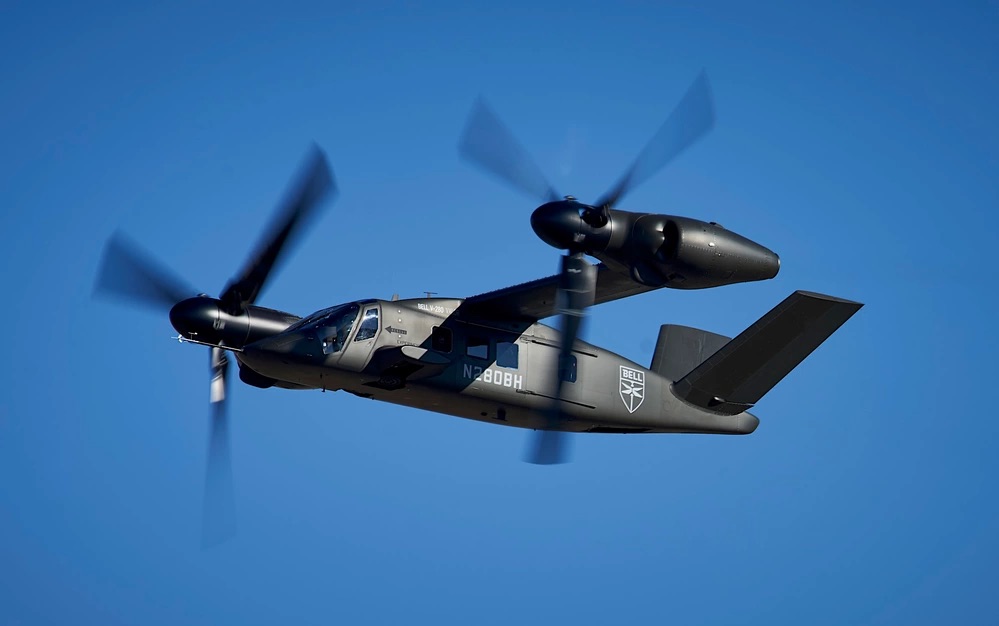
Bell says the aircraft is capable of a cruise speed of around 320mph, compared with roughly 175mph for the UH-60 Black Hawk.
Its ferry range is expected to reach 2,400 miles, compared with about 1,389 miles for the Black Hawk, while combat range is projected at between 580 and 920 miles depending on mission profile.
That extra reach is not simply about speed for its own sake. It is about allowing troops, special forces and support units to move over far greater operational distances while reducing exposure to enemy air defences and missile threats.
Unlike conventional helicopters, the MV-75 uses tiltrotor technology, allowing it to take off and land vertically like a helicopter before rotating its nacelles forward to fly like a turboprop aircraft in cruise.
That gives it a combination of vertical lift flexibility and fixed-wing speed that the Army sees as central to future air assault operations.
How Bell’s V-280 design shapes the MV-75 Cheyenne II
The MV-75’s design is rooted in Bell’s V-280 Valor demonstrator, which was developed specifically to prove that tiltrotor technology could be adapted into a more practical and maintainable assault aircraft than earlier designs such as the V-22 Osprey.
Bell says flight testing of the V-280 validated the aircraft’s high-speed agility, long-range performance and handling in complex manoeuvres, giving the Army confidence that the platform could meet its core requirements. One of the programme’s defining features is its emphasis on adaptability.
The MV-75 has been built around a Modular Open Systems Approach (MOSA), with an open-architecture digital backbone designed to make upgrades quicker and less disruptive over the aircraft’s service life.
That should allow faster integration of new mission systems, sensors, communications equipment and software as battlefield requirements evolve.

The Army sees this as essential because FLRAA is not intended as a short-term replacement for the Black Hawk. It is being designed as the core assault platform for decades to come.
Bell has also said the aircraft has been designed to work with existing Army ground support equipment and sustainment data systems, an effort intended to reduce training demands and lower long-term operating costs.
That focus on sustainment is particularly important given the Army’s history of costly and troubled aviation programmes.
Bell ramps production as MV-75 Cheyenne II moves towards delivery
The Cheyenne II announcement also comes at a time when Bell is increasingly shifting from development narrative to industrial execution.
Last week, Collins Aerospace was selected to provide five critical systems for the aircraft, including the main power generation system, interconnect drive system, SmartProbe air data system, cockpit seating and ice protection system.
Those are core elements that will shape reliability, mission availability and safety in demanding conditions.
Work on those systems will be spread across multiple US states, underlining how the programme’s industrial footprint is now widening as Bell moves closer to first aircraft delivery.
Ryan Ehinger, Bell’s senior vice president and FLRAA programme director, said the naming reflected both heritage and programme momentum.
“Bell is proud that the MV-75 carries the name of the Cheyenne Tribes as we revolutionise Army Aviation,” he said. “This is a significant milestone that comes right as we are accelerating assembly and production to deliver the MV-75 capability to warfighters faster.”
For now, the MV-75 Cheyenne II remains in the critical phase between promise and proof. Limited user tests are planned for 2027 and 2028, with the Army still targeting first service entry in 2031.
Congress has already appropriated $1.26 billion for research, development, test and evaluation in fiscal year 2026, underlining the scale of the Army’s commitment.
Featured image: Bell Textron
Sign up for our newsletter and get our latest content in your inbox.


More from


October 17, 20264 min read