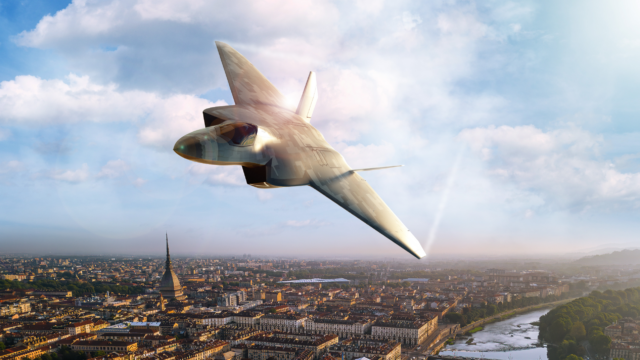
China’s J-36 tailless stealth fighter: What we know so far

5 min read
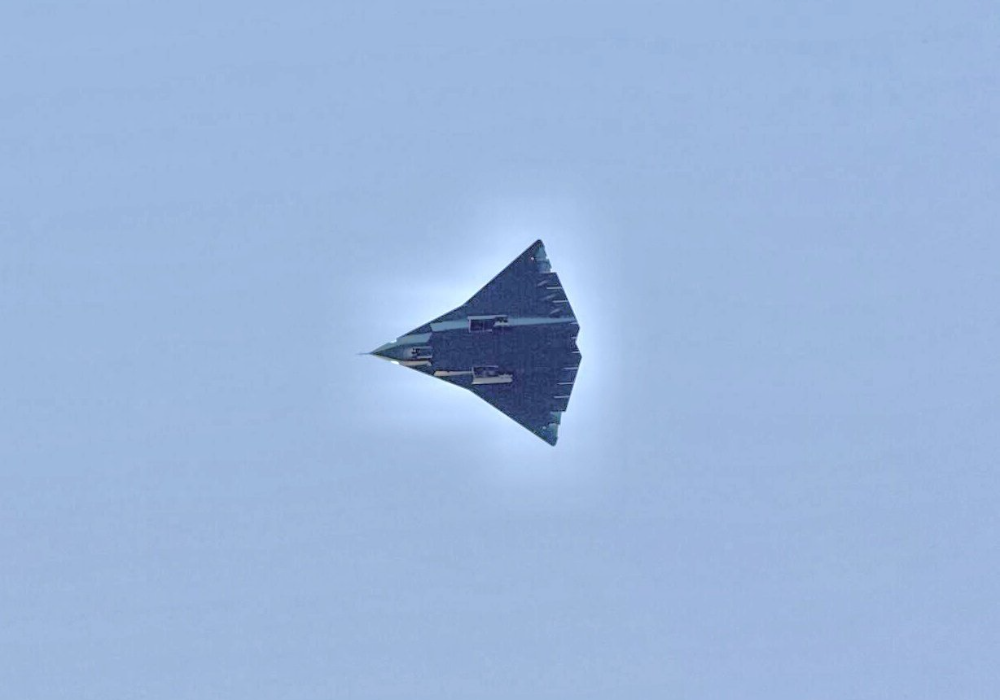
China’s large delta-diamond-winged tailless next-generation stealth fighter, popularly called the J-36 in the media, first flew in public in 2024. Since then, a second and third prototype emerged in late 2025, showing a significant amount of changes to the design.
So far in 2026, little or no new news has emerged about the J-36. Here is a brief introduction to what is known about the new aircraft and what its intended missions likely are.
Development timeline of the J-36
It should be noted that it is unclear at what stage of development the flying J-36’s were. Talk that China has flown a 6th-generation fighter before the US is problematic for a couple of reasons.

One issue is that the aircraft flown could be anything from a technology demonstrator to a precursor to an experimental design. While the first representative F-47 is not expected to fly before 2028, the F-47’s demonstrator forerunner first flew in 2020.
If the 2024 and 2025 J-36s were the first demonstrators and if they were to follow a similar timeline as the F-47, then a representative example may not be flying until 2032. The US projects operational examples of the aircraft will enter service in the mid-2030s.
Perhaps more telling is Japan, whose frontline fighter jets are F-15 derivatives and new F-35s. Japan feels like it needs the next-generation Tempest/GCAP fighter jet to counter China by 2035. Japan is known to be opposed to the UK and Italy delaying the programme.
🇨🇳 China’s military has unveiled its sixth-generation fighter jet, the J-36, for the first time. The aircraft flew in formation with the fifth-generation J-20. pic.twitter.com/sbxzxQ7LG1
— Visegrád 24 (@visegrad24) October 31, 2025
While China has proven it can develop military aircraft quickly, the delays in its Xi’an H-20 stealth bomber show that it is not immune to complex designs hampering the development schedule.
Get the latest aerospace defence news here on AGN.
Notable characteristics of the J-36
What is publicly known about the tailless J-36 is partially limited to some, often grainy, images of the aircraft. It is large with an MTOW potentially 50-55+ tons (more on that below).
J-36 approach and a look at top intake/inlet and cockpit
— Hûrin (@Hurin92) March 26, 2025
Should be side by side https://t.co/dWfRYLytom pic.twitter.com/KmE5l23gk2
It also features three engines, has thrust vectoring on later prototypes (similar to the F-22), is believed to be capable of supercruise, and lacks the canards of the J-20.
It remains unclear why the J-36 is designed with three engines. It’s possible the decision is a pragmatic one, as Chinese engines are known to still be playing catch-up with their US and European counterparts.
Chinese engines are improving, and the country is progressively cutting its reliance on Russian engines. Chinese engines on its J-15s had improved enough to be used in carrier operations for the first time in 2024.
The J-36’s robust tandem two-wheeled main landing gear speaks to how heavy the aircraft is. Like other emerging next-generation designs, it appears optimised for speed, stealth, and efficiency more than raw manoeuvrability.

Its exhausts are recessed from the trailing edge on top of the aircraft, which is likely intended to reduce its infrared signature. The War Zone notes its exhaust layout is similar to the YF-23 prototype that lost to the YF-22.
What we don’t know about the J-36
It should be stressed that little is known about the inner workings of the three-engined aircraft. Without looking inside the cockpit, it is impossible to assess what its situational awareness is, its level of next working, its sensor fusion, etc.
In 2024, Rusi’s Justin Bronk spoke of various 5th-generation-looking fighter jets being developed around the world, like the Su-57, Su-75, KF-21, Kaan, and J-35.
Bronk noted, “It’s comparatively easy to produce something that looks like a stealth fighter-ish thing, that will fly. It is incredibly difficult and unbelievably expensive to sustain the production of a weapons system that works as a low observable fighter…”
He added that what makes a mature 5th-gen fighter is “the things you don’t see when you look at a plane.” Put another way, the external appearance of a fighter jet is not the same as combat effectiveness.

Another important aspect is that the category of fighter jet generations is more of a marketing term than a strict description and prescription of real-world aircraft.
How does the J-36 function inside the cockpit, and to what degree would it meet the USAF’s working definition of a 6th-generation aircraft? Frustratingly, we can only say that we don’t know.
Intended role of the J-36
While much of what makes a 6th-gen aircraft 6th-gen is the computers and sensors, how it flies, its payload, and its range are different.
J-36 #2 from today's flight
— Hûrin (@Hurin92) November 20, 2025
The one with DSI and angular 2D TVC nozzles https://t.co/JGdqPMPzbr pic.twitter.com/Jtg39qlkwl
All aircraft, including Chinese ones, are subject to the same laws of physics, and so more can be gleaned about their intended missions. It may have the range to put US bases in the Pacific at risk.
Its size suggests it is intended to sit between a heavy fighter and China’s upcoming Xi’an H-20 strategic bomber. It is also likely able to operate at high altitudes (perhaps 60,000 feet).
Being large means it can carry more fuel and so boast an impressive combat radius. This is important for China as it lacks overseas airbases that the US does; it only has a small tanker fleet, and its navy is likely some way from competing directly with the US Navy and its allies.
Writing for Rusi, Bronks says, “The J-36 in particular will probably have an extremely impressive range on internal fuel and a huge internal weapons bay…”
He argues it can be deduced that the PLAAF has a requirement for an aircraft to conduct counter-air or offensive counter-air sweeps across the massive distances of the Indo-Pacific.
This would make it even more difficult for US enablers like tankers and AWACS, and may have been a contributing reason for the USAF to want to cancel the E-7 Wedgetail.
Featured Image: Chinese Media
Sign up for our newsletter and get our latest content in your inbox.


More from

October 17, 20265 min read


October 17, 20264 min read