Poland plans armed M28 Skytruck fleet to counter Shahed-style drones

6 min read
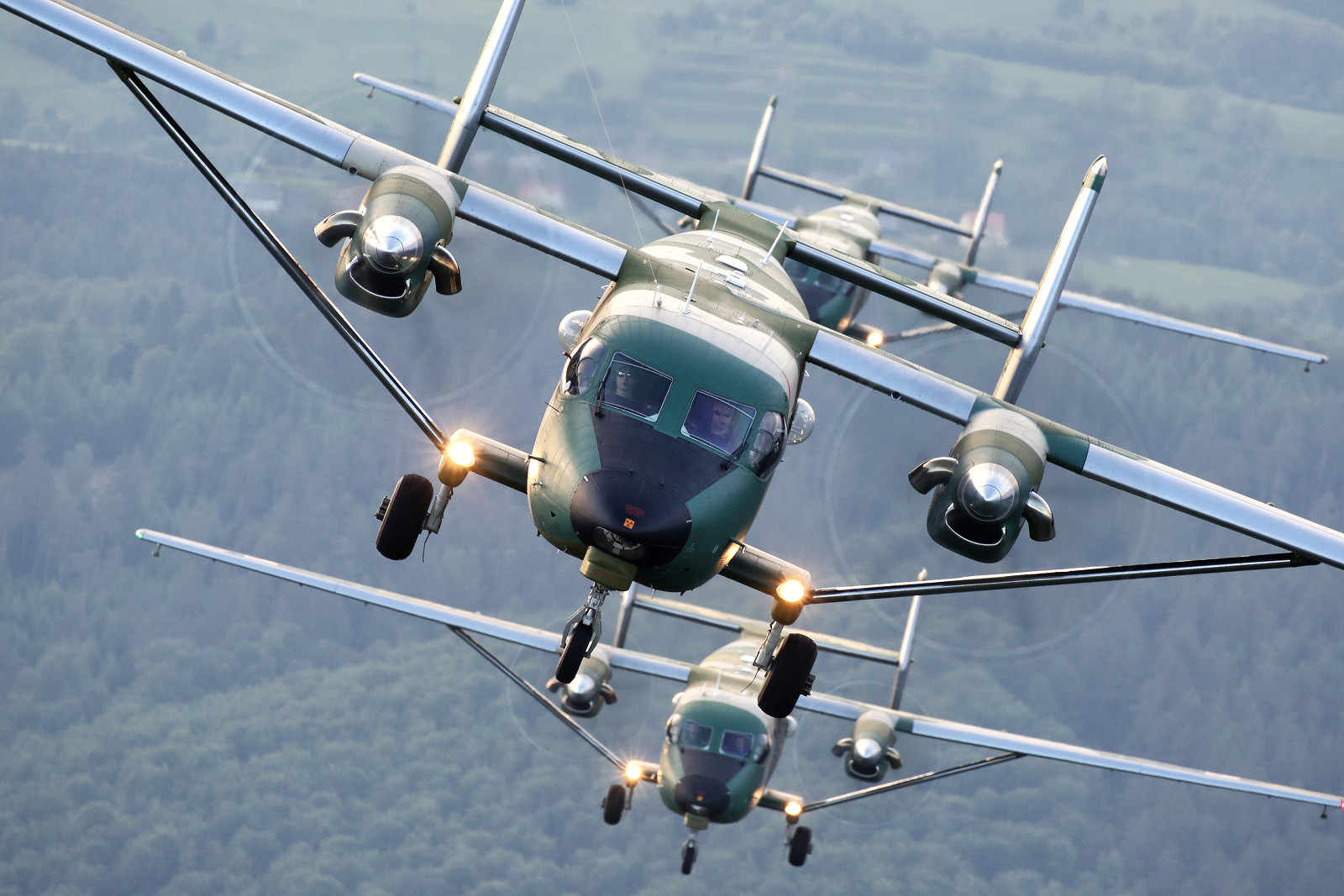
Poland is moving to transform one of its most familiar utility aircraft into a dedicated counter-drone platform, reflecting how rapidly the war in Ukraine is reshaping military aviation thinking across Europe.
The Polish Air Force has confirmed work is underway to arm the PZL M28 Skytruck for anti-drone missions, with the first prototype expected to undergo modification once a contract is signed between the Armed Forces Support Inspectorate and manufacturer PZL Mielec.
The development was first reported by Polish defence outlet Defence24 following comments made by Major General Ireneusz Nowak during the Defence24 Days conference in Warsaw.
“Following the signing of the contract between the Armed Forces Support Inspectorate and the contractor, the first prototype of the armed [M28] will undergo modifications to equip the aircraft with gun armament,” Nowak said.
The idea may sound unconventional at first glance. The M28 is a rugged twin-turboprop transport aircraft better known for cargo runs, maritime patrol work and operations from rough airstrips than for aerial combat.
Yet the aircraft is increasingly being seen as a practical and cost-effective answer to one of modern warfare’s most persistent problems: how to stop large numbers of cheap attack drones without exhausting expensive missiles and fighter aircraft.
Why Poland wants the M28 Skytruck to become a dedicated drone interceptor aircraft
The shift comes directly from lessons emerging out of Ukraine.
Ukrainian crews operating the Antonov An-28, the Soviet-era predecessor of the M28, have reportedly achieved notable success hunting Russian Shahed and Geran one-way attack drones.
Those aircraft were initially armed with door-mounted M134 Miniguns before evolving into more specialised airborne interceptors capable of launching interceptor drones as well.
According to reports referenced by multiple defence outlets, Ukrainian crews have claimed more than 150 confirmed drone kills using the concept. For Poland, the appeal is obvious.
Shahed-type drones fly comparatively slowly and at relatively low altitudes. Sending advanced fighters armed with costly air-to-air missiles after them is effective, but financially unsustainable during large-scale attacks. Ground-based missile systems face the same problem.
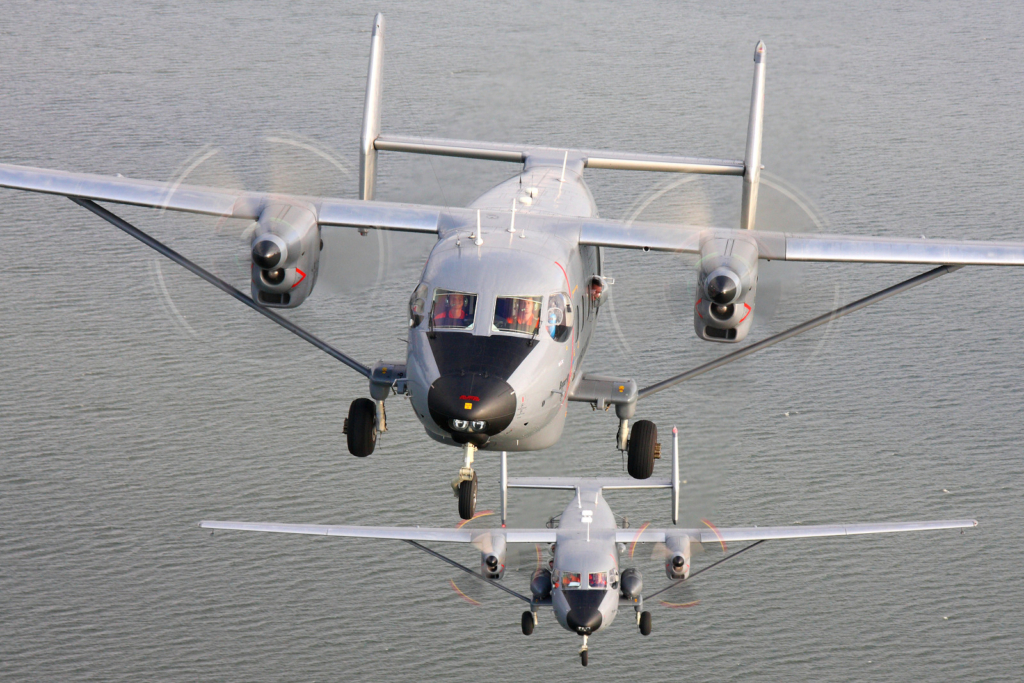
A slower turboprop aircraft carrying machine guns, rockets or low-cost interceptor drones offers a far cheaper way of dealing with the threat.
The concept also provides deeper magazines and longer patrol times than many conventional air defence systems.
The M28 Skytruck’s unusual design may make it ideal for counter-drone missions
The M28 was never designed as a combat aircraft, but several of its characteristics suit the drone-hunting role surprisingly well.
Produced by PZL Mielec, the aircraft is a short take-off and landing platform capable of operating from rough and unprepared strips. It can carry loads of more than two tonnes while operating from airstrips just 548 metres long.
That gives the aircraft considerable flexibility during dispersed operations. The high-wing configuration also creates clean firing arcs for door-mounted weapons. In the Ukrainian An-28 configuration, crews have used pintle-mounted M134 Miniguns firing between 3,000 and 6,000 rounds per minute.
A civilian plane. A minigun. And one less Shahed in the sky.
— Meanwhile in Ukraine (@MeanwhileInUA) February 26, 2026
Ukraine intercepted a Russian Shahed drone using a minigun mounted on a modified An-28 civilian aircraft — turning an everyday airframe into a flying air-defense platform.
This is what adaptation looks like when… pic.twitter.com/AidWaUwrUQ
The aircraft’s relatively low operating speed is another advantage. Unlike fast jets, which can struggle to track small drones flying at modest speeds, the M28 can patrol more comfortably within the same flight envelope as its intended targets.
Its spacious cabin also provides room for additional mission systems, sensors and operators.
PZL Mielec already markets the aircraft as a multi-mission platform capable of transport, reconnaissance, maritime patrol and paradrop operations.
The aircraft can also operate using night vision goggles and tactical navigation systems, features that could prove valuable during nighttime drone interception missions.
What weapons could Poland arm the M28 Skytruck with?
Poland has yet to disclose the final weapons configuration for its drone-hunting M28 fleet.
However, several possibilities have already emerged.
Reports indicate that proposed armed configurations include door-mounted 7.62mm M134 Miniguns, heavier 12.7mm machine guns, underwing 70mm rocket pods and even 20mm cannon installations mounted near the landing gear nacelles.
The aircraft may also eventually carry airborne interceptor drones similar to those already deployed from Ukrainian An-28 aircraft.

Another possible option is the Advanced Precision Kill Weapon System (APKWS), the laser-guided 70mm rocket increasingly used in counter-drone roles worldwide.
Major General Nowak confirmed that APKWS rockets are being integrated onto Polish F-16 fighters and FA-50 light combat aircraft. Defence analysts believe the same weapon could eventually find its way onto the M28 platform as well.
The aircraft could also carry electronic warfare systems, jammers and infrared search sensors.
Ukrainian crews reportedly use externally mounted infrared cameras alongside night-vision goggles to locate and track incoming drones at night.
Poland’s counter-drone strategy goes beyond the M28
The M28 programme is only one part of a much broader Polish response to the growing drone threat along NATO’s eastern flank.
Warsaw has become increasingly concerned about drone incursions and mass attacks after multiple incidents linked to Russia and the war in Ukraine.
In one incident last year, around 20 military drones reportedly entered Polish airspace, triggering responses from both Polish and NATO aircraft.
Poland is now building a layered counter-drone architecture that combines airborne interception, missile defence, sensors and future directed-energy systems.

The country plans to field new air defence capabilities under its Narew and Wisła programmes by 2032.
It has also acquired Saab 340 airborne early warning aircraft and is pursuing an aerostat-based surveillance system designed specifically to detect low-flying drones and helicopters.
Rotary-wing aircraft will also play a role. Poland expects its future AH-64E Apache Guardian attack helicopters and AW149 combat support helicopters to participate in counter-drone operations.
The AW149 is already being adapted to carry laser-guided 70mm rockets and guns for that mission set.
Why NATO air forces are paying closer attention to low-cost airborne drone killers
The emergence of armed utility aircraft as drone hunters highlights a broader change underway in military aviation.
For decades, air superiority focused primarily on defeating enemy fighters and suppressing advanced air defence systems. Ukraine has altered that equation. Small drones, loitering munitions and mass one-way attack UAVs are now forcing militaries to rethink how they defend airspace on a daily basis.
That is driving interest in lower-cost intercept solutions.

A turboprop aircraft armed with machine guns may appear unsophisticated compared with fifth-generation fighters or modern missile systems. Yet against slow-flying drones costing tens of thousands of pounds rather than millions, it can make tactical and financial sense.
The concept is not entirely new. The United States Air Force Special Operations Command previously explored using an M28 derivative as a lightweight side-firing gunship armed with GAU-18 machine guns.
What is different now is the urgency behind the requirement. Poland’s plans also show how NATO air forces are increasingly willing to adapt existing aircraft rather than waiting years for purpose-built solutions.
If the prototype programme succeeds, the M28 could evolve from a modest transport aircraft into one of the alliance’s most unusual counter-drone platforms, and perhaps one of its most practical too.
Featured image: PZL
Sign up for our newsletter and get our latest content in your inbox.


More from


October 17, 20265 min read


October 17, 20264 min read