


Rolls-Royce backs hydrogen combustion for large aircraft, but the market must catch up

7 min read
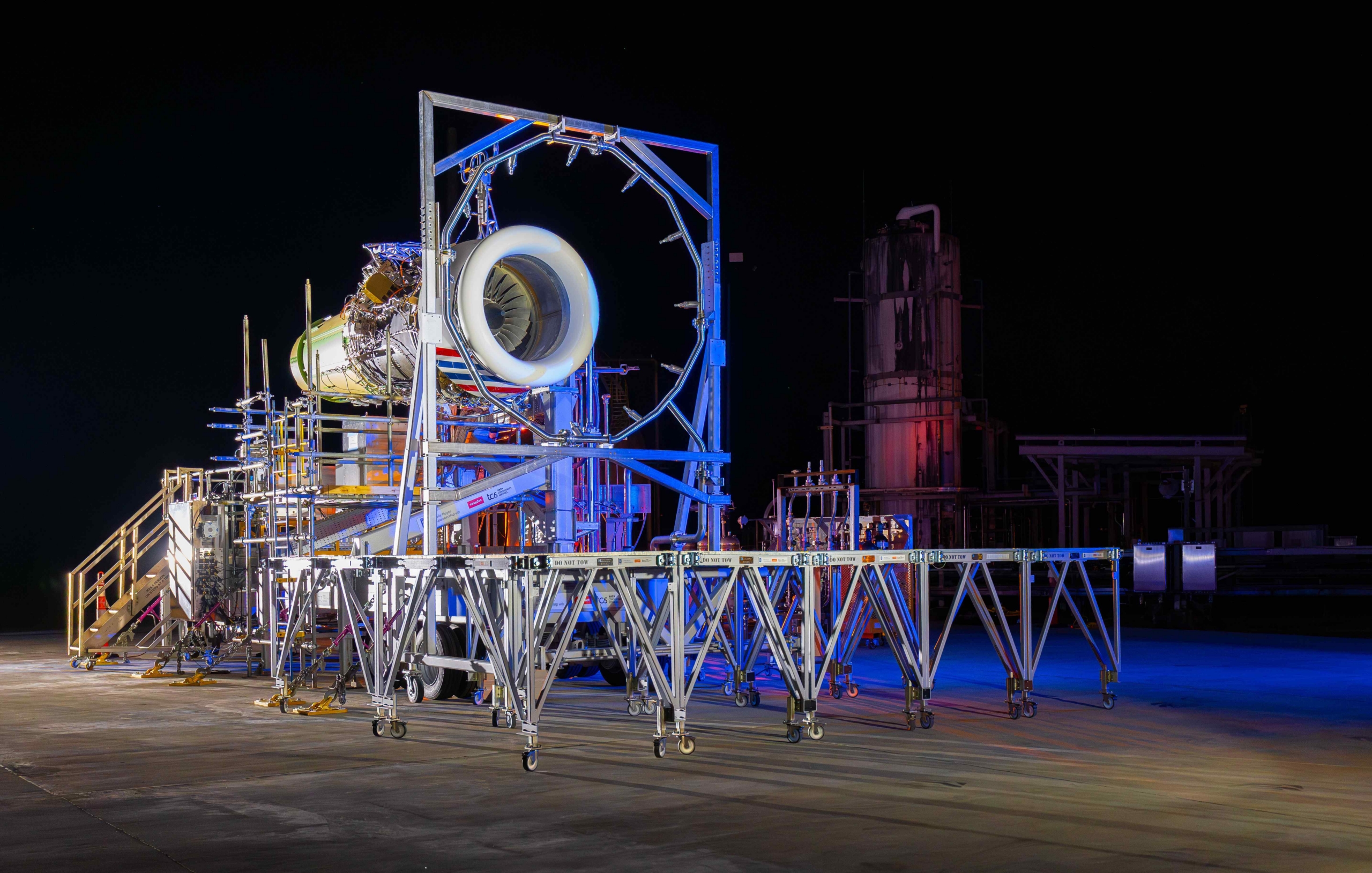
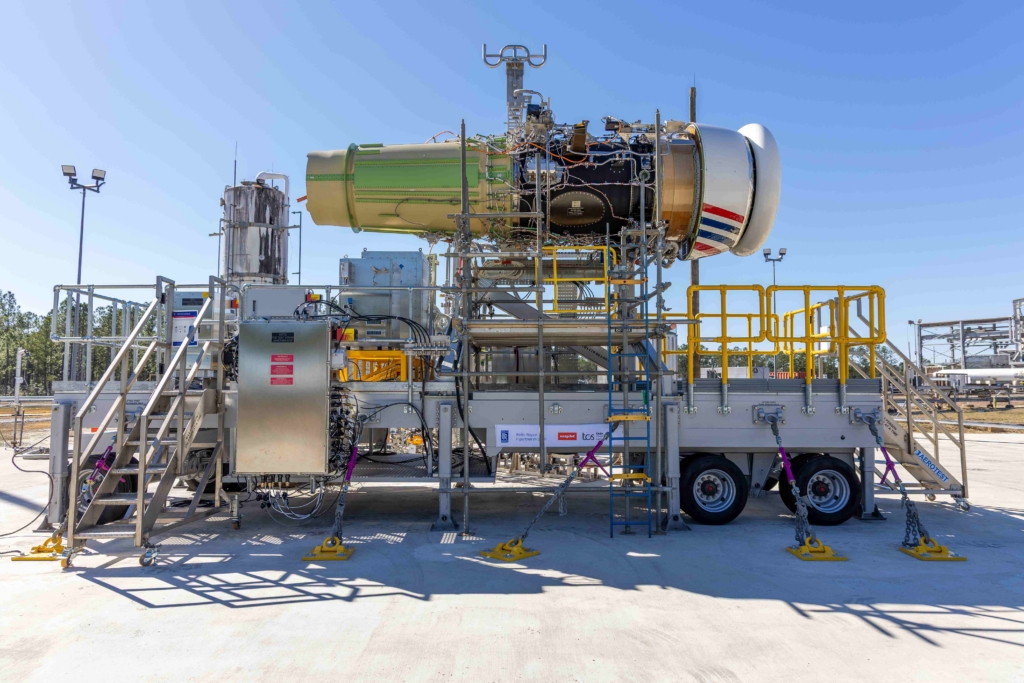
Last month, Rolls-Royce and easyJet completed a full hydrogen-powered flight cycle on a Pearl 15 engine at NASA’s Stennis Space Center.
Beyond showing that a modern jet engine could run safely on hydrogen in a ground-test environment, the campaign helped prove that a hydrogen-powered gas turbine could still behave like a normal aero engine.
On the ground at NASA was Adam Newman, Chief Engineer for the Hydrogen Demonstrator Programme at Rolls-Royce. Speaking exclusively to AGN, he described the campaign as an “amazing experience” and the “highlight” of his career.
“The flight cycle was a real statement piece,” Newman said. “We wanted to show that we could run an aero gas turbine like an aero gas turbine. In the full flight cycle, we could do the operability, the accelerations, decelerations… That was really key.”
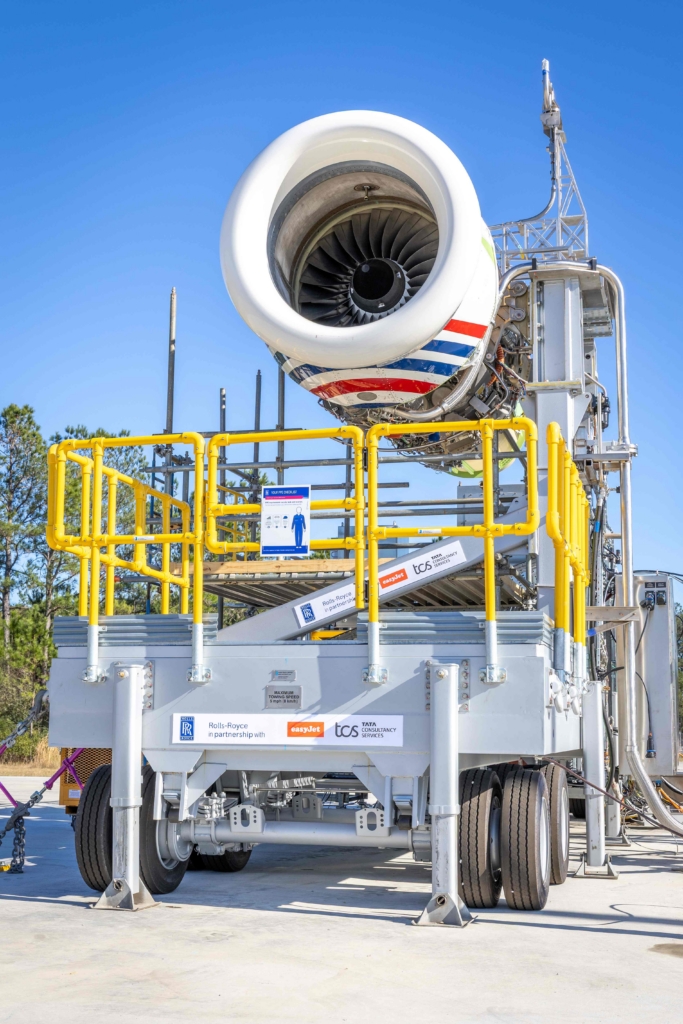
The test marked a leap from Rolls-Royce’s first hydrogen engine run in 2022, using an AE2100 engine.
“That was largely to idle and to show some of those real fundamental basics,” Newman said. “This was to show the progression in a short period of time.”
The more significant question now is what the test says about the future of hydrogen propulsion, and why Rolls-Royce is pursuing hydrogen combustion rather than the fuel-cell route being explored elsewhere in the industry.
Why Rolls-Royce sees hydrogen combustion as the solution for large aircraft
Hydrogen fuel cells have attracted significant attention in aerospace. These use hydrogen to generate an electric charge, which is then used to power propellers or motors for aircraft.
But the modest power output of these technologies, for now, means they’re limited to smaller aircraft. Rolls-Royce, for many years, has been a major powerhouse behind some of the largest aircraft on the planet, and was considering markets beyond regional propeller aircraft.
“The reason we are looking at gas turbines combusting hydrogen rather than fuel cells is the size of aircraft we’re looking to power,” Newman said. “The inconvenient truth, I guess, for the fuel cell manufacturers, is that the gas turbine is unbeatable in terms of power density.”
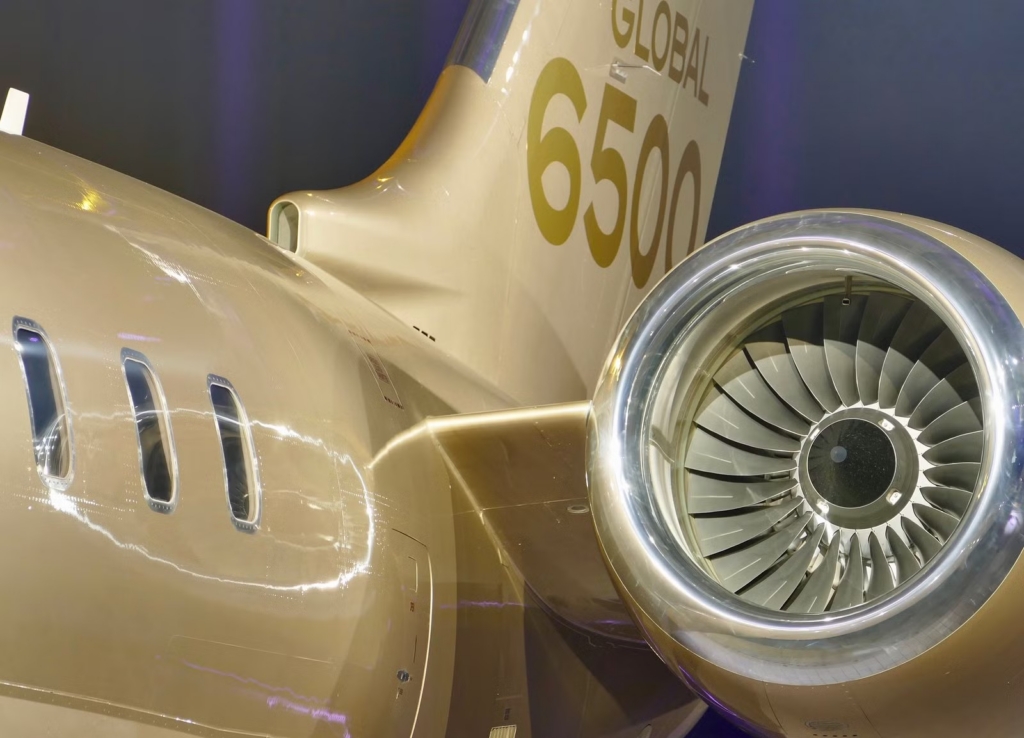
Rolls-Royce’s Pearl 15 is one of the company’s smaller gas turbines, powering aircraft such as the Bombardier Global 5500 and Global 6500 business jets. Yet even that engine produces more than 10MW of equivalent power.
By comparison, he said, fuel-cell systems are typically much smaller.
“You look at some of the fuel cells that are publicly available at the moment, and they’re maybe one to two megawatts,” Newman noted. “So perhaps a tenth of the size of the gas turbine that we ran.”
It’s not that Rolls-Royce doesn’t see a future for fuel cell technology in aviation, just that it’s not the right solution for the markets where Rolls-Royce plays hard – large passenger aircraft.
“We power business jets, but they’re quite a small part of our market,” Newman explained. “Really, it’s narrowbody all the way up to widebody. That’s where engines start to become in the 30,000 lb to 100,000 lb thrust range. That’s typically where Rolls-Royce sets itself out to major in the civil aero market.”
For aircraft of this scale, power density becomes a priority. Batteries are too heavy for larger commercial aircraft. Fuel cells have a role, but scaling them to high-thrust commercial aviation remains difficult. Gas turbines, for all their complexity, already provide the thrust levels aviation needs.
The engine might not be the hardest part of hydrogen aviation
Although the Stennis campaign demonstrated a major propulsion milestone, Newman is clear that hydrogen aviation remains a much bigger challenge than the engine alone.
“There are big pockets of challenge,” he said. “It’s a whole ecosystem challenge.” Even so, Rolls-Royce wanted to tackle the powerplant problem first.
“We really wanted to set our stall on the powerplant and address some of those fundamental powerplant challenges,” Newman said. “Particularly myth-busting some of the things around non-CO2 effects. There are a lot of people who say hydrogen combustion will never work because of X, Y, Z, and we’ve gone off to try and prove some of those things as untrue, or quantify them much more accurately so we can have a better-informed conversation.”
Beyond the engine, the bigger questions are aircraft integration, fuel storage and infrastructure. At aircraft level, storing the fuel could require large tanks, with future aircraft likely to use liquid hydrogen stored at cryogenic temperatures for at least part of the fuel system.
“There are real challenges around storage,” Newman said. “There are a number of projects looking at how you can store hydrogen on an aircraft at what we call a gravimetrically efficient level: how much is the weight of the fuel system versus the weight of the fuel. That’s a challenge.”
Then comes the airport and supply-chain problem. Newman suggested hydrogen aviation may not require every airport in the world to be hydrogen-ready from day one. A more targeted rollout could be possible, particularly in Europe.
“You could choose these hub-and-spoke type models, where you could be a bit more targeted around where you do your initial investment and still have, certainly in Europe, really good coverage.”
What comes next for Rolls-Royce after the Pearl hydrogen test?
For all the optimism around the Stennis test, Rolls-Royce is not presenting hydrogen as an imminent commercial solution.
“Hydrogen is part of the energy mix, but it’s probably going to be the later part, the 2040s into the 2050s,” Newman said. “Things like UltraFan can have a much bigger impact in the nearer term.”
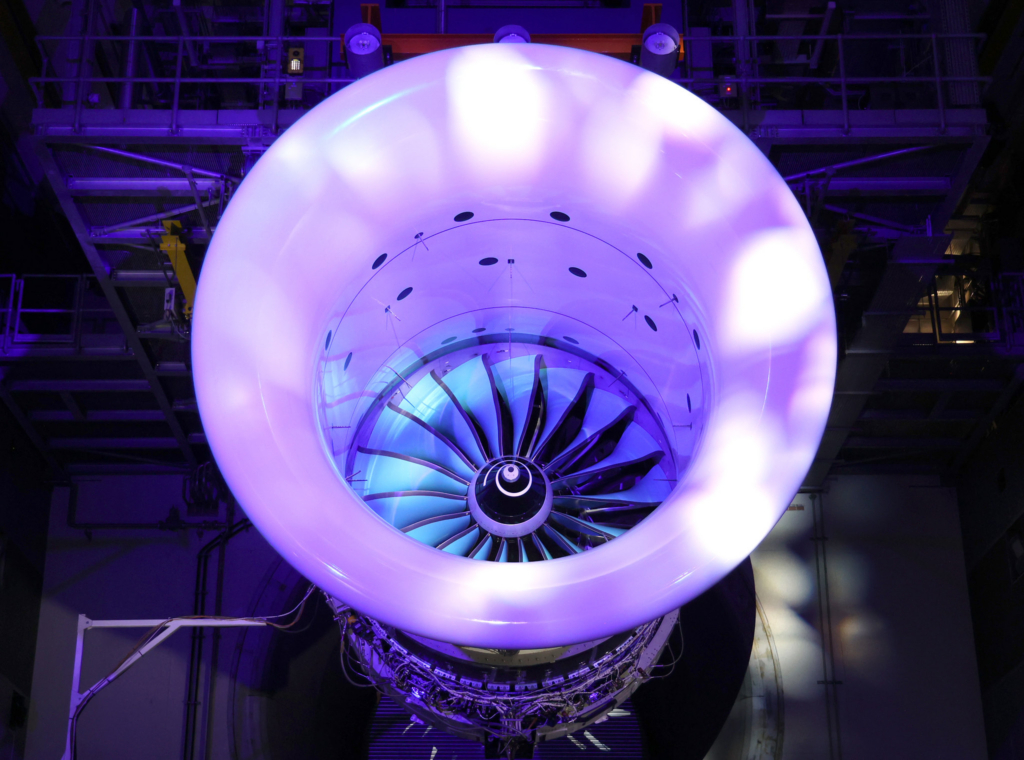
UltraFan and other next-generation gas turbine technologies are being developed with efficiency and sustainable aviation fuel compatibility in mind, rather than specifically as hydrogen engines.
“We’re not looking to design those specifically with hydrogen in mind,” Newman said.
That does not mean Rolls-Royce is stepping away from hydrogen. But after the Pearl 15 demonstrator, the company is moving into data analysis, publication and deeper technology work.
“We’re very much analysing everything we’ve collected,” Newman said. “As you can appreciate, we’ve just collected a huge amount of data.”
Rolls-Royce expects to share more of the findings through technical papers and industry conferences.
One of the next technical areas is cryogenic fuel systems. The Pearl 15 demonstrator used gaseous hydrogen, but a commercial aircraft is likely to require liquid hydrogen for at least part of the onboard fuel system.
“We have an ongoing cryogenic fuel programme, which will look at things like cryogenic liquid hydrogen and really explore some of the challenges around pumps and seals and valves, because they get even harder when you’re down at those cryogenic temperatures.”
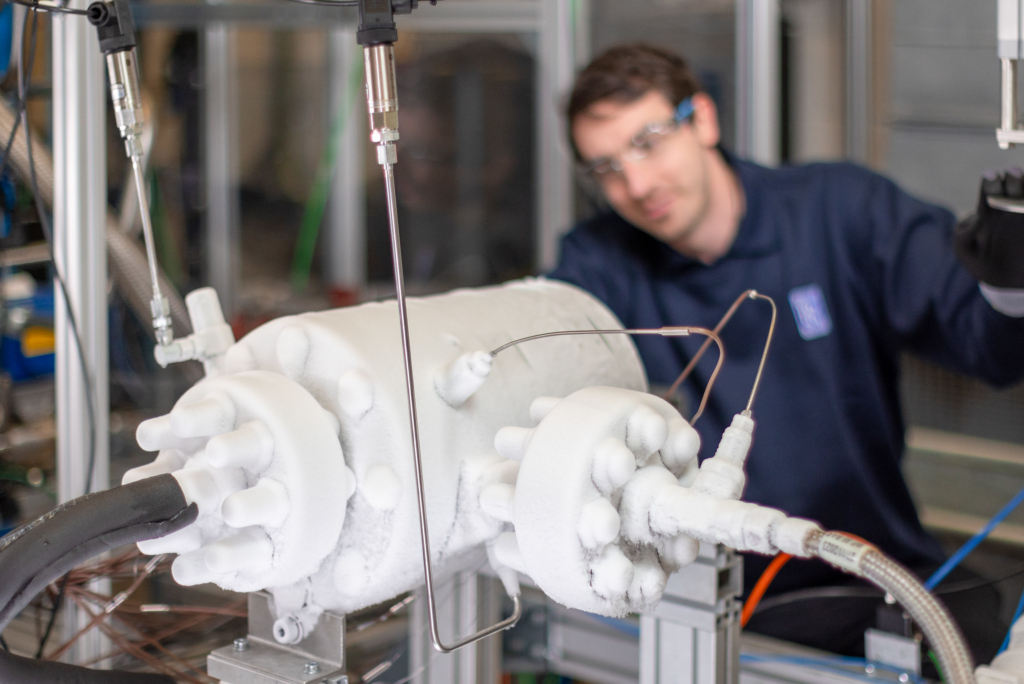
There is no committed date for another Rolls-Royce hydrogen engine run.
“In terms of when we do an engine next, that’s a really hard question to answer,” Newman said. “We have no committed plan for one. We certainly have ideas of things we could do in the future, and potentially future funding calls that we may look to contribute to.”
For now, Rolls-Royce is watching the market as much as the technology.
“We’re very keen to develop technology at the right time for the right products,” Newman added. “There’s no point in developing all this wonderful technology for it just to sit on a shelf gathering dust because there’s no market for it.”
As Newman put it, the work so far remains positive, but the journey to a product is still a long one.
“There’s an awful lot of road to go,” he said. “As incredible as our engineers and the work we’ve done is, from here to a product is still a really hard journey.
“But everything we’ve done so far is positive and continues to show hydrogen as a potential future fuel, and the gas turbine is still probably the preferred propulsion method, regardless of the fuel type.”
Featured image: Rolls-Royce
Sign up for our newsletter and get our latest content in your inbox.



More from


September 21, 20263 min read


