Why is sustainable aviation fuel so scarce and expensive?

11 min read
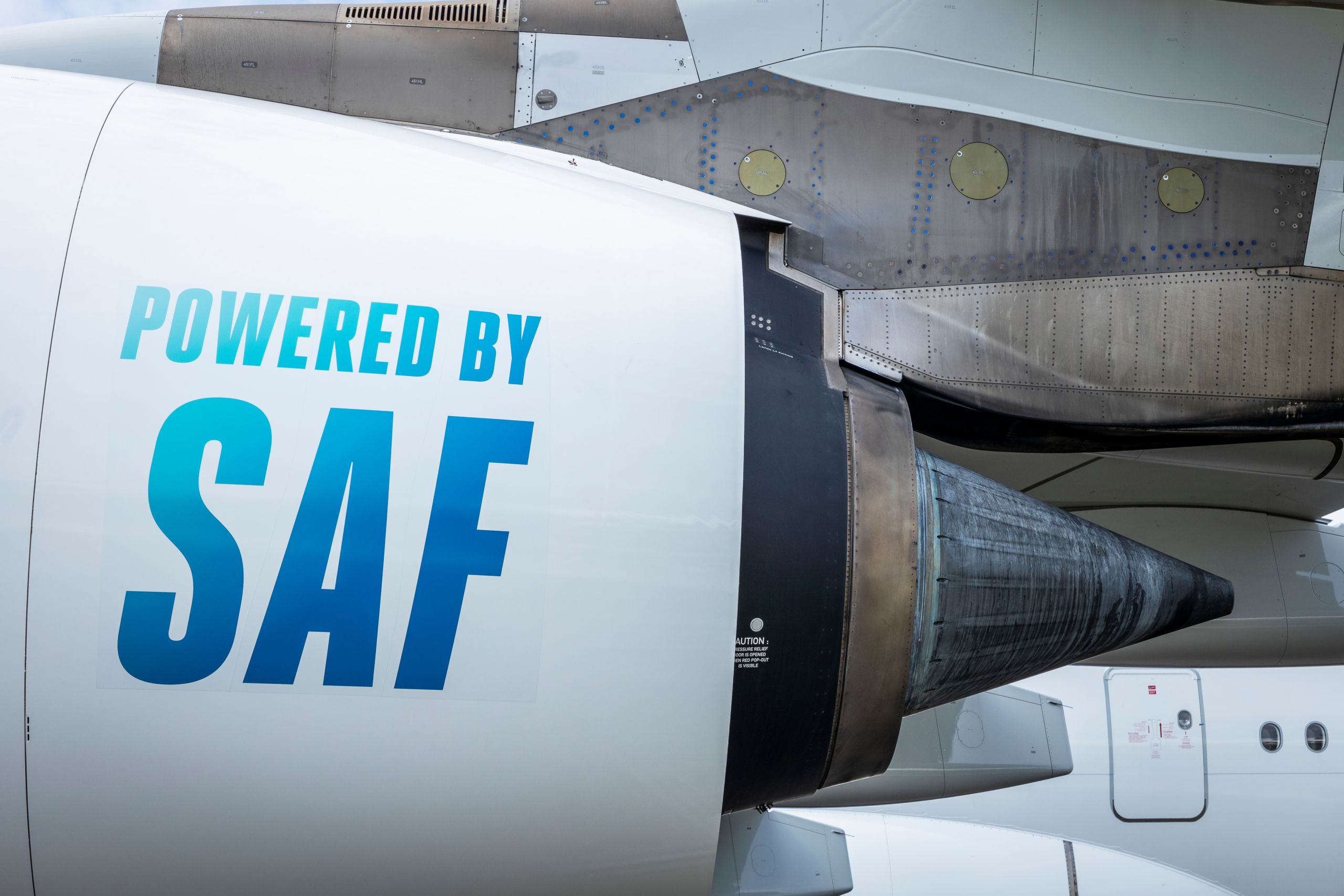
Sustainable aviation fuel (SAF) is considered the most practical way to reduce aviation emissions before new aircraft technologies become commercially viable. It can be used in existing aircraft and distributed through much of the existing fuel infrastructure.
Yet SAF remains exceptionally scarce. Here’s why.
SAF production covers only 0.8% of global jet fuel supply
The International Air Transport Association (IATA) expects global SAF production to reach approximately 2.4 million tonnes in 2026. That would cover only around 0.8% of global jet fuel consumption. Despite the limited volume, IATA estimates the fuel will cost airlines approximately $4.3 billion during the year.
Part of the problem is that too few SAF refineries have been built around the world. Feedstock availability, immature production technologies, high capital costs, competing demand from other industries and inconsistent government policies also constrain supply.

There is also a major difference between the SAF capacity announced by project developers and the amount of certified fuel that is ultimately delivered to airports.
What is sustainable aviation fuel?
SAF is a renewable or waste-derived aviation fuel that meets defined sustainability requirements. It is chemically similar enough to conventional kerosene to be blended with fossil jet fuel and used in existing aircraft without major modifications.
The term covers several different fuels. These can be made from used cooking oil, animal fats, agricultural waste, municipal waste, alcohol, captured carbon and renewable hydrogen.
SAF does not eliminate the carbon dioxide released from an aircraft engine. The climate benefit comes from the fuel’s lifecycle.
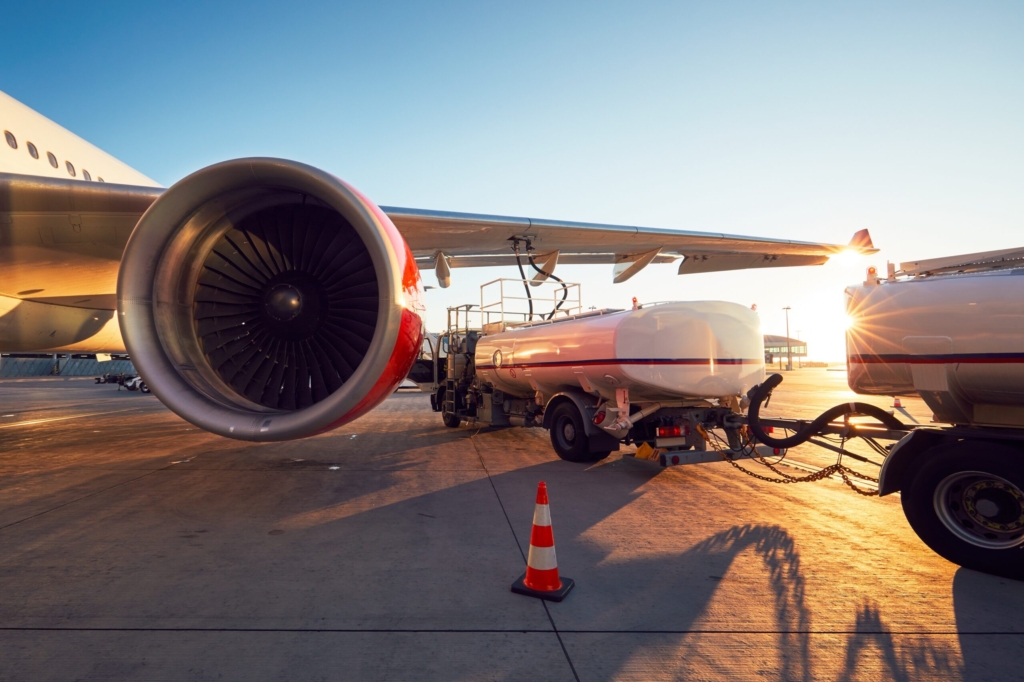
Carbon absorbed by plants, recovered from waste or captured from another source can replace some of the fossil carbon extracted from underground. The emissions reduction therefore depends on the feedstock, production process, energy source, transport requirements and possible changes in land use.
That means not every litre of SAF offers the same environmental benefit. ICAO calculates eligible fuel emissions according to lifecycle carbon intensity rather than treating all SAF as identical.
Feedstocks are the first major constraint
Most SAF currently available is produced from waste oils and fats, including used cooking oil, animal fats and residues from vegetable oil processing.
These materials can be converted using the hydroprocessed esters and fatty acids process, or HEFA.
HEFA’s refining technology is relatively mature. It is closely related to the processes used to produce renewable diesel. Existing refineries can sometimes be converted or expanded to make HEFA fuels more quickly than entirely new SAF technologies can be developed.
However, the supply of suitable waste oils and fats is limited.

Used cooking oil cannot be generated on demand in the same way that crude oil can be extracted from a reservoir. Its availability depends on food consumption, collection systems and competing uses.
The same feedstocks are also used to make renewable diesel for road transport. Producers may favour diesel because it can be cheaper to manufacture, faces fewer technical requirements and may receive stronger government support.
As demand rises, waste oils can become more expensive. Longer supply chains also increase collection, transport, verification and certification costs.
There are also concerns over feedstock origin. Poorly controlled markets can create incentives to mislabel virgin vegetable oil as waste oil. Sustainability systems must trace where the material came from and whether its use caused indirect environmental damage.
The main SAF production routes explained
SAF is not made through one standard process. The industry is developing several routes, each with different feedstocks, costs and levels of technical maturity.
HEFA
HEFA converts oils and fats into hydrocarbons using hydrogen.
It is currently the dominant commercial SAF pathway. It is technically proven and can be integrated into some existing refining operations.
Its weakness is feedstock supply. Waste oils and fats are unlikely to support the volumes aviation will eventually require on their own.
Alcohol-to-jet
Alcohol-to-jet, or ATJ, converts alcohols such as ethanol or isobutanol into jet fuel.
The alcohol can be made from sugar crops, starch crops, agricultural residues, forestry material or industrial waste gases, depending on the process.
ATJ could access a much larger resource base than HEFA. However, its economics depend on the cost and carbon intensity of the alcohol. Additional processing is required to remove water, convert the alcohol into hydrocarbons and produce molecules that meet aviation fuel specifications.
US Department of Energy analysis has identified feedstock cost as a critical driver of alcohol-to-jet economics.
Fischer-Tropsch
The Fischer-Tropsch methodology converts a carbon-rich gas into liquid hydrocarbons.
The gas can be produced from municipal solid waste, forestry residues, agricultural waste or other biomass. The process could use feedstocks that are more abundant than waste oils.
However, Fischer-Tropsch plants are complex and expensive. Feedstock must be collected, sorted and converted into a clean, consistent synthesis gas before the fuel itself can be produced.
Projects also face construction risks associated with large first-of-a-kind industrial facilities.
Power-to-liquid and e-SAF
Synthetic SAF, commonly known as e-SAF or power-to-liquid fuel, is produced using renewable electricity, hydrogen and carbon dioxide.
Renewable electricity powers electrolysers that split water to produce hydrogen. The hydrogen is combined with captured carbon and converted into synthetic hydrocarbons.
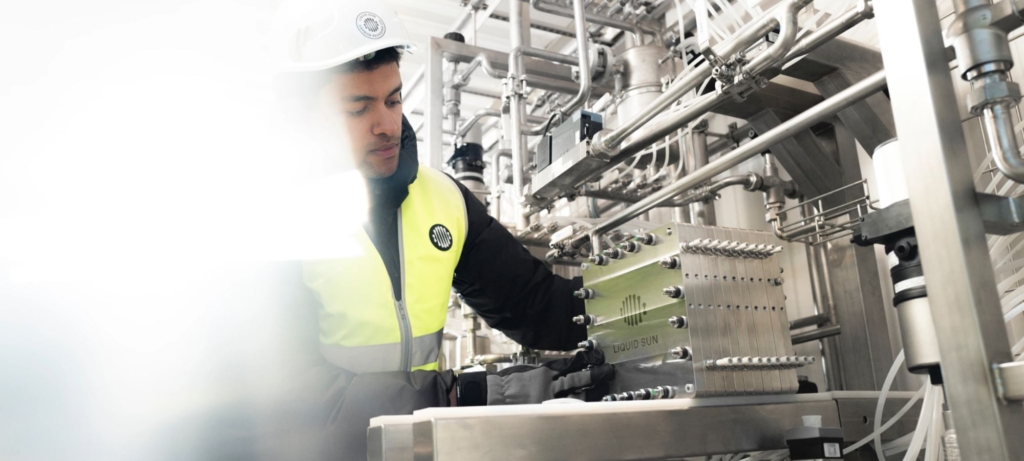
This pathway does not depend on waste oils or biomass. In principle, it could provide very large volumes of fuel.
In practice, it requires enormous quantities of low-cost renewable electricity. It also needs electrolyser capacity, carbon capture infrastructure, water, pipelines and new fuel synthesis plants.
IATA reported in June 2026 that the EU and UK mandates would require around 600,000 tonnes of e-SAF by 2030. However, global operating and under-construction capacity stood at only around 20,000 tonnes, with one production site operating. IATA estimated that around 20 commercial-scale refineries would be needed to meet the mandated volume.
The cost of e-SAF, therefore, goes far beyond the cost of making jet fuel. It includes the cost of building an entirely new renewable energy and hydrogen supply chain.
Why does SAF cost so much more than fossil jet fuel?
Conventional jet fuel benefits from a global oil industry developed over more than a century.
Crude oil is produced at enormous scale. Refineries, pipelines, storage terminals, trading markets and airport hydrant systems are already in place. Much of the infrastructure has been paid for or depreciated over decades.
SAF producers do not have those advantages.
A new SAF facility may require several billion dollars of capital. Investors must assess whether sufficient feedstock will be available, whether airlines will sign long-term purchase agreements and whether government incentives will remain in place.
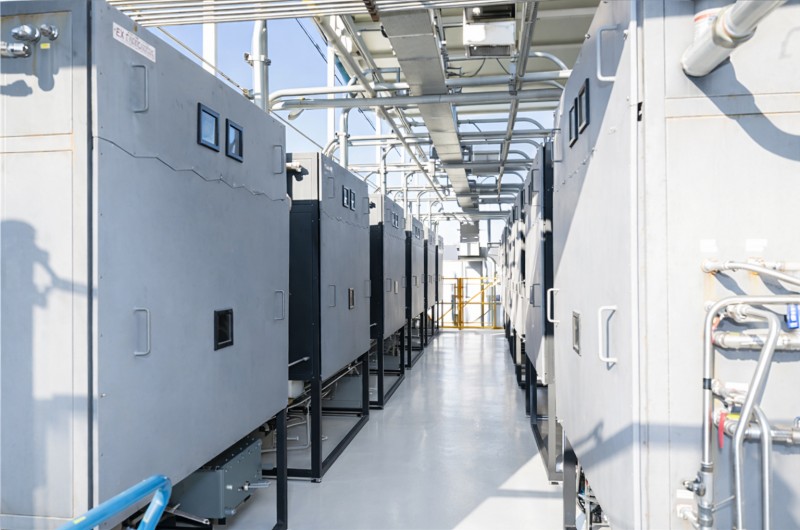
Early plants are also smaller than conventional refineries. Their engineering, labour and financing costs are spread across fewer tonnes of fuel.
The price paid by an airline can include certification, sustainability auditing, transport, blending, storage, trading margins and other transaction costs, which can add substantial premiums.
IATA said that the difference between HEFA production costs and the market price in Europe reached approximately $1,000 per tonne in 2024.
Moving small volumes of SAF to individual airports can be particularly inefficient. It may require dedicated tanks, blending operations or delivery by truck where pipeline access is unavailable.
What SAF mandates are intended to do
SAF mandates require fuel suppliers to include a minimum percentage of qualifying fuel in their aviation fuel sales.
The purpose is to create guaranteed demand. Producers can use that demand signal to secure investment and sign long-term contracts.
From 2025, the EU’s ReFuelEU Aviation regulation requires 2% SAF at covered EU airports. By 2050, the requirement will be 70%. A separate synthetic fuel requirement begins at 1.2% in 2030 and reaches 35% in 2050.
The UK mandate also began at 2% in 2025. It is scheduled to rise to 10% in 2030 and 22% in 2040.
While mandates can accelerate demand, they do not automatically create production facilities.

A developer still needs planning approval, engineering contractors, feedstock contracts, technology guarantees, financing and airline customers. These projects can take years to reach operation.
Mandates can also raise airline costs when supply is limited. Fuel suppliers may charge a substantial premium when airlines must buy SAF to comply with regulations but have few competing sources.
IATA argues that production incentives and investment frameworks should be introduced before or alongside mandates. Its position is that governments must reduce the risks of building new facilities rather than placing most of the cost on fuel buyers after the mandate begins.
What is a SAF book-and-claim system?
Physical SAF is not available at every airport. Shipping small volumes around the world would add cost and emissions.
Book-and-claim systems separate the physical fuel from its environmental attributes.
For example, a SAF producer may deliver fuel into the supply system at an airport close to its refinery. An airline operating on another continent can pay for that SAF and claim the verified emissions reduction, even though the physical molecules do not enter that airline’s aircraft.
The aircraft using the fuel and the airline funding it may therefore be different.
This approach can reduce unnecessary transport and allow SAF to be used where the infrastructure already exists. It can also enable companies to support SAF purchases associated with employee travel or air cargo.

A credible system must ensure that each environmental benefit is claimed only once. It must record the fuel’s origin, quantity, sustainability certification, lifecycle emissions value, and final use.
The CADO SAF Registry, launched in 2025 following development by IATA, records SAF transactions and their environmental attributes. It is intended to prevent double-counting and connect producers, airlines, and corporate customers across different regions.
Book-and-claim does not produce additional fuel by itself. It is an accounting and market mechanism.
Its value is that it can make the existing supply easier to buy and may give producers access to more customers. Its credibility depends on transparent registries, common standards, and clear rules governing who can claim the emissions reduction.
Announced capacity is not the same as delivered SAF
SAF forecasts often include projects that have been announced but have not yet reached production.
An announced facility may still be a proposal. It may not have completed engineering studies, obtained permits, secured finance, or signed feedstock contracts.
Even a project that has reached a final investment decision can be delayed by construction problems, rising costs, or equipment shortages.
The progression runs through several stages:
- Announced capacity is the output a developer says a proposed project could produce.
- Final investment decision capacity covers projects whose owners have committed capital and authorised construction.
- Capacity under construction refers to plants that are physically being built.
- Nameplate capacity is the maximum theoretical output of a completed facility under specified operating conditions.
- Actual production is the fuel the plant manufactures.
- Delivered SAF is certified fuel that has passed through blending and distribution and is available for use or a verified book-and-claim transaction.
Each stage generally produces a smaller number than the stage before it.
A plant designed to produce one million tonnes of renewable fuel may not produce one million tonnes of SAF. Some output may be renewable diesel, naphtha, or other products. Producers can adjust the mix according to market prices and incentives.
Facilities also take time to reach full output. Maintenance, commissioning issues, and inconsistent feedstock can reduce production below nameplate capacity.
This explains why adding together every announced project can create a misleading picture of future availability.
SAF is competing for more than investment
SAF production sits within a wider transition in global energy and agriculture.
Road fuel producers also want waste oils. Biomass is used for heating, power generation, and industrial processes. Renewable electricity is needed for data centres, electric vehicles, steelmaking, hydrogen production, and the wider decarbonisation of electricity grids.
Chemical producers and other synthetic fuel industries will also require captured carbon.
Aviation, therefore, cannot rely on all technically suitable raw materials being available for jet fuel.
Policies determine where those resources go. A renewable diesel credit that offers a better return than a SAF incentive can divert feedstock and refinery capacity away from aviation.
Can SAF production catch up?
Production is growing, but not at the pace suggested by many airline and government climate targets.
The International Energy Agency expects SAF consumption to rise from approximately one billion litres in 2024 to nine billion litres in 2030 in its main forecast. Even then, SAF would meet only around 2% of global aviation fuel demand. The agency expects e-kerosene to account for just 5% of SAF production in 2030.

IATA estimates that aviation could ultimately require around 500 million tonnes of SAF annually by 2050. That would require the supply to increase more than 250-fold from current levels.
Reaching that scale will require more than airline purchase commitments.
Governments would need to back their mandates with incentives for production, loan guarantees, and infrastructure investment, while ensuring policy offers clearer sustainability rules.
Producers will need access to larger and more diverse feedstock supplies.
New SAF fuel production methodologies still have to advance from early demonstration plants to repeatable commercial projects.
Book-and-claim systems can improve access to the SAF already produced. However, they cannot replace the refineries, renewable electricity, hydrogen plants, and feedstock supply chains needed to make the fuel.
The main challenge for SAF is not whether aircraft can use it—they already can—it is building an entirely new fuel industry quickly, and at a price the global aviation system can absorb.