Biman Bangladesh Airlines places first major Airbus order

5 min read
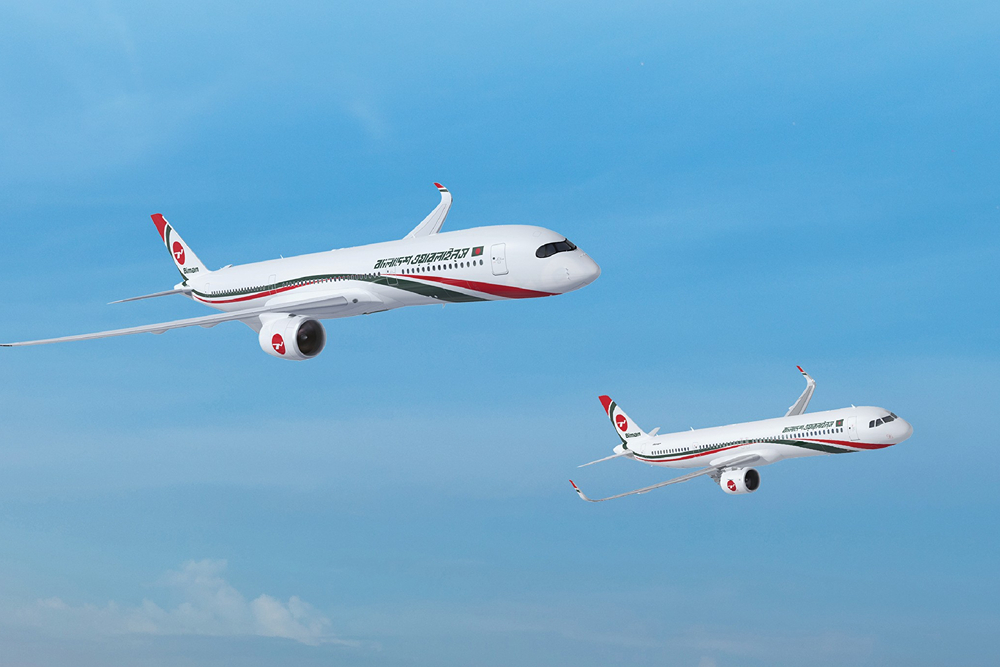
Biman Bangladesh Airlines is embarking on the next stage of an ambitious fleet expansion programme, ordering 10 Airbus aircraft as Bangladesh’s national carrier seeks to modernise its fleet and expand its international network.
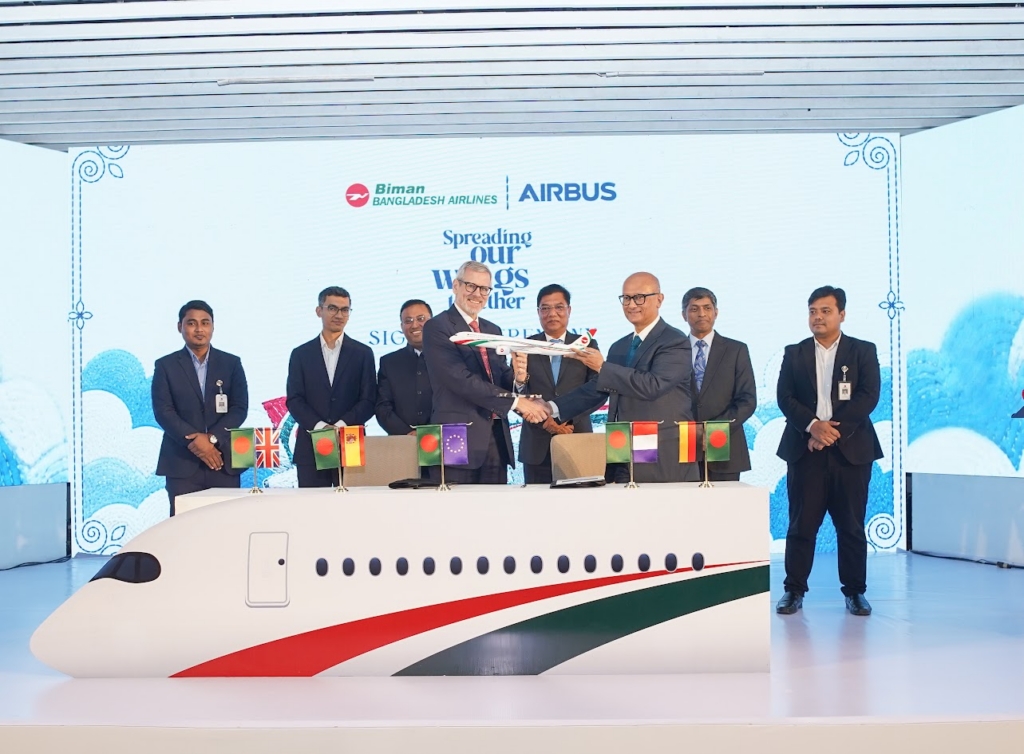
The order comprises four Airbus A350-900 widebody aircraft and six A321neo single-aisle aircraft. The agreement represents Biman’s first major Airbus order and forms part of a broader fleet renewal involving both Airbus and Boeing products. The investment will also increase overall network capacity.
Biman turns to Airbus for future fleet expansion
The four A350-900s are intended for long-haul international routes, strengthening Biman’s network from its Dhaka hub. They are expected to support services to North America as well as important destinations in Europe and the Middle East.
Airbus said that the A350-900’s range makes it suitable for connecting Bangladesh directly with distant markets, while its capacity and efficiency should allow Biman to consider new destinations and strengthen existing services. The aircraft also offers better economics than older widebodies.

The six A321neos will provide Biman with a smaller and more flexible aircraft for regional and medium-haul flying. The type can serve routes that may not justify a widebody while offering substantial range.
According to an Airbus statement, the A321neo is well suited to Biman’s network across South Asia, Southeast Asia and the Middle East. It will also allow Biman to adjust capacity without deploying a large widebody on lower-demand routes.
Why Biman Is ordering these aircraft
The expansion comes as Biman seeks to take advantage of growing demand for international air travel from Bangladesh. Bangladesh has a large internationally connected population, while its diaspora provides substantial year-round demand.
Airbus estimates Bangladesh’s diaspora at around 15 million people, with particularly strong links to the Middle East and Southeast Asia. Growing trade is also expected to generate additional demand.
Biman is starting from a relatively small fleet. The airline currently operates 19 aircraft, making the planned acquisition programme a substantial increase in capacity.
The government has argued that foreign airlines carry most international passenger traffic. Expanding the fleet would allow Biman to serve more of that demand and strengthen connectivity.
Airbus order follows major Boeing commitment
The Airbus order is particularly notable because it follows a major commitment to Boeing announced only weeks earlier.
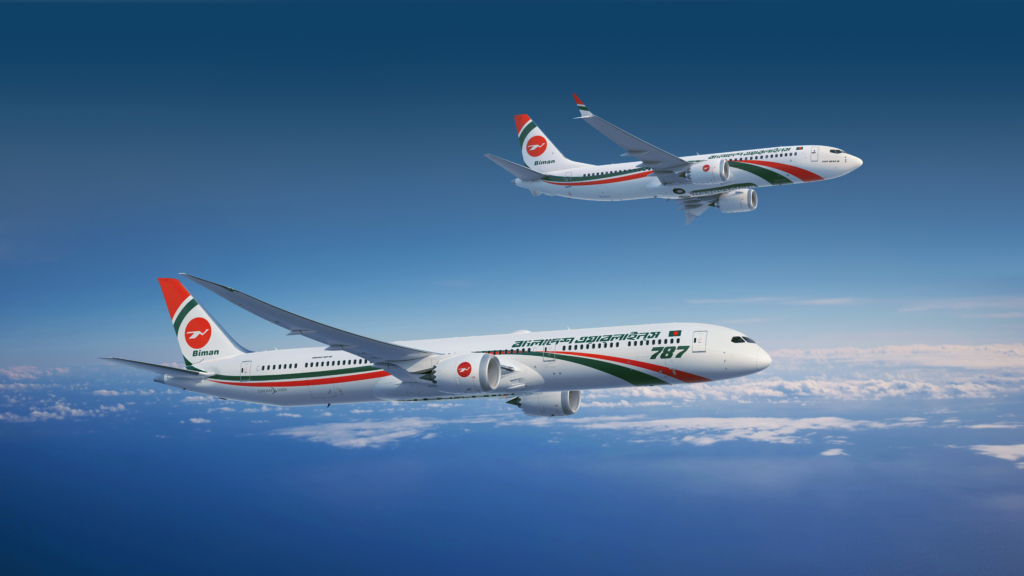
On 23 September, Biman confirmed an order for a further 11 Boeing aircraft, comprising five 787-10 Dreamliners and six 737 MAX 8s. That followed a larger Boeing agreement announced in April for 14 aircraft, including eight 787-10s, two 787-9s and four 737 MAX 8s.
Biman has now contracted for 25 Boeing aircraft in addition to the 10 Airbus aircraft, creating a 35-aircraft acquisition pipeline. The orders underline Biman’s ambition to increase its fleet and expand internationally.
How the fleets will complement each other
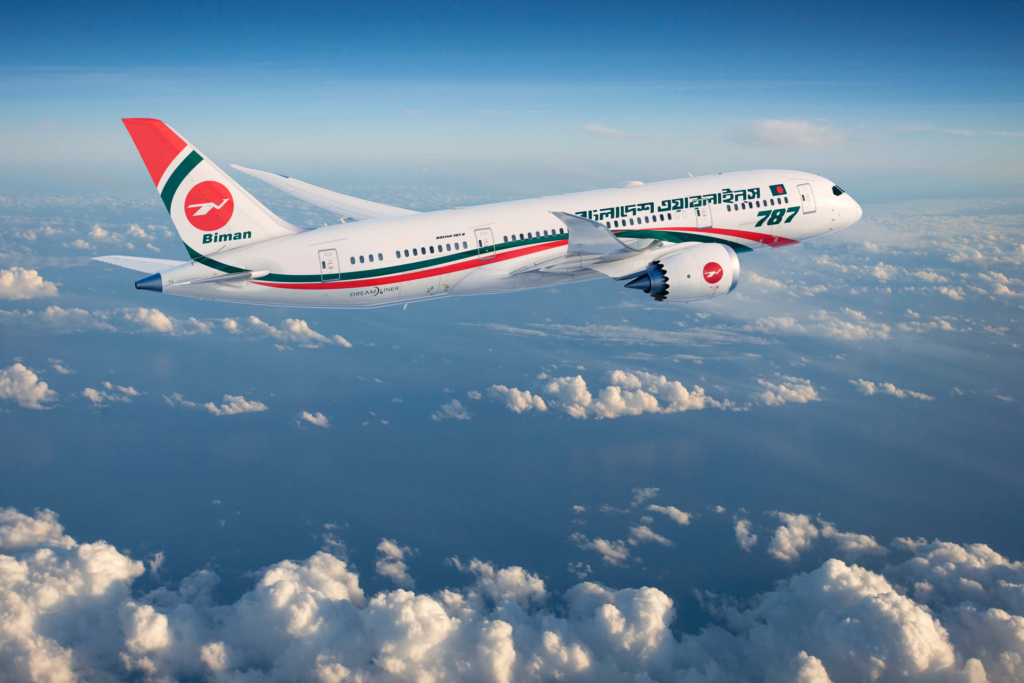
The Boeing and Airbus fleets will have complementary roles. The 787 Dreamliner family will provide additional long-haul capacity, with the 787-10 particularly suited to high-demand Middle Eastern services, while the 787-9 will support longer routes to Europe and North America.
The 737 MAX 8 will handle regional and shorter international services, including destinations in the Middle East, India and Southeast Asia. The A350-900s will sit alongside the 787s as Biman’s long-range widebody fleet.
The A321neo and 737 MAX 8 will complement one another on shorter routes, matching aircraft size and economics to individual markets. This approach enables Biman to match aircraft more closely to demand.
The decision to operate aircraft from both manufacturers represents a deliberate move towards a mixed fleet. Bangladesh’s civil aviation minister has said the purchases are based on commercial and operational requirements rather than geopolitical considerations.
Fleet planning has considered range, capacity, demand and route frequency. Although a mixed fleet adds complexity, it gives Biman access to different aircraft sizes and capabilities.
New aircraft will improve efficiency
There is also a strong fleet-renewal component to the programme. New-generation aircraft such as the A350, A321neo, 787 and 737 MAX 8 offer significantly better fuel efficiency than the older aircraft they replace or supplement.
Airbus says the A350 provides a 25% advantage in fuel burn, operating costs and CO₂ emissions compared with previous-generation aircraft, while the A321neo offers at least a 20% reduction in fuel consumption and emissions.
Boeing similarly highlights 20–25% fuel-efficiency improvements for the 787 and 737 MAX families compared with the aircraft they replace. Lower fuel consumption is particularly important because fuel is a major airline operating cost. More efficient aircraft can improve economics while reducing emissions.
Biman enters a new chapter
The Airbus order goes beyond simply adding 10 aircraft. It is part of an attempt to reshape the airline around a larger, more modern and internationally competitive fleet.
The A350s can open opportunities in distant markets, while the A321neos provide flexibility to build a broader regional network. Boeing’s 787s and 737 MAX 8s will add capacity across long-haul, medium-haul and regional markets.
If deliveries proceed as planned, Biman will have more capacity and a more flexible fleet. The challenge will be turning that capacity into profitable routes and stronger market share.
For Bangladesh, the objective is clear – to build an airline capable of serving a larger proportion of the country’s international travel demand rather than leaving much of that market to foreign carriers.
The Airbus order, alongside the major Boeing commitments, gives Biman the aircraft range and capacity to pursue that goal, while the strategy also supports future growth.