

Dream Chaser clears landing hurdle as Sierra Space prepares for 2027 debut

6 min read

Sierra Space has secured US Federal Aviation Administration (FAA) approval for its Dream Chaser spaceplane to return from orbit and land at Vandenberg Space Force Base in California, clearing an important regulatory hurdle ahead of the spacecraft’s long-awaited debut in spring 2027.
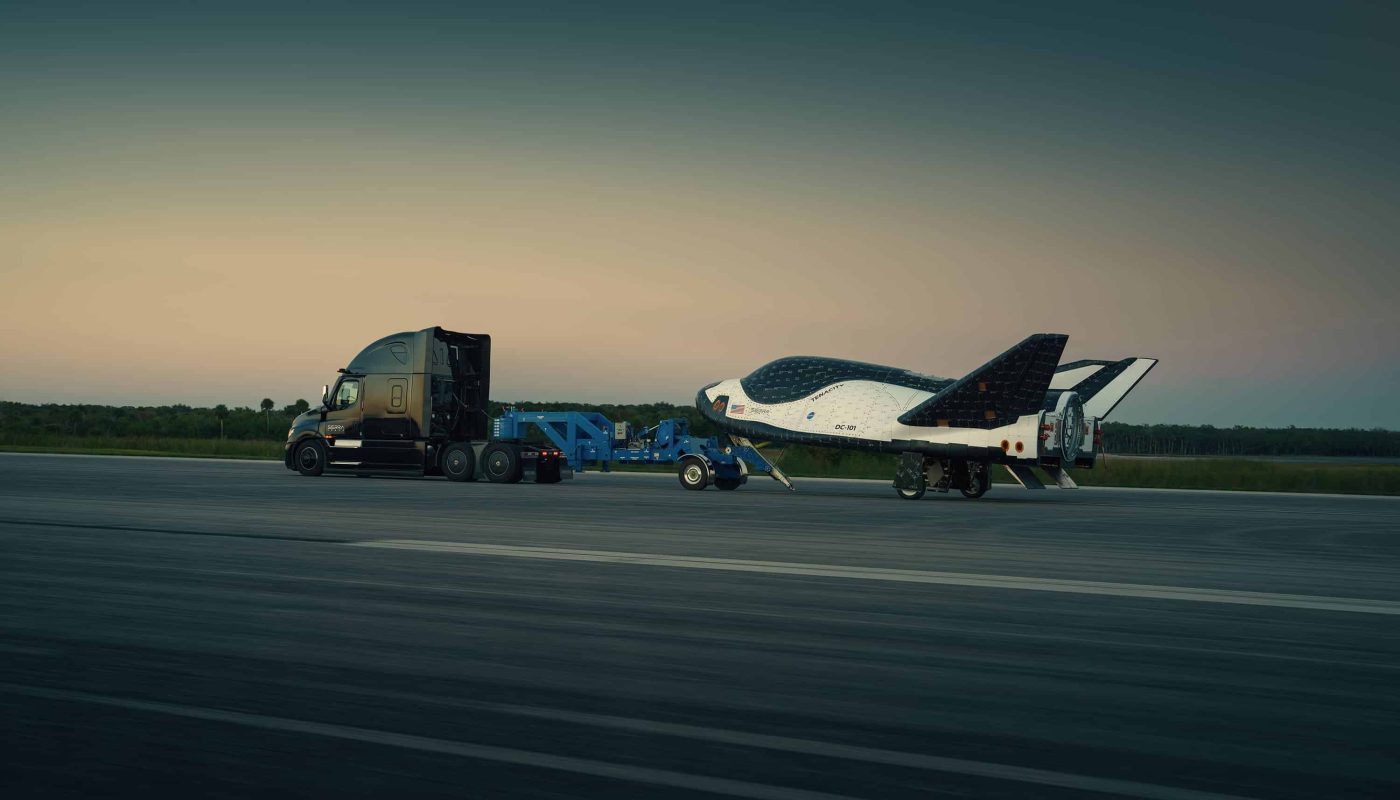
The approval brings the Colorado-based company closer to flying the inaugural Dream Chaser spaceplane ‘Tenacity’, a reusable spacecraft that will launch vertically aboard a rocket but return to Earth on wings, touching down on a runway rather than splashing into the ocean.
Sierra Space announced the FAA authorisation on November 9, saying the licence permits Dream Chaser to re-enter the atmosphere and land at Vandenberg.
“Another milestone for DreamChaser!” the company said on X, thanking the FAA for its collaboration and support.
The first mission is planned as a free-flying orbital demonstration carrying payloads for national security and commercial customers. It will test whether Dream Chaser can operate in space, survive re-entry and make an autonomous runway landing.
Unlike NASA’s retired space shuttles, which carried astronauts, Tenacity will fly without a crew.
“Tenacity is poised to embark on its initial seven cargo missions to and from the International Space Station, carrying essential supplies such as food, water and scientific experiments. One of Dream Chaser’s groundbreaking features is its capability to safely return critical cargo to Earth at fewer than 1.5g’s, ensuring the preservation of invaluable payloads.
“This innovative spaceplane offers unparalleled flexibility and can land at any compatible commercial runway worldwide, just like a narrow body commercial airliner,” according to Sierra Space.
A spacecraft that lands like an aircraft
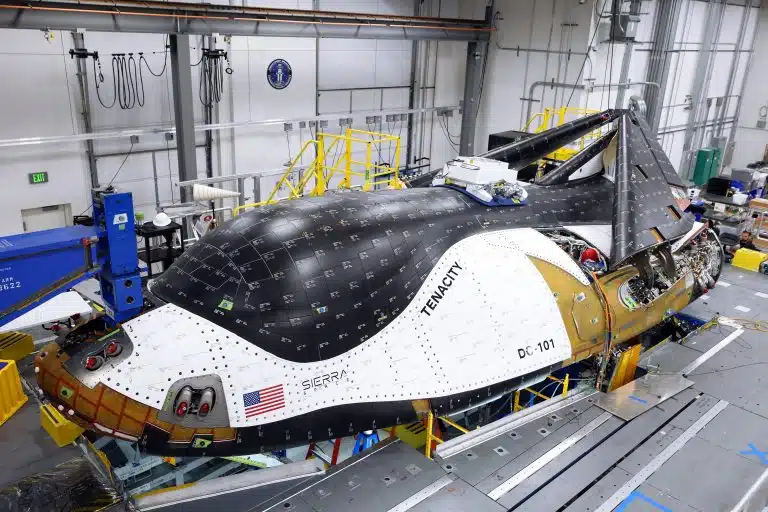
Dream Chaser is about nine metres long, considerably smaller than the space shuttle. Its compact, winged body is designed to survive the intense heat of re-entry before gliding towards a runway.
It does not need jet engines to land. After slowing down in the atmosphere, it flies as a glider, using aerodynamic controls to guide its descent.
Its wings fold during launch so the spacecraft can fit inside a rocket’s protective fairing, then deploy in space.
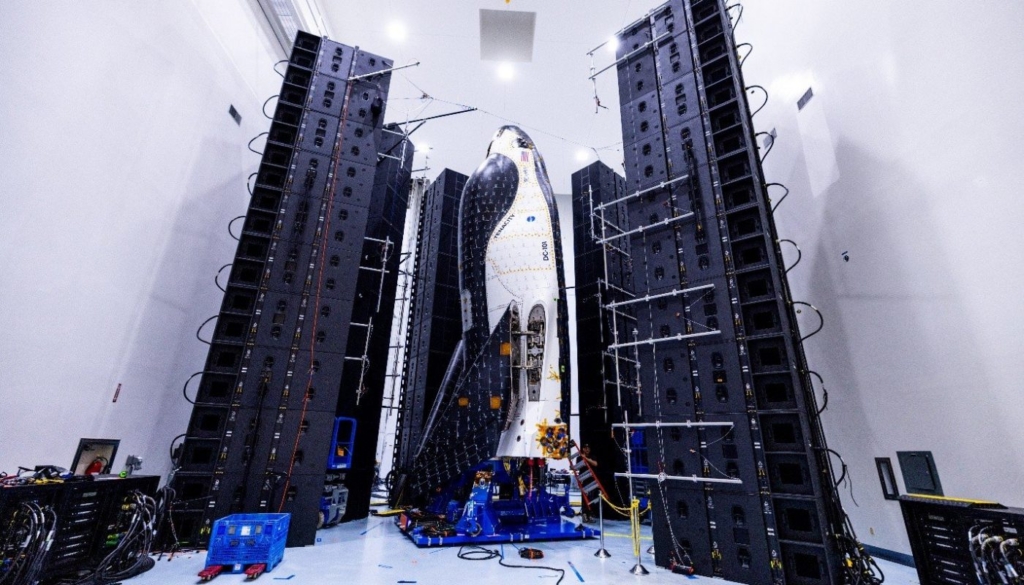
Sierra Space says the vehicle can carry up to 3,629kg of cargo and is designed for at least 15 missions. It can also return sensitive equipment and scientific experiments to Earth while keeping landing forces below 1.5 times normal gravity.
Dream Chaser is the only commercial, multi-use orbital spaceplane capable of returning cargo from orbit at less than 1.5g and landing on any 737-capable runway.
Its unique pressurized volume and controlled runway-return allow customers to fly hardware with partial space certification rather than full environmental qualification, significantly reducing development costs and accelerating time to orbit.
Dream Chaser demonstrates capabilities in spacecraft systems, orbital logistics, and runway return operations from a single, flexible platform.
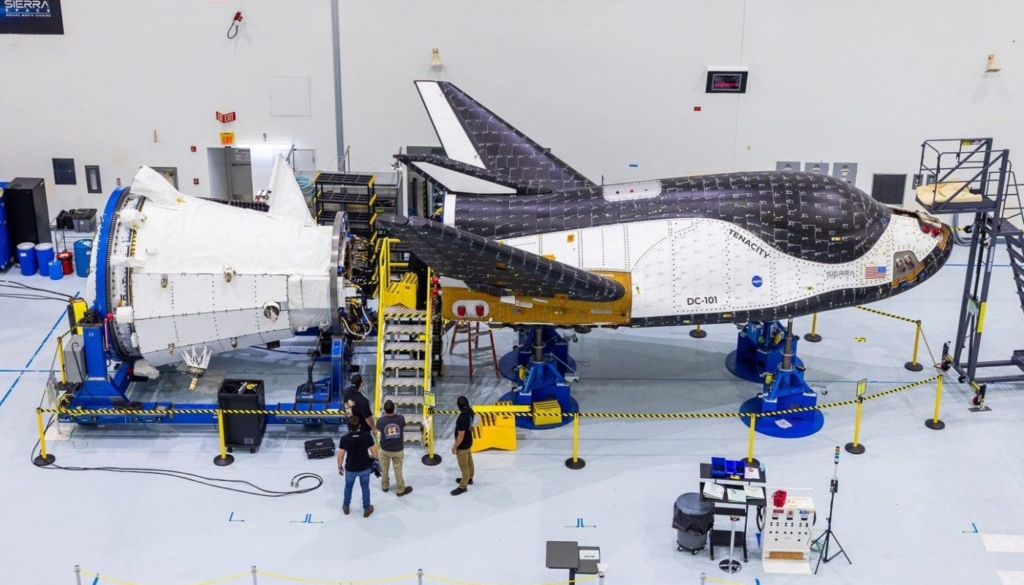
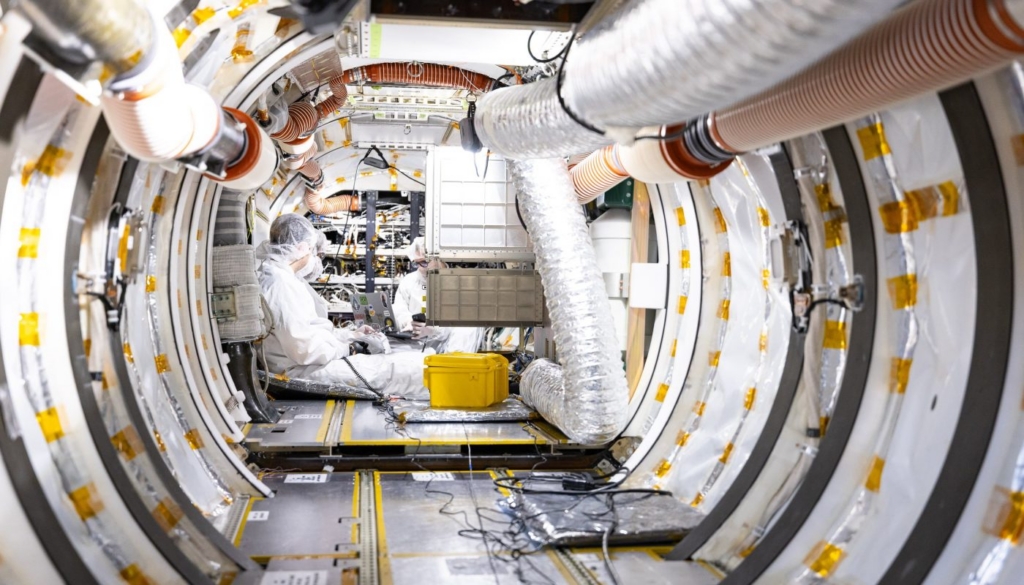
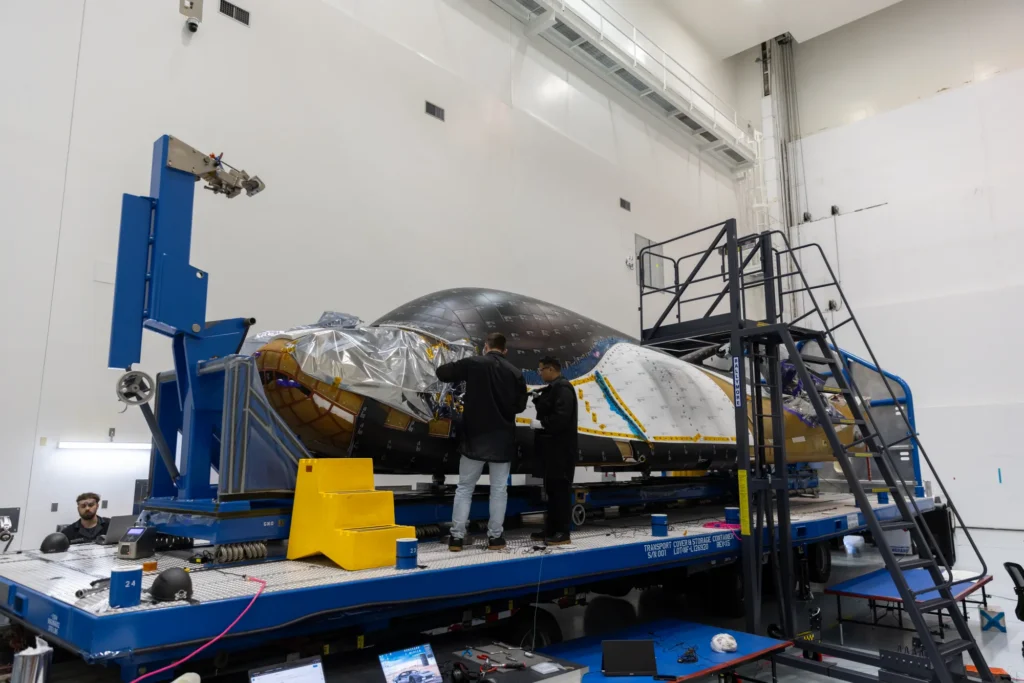
“With environmental testing, command and telemetry validation, and post-landing recovery rehearsals complete, Dream Chaser is preparing for its inaugural mission. It is launching from Kennedy Space Center, conducting multiday orbital operations, and returning to Earth with a runway landing at Vandenberg Space Force Base,” Sierra Space said.
That relatively gentle return is particularly useful for delicate experiments and hardware that could be damaged during a rougher descent.
The spacecraft also has a detachable cargo module, allowing it to accommodate different types of payloads.
Sierra Space has spent years testing the design. In April, engineers completed acoustic testing at NASA’s Kennedy Space Center using 90 speakers to reproduce the extreme noise experienced during a rocket launch.
The programme has also completed electromagnetic interference testing, high-speed ground tow trials, communications checks and post-landing recovery rehearsals.
“As the space domain has become increasingly contested, Dream Chaser has evolved into exactly what America needs, a strategic national capability built on commercial innovation and investment,” said Dan Jablonsky, CEO of Sierra Space.
“We’re establishing a new operational model in which the same platform serves national security, civil, and commercial customers on a single mission. We’re not just talking about the multi-use space economy, we’re operating it. Dream Chaser is truly America’s Spaceplane.”
Why Vandenberg matters
Vandenberg Space Force Base, near Lompoc on California’s Pacific coast, is a major US military space installation. It supports satellite launches, missile testing and missions for NASA and commercial operators.
Its operations are managed by Space Launch Delta 30, which provides the infrastructure and range services needed for launches, particularly into polar orbit.
Dream Chaser’s planned arrival would give the base a different role: receiving a reusable spacecraft returning from orbit.
The FAA’s environmental assessment concluded that the proposed re-entry and landing would not have a significant environmental impact. It also examined the sonic boom expected as Dream Chaser passes through the atmosphere.
The agency said any sonic boom would be brief, with a maximum overpressure of 1.1 pounds per square foot, comparable to a thunderclap.
The approval does not mean the spacecraft is ready to fly. Sierra Space must still complete its remaining preparations and demonstrate that the vehicle can perform as intended.
From NASA cargo carrier to wider missions
Dream Chaser’s history stretches back more than two decades.
The programme was originally developed by Sierra Nevada Corporation, before Sierra Space became a separate company. It competed for NASA contracts to transport astronauts to the International Space Station, but the agency selected Boeing and SpaceX in 2014.
The company subsequently developed an uncrewed cargo version. NASA awarded it a Commercial Resupply Services contract in 2016, although repeated delays prevented the spacecraft from making its planned station flights.
Dream Chaser was also expected to launch on United Launch Alliance’s Vulcan rocket in 2024, but the vehicle was not ready.
Its first mission is now being prepared as an independent orbital demonstration rather than an initial docking flight to the space station.
In September, Sierra Space announced contracts with undisclosed national security and commercial customers to carry payloads on that inaugural flight.
“We spent years solving the hardest engineering challenges: deployable wings so we could maximize our payload capacity in a standard rocket fairing, hypersonic flight control providing unparalleled maneuverability and mission flexibility, autonomous reentry, and less than 1.5g runway landing,” said Dan Polis, Sierra Space’s senior vice president of engineering and Dream Chaser.
The company is also pursuing future civil and commercial missions, including opportunities involving privately operated space stations.
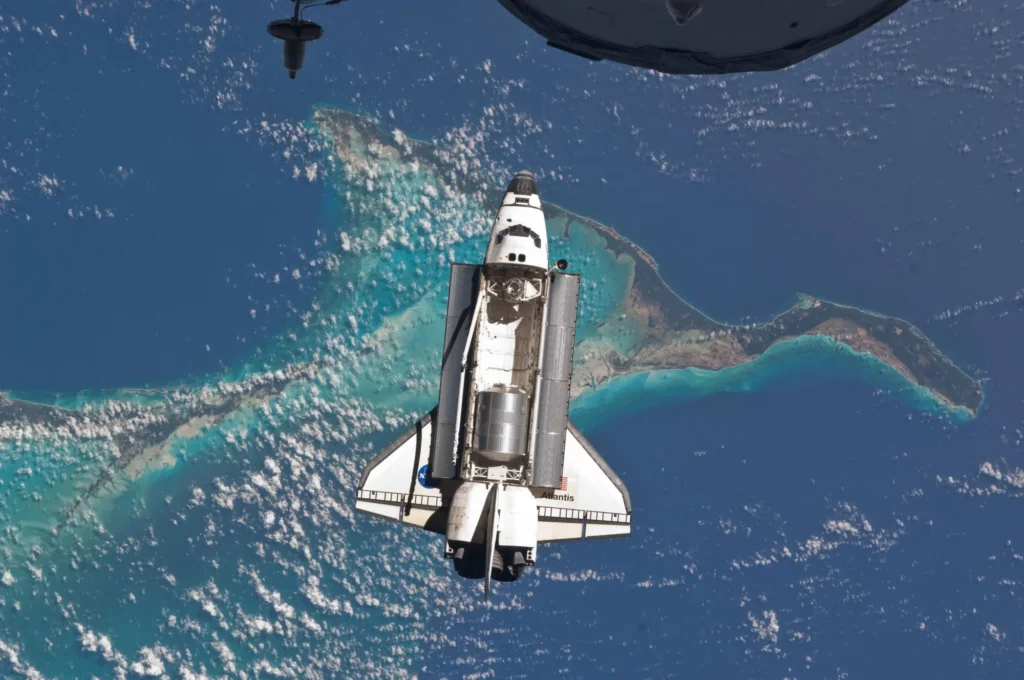
NASA’s Space Shuttle programme had ended with the landing of Space Shuttle Atlantis on July 21, 2011. Space Shuttle was the world’s first reusable spacecraft launched like a rocket, maneuvered in Earth orbit like a spacecraft and landed like an airplane. It was comprised of the orbiter, the main engines, the external tank, and the solid rocket boosters.