Heart Aerospace unveils evolved ES-36 as JSX converts options into orders

5 min read
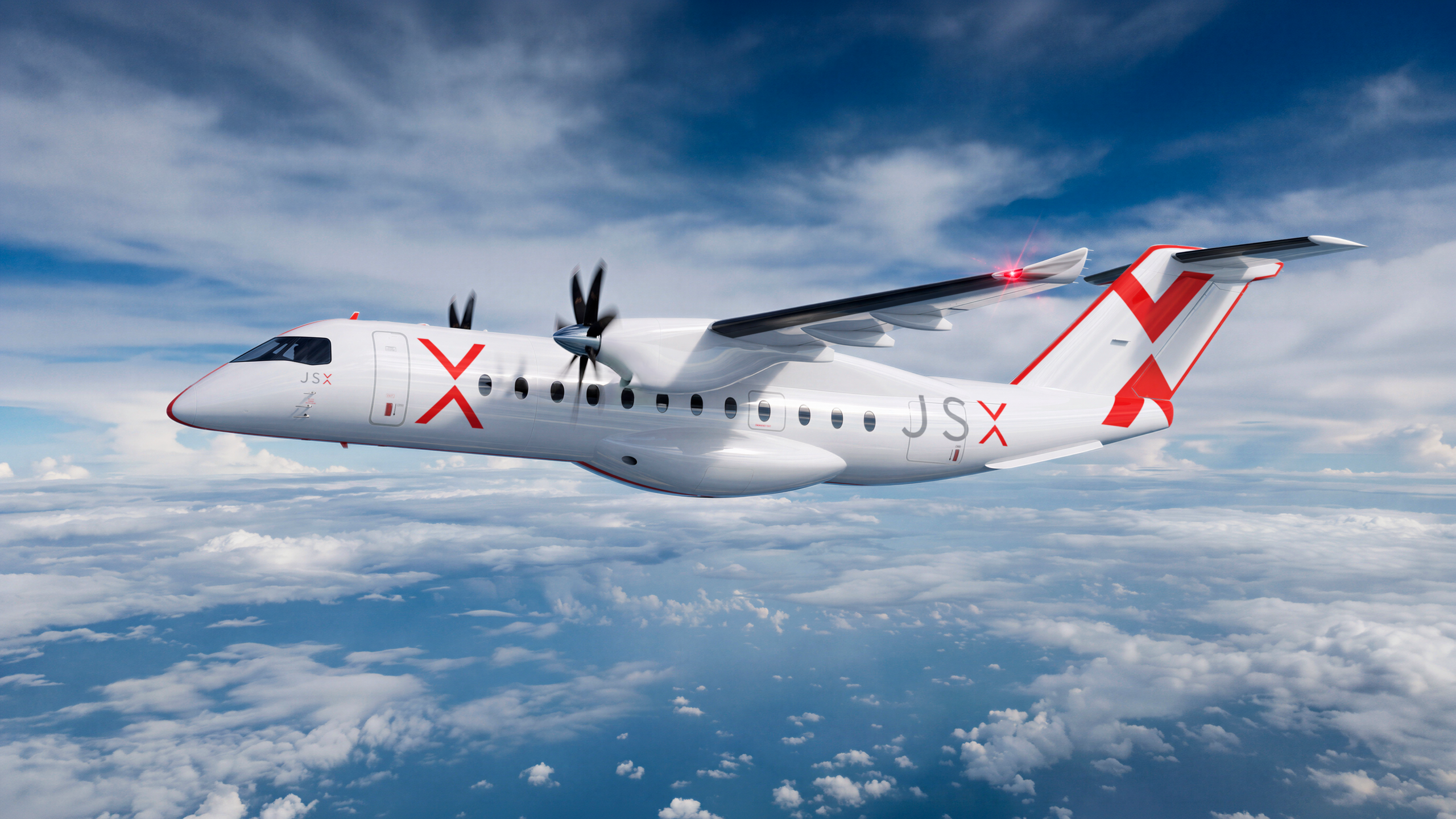
Heart Aerospace has unveiled the ES-36, a new 36-seat hybrid-electric regional airliner that the company says represents the next stage in its drive to bring electric propulsion into commercial aviation.
The aircraft, revealed on 23 September, evolves the previously announced ES-30 design and becomes Heart Aerospace’s production aircraft. The unveiling comes just weeks after the company achieved another significant milestone: the first flight of its X1 all-electric demonstrator in upstate New York.
The ES-36: six more seats, with a redesigned aircraft
The timing of the announcement of the ES-36 is significant. While the X1 is a technology demonstrator rather than an airliner intended for passenger service, its successful flight has provided Heart with an opportunity to test its electric propulsion technology at a scale much closer to a commercial aircraft. The lessons learned from that programme have now fed directly into the design of the ES-36.

The ES-36 retains the basic concept behind Heart’s ES-30: a regional aircraft capable of using battery-electric propulsion for shorter flights while employing a hybrid system to extend its range. However, Heart has made substantial changes to the aircraft.
The new design accommodates 36 passengers, six more than the ES-30, while increasing payload capacity by 20%. Remarkably, Heart says it has achieved this without increasing the aircraft’s maximum take-off weight or battery capacity.
From four engine nacelles to two
A major change with the ES-36 is the move from four propulsion nacelles to two. The ES-36 uses a twin series-hybrid configuration, with each powertrain incorporating a 1.65-megawatt electric motor driving a propeller.
Heart says the simplified configuration should reduce the number of propulsion components requiring maintenance while also improving the aircraft’s aerodynamic efficiency.
The company is targeting operating costs at least 40% lower than those of legacy regional aircraft.
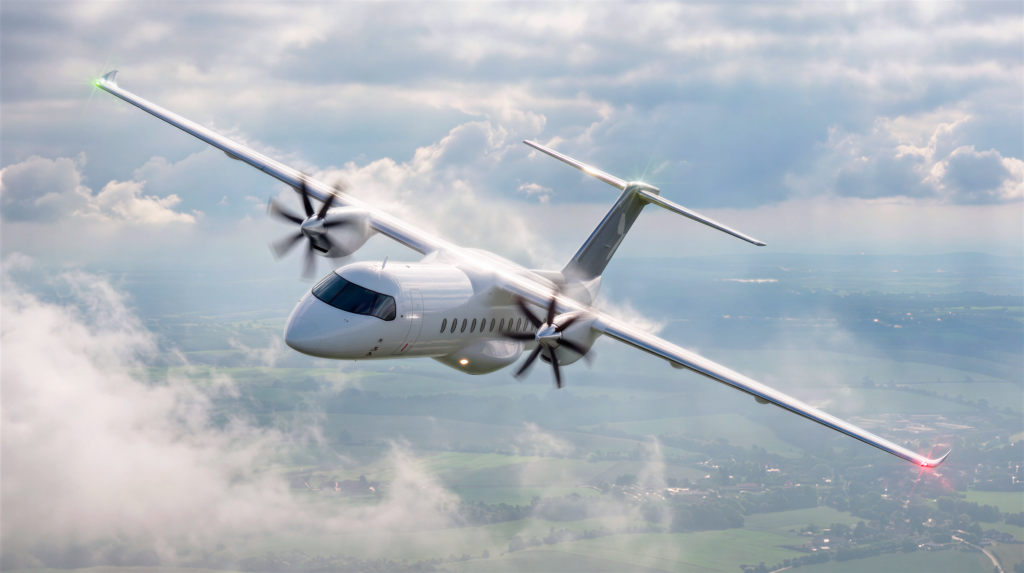
The aircraft has also been designed with a smaller footprint than its predecessor. Its wingspan is approximately 95 feet, around 11 feet shorter than the ES-30. That could be particularly relevant at regional airports, where ramp, gate and hangar space can be constrained.
Electric for short routes, hybrid for longer sectors
At the heart of the ES-36 is a distinction that could prove important to the future of regional electric aviation. The aircraft is designed to operate entirely on battery power for flights of up to 125 miles (200 kilometres), plus reserves.
For longer journeys, its hybrid-electric system provides a claimed range of up to 745 miles (1,200 kilometres), plus reserves. Two megawatt-class turbogenerators provide the range extension. Each is powered by a compact gas turbine that generates electricity in flight, supplying the electric propulsion system alongside the batteries.

That approach allows Heart to avoid making the aircraft dependent on batteries alone for every mission. Instead, operators can use battery-electric power where the range allows it, while retaining the flexibility of a conventional regional aircraft for longer sectors.
The objective is therefore not simply to create an electric aircraft, but to make electrification useful within the operational realities of an airline.
JSX commits to up to 100 aircraft
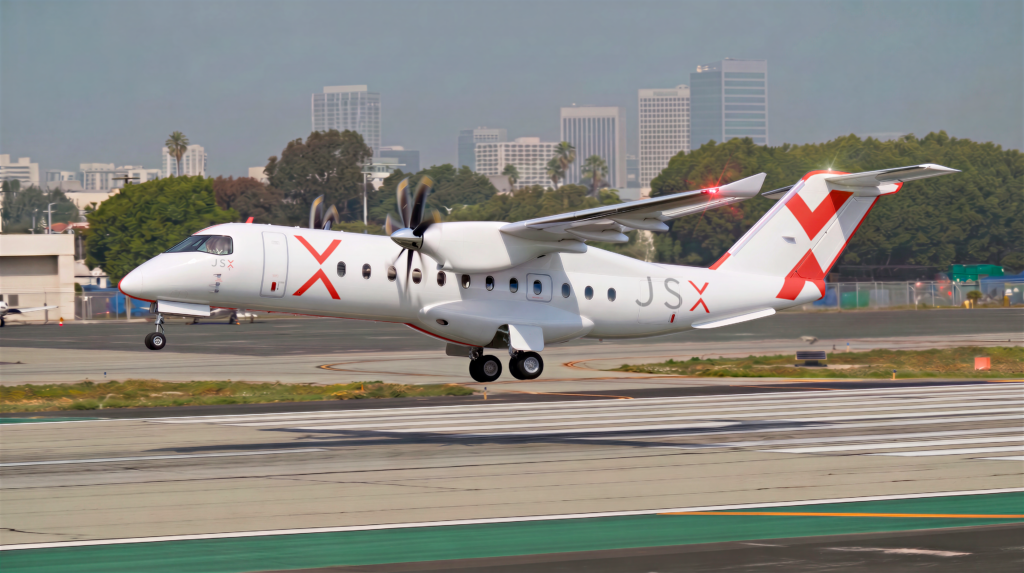
The ES-36 unveiling was accompanied by a major commercial announcement. US air carrier JSX has signed a deposit-backed purchase agreement for 50 ES-36 aircraft, with purchase rights for a further 50.
The agreement converts JSX’s previous 2023 letter of intent into a purchase commitment and gives the carrier early delivery positions.

The two companies also plan to work together on the aircraft’s configuration and operation, including cabin design, charging and turnaround procedures, route planning and airport readiness.
For JSX, the aircraft could be particularly suited to its focus on convenient community airports. Heart says the ES-36’s short-field capabilities and compact dimensions could allow it to serve airports where operating larger regional aircraft may be less practical.
The company also sees the aircraft’s quieter, all-electric operation as potentially helping address noise concerns at airports located closer to populated areas.
X1 takes electric aviation into the air
The ES-36 arrives with Heart having already crossed an important technological threshold. On 12 August 2026, the company’s X1 demonstrator completed its first flight at Plattsburgh International Airport in New York.
The 27-minute flight included taxiing, take-off, climb, manoeuvring and landing, with the aircraft reaching approximately 1,100 feet above ground level. Its battery-electric propulsion system delivered more than one megawatt of power.
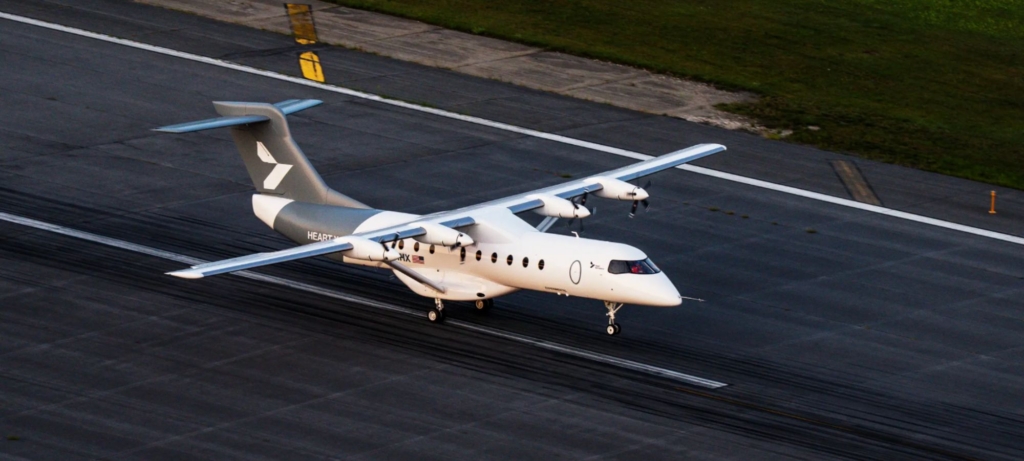
With a 106-foot wingspan and a take-off weight of more than 25,000 pounds, Heart described the X1 as the largest battery-electric aircraft ever flown.
The aircraft is not itself the production ES-36. Instead, it was built as a full-scale demonstrator to validate technologies, aerodynamics, propulsion and systems integration relevant to Heart’s commercial aircraft programme.
The successful flight gives the company real-world data that can now be applied to the production aircraft. Heart says the ES-36 design is directly informed by what it learned from designing, building, testing and flying X1.
What’s next for Heart Aerospace?
The next stage will be considerably more demanding: turning a successful demonstrator into a certified passenger aircraft. Heart is already building its first pre-production ES-36 at its pilot manufacturing plant in Los Angeles.
The company is targeting the aircraft’s first flight in the second half of 2028, followed by entry into service in 2031, subject to FAA Part 25 certification.
Between now and then, Heart will need to progress through extensive ground and flight testing, refine the aircraft’s systems and propulsion architecture, and demonstrate that the ES-36 can meet the safety, reliability and performance requirements of commercial aviation.
The X1 programme will continue to provide an important foundation for that work. Heart’s development process has been deliberately iterative, using the demonstrator to build experience in aircraft design, electric propulsion, systems integration, flight testing and airworthiness.
The ES-36 therefore marks a change in emphasis for Heart Aerospace. X1 demonstrated that electric flight can be taken to the scale of a large regional aircraft. The new ES-36 is intended to demonstrate whether that technology can be turned into a commercially viable airliner.
If the programme stays on schedule, the next major milestone will be the ES-36’s first flight in 2028, bringing Heart one step closer to its goal of putting hybrid-electric regional aircraft into everyday airline service from 2031.
Sign up for our newsletter and get our latest content in your inbox.


More from


October 13, 202612 min read