


First look: Shield AI rolls out X-BAT 001 as autonomous fighter approaches flight testing

3 min read
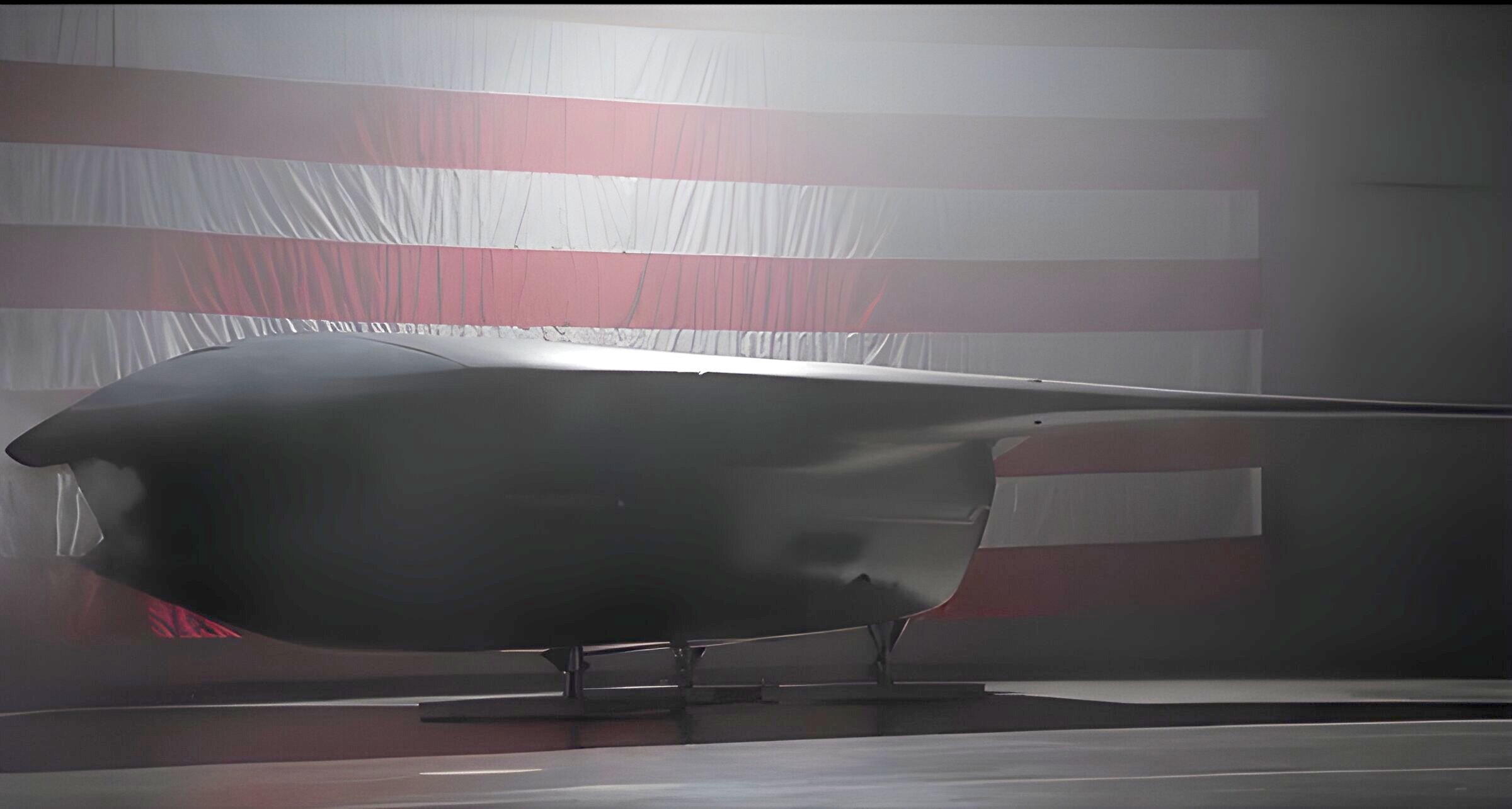
Shield AI has offered a shadowy first look at X-BAT 001, believed to be the first flight-test vehicle for its autonomous, tail-sitting fighter aircraft.
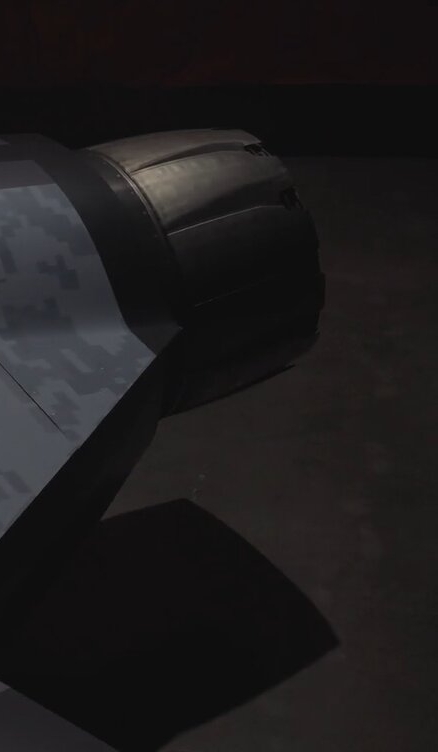
A short video shows the aircraft inside a hangar, revealing its broad wings, digital camouflage and prominent engine exhaust. While the dramatic lighting conceals much of the detail, stills captured by Aerospace Global News offer a closer look at the aircraft taking shape.
AGN has asked Shield AI to confirm the vehicle’s status and configuration and is awaiting comment.
A closer look at X-BAT 001
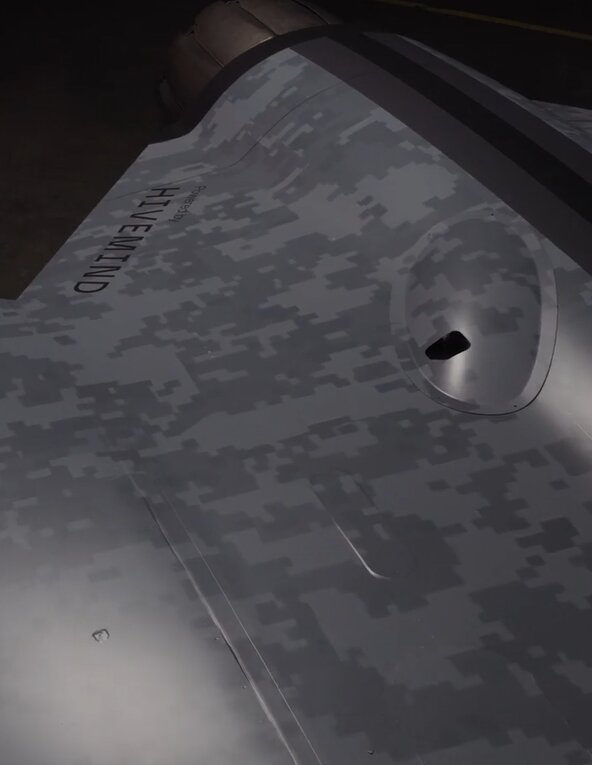
The aircraft wears a grey digital camouflage scheme, broken up by dark edging and a contrasting central strip. “X-BAT 001” and “Powered by Hivemind” markings identify the vehicle and the autonomy software intended to fly it.
Its sharply swept wings blend into a substantial central body, with no cockpit or canopy. Panel boundaries and fasteners are visible in the closer views, alongside several upper-surface openings whose functions are not immediately clear.
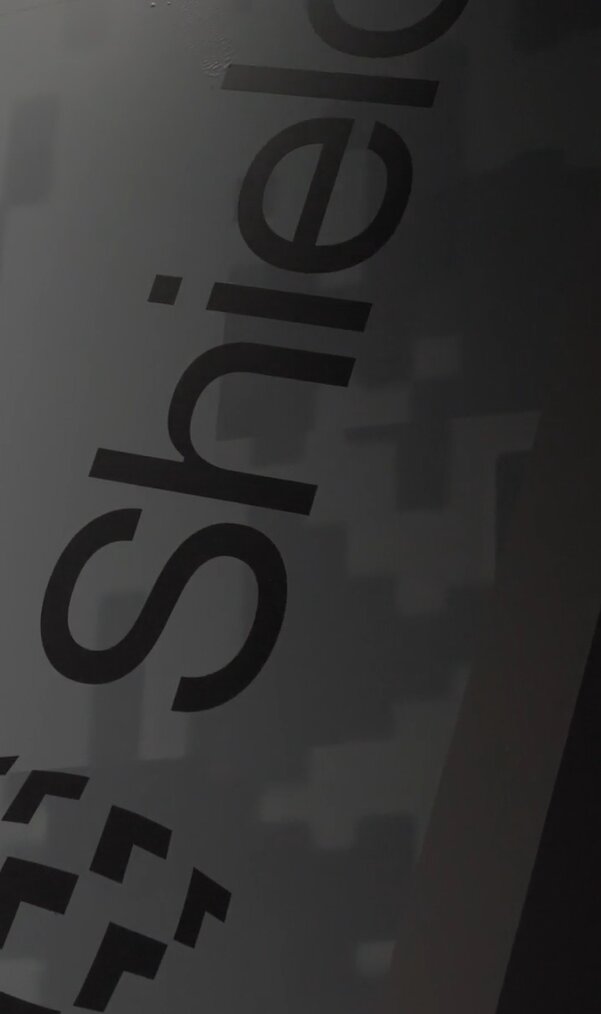
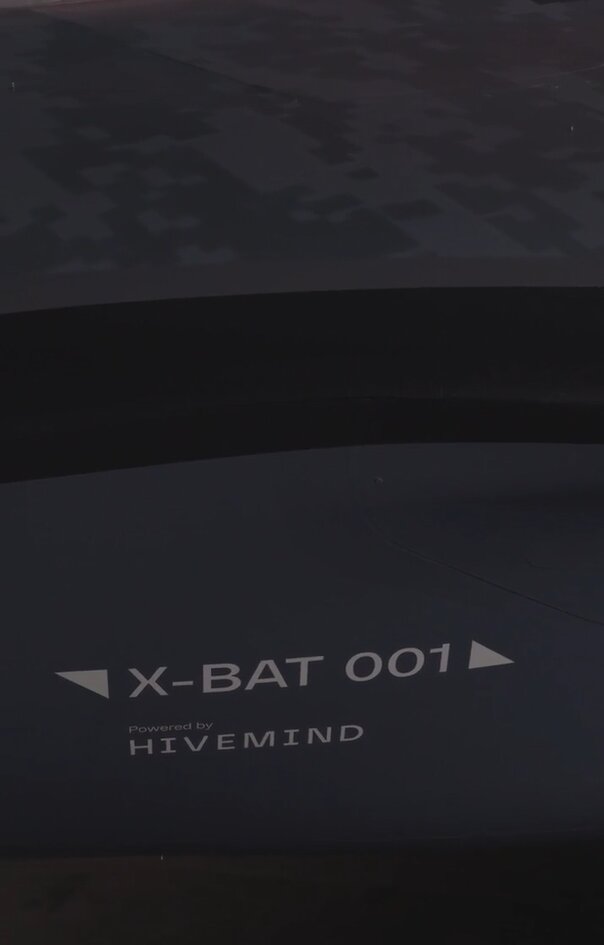
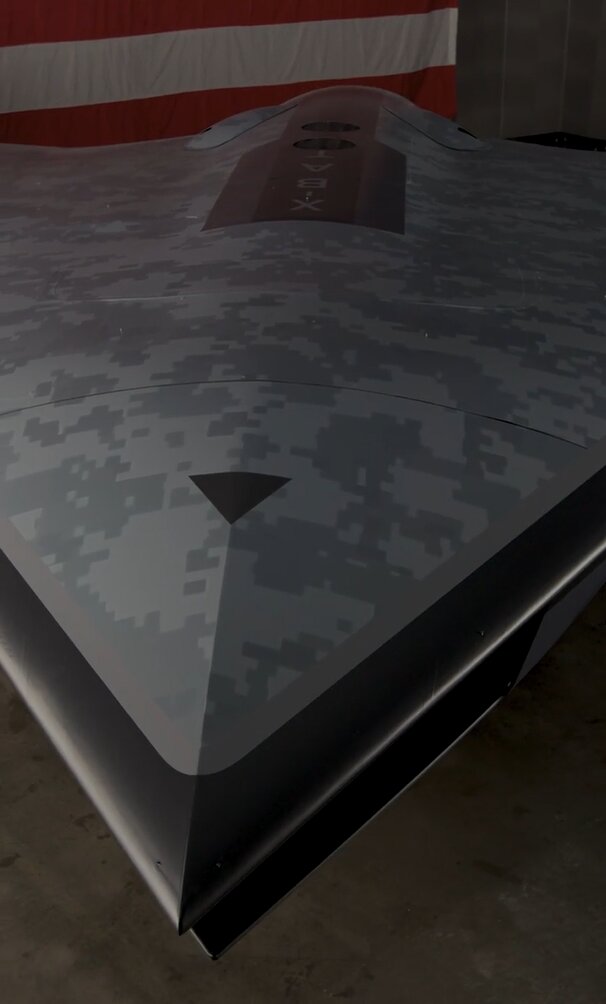
Perhaps the most notable feature is the broad, mouth-like opening beneath the forward body. Appearing to form the aircraft’s intake, it gives the nose something of a whale shark’s profile.
Despite being designed to take off and land vertically from a tail-sitting position, X-BAT 001 is shown resting horizontally on ground supports. Shield AI has not explained that presentation. The footage does not show the aircraft being raised into its launch position or demonstrate its landing arrangement.
X-BAT’s F110 engine appears to be installed
The video gives particular attention to the aircraft’s rear, including close-ups of a circular exhaust nozzle with overlapping metallic petals.
The assembly appears consistent with the GE F110 propulsion system selected for X-BAT. Its position suggests that propulsion hardware has been fitted to the airframe, although the footage alone cannot establish whether the complete engine installation is operational.
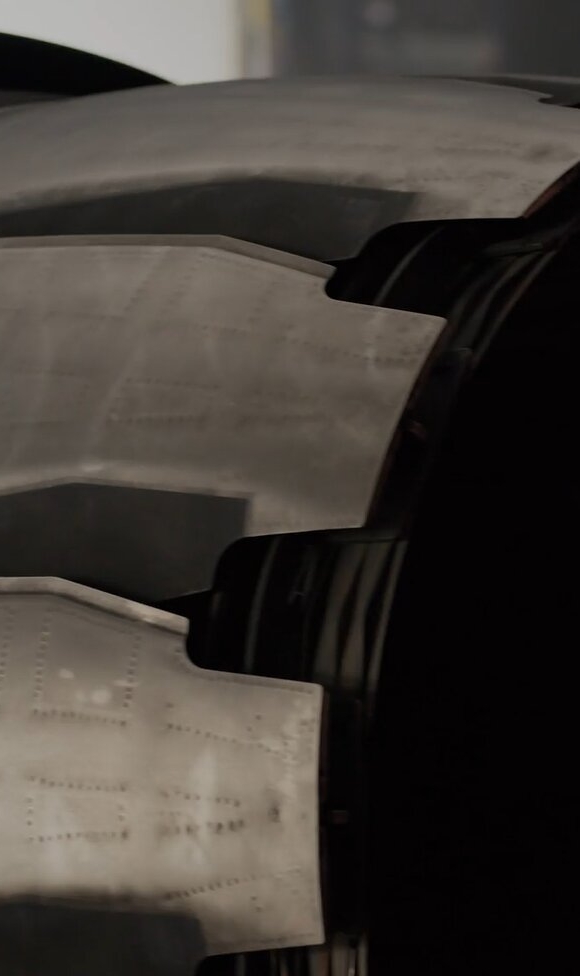
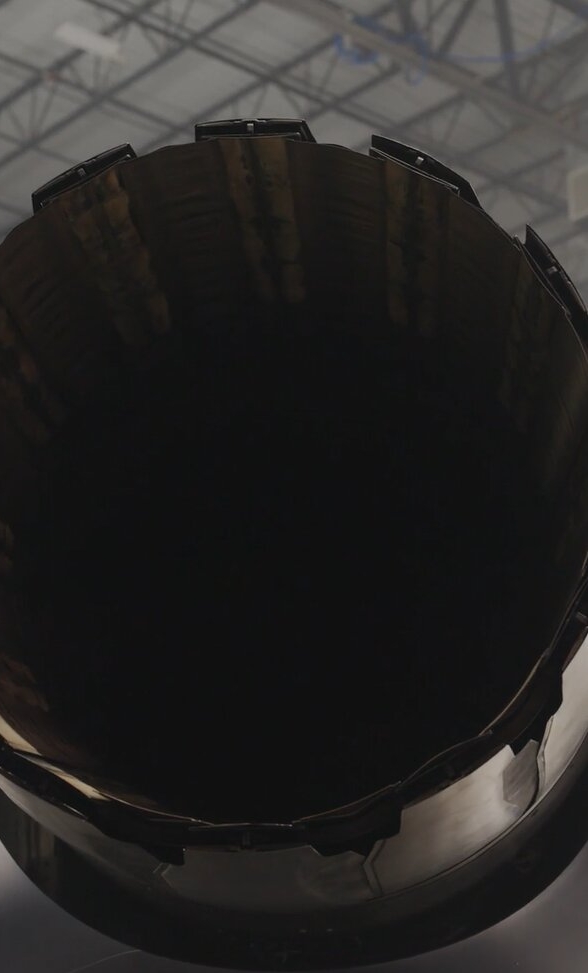
Shield AI’s chosen powerplant combines the F110-GE-129E with GE’s Axisymmetric Vectoring Exhaust Nozzle, or AVEN. The nozzle redirects engine thrust to provide the control needed for vertical flight.
In July, the companies announced successful integration, actuation and engine light-off testing at GE’s Peebles facility in Ohio. Those tests brought the engine, nozzle and controls together ahead of installation and flight testing on X-BAT.
The new footage shows no engine run or nozzle movement, but provides a much closer view of the hardware associated with the aircraft’s unusual takeoff and landing concept.
When will X-BAT fly?
Shield AI’s latest published schedule calls for flight testing to begin before the end of 2026. Its October update said flight-test aircraft were under construction and that weapons-bay aerodynamics had been evaluated in low- and high-speed wind-tunnel tests.
Speaking to Defense One in October, aircraft chief Armor Harris said two full-scale prototypes were being built, with initial flying focused on vertical takeoff and landing tests. He described an early operational capability around 2029 as the objective of a potential subsequent development phase.
Development flying will be based at Newton City-County Airport in Kansas. Shield AI has designated Des Moines, Washington, as X-BAT’s production location, with manufacturing planned to begin in 2029 and reach full rate in the early 2030s.
For now, X-BAT 001’s appearance offers a tangible glimpse of that ambition. The next milestone will be demonstrating that the aircraft can lift off, remain controlled in vertical flight and land safely.


