


X-BAT takes key step towards vertical take-off with repurposed F-16 nozzle

4 min read
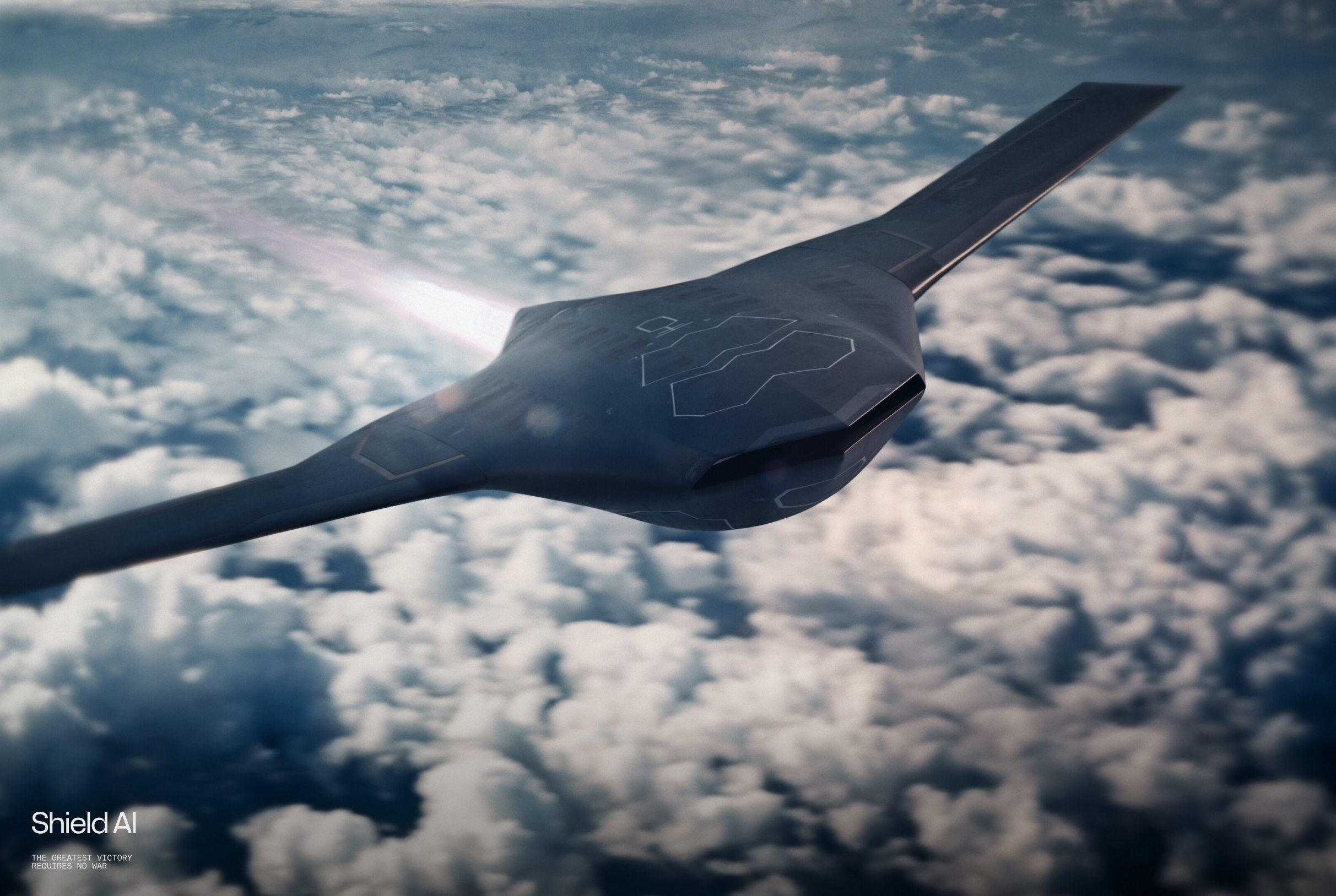
Yesterday, Shield AI announced its ambitious X-BAT autonomous fighter jet had reached a critical milestone in the programme’s path to vertical flight. The company is moving forward with integrating and testing a repurposed experimental F-16 nozzle for its future X-BAT.
Shield AI conducts first X-BAT light-off test
Yesterday, GE Aerospace and Shield AI announced they have successfully completed the “integration, actuation, and engine light-off testing of the advanced Axisymmetric Vectoring Exhaust Nozzle (AVEN) for Shield AI’s X-BAT aircraft.”
No runway, no problem.
— Shield AI (@shieldaitech) July 20, 2026
Shield AI and @GE_Aerospace just cleared a critical path to vertical flight, completing engine light-off testing of the Axisymmetric Vectoring Exhaust Nozzle (AVEN) for X-BAT.
Engineers from both companies integrated the AVEN into GE Aerospace's… pic.twitter.com/OxV3y3sRKB
In the news release, Shield AI said that engineers from both companies have modified and integrated the AVEN into GE Aerospace’s F110-GE-129E engine in Ohio.
The engineers then completed functional checkouts and engine light-off to test the system. Shield AI said that this was the first fully integrated test campaign of this kind since the 1990s.
Armor Harris, senior vice president of aircraft engineering at Shield AI, said, “X-BAT is designed to take off and land vertically from anywhere — no airbase, no runway — and that capability lives or dies with propulsion.”
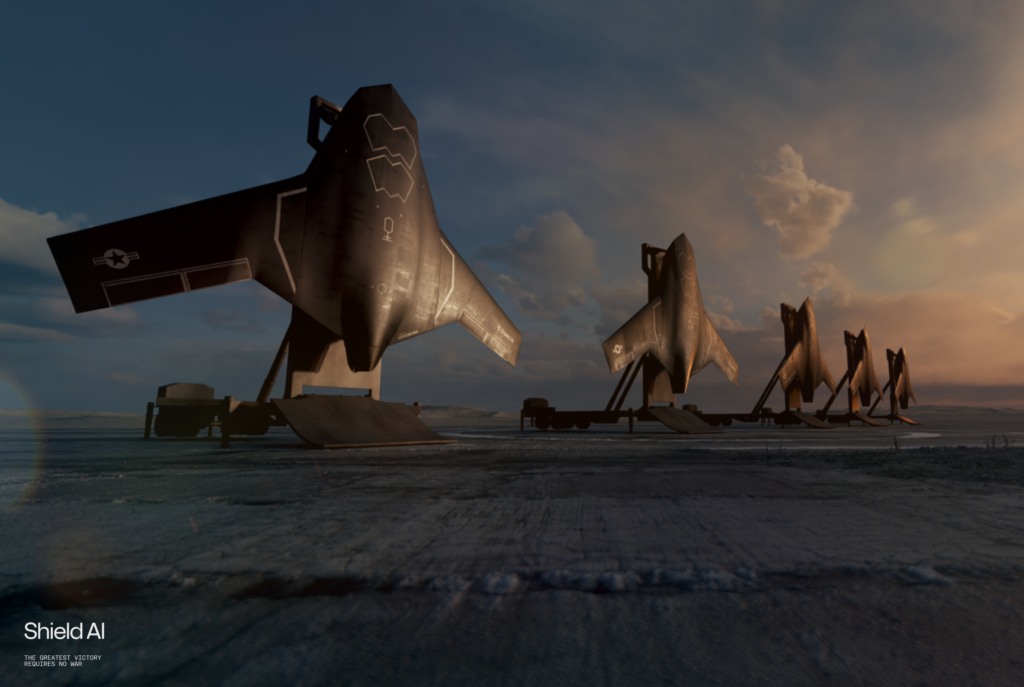
Shield AI selected GE Aerospace and its F-110 engine to develop the X-BAT in November 2025. The flight testing is expected to begin later this year.
Repurposing a 1990’s experimental F-16 thrust-vectoring nozzle
AVEN was developed in the 1990s and was used for 95 tests, 135 flight hours, and 73 hours of ground testing with the F-16. Shield AI says that using this existing system allows it to move forward in the development of the X-BAT faster than designing a new one from scratch.
The AVEN system was originally designed for multi-axis thrust-vectoring for an F-16 demonstration (the NF-16D VISTA testbed aircraft); Shield AI says it is using the AVEN system differently compared to how it was used before (originally to provide supermaneuverability).
X-62A—formerly known as NF-16D VISTA (Variable Stability In-flight Simulator Test Aircraft). It is a heavily modified F-16D that has been used in various research projects in the past, and now is a testbed for autonomous flight research.
— Thanos Massias (@MassiasThanos) September 17, 2024
🎞️ https://t.co/wOJjFaKSLT 👁🗨 @DVIDSHub pic.twitter.com/P9yd9eiEzR
Shield AI wrote in an email to AGN, “Rather than developing an entirely new thrust-vectoring system, the team has modernized proven hardware and adapted it for a fundamentally different mission.”
For the X-BAT development, the AVEN was refurbished, returned to operation, and is now undergoing ground testing ahead of flight testing on the X-BAT prototype.
Doogie Russell, vice president of Edison Works at GE Aerospace, said in the press release, “The integration of AVEN into our F110-GE-129E engine and a successful light-off represents a full-circle moment for our GE Aerospace team.”
Russell added that GE Aerospace is integrating the best of its past, present, and future products into making the revolutionary X-BAT a reality.
Get the latest aerospace defence news here on AGN.
Shield AI’s revolutionary new unmanned fighter X-BAT concept
AGN has previously reported that most contractors are developing next-generation Collaborative Combat Aircraft (aka loyal wingmen drones) to complement manned fighter jets. However, Shield AI is more ambitious.
We’ll see you at @FIAFarnborough, Hall 3 Booth 3750.
— Shield AI (@shieldaitech) June 30, 2026
See X-BAT, the world’s first AI-piloted VTOL fighter jet, up close and learn how Shield AI is delivering sovereign autonomy with Hivemind.
Explore V-BAT, our ISR UAS with a proven operational track record, alongside our… pic.twitter.com/H228D4H3S9
Shield AI is developing its X-BAT as an unmanned fighter in its own right as well as being able to form part of a larger force package with crewed aircraft.
It is to carry up to 2,000 lbs of weapons internally in each bay (similar to the F-35), generate 50 kilowatts of power, and have a combat radius of 1,000 nautical miles.
Shield AI’s X-BAT concept is for a tail-sitting aircraft able to conduct vertical flight (VTOL). The aircraft is intended to solve today’s operational problems like contested airspace, vulnerable runways, and the need for aircraft with long ranges and high payloads.
The contractor asserts, “It’s a long-range, survivable, AI-piloted strike fighter that takes off and lands vertically, so it can operate from ships, islands, or remote sites without runways or support infrastructure.”

The X-BAX is to be powered by Shield AI’s Hivemind autonomy software, and it is intended to have an emphasis on greater AI decision-making and autonomy.
Featured Image: Shield AI
Sign up for our newsletter and get our latest content in your inbox.


More from


September 21, 20263 min read


September 18, 20263 min read