Shield AI X-BAT: What we know about the runway-independent autonomous combat jet

3 min read
Shield AI is developing a jet-powered autonomous combat aircraft capable of vertical take-off and landing without conventional runways, allowing it to operate from roads, ships, and remote forward locations.
Known as the X-BAT, the aircraft is designed as a collaborative combat platform that can support piloted aircraft across air-to-air and strike missions while operating in contested environments where traditional air bases may be vulnerable.
The aircraft is being developed in partnership with GE Aerospace, which will supply a modified F110-GE-129 engine equipped with thrust-vectoring capability.
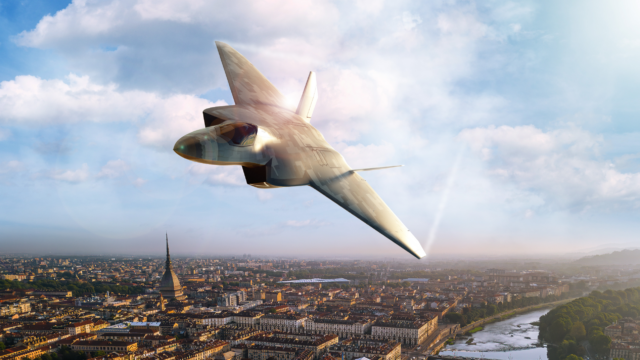
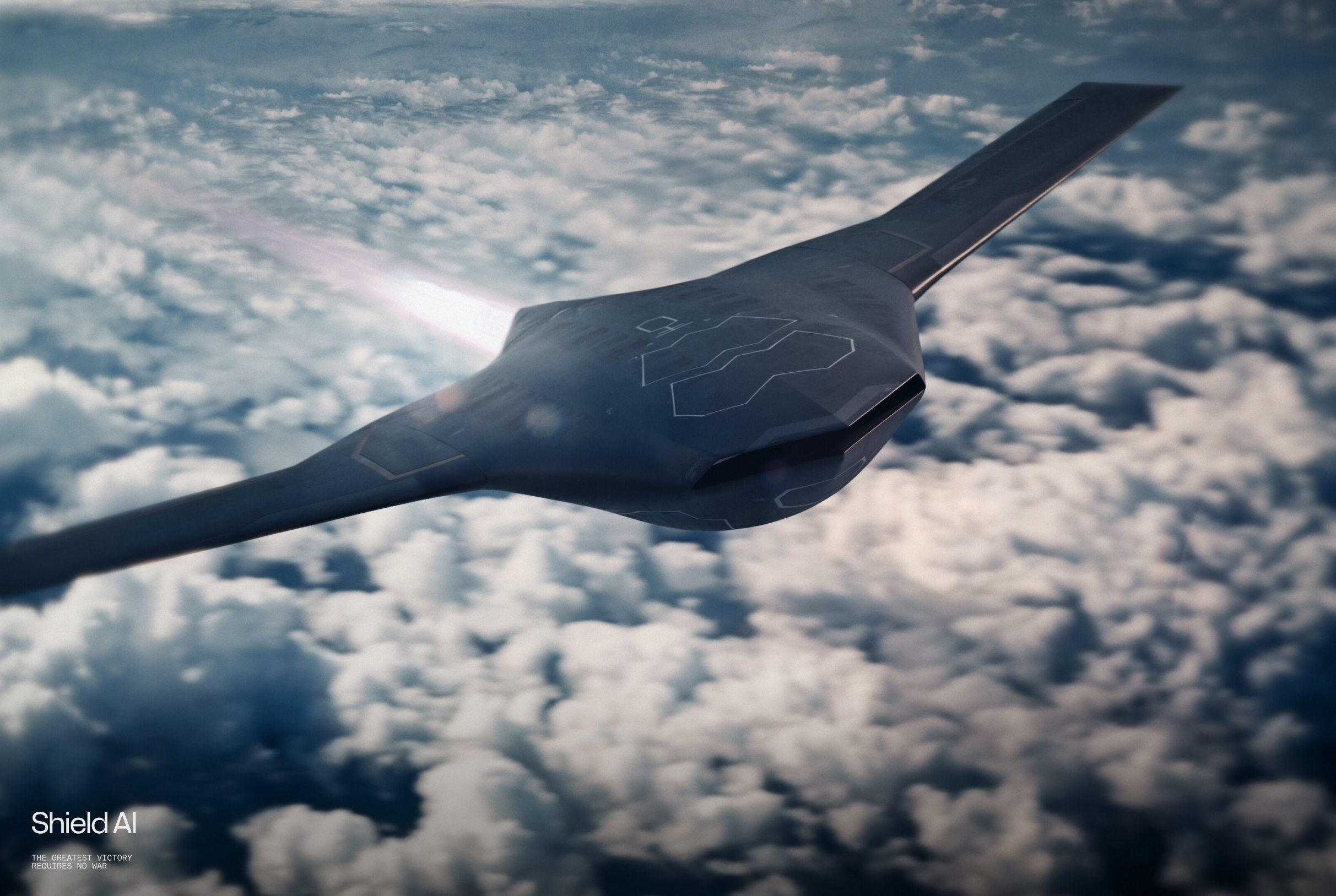
Roughly half the size of a Lockheed Martin F-35 Lightning II, the X-BAT features a distinctive arrowhead-shaped design with highly swept wings intended to reduce its radar signature.
What makes the Shield AI X-BAT different?
The X-BAT’s defining feature is its ability to launch vertically before transitioning into forward jet-powered flight, eliminating the need for traditional runways.
Unlike conventional combat aircraft that depend on large air bases, Shield AI says the X-BAT is intended to operate from dispersed and austere locations, including roads, clearings, and ships at sea.
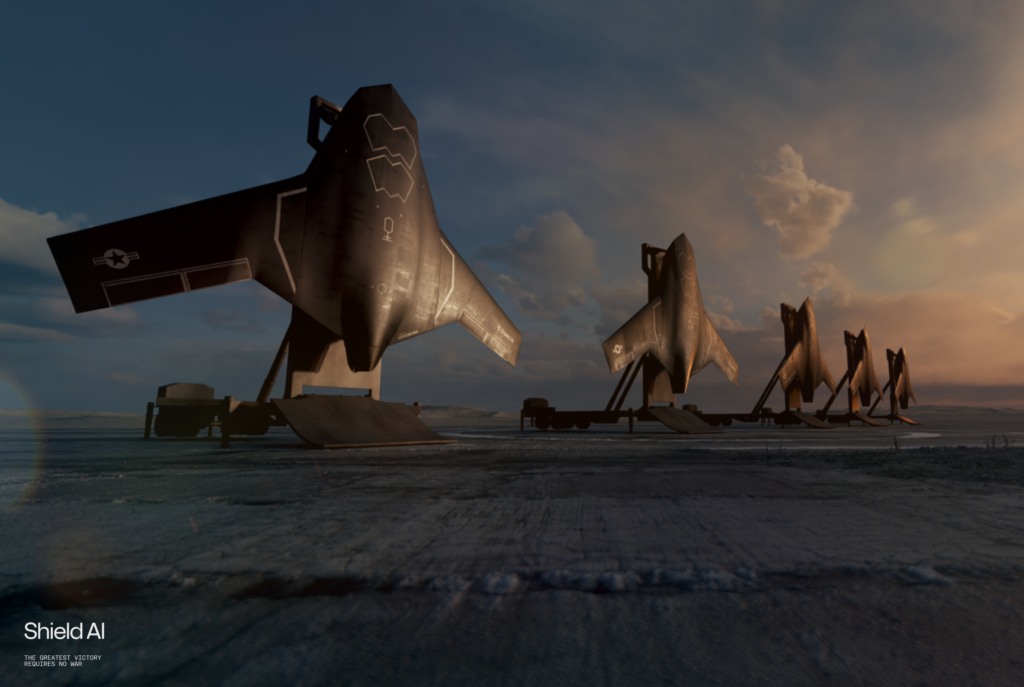
The aircraft launches using a mobile Launch and Recovery Vehicle (LRV), which allows it to take off vertically before transitioning into conventional forward flight in approximately five seconds.
Shield AI says the system can reach cruising altitude within around one minute.
The company believes this operational flexibility could improve survivability in future conflicts where fixed air bases may be targeted early in a campaign.
A jet-powered autonomous combat drone
The X-BAT uses a modified GE Aerospace F110 afterburning turbofan engine fitted with an Axisymmetric Vectoring Exhaust Nozzle (AVEN).
The thrust-vectoring system allows the aircraft to direct engine thrust downward during vertical operations while also improving manoeuvrability during forward flight.
Shield AI says the aircraft has a range of around 2,000 nautical miles and can carry weapons internally and externally.
| Shield AI X-BAT Drone | |
|---|---|
| Short surface equipped | Transporter erector launcher |
| Runway length needed | 40 feet |
| Time to transition from vertical to forward flight | 5 seconds |
| Time to cruising altitude | 60 seconds |
| Internal weapon hardpoints | 4 |
| External weapon racks | 2 |
| Engine | GE F110 afterburner engine |
| Range | 2,000 nautical miles |
X-BAT: Designed for distributed warfare
The X-BAT programme reflects growing military interest in distributed air operations, where crewed and autonomous aircraft operate from dispersed locations instead of relying on large fixed bases.
The aircraft’s folding wing design reduces its storage footprint to roughly one-third that of a conventional fighter aircraft, making it easier to transport aboard ships, trucks, or cargo aircraft.
Shield AI says the aircraft is powered by its Hivemind autonomy software, which is designed to allow the drone to continue operating even in communication-denied environments.
The company claims the software enables the aircraft to identify threats, navigate contested airspace, and collaborate with crewed aircraft autonomously.
Could the X-BAT become an autonomous tanker?
Shield AI has also suggested the aircraft’s external hardpoints could support auxiliary fuel tanks, potentially opening the door to future aerial refuelling applications.
While aerial refuelling does not appear to be a primary mission for the aircraft, the platform’s payload flexibility could allow it to support collaborative operations in multiple roles.
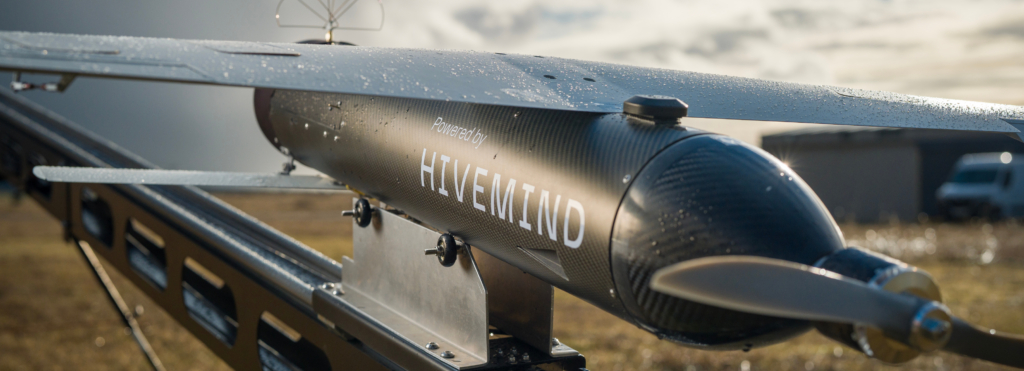
Shield AI’s Hivemind software onboard the aircraft is fast, complex, and unique – enabling aircraft operations in communication-denied environments and across various domains.
The digital pilot is more aware of its environment and can intelligently recognise its adversaries on the battlefield.
When could Shield AI’s X-BAT fly?
Shield AI is aiming to begin initial testing of the X-BAT later in 2026, with the company currently progressing through ground testing and systems integration work.
The manufacturer says it is using an iterative development approach, allowing the aircraft design to evolve as flight testing progresses.
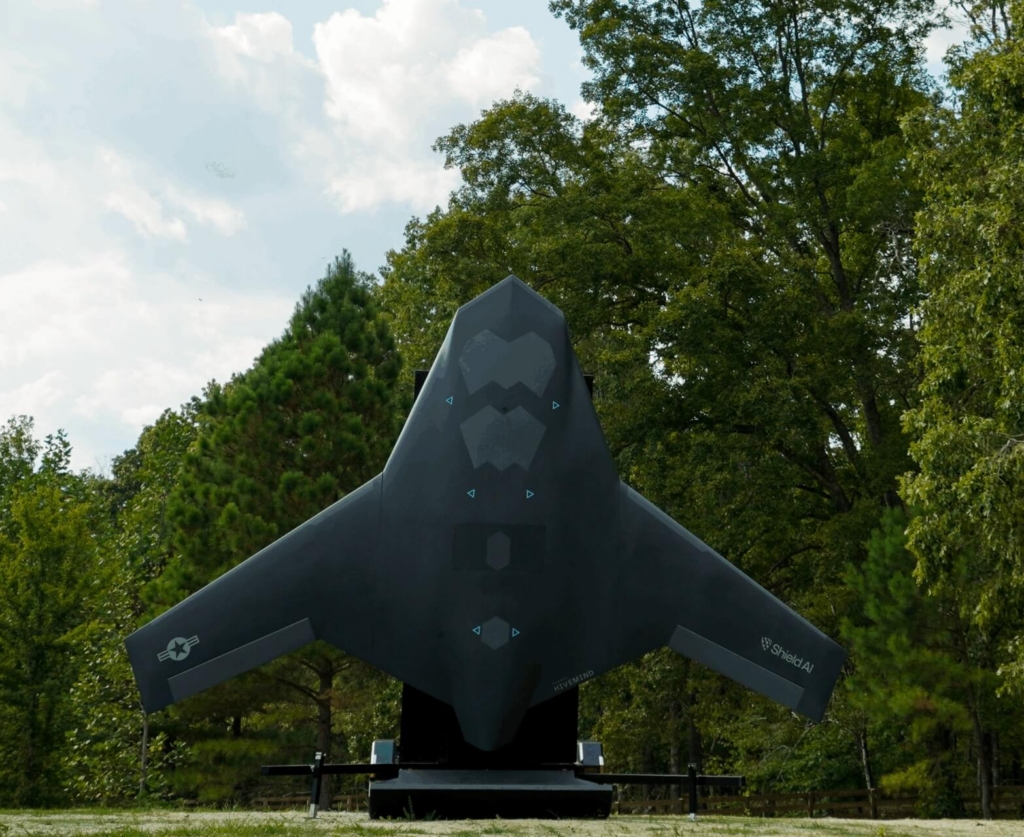
Full-scale production is currently planned for the late 2020s, although many aspects of the programme remain in early development.
The X-BAT joins a growing field of autonomous combat aircraft being developed to support future collaborative and distributed air warfare operations.
Featured Image: Shield AI
Sign up for our newsletter and get our latest content in your inbox.


More from


October 17, 20264 min read