


The invisible pollution around airports: Why scientists are worried about ultrafine particles from aircraft

6 min read
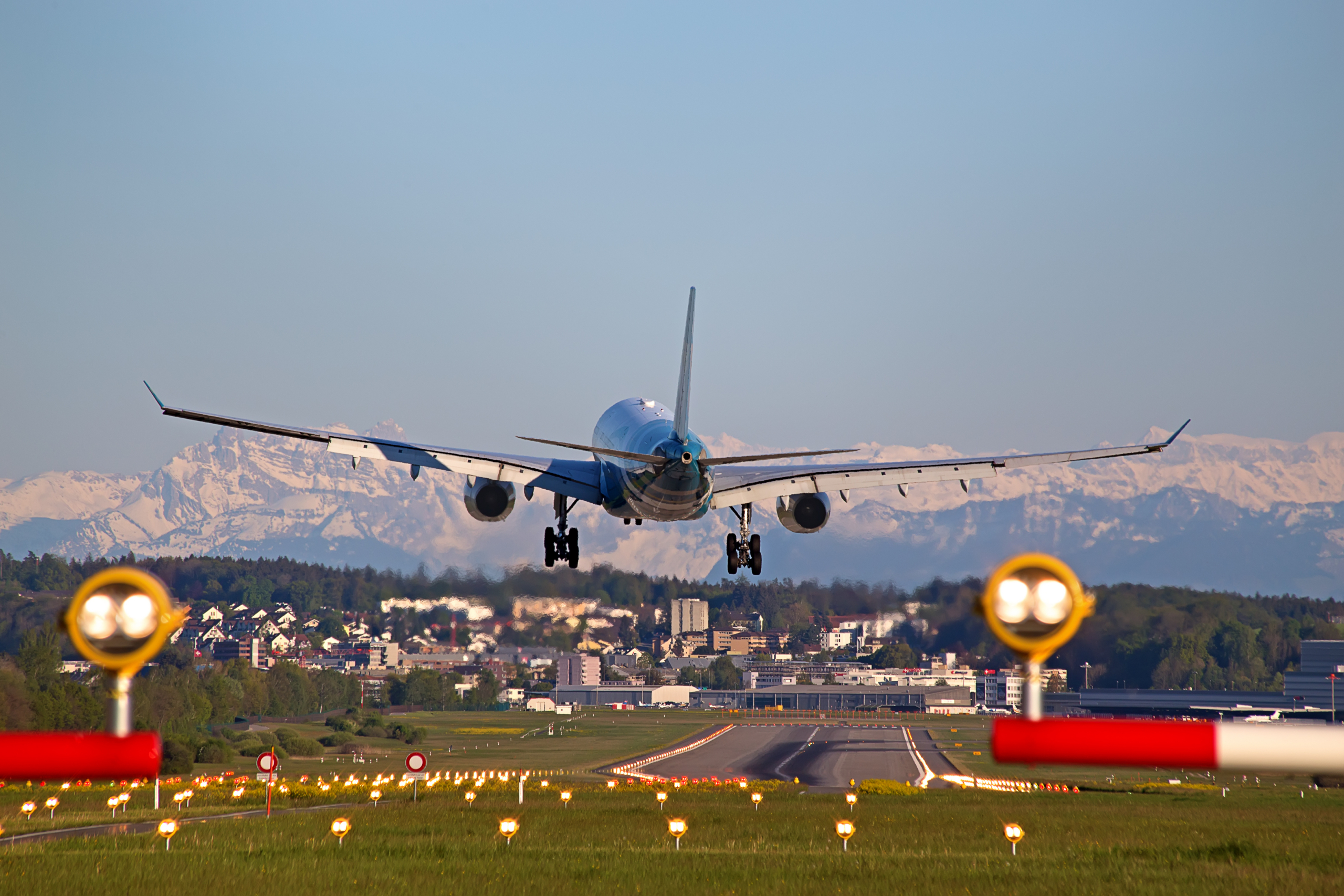
For years, air pollution around airports has largely been discussed in familiar terms such as carbon emissions, aircraft noise and visible exhaust.
But scientists are increasingly focusing on something passengers and nearby residents cannot see at all.
They are called ultrafine particles, or UFPs. They are thousands of times smaller than the width of a human hair. And according to new Swiss research near Zurich Airport, aircraft operations can release them in enormous quantities directly over communities living close to major airports.
Researchers from the Paul Scherrer Institute (PSI) found concentrations reaching up to 300,000 particles per cubic centimetre of air near Zurich Airport during periods of heavy aircraft activity, roughly ten times higher than levels measured when flights were not operating.
What makes the findings more significant is not simply the number of particles, but their size.
Unlike larger pollution particles commonly associated with road traffic or industrial emissions, these aviation-related particles are mostly smaller than 100 nanometres. Many were below 20 nanometres.
That matters because ultrafine particles behave very differently once inhaled.
Why ultrafine particles may be more dangerous than ordinary air pollution
Most people are familiar with pollution measurements such as PM10 or PM2.5, which refer to larger particulate matter suspended in the air. Ultrafine particles are far smaller.
Scientists define them as particles below 100 nanometres in diameter. At that scale, they can travel far deeper into the human body than ordinary pollution particles.
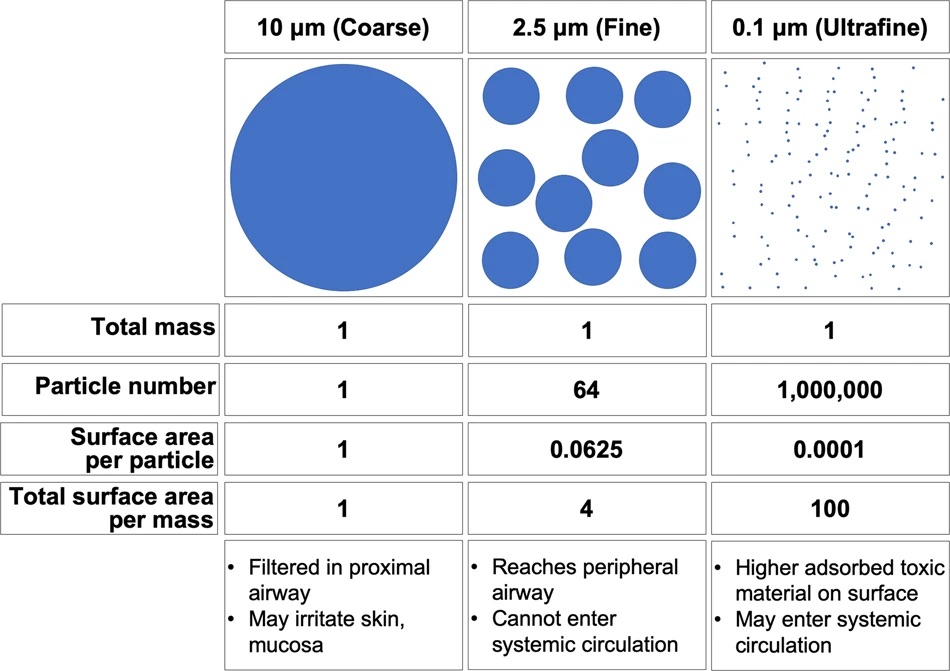
Larger particles are often trapped higher up in the respiratory system. Ultrafine particles, however, can penetrate into the lungs’ deepest regions like the alveoli, where oxygen enters the bloodstream. Some studies suggest they may even pass into the circulatory system itself.
Researchers have linked prolonged exposure to ultrafine particles with respiratory disease, cardiovascular problems and possible neurological effects.
That is why scientists increasingly see UFPs as one of the least understood but potentially most serious forms of urban air pollution. And airports are emerging as a major source.
Zurich Airport study reveals massive spikes in aircraft ultrafine particles
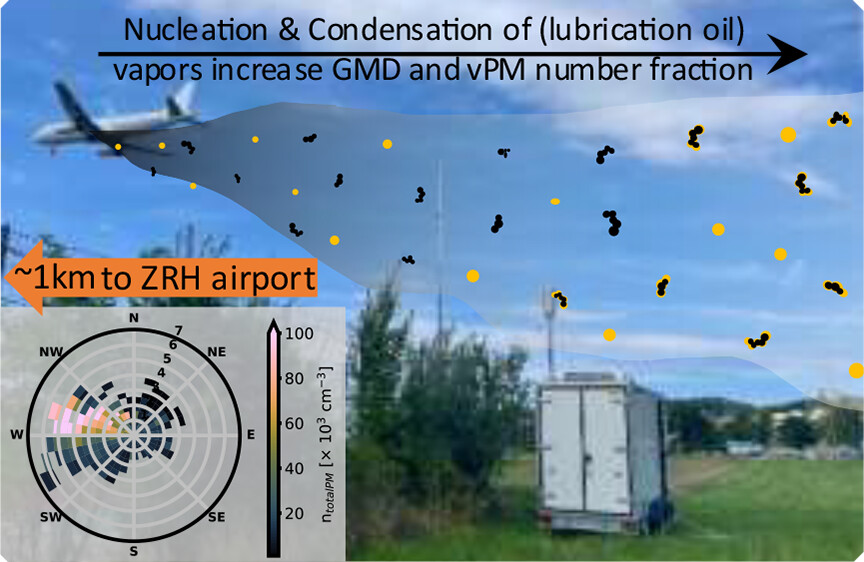
The Swiss study focused on an open field in Kloten, roughly one kilometre downwind of Zurich Airport and less than 50 metres from a primary school.
Researchers monitored air quality during winter 2022 and combined it with long-term measurements covering 2022 and 2023. The location allowed scientists to observe what happens when aircraft exhaust plumes move directly over nearby residential areas.
The findings were striking.
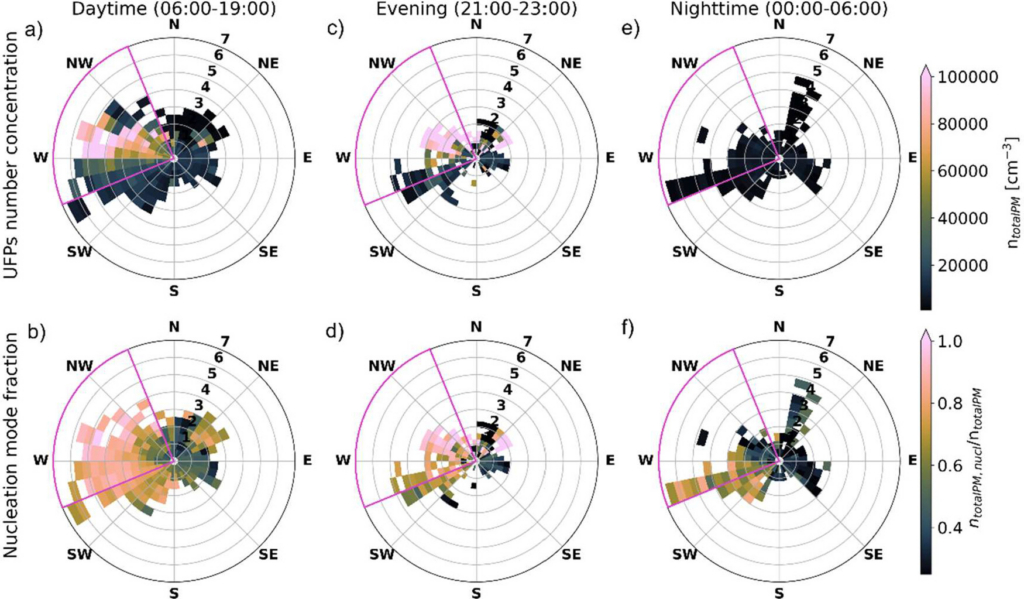
During periods when winds carried emissions from the airport towards the monitoring site, ultrafine particle concentrations surged dramatically.
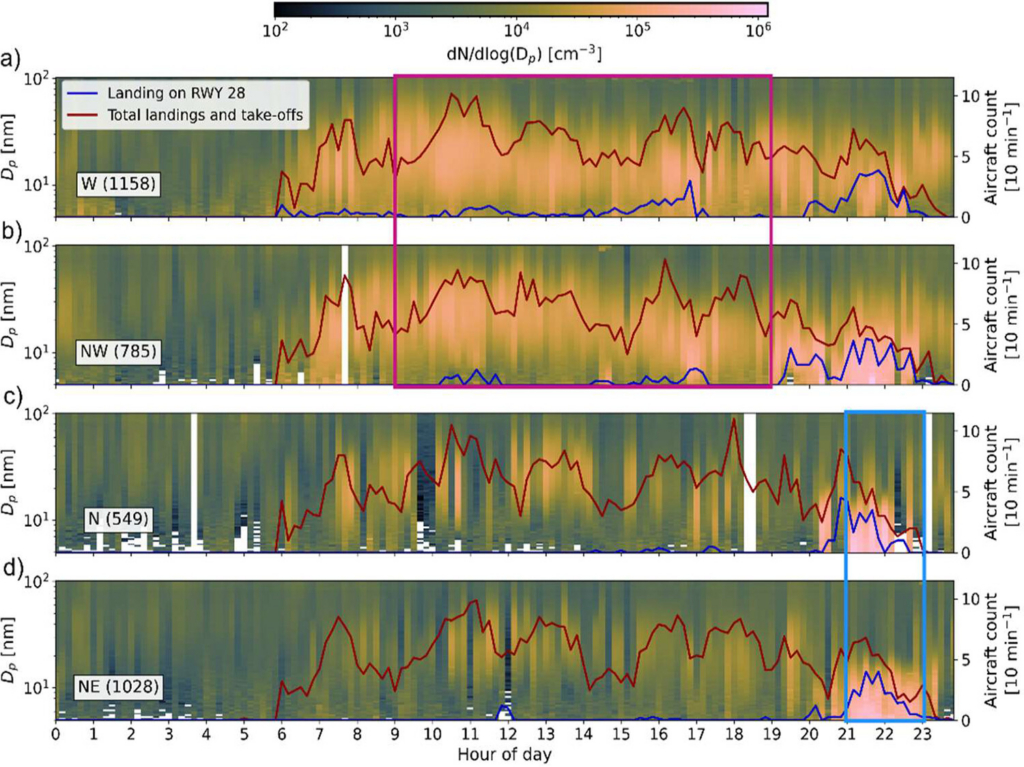
The highest levels were recorded during busy daytime flight operations and evening landing periods. At times, aircraft were landing directly overhead at altitudes as low as 80 metres, causing exhaust plumes to descend rapidly towards the ground.
Researchers found that every aircraft passing overhead triggered sharp spikes in ultrafine particle concentrations. What surprised scientists was how dominant aviation emissions appeared to be compared with other urban pollution sources.
Road traffic still contributed to background pollution, particularly during morning rush hour, but airport emissions were responsible for the largest spikes in ultrafine particle numbers.
The study found airport-related emissions dominated daytime ultrafine particle concentrations for roughly 30% of the time across all wind directions.
Scientists found aircraft engine oil in ultrafine pollution particles
The Zurich research also identified something rarely measured in real time before: the traces of aircraft engine lubrication oil attached to the ultrafine particles.
Researchers used specialised mass spectrometry equipment capable of detecting chemical signatures linked to jet engine lubricants.
They found strong correlations between spikes in ultrafine particle levels and compounds associated with aircraft lubrication oils, including tricresyl phosphate (TCP).
“A previous study at Frankfurt Airport had already found lubricating oil in the particulate matter,” study leader Benjamin Brem, from the PSI Center for Energy and Environmental Sciences, said. “However, in that study, the particles were collected and daily average values were determined. We, on the other hand, recorded measurements of the lubricating oil in real time.”
The particles themselves are produced through a combination of soot, sulphates and volatile compounds generated during aircraft engine combustion and exhaust cooling.
Scientists say the smaller the particles become, the more easily they can reach the deepest parts of the lungs.
“In terms of particle mass, the particulate matter pollution at the airport is lower than in the city,” researcher Sarah Tinorua said. “But the number of particles at the airport is significantly higher.”
Tinorua also warned that the long-term health effects of inhaling these lubricating oil compounds remain poorly understood.
“The potential health effects of such lubricants being inhaled deep into the lungs have not yet been fully investigated,” she added.
How weather conditions affect aircraft ultrafine particle pollution
The study also showed how weather conditions affect particle behaviour.
Under stronger winds, particles tended to remain smaller because they dispersed more quickly. Under calmer conditions, however, particles had more time to collide, combine and grow in size during transport away from the airport.
Researchers observed ultrafine particles growing from below 20 nanometres to around 40 nanometres within relatively short distances from the airport.
The airport’s operational patterns also mattered.
Take-offs generated major daytime emissions, while evening landing operations created distinct spikes as aircraft descended directly over nearby communities.
In some cases, the concentration peaks remained detectable even outside the main downwind direction because of the way aircraft wake turbulence pushed exhaust plumes downward.
Why regulators are becoming concerned about airport ultrafine particles
Although emissions such as nitrogen oxides and carbon monoxide from aircraft engines are already regulated internationally, ultrafine particles remain far less tightly controlled.
The Zurich findings are therefore likely to add pressure for more monitoring around airports.
The Swiss Federal Office of Civil Aviation, which funded the research, is already discussing mitigation measures.
Potential steps include wider use of low-sulphur kerosene, increased adoption of sustainable aviation fuels, reducing aircraft idling, and using electric towing vehicles instead of running engines during ground movement.
Zurich Airport has already restricted the use of onboard auxiliary power units while aircraft are parked, requiring them to connect to airport electricity instead. The broader issue, however, extends well beyond Zurich.
Major airports around the world sit close to dense urban populations. Millions of people live beneath flight paths or near runways.
The Swiss study adds to a growing body of evidence suggesting that aviation-related ultrafine particles may become one of the next major environmental and public health debates facing the global aviation industry.
Featured image: stock.adobe.com
Sign up for our newsletter and get our latest content in your inbox.


More from


September 25, 20264 min read

September 25, 20264 min read

September 24, 20262 min read


