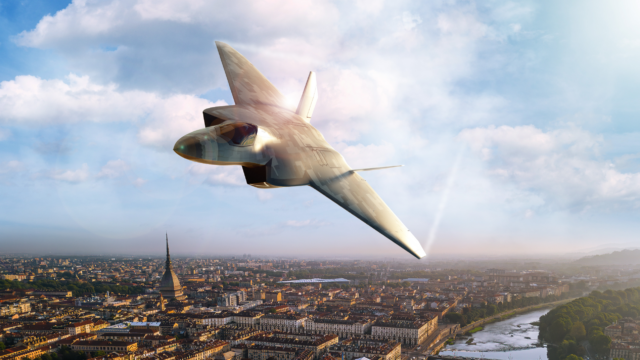
Otto Aerospace advances Phantom bizjet technology with successful laminar flow UAV flights

4 min read
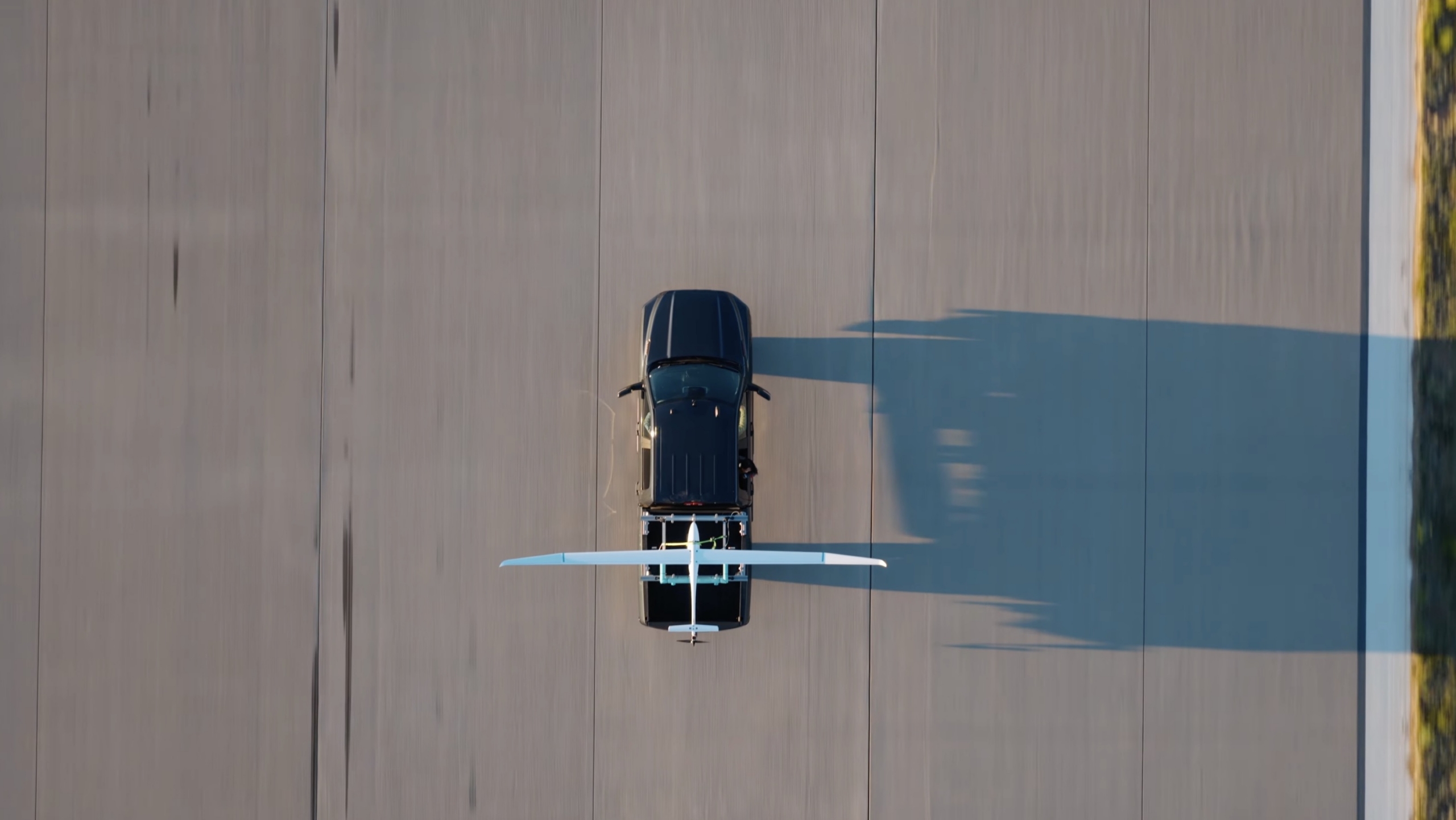
Otto Aerospace has completed a flight-test campaign of an unmanned aircraft built around its laminar flow aerodynamic technology, with the company saying the trials successfully validated the aircraft’s predicted efficiency in operational flight conditions.
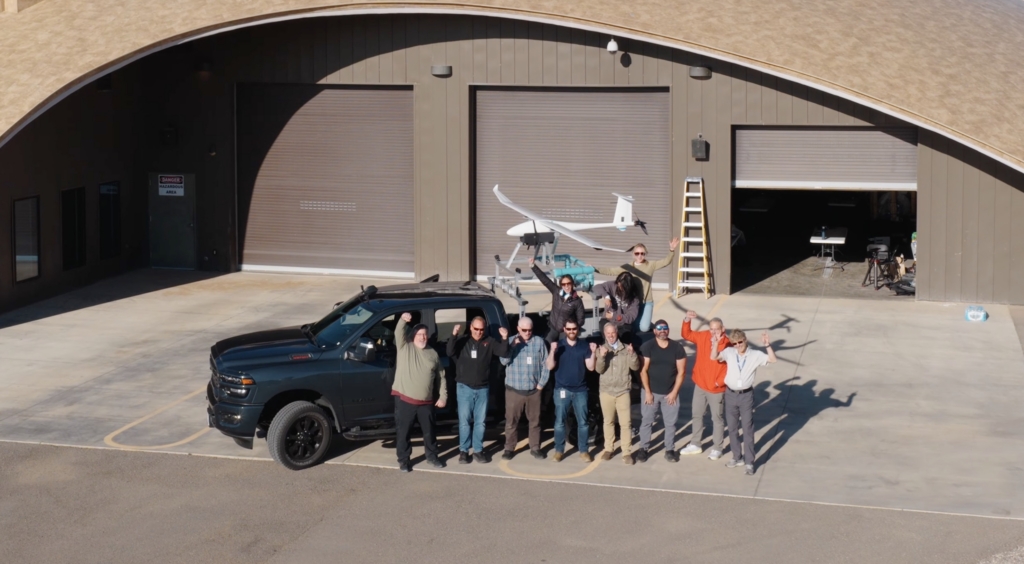
The tests were conducted from Spaceport America in New Mexico within White Sands Missile Range airspace and involved multiple sorties using an unmanned demonstrator designed specifically to evaluate Otto’s low-drag aerodynamic approach.
Video released by the company showed a long-winged aircraft with a slender fuselage, smooth external contours and minimal surface interruptions, all intended to preserve uninterrupted airflow across the airframe.
The demonstrator was originally developed as part of research linked to DARPA’s Energy Web Aircraft (EWA) programme, although Otto said the latest campaign itself was company-funded and conducted outside the scope of the government contract.
DARPA’s EWA effort explored concepts centred on airborne energy relay systems and laser-based power transfer that could potentially allow aircraft to remain airborne for extended periods.
Otto’s role focused on designing an ultra-efficient laminar-flow airframe capable of reducing the amount of energy required for sustained flight.
“This aircraft proved what we’ve modelled for years, that high-efficiency laminar-flow aerodynamics can deliver extraordinary endurance and performance,” said Scott Drennan, president and chief executive of Otto Aerospace.
Laminar-flow UAV flight tests validate Otto Aerospace efficiency claims
Laminar flow has been one of aviation’s most difficult aerodynamic goals for decades.
In simple terms, it refers to smooth airflow travelling across an aircraft’s surface in stable layers without breaking into turbulence. Once airflow becomes turbulent, drag rises sharply, increasing fuel consumption and reducing endurance.
Maintaining laminar flow across large sections of an aircraft is technically difficult because even small surface imperfections, gaps or protrusions can disrupt airflow.
The aircraft seen in the flight-test footage was designed around that principle from the outset.
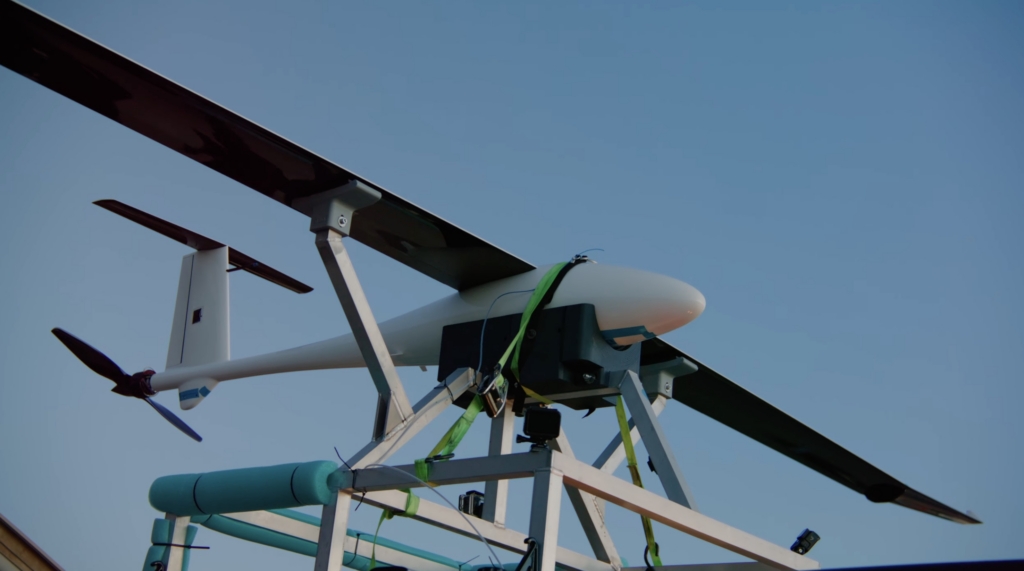
The demonstrator’s elongated fuselage, high-aspect-ratio wings and unusually clean external surfaces are all intended to minimise aerodynamic disturbance and reduce drag throughout flight.
Unlike many earlier laminar-flow experiments confined largely to wind-tunnel research or isolated wing sections, Otto’s approach attempts to apply the concept across the broader aircraft structure.
The company said the latest tests validated the aircraft’s predicted aerodynamic performance during real flight operations rather than controlled laboratory conditions alone.
Flight operations were conducted in partnership with Swift Engineering, which handled vehicle preparation and coordinated telemetry and range support during operations over White Sands Missile Range.
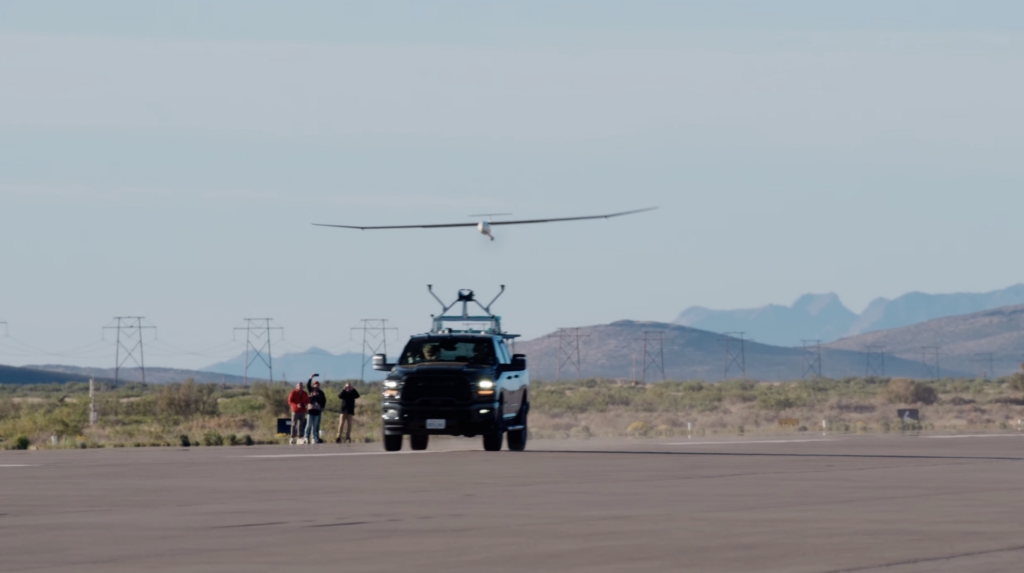
Footage showed launch, recovery and ground operations at Spaceport America as well as the aircraft operating at altitude over restricted airspace in New Mexico.
“The performance demonstrated in flight confirms the promise of laminar-flow aerodynamics to redefine long-endurance efficiency for unmanned systems across defence and commercial applications,” said Hamed Khalkhali, president of Swift Engineering.
DARPA research explored ultra-endurance aircraft and airborne power transfer
The wider DARPA-linked research effort examined future concepts for persistent airborne systems capable of remaining aloft for extremely long periods.
The Energy Web Aircraft programme explored whether airborne relay aircraft could transfer power using laser-based systems to support other aircraft in flight.
Within that broader concept, Otto’s contribution centred on reducing the aircraft’s energy demand through aerodynamic efficiency.
Lower drag directly translates into reduced fuel burn, greater endurance and longer time on station, particularly important for high-altitude unmanned aircraft used for surveillance, communications relay or intelligence missions.
The company said the data gathered during the latest campaign could support future development of energy-efficient unmanned aircraft and airborne relay systems.
“The data collected in this test opens new possibilities for energy-efficient aviation,” Drennan said. “From business jets to long-endurance UAVs, we’re showing how laminar flow can change what’s possible in flight.”
Otto Aerospace flight tests support Phantom 3500 business jet development
The flight campaign also has direct relevance to Otto Aerospace’s Phantom 3500 business jet programme, which has attracted attention because of its highly unconventional design.
The Phantom’s windowless passenger cabin and unusually smooth fuselage geometry are based on the same aerodynamic philosophy demonstrated during the New Mexico tests.
Traditional aircraft windows interrupt airflow and complicate efforts to maintain laminar flow along the fuselage.

Otto’s solution replaces conventional passenger windows with digital display systems linked to external cameras, allowing the aircraft exterior to remain smoother and aerodynamically cleaner.
The Phantom also incorporates a narrow fuselage and long, high-aspect-ratio wings designed to reduce drag and improve fuel efficiency.
Several of those design characteristics were clearly visible in the unmanned demonstrator used during the latest flight campaign, providing one of the clearest operational demonstrations so far of the aerodynamic principles underpinning Otto’s wider aircraft development strategy.
While Otto has not released detailed performance figures from the campaign, the successful flights represent an important validation step for the technology the company hopes will eventually support both future long-endurance unmanned systems and next-generation commercial aircraft.
Featured image: Otto Aerospace
Sign up for our newsletter and get our latest content in your inbox.


More from


October 17, 20264 min read