


Airbus tests giant A350F cargo door as freighter nears first flight

4 min read
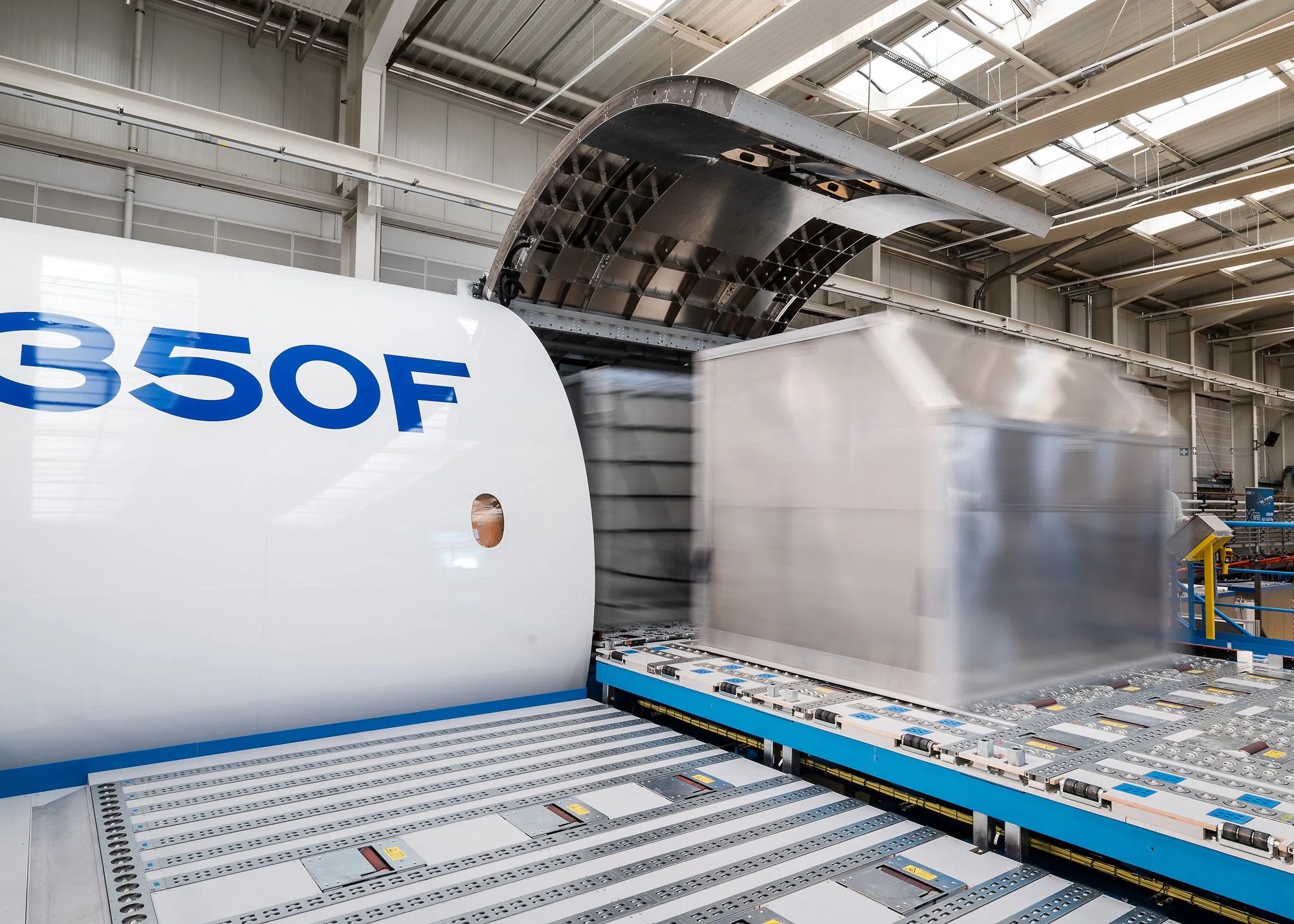
Airbus is stress-testing the giant cargo door and cargo handling systems of its forthcoming A350F freighter ahead of the aircraft’s first flight later this year.
Since March, engineers have been testing not only the door but also the cargo loading systems inside a 24 metre long slice of aircraft fuselage.
The partial full-scale replica of the A350F’s cargo hold is called ‘Cargo Zero,’ and is the final step before the system is installed into the flight test aircraft, MSN700.
Airbus is targeting the third quarter of 2026 for the first flight of its A350-based freighter, ahead of entry into service in the second half of 2027.
Testing the Airbus A350F main deck cargo door
While plenty of attention is focused on the aircraft, preparing the A350F for real-world freight operations is about more than just making it fly.
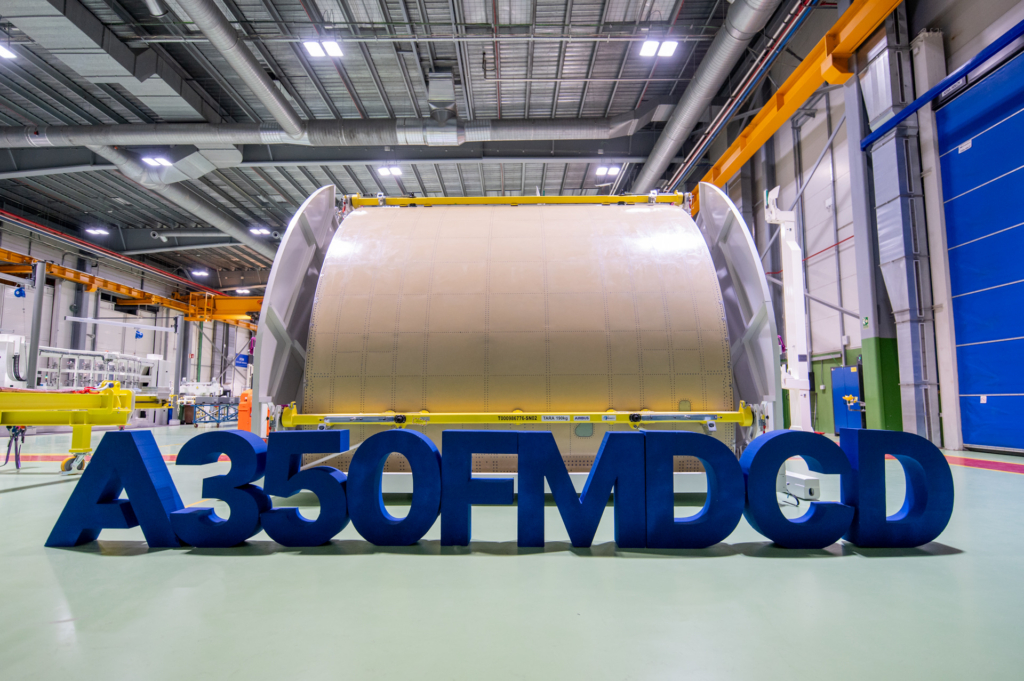
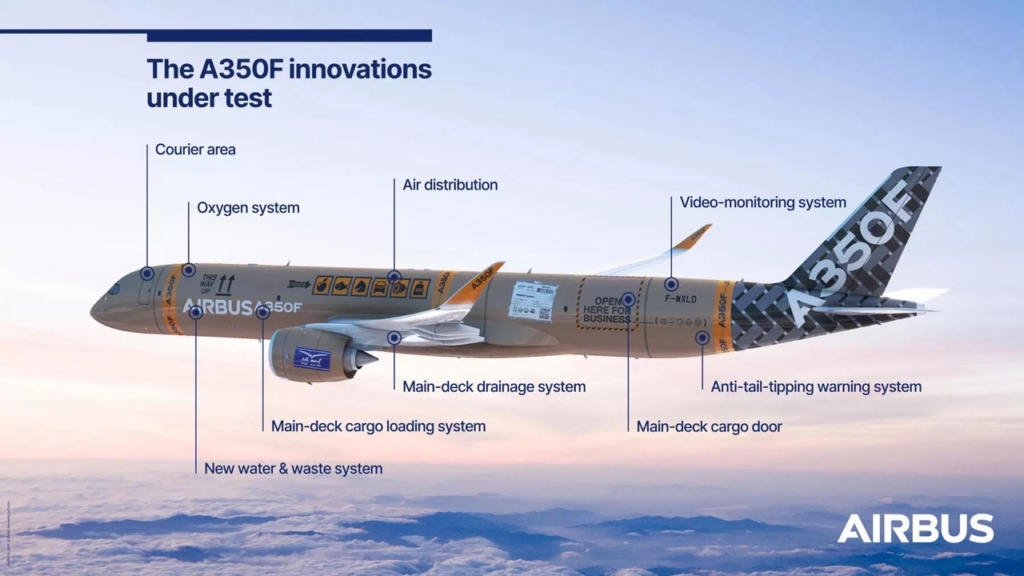
The A350F features the industry’s largest main deck cargo door (MDCD) at 170 inches (4.3 m) wide. Getting that huge door to lift, close, and securely fasten has been a new challenge for Airbus.
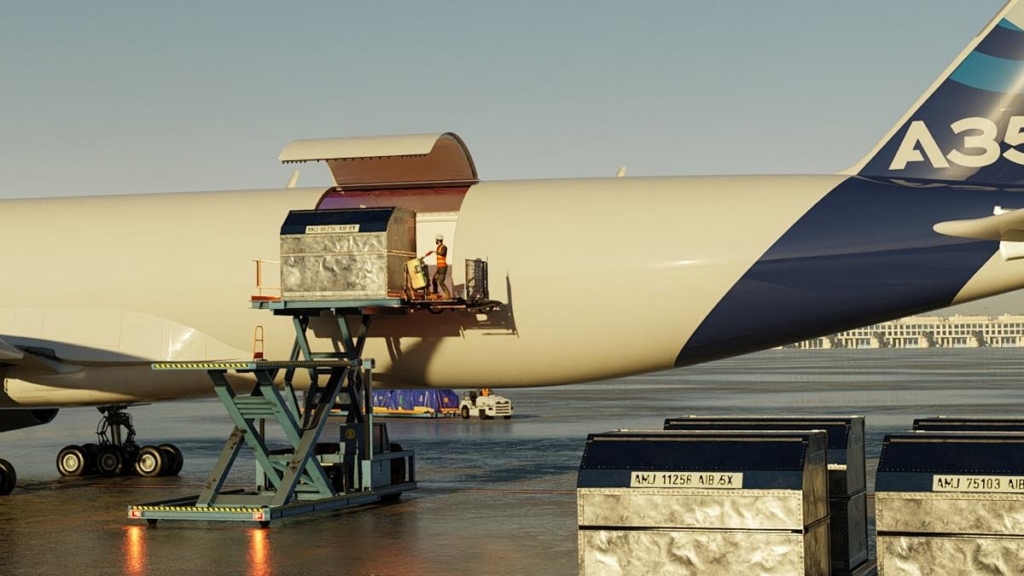
Like the passenger A350 family, the freighter follows Airbus’ “more electric aircraft” philosophy, replacing many traditional hydraulic systems with electric motors and actuators. This reduces weight significantly and drives down maintenance burden. As such, the MCDC was always going to be electrically controlled.
To test the Airbus design for the lifting mechanism, a 20-tonne test rig was constructed in Bremen. Engineers open and close the mechanism multiple times, simulating different structural loads to give early validation to the actuators.
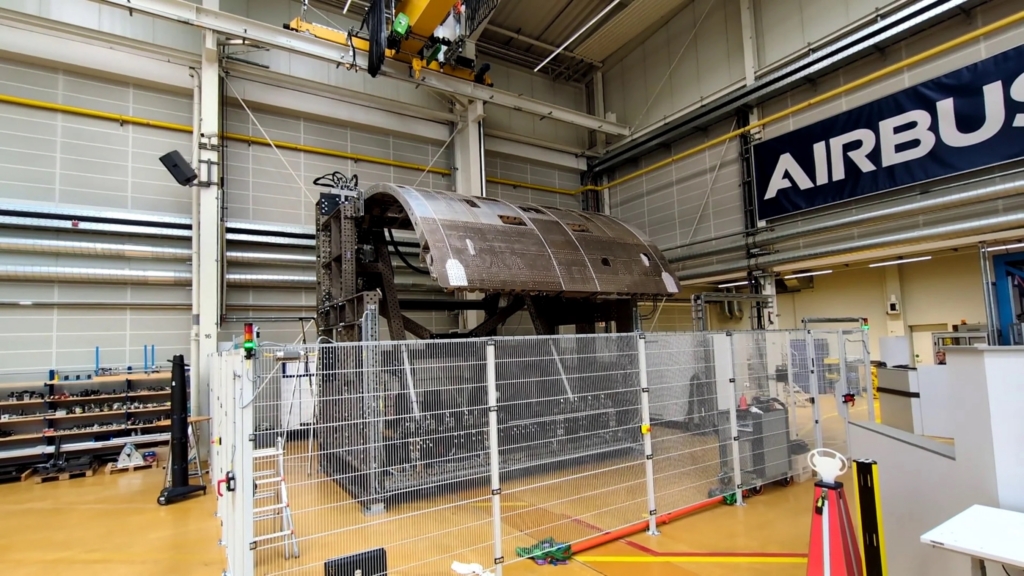
Alongside this, the tests have been putting the Airbus-designed and patented latching system through its paces.
“The door system itself is always shut off during flight, so the immediate goal is ensuring the system is locked and secured,” says Jürgen Ruckes, cargo and door testing leader. “Later, the system must be shown to be compliant with airworthiness requirements for EASA certification. The results from the testing benches feed into the certification campaign.”
Cargo Zero: A glimpse at the hold of the A350F
As well as supporting early certification of the lift and latch mechanisms, Bremen has also been testing the loading system itself.
Cargo Zero is essentially a chunk of A350F fuselage, complete with the entire Cargo Loading System (CLS) and a cutout of the main deck cargo door. All the panels, controls and power-drive units are in place, as they would be in the real aircraft.
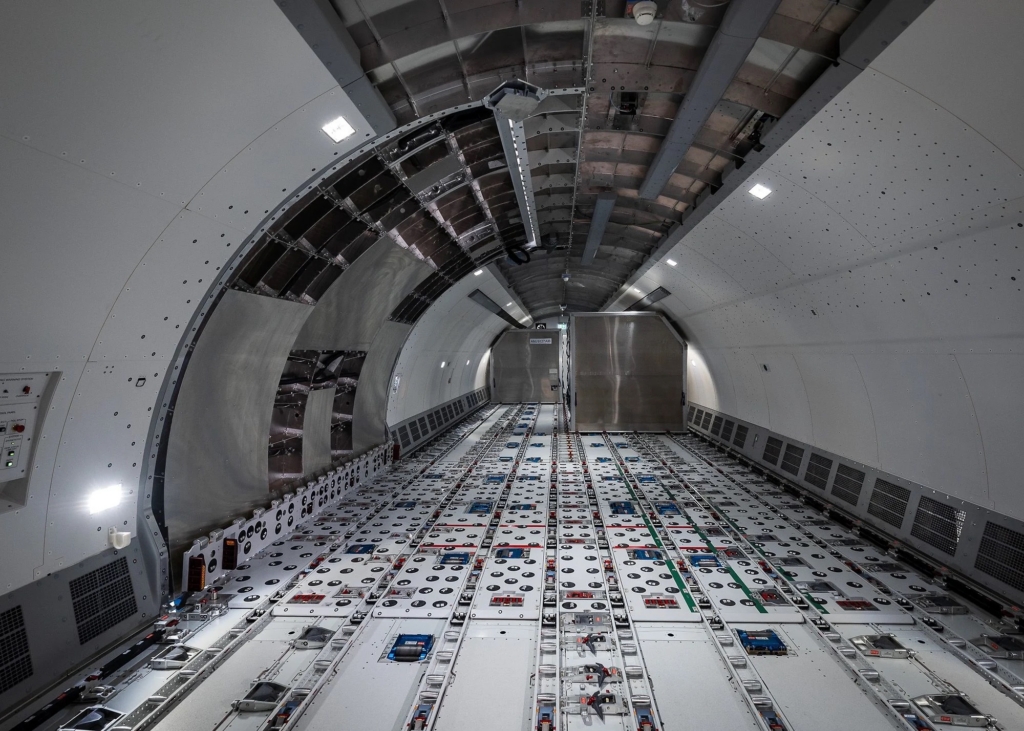
While Cargo Zero looks very similar to the real A350F, some elements are missing from the demonstrator. To tackle this, Airbus engineers have been using mixed reality tools such as HoloLens to visualise things like additional rails, floor panels and bolts.
The cargo loading system works with electrical power drive units and mechanical rollers to help ground crews easily move items into place. Control panels on the walls give them precise control over pallets and containers as they arrive on board.
With such a large cargo door, Airbus is positioning the A350F as a carrier of outsize cargo, when required. Things like aircraft engines and heavy machinery can be more easily loaded with the extra clearance, but it is important for Airbus to make sure it can transport them safely.
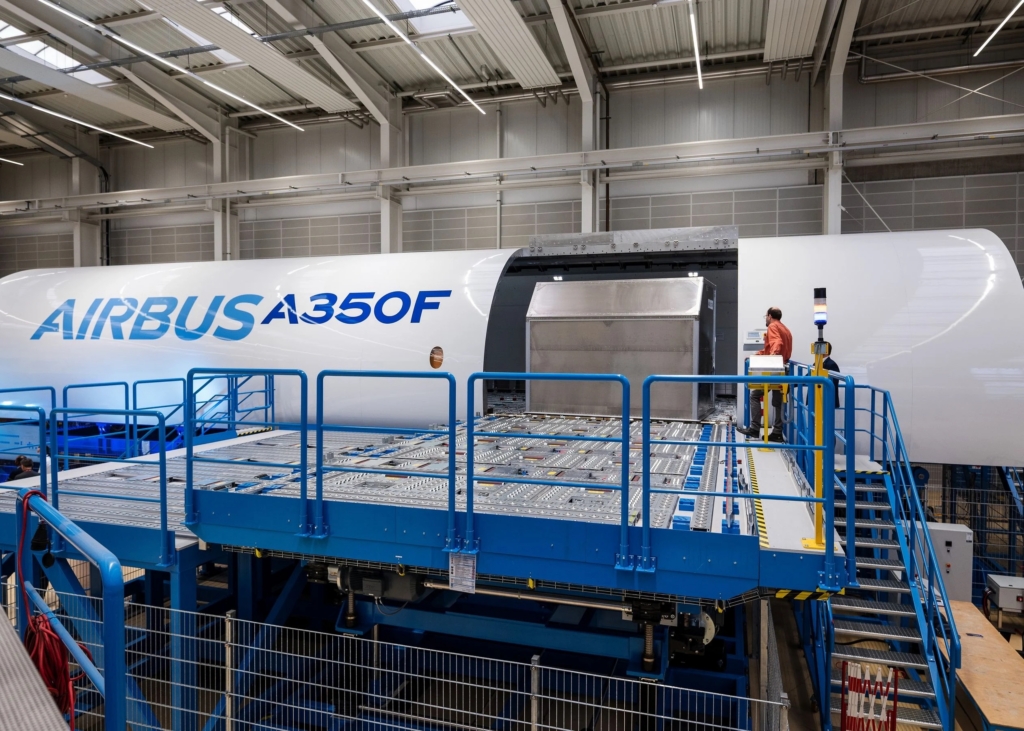
Cargo Zero is designed to simulate handling scenarios involving exceptionally heavy cargo, including ULDs weighing up to 28 tonnes. The rig can simulate extreme floor flex and tilt angles, so engineers can be confident in the load system and security of the cargo.
Cargo Zero is also being used to validate the A350F’s Tail Tipping Warning System. The system will protect against the aircraft tipping backwards during uneven loading scenarios, particularly when heavy rear cargo combines with strong headwinds or snow accumulation on the tailplane.
What’s next for the A350F?
With cargo system testing now accelerating in Bremen, Airbus is preparing the A350F programme for several major milestones over the next 18 months.
The first flight-test aircraft, MSN700, is currently progressing through final assembly in Toulouse, with Airbus still targeting a maiden flight in the third quarter of 2026.
That will be followed by an intensive flight-test and certification campaign expected to run into 2027.
Airbus has previously indicated the programme could involve roughly 400 flight hours across two dedicated flight-test aircraft, MSN700 and MSN701, ahead of certification by the European Union Aviation Safety Agency and the US FAA.
Entry into service remains targeted for the second half of 2027, despite earlier delays linked to supply chain disruption.
For the Bremen teams, the work is far from over. Airbus says Cargo Zero and the cargo door integration rigs will continue supporting testing throughout 2026 and 2027, including additional operational scenarios, abnormal loading conditions and further maturity testing.
The company also plans to use Cargo Zero for customer-specific evaluations and training exercises, allowing operators to simulate how they would load and operate the aircraft before it enters service.
Beyond the initial certification phase, Airbus says the Bremen demonstrators will continue helping refine the A350F’s cargo handling procedures, loading systems and operational reliability as the freighter moves closer to commercial operations.
Featured image: Airbus


