Airbus’s first A350F cargo door arrives in Toulouse as program advances

3 min read
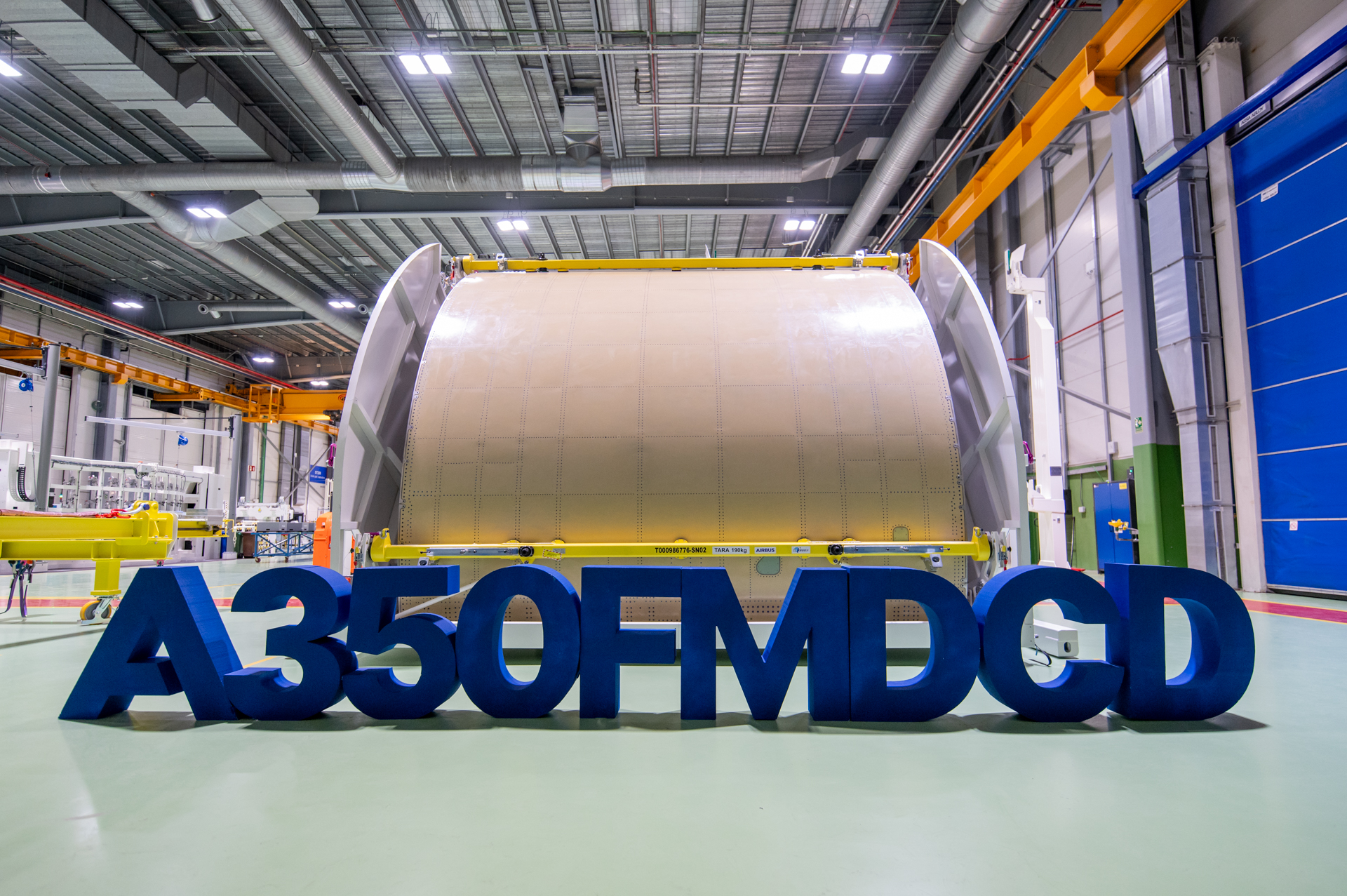
Airbus has completed the first main deck cargo door for its next-generation Airbus A350F. The critical component was delivered to Toulouse this Wednesday as the programme ramps up ground testing ahead of first flight.
The cargo door was built and assembled at Airbus’ Illescas facility in Spain and transported to the final assembly line (FAL) in Toulouse after completion. It will now be integrated into the fuselage of the first A350F test aircraft (MSN 700), where it is set to undergo testing in the coming weeks.
Airbus is producing two A350F aircraft for flight testing between 2026 and 2027, as the freighter moves toward certification and entry into service.
The largest cargo door in the industry
The A350F’s main deck cargo door, constructed of composite materials, is a defining feature of the new aircraft. Airbus touts it as the largest in the industry, with a 4.5-metre cut-out width and a 4.3-metre-high opening. The doors’ generous dimensions will speed up loading and also improve the safety and handling of oversized freight.
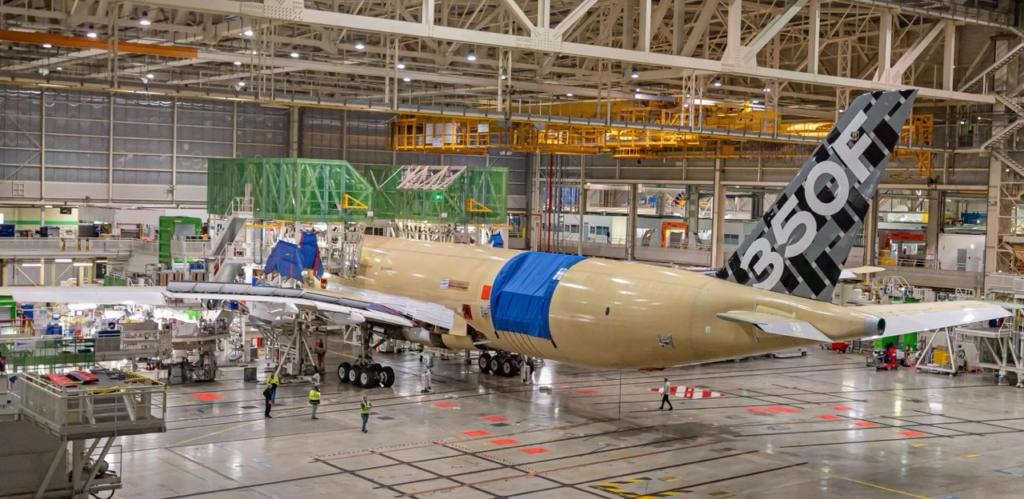
Located in the rear fuselage, the door supports stable loading by maintaining an optimal centre of gravity. It uses an electrically actuated opening and closing system.
Built in Spain, integrated across Europe
The production of the cargo door in Spain aligns with Airbus’ distributed manufacturing system. The Illescas plant produces the doors’ composite skins and assembles the structure before delivery for integration.
“This milestone demonstrates Spain’s key role in the production of our commercial aircraft, including the A350F programme,” said Ricardo Rojas, president of Airbus’ commercial aircraft business in Spain. “Delivering the first main deck cargo door is the result of years of preparation and extensive teamwork, showcasing the deep expertise and technical maturity that Illescas plant has refined over decades in composite materials.”

The doors are installed on the test aircraft in Toulouse during pre-series production. Once serial production begins, Airbus plans to route them via Hamburg for integration into the aft fuselage before final assembly.
Ground testing shifts focus to systems validation
The cargo door installation comes as Airbus enters a critical ground-testing phase at the Toulouse FAL to validate all aircraft systems.
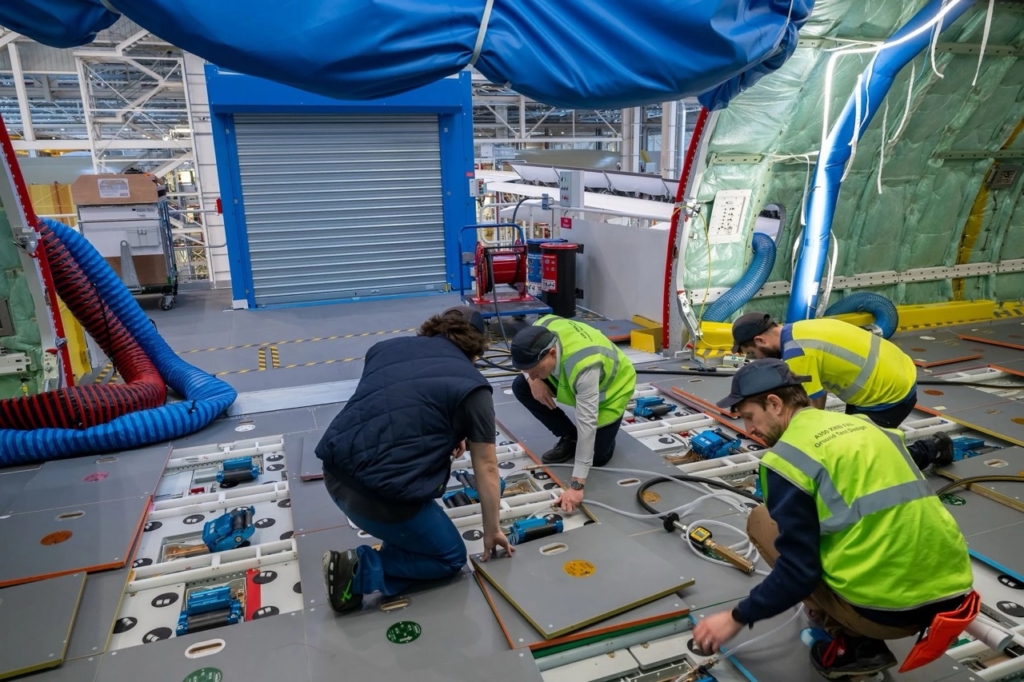
Ground tests are now underway to verify freighter-specific systems, including:
- The main deck cargo loading system
- The large main deck cargo door itself
- Environmental, drainage, and air distribution systems
- Onboard monitoring and “Smart Freighter” technologies
- Anti-tail-tipping protection systems
The campaign includes around 200 serial ground test instructions, with up to 40% of these specific to the A350F variant.
One key test involves repeatedly cycling the cargo door—both manually and electrically—to validate system reliability and integration.
Airbus is also conducting development and certification testing on the two dedicated flight-test aircraft, MSN700 and MSN701, including payload and pressurisation trials.
A350F advancing toward entry into service
Airbus is positioning the A350F as a replacement for ageing large freighters, offering a payload of up to 111 tonnes and a range of up to 8,700 kilometres.
Built with more than 70% advanced materials, the aircraft is designed to be significantly lighter than competing models, reducing fuel consumption and emissions.
Airbus has targeted a first flight in 2026 and entry into service in 2027, placing the A350 in direct competition with Boeing’s new 777-8F.
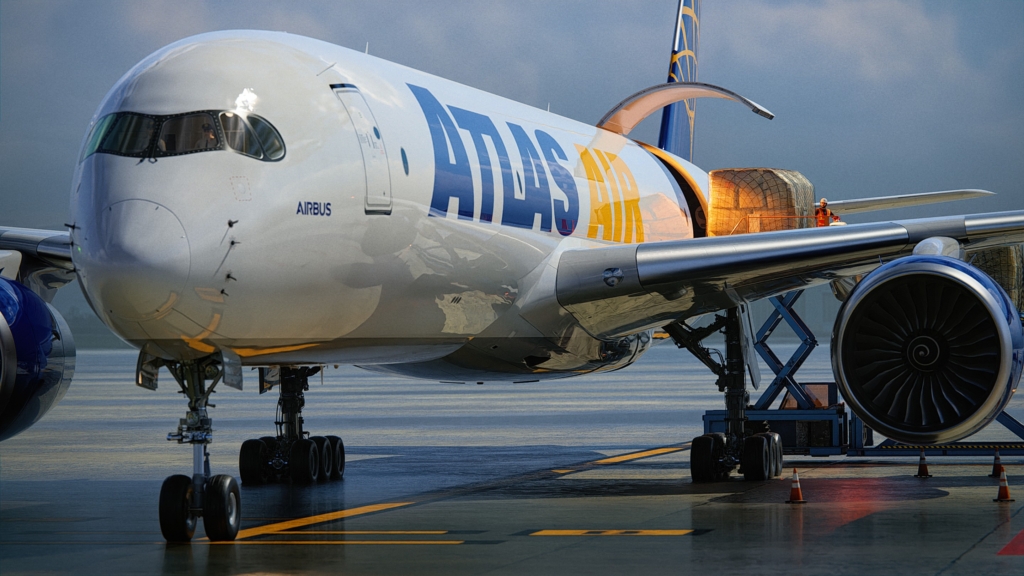
As of the end of March 2026, Airbus had secured 101 orders from 14 customers for the A350F. The largest order to date is from US cargo carrier Atlas Air, which committed to buying 20 new freighters with options for 20 more this March.
With the first cargo door now delivered, the A350F programme is entering the final phases of development as Airbus prepares its next-gen freighter for entry into service.
Featured Image: Airbus