


easyJet A320s towed to Schiphol’s Polderbaan in world-first electric TaxiBot trial

4 min read
Amsterdam Schiphol – the fourth busiest airport in Europe – is balancing its role as a major international hub with the pressing need to cut carbon emissions.
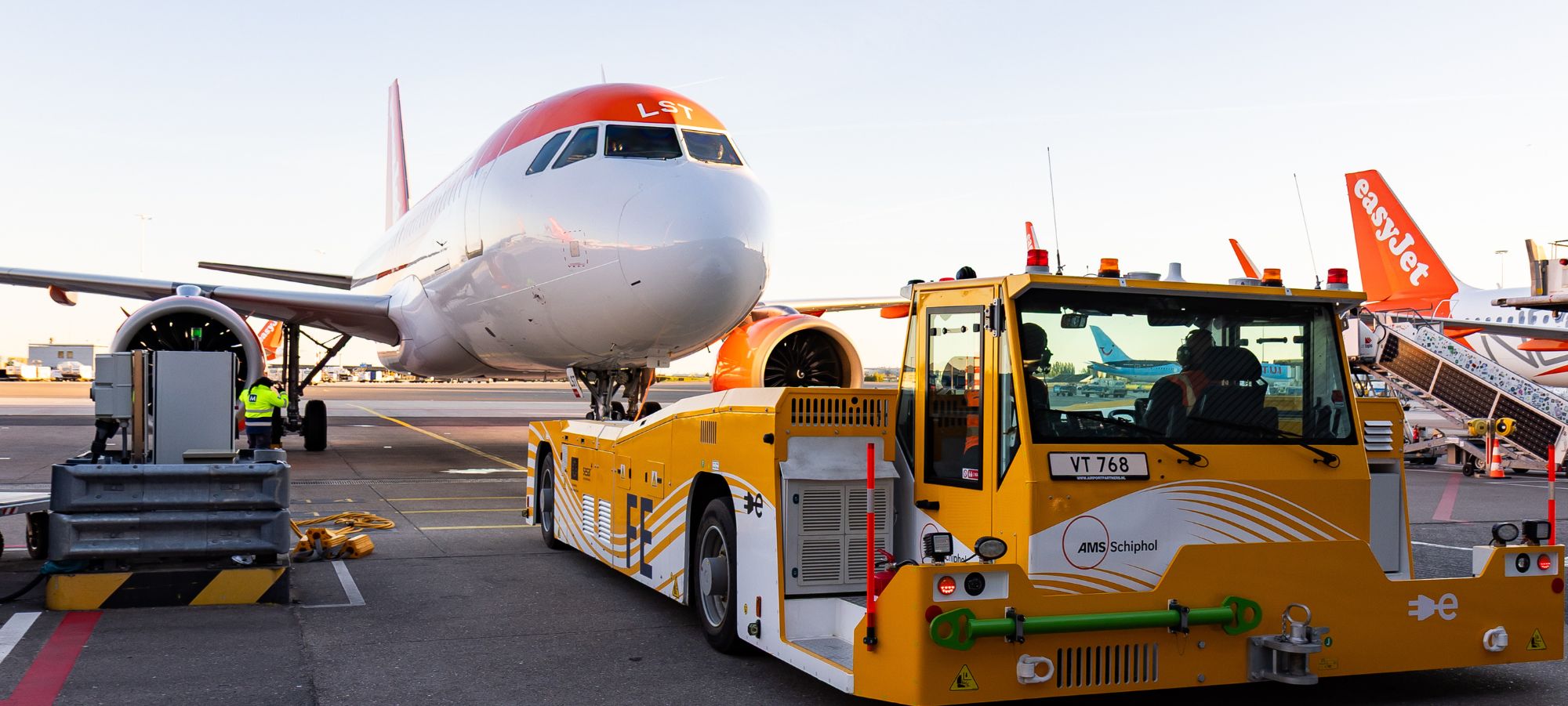
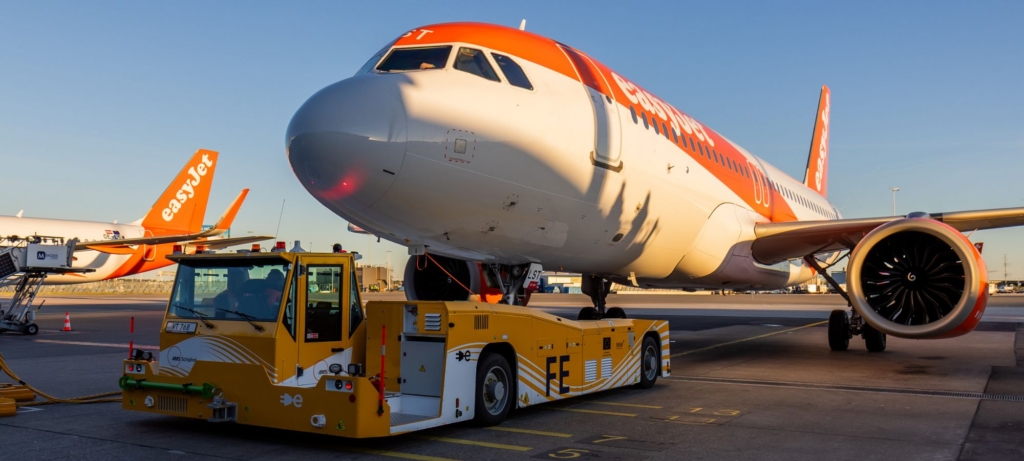
The airport is partnering with ground-handling firm Menzies, airframe manufacturer Airbus, and popular low-cost carrier easyJet on what it has described as the “world’s first electric TaxiBot for Airbus operations”.
The deployment of the electric TaxiBot follows the announcement at the end of 2025 that Schiphol is developing autonomous robots for aircraft to GPU connections.
Schiphol’s TaxiBot can reduce fuel consumption by up to 65%
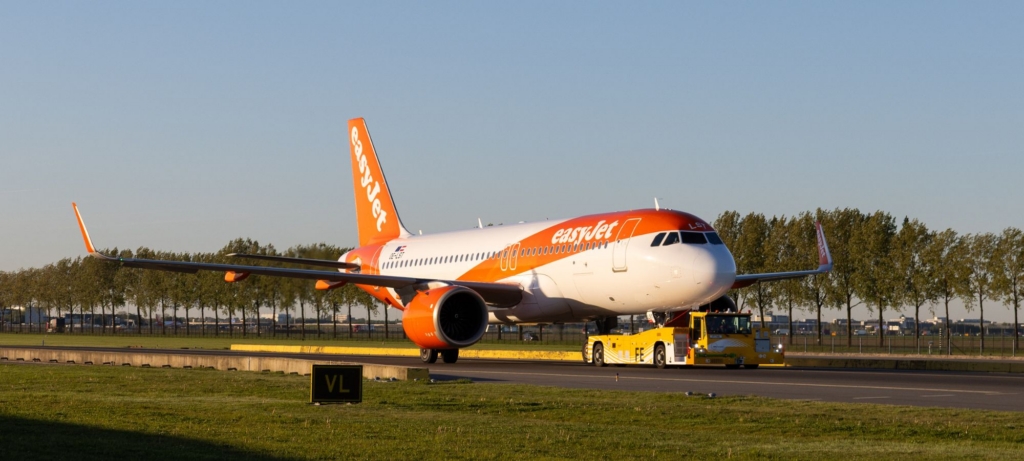
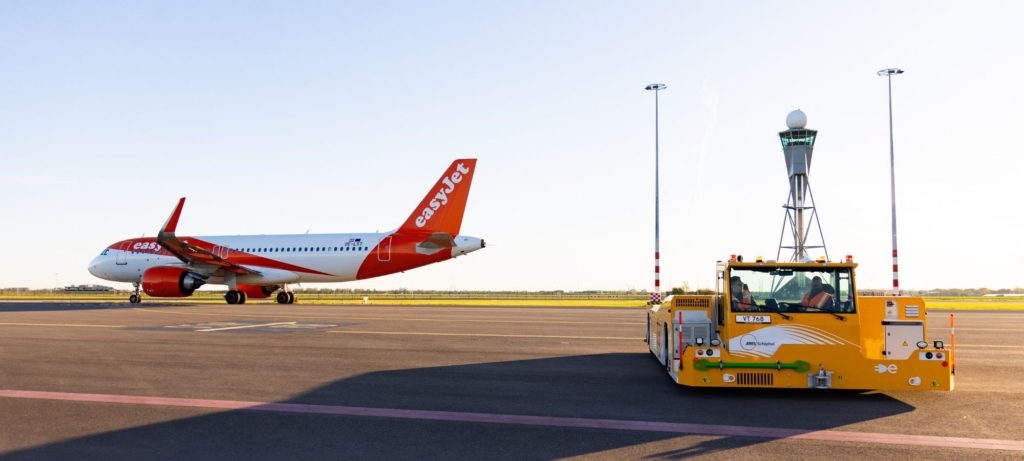
The TaxiBot is deployed on the airport’s Polderbaan Runway, which has the longest taxi time. The electric tug is being used to tow four Airbus A320 aircraft operated by easyJet from the gate to the runway.
Large-scale deployment could reduce fuel consumption by up to 65%, according to the airport. Meanwhile, easyJet says the TaxiBot is expected to save an average of 95 kg of fuel and 299 kg of CO2 per flight.
Esme Valk, Chief People and Transformation at Royal Schiphol Group, described the deployment of the TaxiBot as another “practical step” the airport is taking towards reducing emissions and noise on the apron.
“This is how we’re creating a healthier and cleaner workplace, and an ever more sustainable and modern airport that is ready for the future,” she said.
How does Schiphol’s electric TaxiBot operate?
A semi-robotic, push-pull-free aircraft tractor, the TaxiBot tows aircraft between the gate and the runway without using their main jet engines. Instead, the aircraft operates using only its Auxiliary Power Unit (APU) to significantly reduce fuel burn, CO2 emission and noise during ground operations.
Powered by supplier Smart Airport Systems, Schiphol’s TaxiBot can move aircraft at speeds of up to 42 km/h. The pilot controls the tug from the cockpit and only starts the aircraft engines just before departure on the runway. The electric tug is then driven back to the gate, ready to tow the next aircraft.
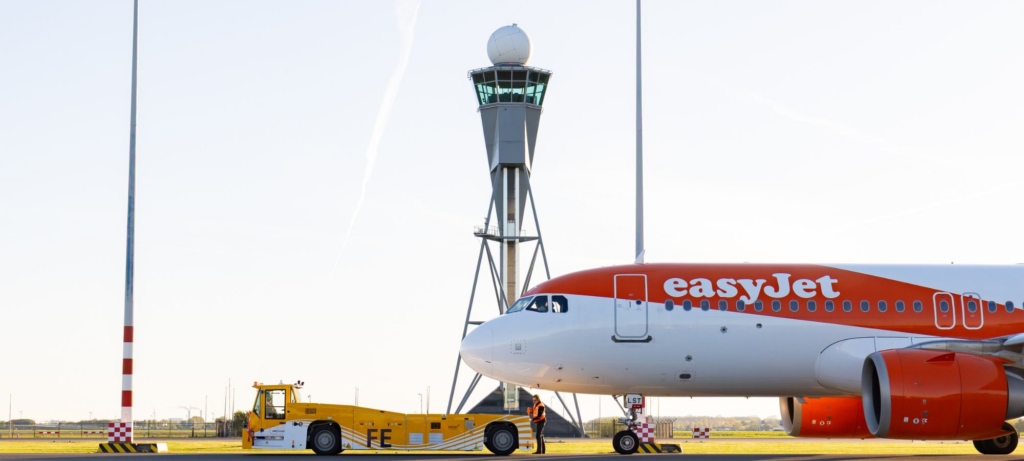
The electric tug complements two hybrid TaxiBots that have already been towing KLM Boeing 737s to the Polderbaan since 2022. Another three electric TaxiBots are due to arrive at the airport later this year.
Once certification is achieved, the plan is to use these on a wider range of aircraft, including Embraer aircraft operated by KLM Cityhopper. Transavia is also expected to participate in the project using the electric TaxiBots to tow its Boeing 737 fleet at Schiphol.
For the time being, easyJet is leading the way in making its operations at Schiphol more efficient. It is rolling out the technology on four of its Airbus A320neo aircraft. By enabling aircraft to taxi to the runway without using their engines, there is an instant reduction in fuel consumption, emissions and ground noise.
“This is only possible thanks to the commitment of our partners, and in particular the Menzies Aviation team, who play a crucial role in our ground operations,” said William Vet, Local Director for the Netherlands and Scandinavia, easyJet.
Why does investing in greener ground handling operations matter?
From overhauling its ground operations to championing sustainable aviation fuels (SAF) and lobbying for systemic policy change, Schiphol is making sustainability integral to future operations.
In 2023, it became the first airport in the world to have its long-term net-zero targets validated by the Science Based Targets initiative (SBTi), aiming to achieve zero Scope 1 and 2 emissions by 2030 and net-zero Scope 3 emissions by 2050.
The airport has been offering SAF for refuelling since 2021, with the Dutch government aiming to blend 14% SAF across its kerosene fuelling infrastructure by 2030.
Electric vehicles, including passenger buses, catering vans, and ground-handling equipment, have also been deployed across the airport for ground-handling operations. Meanwhile, renewable energy, including wind, solar, and thermal, is being used to power air conditioning, lighting, cooling, and heating.
Schiphol had also previously announced plans to stop night flights (banning take-offs between midnight and 6 am and landings before 5 am) and to ban private jets, although these have since been quietly dropped.
In line with plans to continuously build a future that is more in harmony with its surroundings, Schiphol is working with ground handlers, airliners, Air Traffic Control Netherlands (LVNL) and Smart Airport Systems to develop solutions that deliver greener daily operations. This includes the electric TaxiBot.
David Morgan, Chief Operating Officer at easyJet, said the TaxiBot is another “important step in our mission to operate as efficiently as possible,” delivering immediate reductions in noise and carbon emissions.
As the airline continues to modernise operations, “initiatives like this demonstrate how innovation and collaboration across the industry can help reduce aviation’s environmental impact both in the air and on the ground,” said Morgan.
Featured image: Amsterdam Schiphol Airport


