Why sonic booms happen and how NASA’s X-59 Quesst plans to eliminate them

8 min read
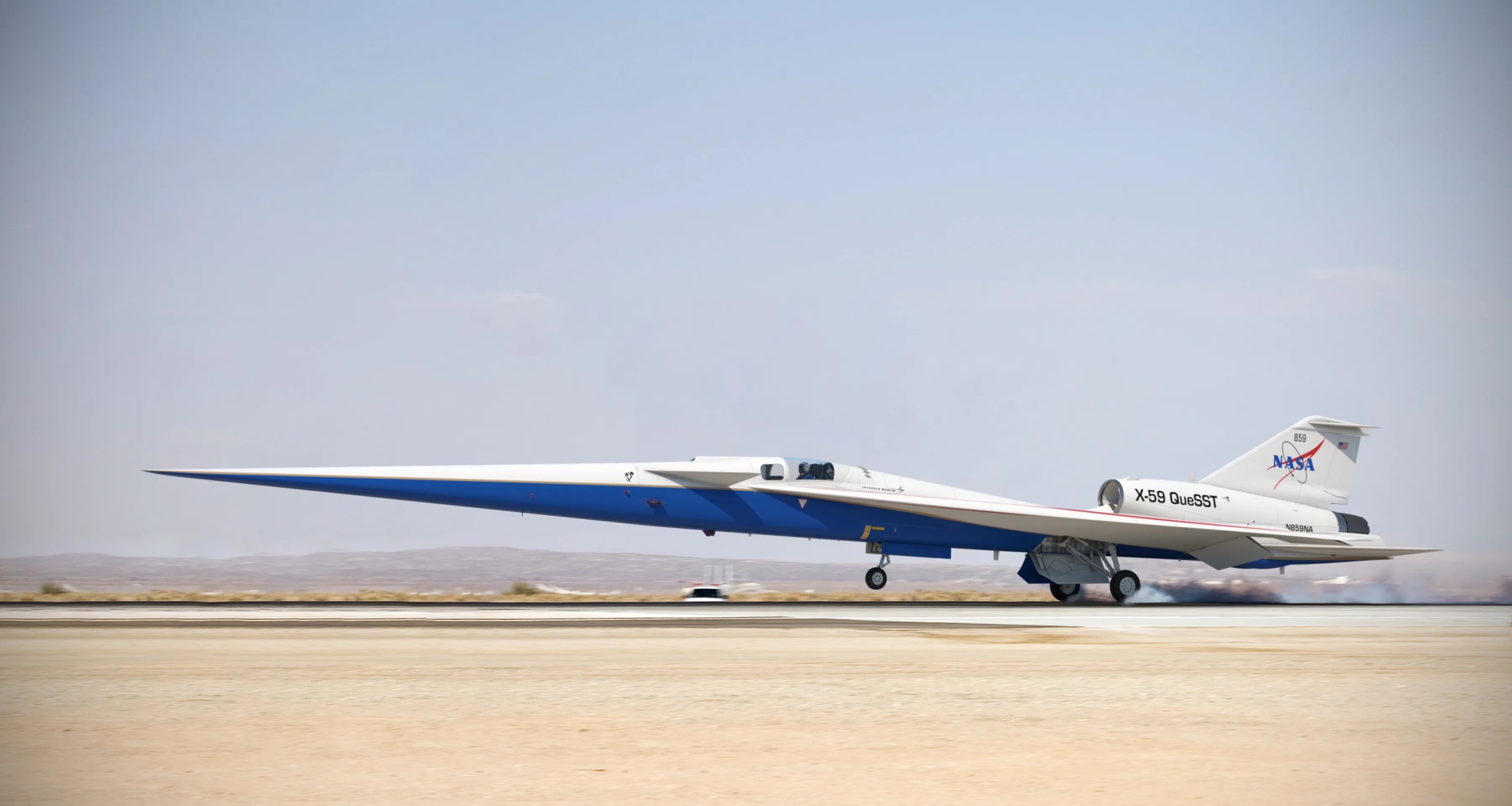
NASA has published a detailed explanation of how sonic booms are created as its X-59 experimental aircraft moves closer to the part of its mission that could determine whether quieter supersonic flight can eventually be accepted over land.
The timing is significant. The X-59 has already reached the speed and altitude NASA says it needs for future community flights, while the US Federal Aviation Administration is working on a regulatory framework that would replace the longstanding prohibition on civil supersonic flight over land with a performance-based, noise-focused approach.
NASA published its “X-59 Explainer: Science of Sonic Booms” on 10 August, describing how pressure waves form around a supersonic aircraft, how they travel through the atmosphere and why they can combine to produce the loud boom heard on the ground.
NASA does not say the explainer was issued in response to the FAA’s rulemaking. But the two developments address the same fundamental problem: how to allow aircraft to travel faster than sound without subjecting people on the ground to the conventional sonic boom.
That makes the explanation particularly relevant now.
X-59 reaches planned speed and altitude ahead of community testing
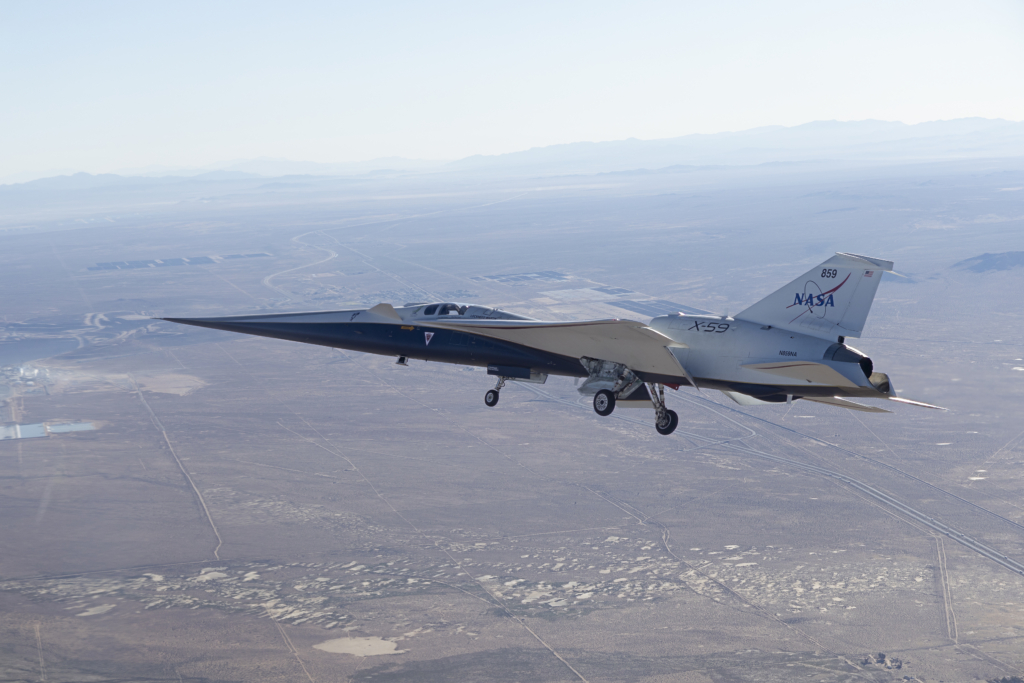
The X-59 crossed an important threshold on June 5, when it flew faster than Mach 1 for the first time.
During that 81-minute flight from Edwards Air Force Base in California, NASA test pilot Jim “Clue” Less took the aircraft to approximately Mach 1.1, or 713 mph, at 43,400 ft. NASA said the aircraft performed as expected.
But the more important flight for the Quesst mission came a week later.

On June 12, the X-59 reached Mach 1.4, about 924 mph, at 55,000 ft for the first time. NASA calls these its “mission conditions” because they are the approximate speed and altitude at which the aircraft will eventually fly over communities to collect data on how people respond to its quieter sonic signature.
That does not mean the X-59 has yet demonstrated the quiet sonic thump it was designed to produce.
The aircraft remains in flight testing. NASA says it still has performance testing to complete before moving into the acoustic-validation phase, when researchers will measure its supersonic acoustic signature and determine whether the aircraft is performing as intended.
That distinction is important because the X-59’s ultimate test is not simply whether it can fly at Mach 1.4.
It is whether it can do so without producing the type of sonic boom that has kept civil supersonic aircraft from routinely flying over populated areas.
Why sonic booms occur during supersonic flight
NASA’s new explainer addresses a common misunderstanding about supersonic flight.
A sonic boom is not a single sound created at the instant an aircraft passes through Mach 1. Instead, a supersonic aircraft generates a system of pressure disturbances and shock waves as it moves through the atmosphere faster than sound.
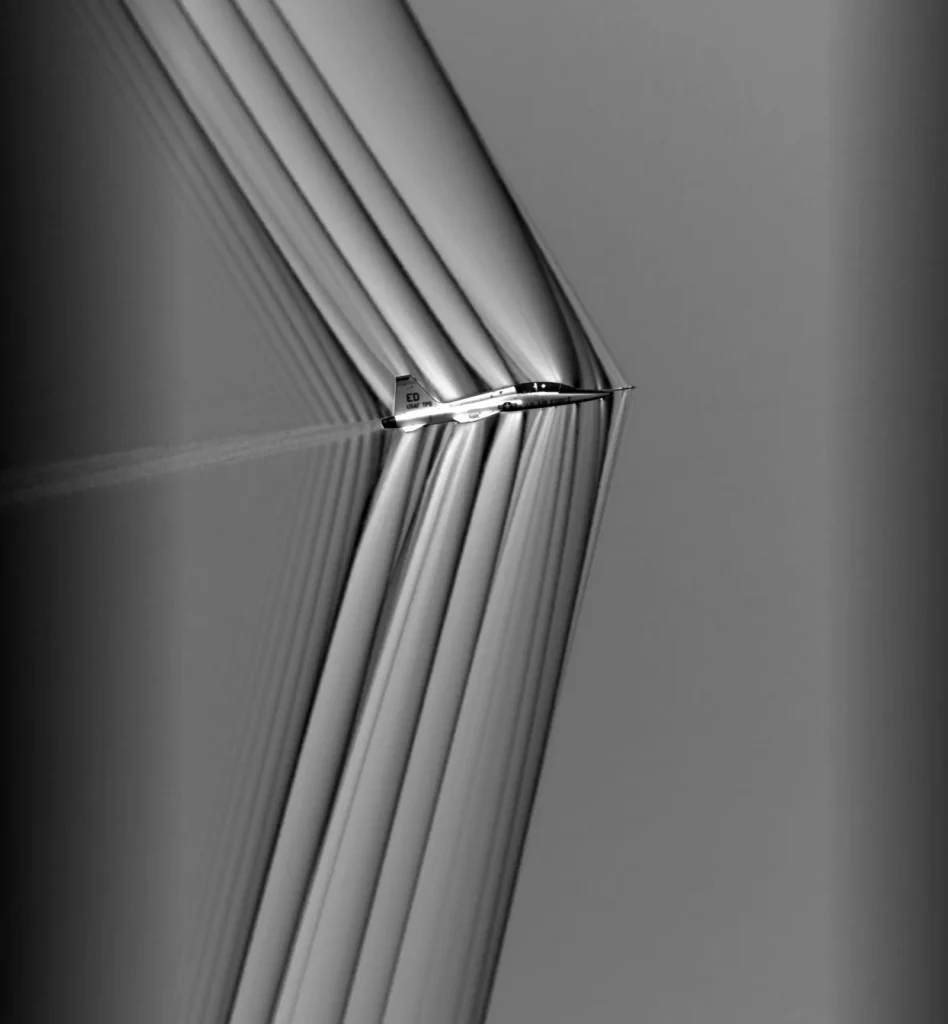
At subsonic speeds, pressure changes generated by an aircraft can propagate ahead of it, allowing the surrounding air to move out of the way. Once the aircraft exceeds the local speed of sound, it moves faster than those pressure disturbances can travel.
The pressure changes therefore become much sharper, forming shock waves.
Every significant part of the aircraft that disturbs the airflow can contribute to the shock-wave system, including the nose, cockpit, wings, engine inlets and tail. As those shock waves propagate towards the ground, they can merge into the stronger pressure changes that are heard as the familiar sonic boom.
The result is not confined to a point directly underneath the aircraft.
The waves spread outward from the flight path, creating what NASA describes as a broad ground “carpet” over which people can hear the boom. The type of sound that reaches the ground depends on the aircraft’s shape, its flight path and atmospheric conditions, so people near one another may hear the same flight differently. “A person on the ground might hear one sharp boom, two closely spaced booms or a softer rumble,” NASA said.
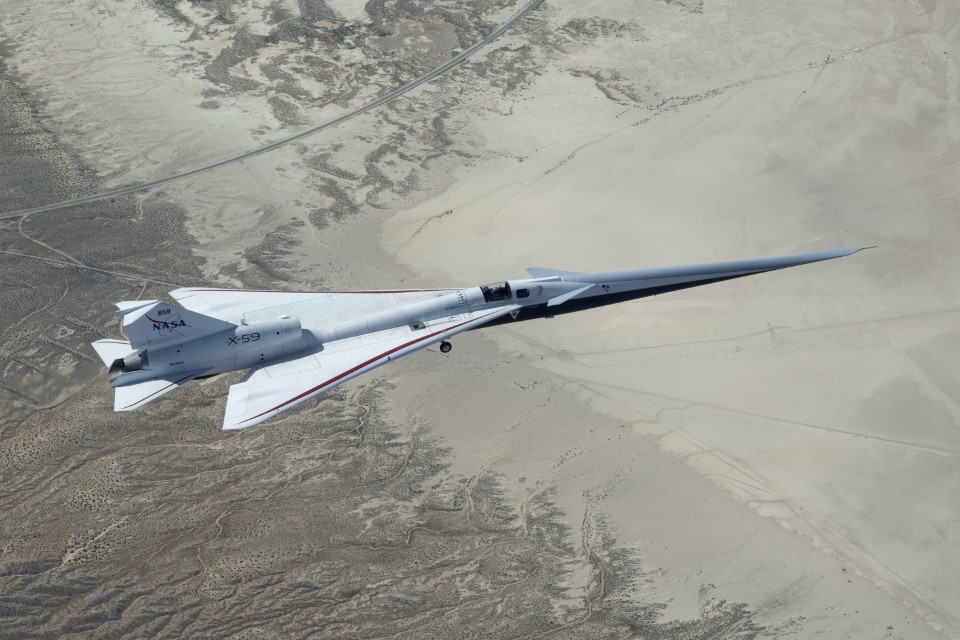
NASA notes that at an altitude of 55,000 ft, a sonic boom can take almost a minute to reach the ground. By then, the aircraft has travelled miles beyond the location where the sound appears to originate.
That physics is central to what the X-59 is attempting to change.
How the X-59 is designed to reduce sonic boom noise
The aircraft has been designed around a different approach to the sonic-boom problem.
Rather than attempting to stop the aircraft from generating shock waves, NASA and Lockheed Martin designed the X-59 so that the waves generated by different parts of the aircraft are managed and shaped in a way intended to reduce the intensity of the disturbance that reaches the ground.
The objective is a softer sound – a “sonic thump” – rather than the explosive boom associated with conventional supersonic aircraft.
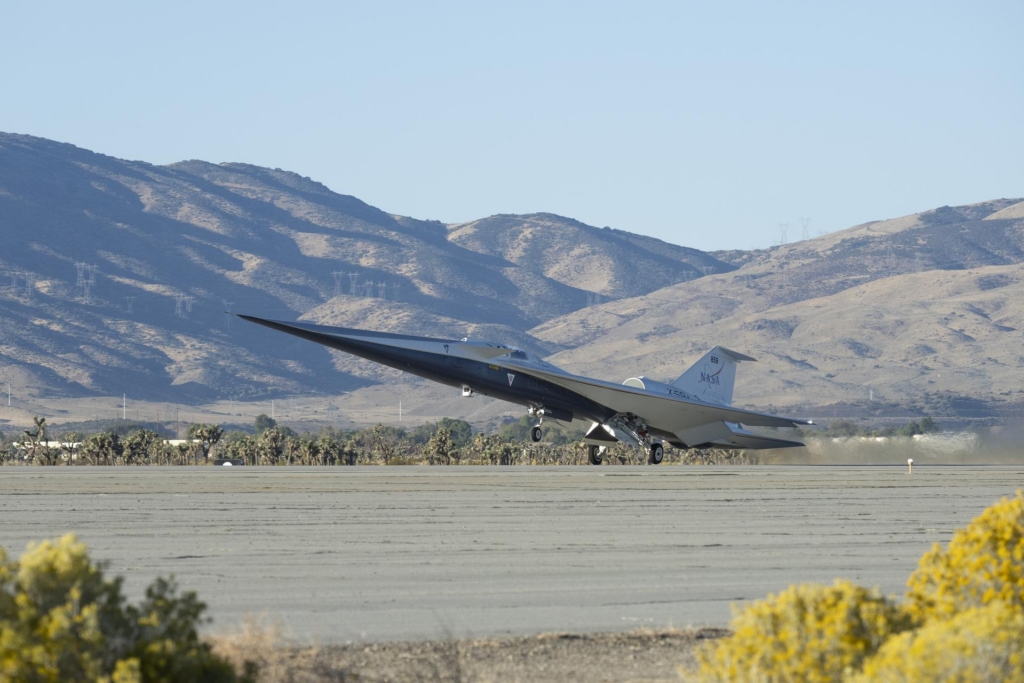
This is why the X-59 looks so different from a conventional fighter or airliner. Its long, slender nose and carefully arranged airframe are part of the aerodynamic approach to managing the shock-wave system.
But the aircraft has not yet reached the point where NASA can evaluate that sound with people on the ground.
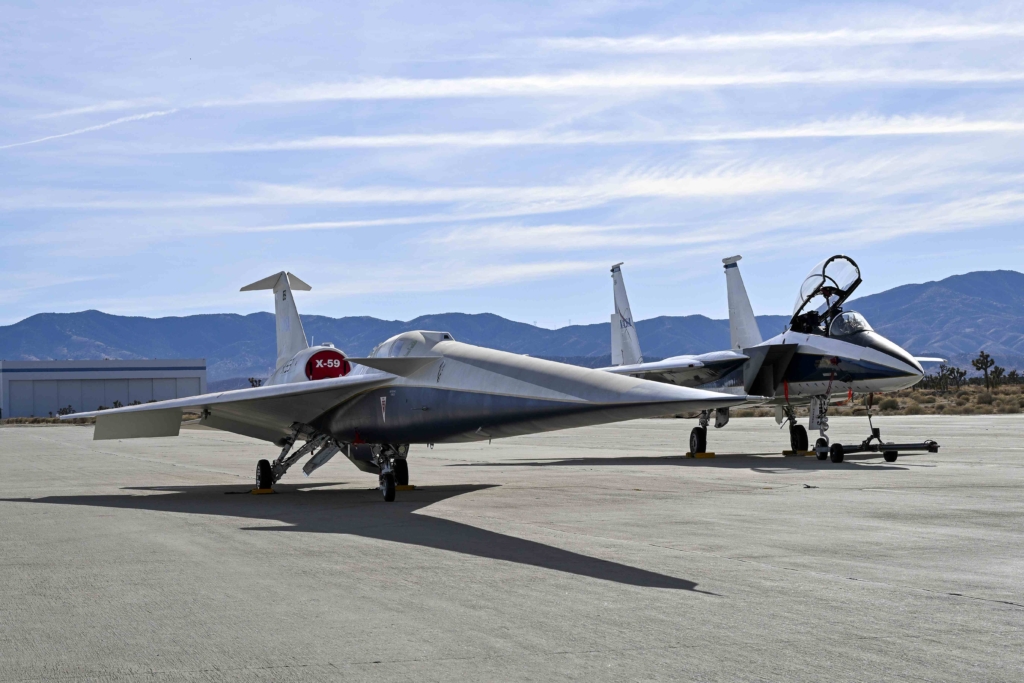
During its initial supersonic flights, the X-59 has been accompanied by a NASA F-15 research aircraft. Because the F-15 produces a conventional sonic boom, its presence means that the X-59’s own acoustic signature cannot simply be judged by listening from the ground.
NASA says the F-15 will also carry a shock-sensing probe during upcoming flights to measure the X-59’s shock-wave signature, providing an early measurement of its supersonic performance.
After the remaining flight-envelope work is completed, Quesst will move into acoustic validation.
That is when the question changes from “Can the X-59 fly supersonically?” to “What does its supersonic flight actually sound like?”
The final test involves people on the ground
The Quesst mission has three broad stages: build and fly the X-59, validate its acoustic performance, and then fly it over communities to gather public-response data.
The third phase is arguably the most consequential for the future of commercial supersonic aviation.
NASA plans to fly the X-59 over selected US communities and ask residents to provide data on how they perceive the sound. NASA intends to share those results with US and international regulators to help establish acceptable noise thresholds for supersonic flight over land.
That means the programme is not simply developing a quieter aircraft.
It is attempting to generate evidence that could help answer a regulatory question: what level of supersonic noise can people on the ground accept?
And that question has become more immediate because the FAA is now working on a new regulatory framework.
FAA proposes a new path for overland supersonic flight
The FAA’s current rules date back to 1973 and prohibit civil aircraft from operating at a true flight Mach number greater than 1 in the United States, except under specific authorisation.
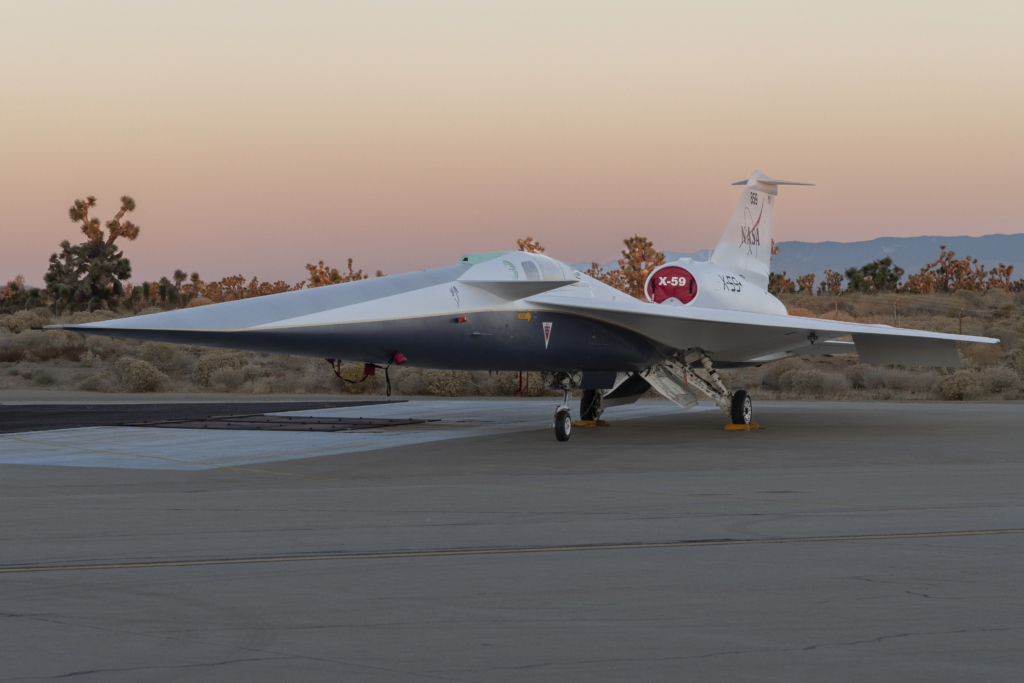
The FAA says the original regulation was introduced to protect the public from sonic booms at a time when the technology and scientific understanding needed to control them were much more limited.
The agency is now proposing to repeal that general prohibition and replace it with an interim, performance-based noise standard.
Under the proposal, an aircraft would have to be operated so that sonic-boom overpressure at the surface does not exceed 0.11 pounds per square foot. Operators would have to demonstrate, through measurement, modelling or other approved means, that their aircraft could meet that limit.
The distinction matters.
The FAA is not simply proposing to allow aircraft to fly supersonically over land and accept whatever noise results. It is proposing a system in which the aircraft’s ability to control the sonic-boom impact becomes part of the regulatory requirement.
The FAA published the proposed “Enabling Supersonic Overland Flight” rule on July 2, with comments due August 17.
The agency says the proposed rule is intended as the first step. A subsequent rulemaking is expected to address final noise-certification standards covering take-off, landing and en-route supersonic operations.
NASA’s X-59 and the FAA rule are connected, but they are not the same programme
This is where the X-59 becomes particularly important. The FAA is developing the regulatory framework, but NASA is generating flight data about what reduced sonic-boom technology can actually achieve.
The FAA itself says NASA will share the reactions gathered during the X-59 community flights with the FAA and international regulators. The agency has described NASA’s research as part of the work informing the future of supersonic regulation.
NASA’s own mission documentation makes the intended relationship clear: Quesst is designed to produce data that can help establish new noise thresholds for supersonic flight over land.
NASA’s sonic boom explainer arrives at a significant moment for the programme. With the X-59 reaching its planned test conditions – and the FAA considering a new approach to overland supersonic flight – attention is shifting from whether the aircraft can fly faster than sound to whether it can do so quietly enough to help inform future rules.
The answer will come in the next phases of Quesst, when NASA validates the aircraft’s acoustic performance and begins gathering data from communities beneath its flight path.