eSAF could solve aviation’s fuel problem. So why is almost nobody making it?

4 min read
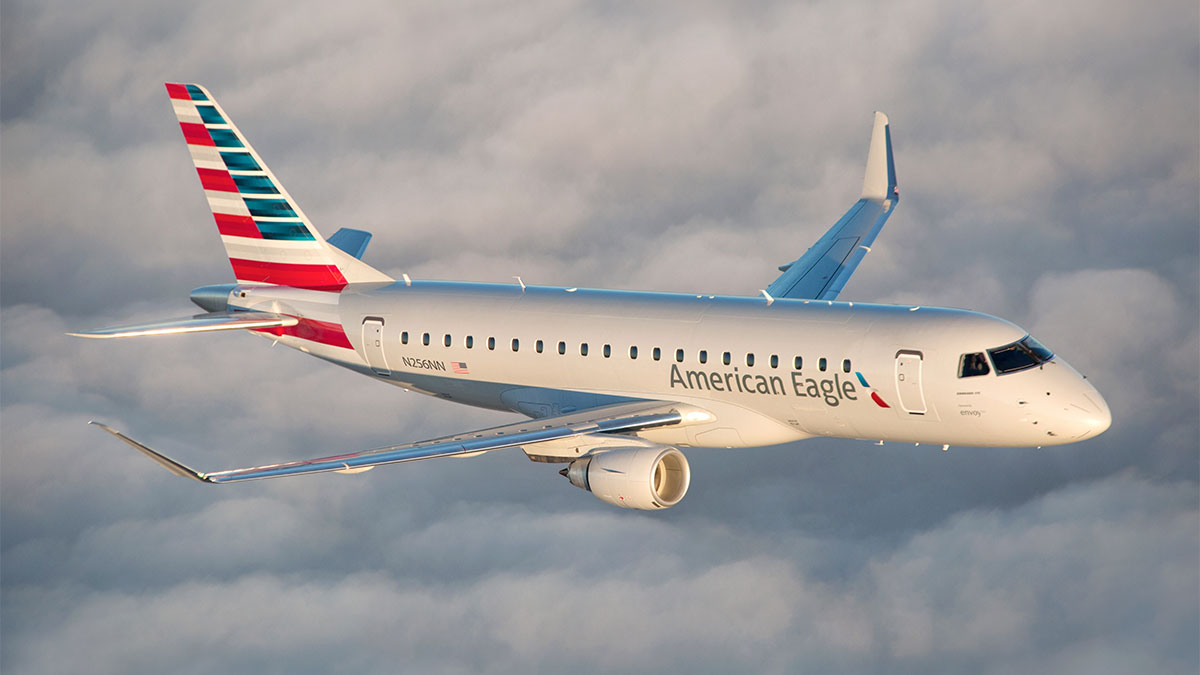
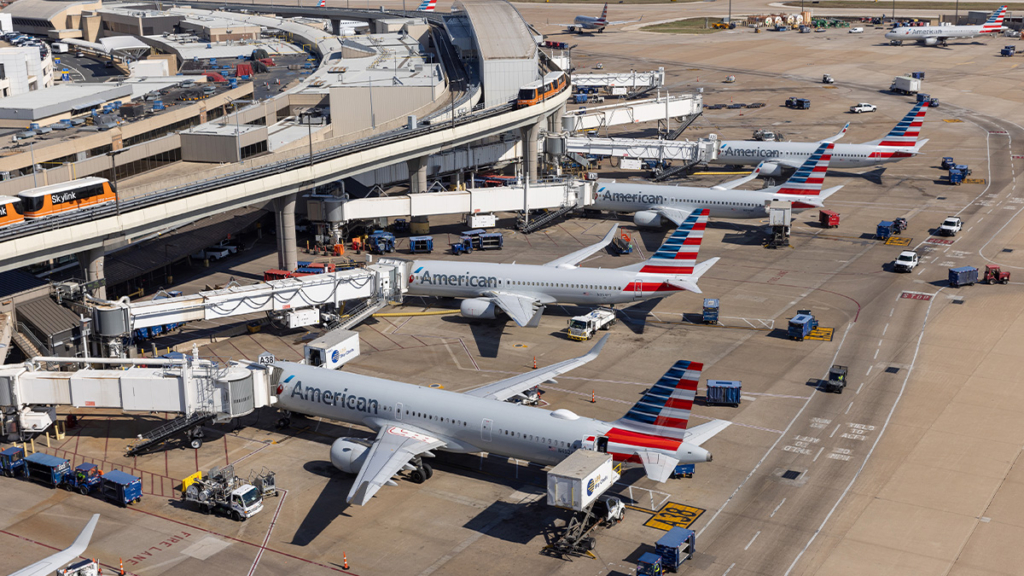
American Airlines has operated a flight from Corpus Christi International Airport (CRP) to Dallas Fort Worth International Airport (DFW) using electro-sustainable aviation fuel (eSAF).
The flight demonstrated that power-to-liquid eSAF can be integrated into the normal airport fuel supply without requiring any special handling.
eSAF promises to reduce lifecycle greenhouse gas (GHG) emissions by over 90% compared to petroleum-based jet fuel. The problem is that almost nobody is making it, and planned production would only make a small dent in airlines’ jet fuel needs.
American Airlines flight changes the conversation on eSAF
The eSAF used on the American Airlines flight was part of a batch produced and blended at Infinium’s Pathfinder facility in Corpus Christi, Texas. It is the world’s first commercial-scale power-to-liquids eFuels production site.
The eSAF was blended with conventional jet fuel and tested to meet the ASTM International specification for JetA. It marked the first delivery of SAF from non-biobased feedstocks to a commercial airport in the US.
“This flight represents a significant moment for aviation,” said American’s CEO Robert Isom. “Through our partnership with Infinium, we’re demonstrating how next-generation technologies like eSAF can move from early investment to real-world application. Scaling SAF production at lower prices is essential to reducing emissions, strengthening our long-term competitiveness, and continuing to deliver the connectivity and economic benefits that our customers rely on.”
Infinium’s eSAF is made using waste CO₂ and renewable electricity.
“Since 2023, we have been producing scalable, drop-in eDiesel and eNaphtha at our Pathfinder facility from waste carbon and renewable energy for use in commercial trucks and plastics processing,” said Infinium CEO Robert Schuetzle. “Adding eSAF to our product slate — and seeing it power a commercial passenger flight — marks another meaningful step forward in bringing practical, low-carbon fuel solutions to industry.”
Infinium’s Project Roadrunner
American Airlines has an offtake agreement for commercial volumes of eSAF from Infinium’s Project Roadrunner.
Project Roadrunner is under construction and expected to begin eSAF production and deliveries next year. Once it reaches full capacity, the company says it could produce over 5 million gallons of eSAF annually.
SAF and eSAF: a scarce supply
Aviation consumes nearly 300 million tonnes of jet fuel annually, but sustainable aviation fuel accounts for less than 1% of global jet fuel supply.
Current SAF mostly comes from limited biofeedstocks like used cooking oil, animal fats and agricultural waste.
eSAF uses captured CO2, water and renewable electricity instead to make synthetic hydrocarbons via hydrogen and Fischer-Tropsch chemistry. It is not limited to waste supply alone. Producers can, in theory, scale up to produce enough eSAF to power airline operations more affordably.
eSAF offers a practical solution for reducing aviation emissions, but all SAF requires production at scale to support airline demand.
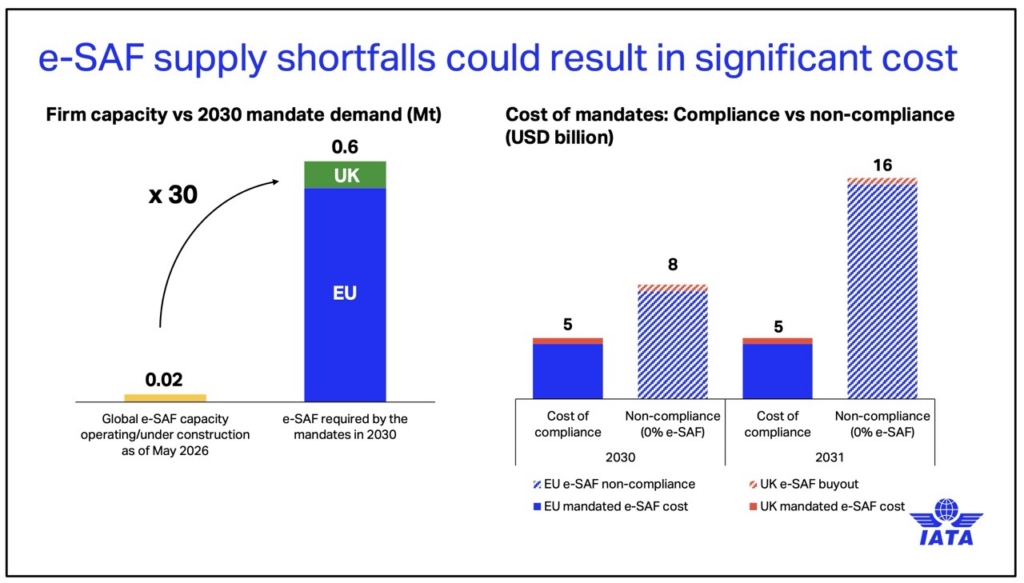
According to the International Air Transport Association’s (IATA) recent figures, operating and under-construction global eSAF capacity is only around 0.02 million tonnes. Only one production site is operating.
Roadrunner contributes only a drop in airline jet fuel requirements
Infinium says Roadrunner will produce more than 5 million gallons per year. But commercial aviation requires around 100 billion gallons annually. Roadrunner’s production would supply only a drop (0.005%) of annual global demand.
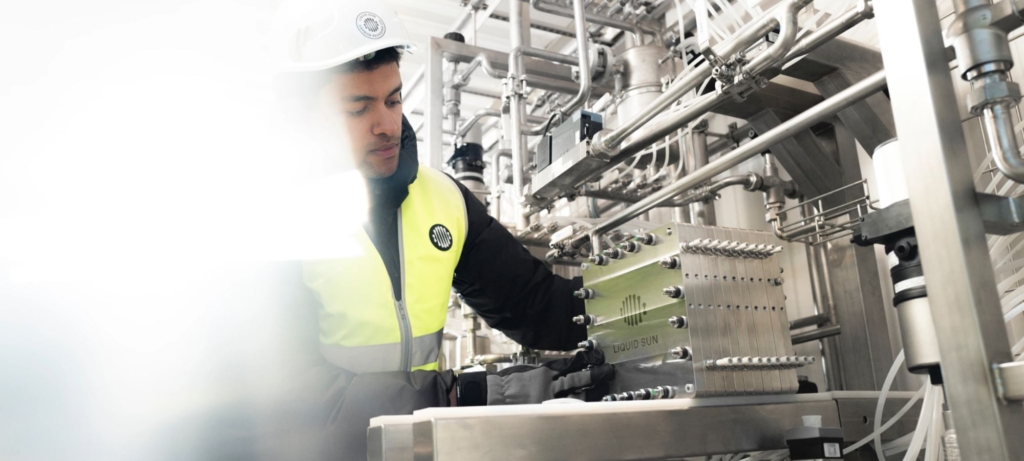
Scaling eSAF production is constrained by significant challenges.
- eSAF needs enormous amounts of cheap renewable power.
- Green hydrogen remains expensive.
- CO₂ supply needs reliable captured carbon streams.
- Power-to-liquid plants cost billions to build.
As a result, eSAF costs several times as much as conventional jet fuel today. Economic factors discourage airlines from committing to large volumes of eSAF, which in turn hampers production.
IATA has suggested that governments must help bridge the gap with policies that support investment in eSAF production.
Airlines still want eSAF
Airlines know that the HEFA feedstocks used to produce bio-SAF are limited, and bio-SAF alone won’t decarbonise aviation. eSAF is one of the few scalable, long-term options. However, it requires investment that cannot come solely from airlines. Governments and investors will need to do their part to bring production to scale and make eSAF more affordable.
American’s flight proved eSAF can move through an ordinary airport fuel system to power a routine flight without adding complexity. While significant, it proved relatively easy, which is great news.
The challenge ahead is much harder: producing enough eSAF to make a measurable difference to global aviation emissions. Overcoming that challenge could transform aviation into a truly sustainable industry.