“It could have been disastrous” – FAA investigates American Airlines call sign mix-up

5 min read
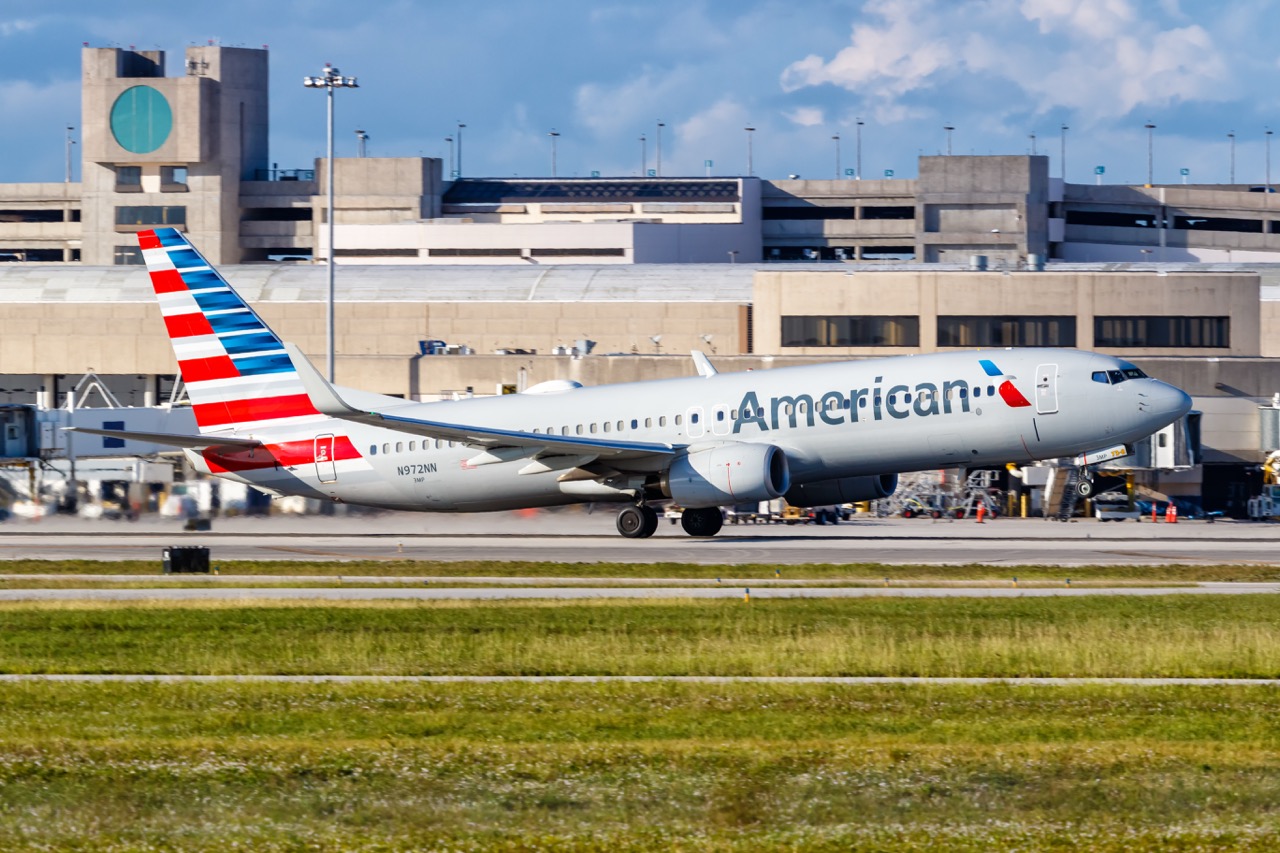
Seeing two aircraft on converging flight paths is routine for air traffic controllers. Seeing two aircraft on converging flight paths while using the same call sign is anything but.
Shortly after midnight on 14 August, that’s exactly the situation an air traffic controller in Phoenix found himself in. Two American Airlines Boeing 737-800s were operating as American Airlines Flight 2482 between Chicago O’Hare and Phoenix Sky Harbor, but flying in opposite directions after a weather delay disrupted the normal schedule.
“I’ve been working in air traffic for 25 years. I’ve never seen two aircraft pretty much merge with the same call sign”, the controller said after the incident.
Why were two American Airlines flights both called 2482?
One aircraft was arriving in Phoenix from Chicago while the other had just departed Phoenix for Chicago. Both aircraft were using the call sign “American 2482” while communicating with air traffic control.
Flight-tracking data showed the arriving aircraft descending through around 11,000ft while the departing aircraft was climbing towards 9,000ft when the duplication was identified.
The Federal Aviation Administration (FAA) said required separation between the aircraft was maintained throughout the incident and is investigating. American Airlines has also said it is reviewing the circumstances, as reported by KTAR.
How the air traffic controller resolved the call sign confusion
American Airlines uses Flight 2482 in both directions between Chicago and Phoenix. The same aircraft normally completes the outbound and return sectors so the two legs don’t overlap.
That changed when the Chicago-to-Phoenix flight was delayed by weather. Rather than wait for that aircraft to reach Phoenix before operating the return service, American Airlines used another Boeing 737-800 already at Phoenix for the Chicago-bound flight.

The result was that the delayed inbound aircraft and the replacement outbound aircraft were airborne simultaneously using the same flight identification.
This created an unusual problem for air traffic control. When a controller transmitted an instruction to “American 2482”, there were two aircraft on the frequency to which that identification could apply.
After recognising the duplication, the controller distinguished between the aircraft by referring to “American 2482 on the arrival” and “American 2482 on the departure”. The controller also maintained altitude separation between them as their tracks converged, according to Sky News.
The controller, who said he had worked in air traffic control for 25 years, described seeing two aircraft effectively converge with the same call sign as highly unusual.
“It could have been disastrous, but I’m glad it all worked out,” he told the pilots after the immediate situation had passed, according to Scripps News reporting on the ATC exchange.
Why unique flight identifications are important
The commercial flight number and the aircraft identification used by air traffic control should differ, with the ATC identifier unique to each flight operating in the airspace at any given time.
Airlines can use the same commercial flight number for multiple sectors of a service. What becomes a safety problem is having two aircraft simultaneously operating in the same airspace with an identical ATC identification.
FAA guidance states that an aircraft’s Flight Identification (FLT ID) is usually based on the company identifier and flight number – for example, AAL3432. The identification transmitted by the aircraft must correspond with the aircraft identification filed in its flight plan.
ATC automation systems use the transmitted flight identification to uniquely identify each aircraft within a given airspace and correlate it with its filed flight plan, enabling controllers to provide surveillance and separation services.

Controllers routinely address an aircraft using its airline radio call sign followed by its flight identification. The FAA gives examples such as “American Fifty-two” and “Delta One Hundred”.
If two aircraft have identical or very similar call signs on the same frequency, there is a risk that one crew could interpret and act on a clearance intended for the other.
The FAA’s Aeronautical Information Manual warns that improper use of call signs can cause pilots to execute ATC instructions for another aircraft. It instructs pilots to make certain their aircraft has been clearly identified before acting on an ATC clearance.
The consequences of call-sign confusion can include incorrect altitude changes and other deviations from an ATC clearance. ICAO material identifies hear-back/read-back errors, level busts and runway incursions among safety events which can be potentially caused by call-sign confusion.
Regulatory procedures to avoid aircraft having similar call signs
Duplicate and similar call signs are a recognised aviation safety issue, and procedures are in place to mitigate the risk.
FAA procedures require controllers to emphasise appropriate digits or letters when dealing with similar aircraft identifications. They must also notify each pilot when another aircraft with a similar identification is operating on the frequency.
The rules also require controllers to notify their operations supervisor of duplicate or phonetically similar call signs when aircraft are operating simultaneously within the same sector.
ICAO also treats call-sign similarity as a recognised safety hazard. Its guidance notes that similar call signs used by aircraft operating in the same area – particularly on the same radio frequency – can lead to actual or potential flight safety incidents.
ICAO recommends that airlines consider other flight numbers already operating in the intended ATC environment when selecting flight identifications. It also recommends keeping flight numbers short where possible.
One way airlines can reduce the problem is through alphanumeric call signs. ICAO guidance says this provides many more possible combinations and reduces the likelihood of similar call signs.
EUROCONTROL operates a Call Sign Similarity Service to address the issue in European airspace. It allows aircraft operators to identify and de-conflict similar call signs embedded in their schedules before they cause confusion on an ATC frequency.
Fortunately, the Phoenix incident did not result in an accident. However, it underscores why these safeguards exist. A weather delay and the decision to operate a replacement aircraft led to two otherwise routine flights sharing the same call sign and frequency as their flight paths converged. The aircraft remained safely separated, but identifying which “American 2482” ATC was talking to became a safety-critical task that the controller had to resolve in real time.
Sign up for our newsletter and get our latest content in your inbox.


More from


October 17, 20264 min read