


Tesla’s flying Roadster revives interest in flying cars, says Samson Sky CEO

10 min read

Sam Bousfield, Founder and CEO of Samson Sky, says Tesla’s flying Roadster demonstration has renewed public interest in flying cars. However, manufacturers still face significant challenges involving certification, insurance and practical design.
Elon Musk’s demonstration of a hovering Tesla Roadster could help bring flying cars closer to commercial reality by renewing public interest in the technology, Bousfield said.
Speaking exclusively to Aerospace Global News, Bousfield described Tesla’s demonstration as good news for an industry that has spent decades trying to turn flying cars into a commercially viable form of transport.
“I think that it was great that he did what he did. He makes the impossible possible,” Bousfield said. “I think that reignited the interest in flying cars, and I think that’s a good thing for the overall industry.”
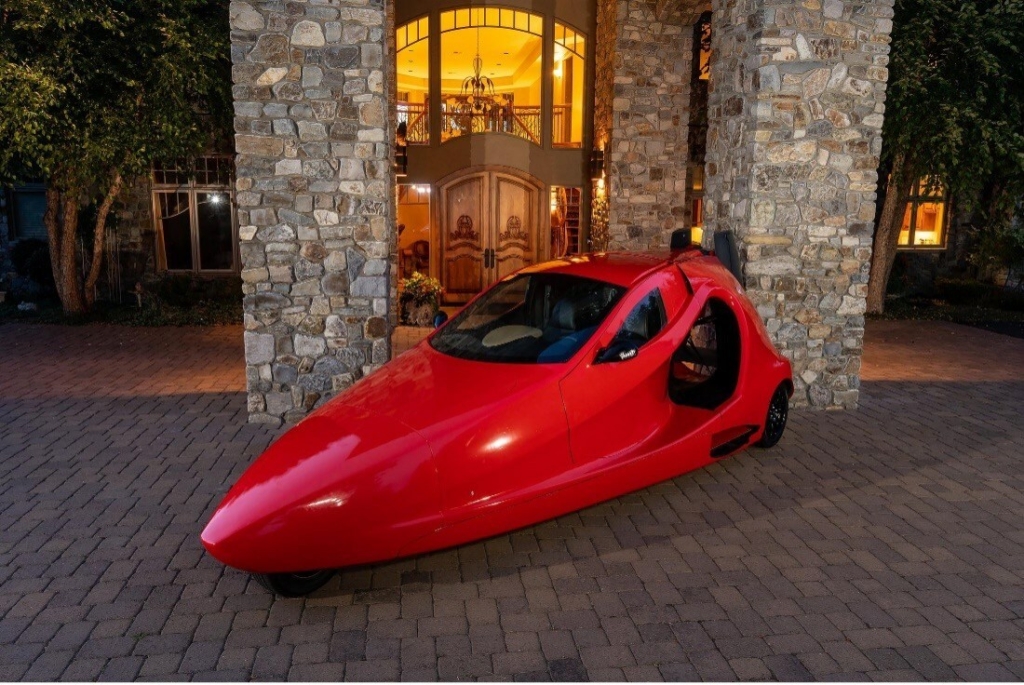
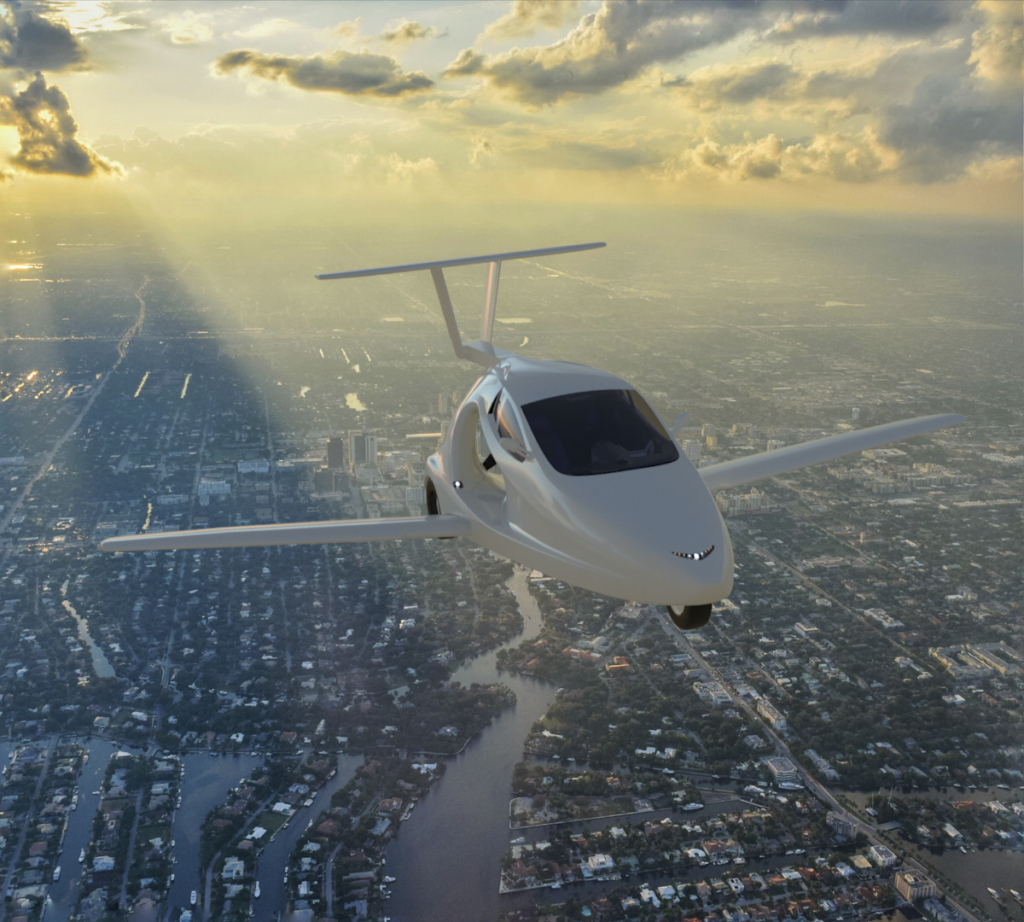
His company has spent 18 years developing the Switchblade, a three-wheeled roadable aircraft with retractable wings and a folding tail. Unlike Tesla’s hovering concept, the Switchblade is designed to drive on public roads and take off from conventional airports.
Samson Sky is now targeting production within 18 months, following a redesign to improve the aircraft’s performance.
Why has it taken so long to develop a commercially viable flying car?
Although flying cars have existed in various experimental forms since the 1950s, manufacturers have struggled to develop vehicles that are practical enough for regular use. Bousfield believes the problem starts with the design.
“It’s difficult to make something that is of high enough performance that people will want to have and still make it do what you want it to do both in driving and flying,” he explained.
For Samson Sky, the answer was to design a vehicle around the requirements of both modes of transport rather than modifying an existing car to fly.
“We asked the question, what’s the best layout for a driving and flying vehicle? Most people asked the question, ‘how do you make a car fly?’ And that difference in question gave a different answer.”
The Switchblade’s wings and tail fold away into its body for road use. At an airport, they deploy to convert the vehicle into a fixed-wing aircraft.
Bousfield said the objective was to make a vehicle owners could use frequently rather than something intended primarily for demonstrations.
“The main difference that we found in our approach is to try to make it a practical flying car from the get-go, from the beginning, and something that people could use often. Not maybe a daily driver, but often.”
Performance has been particularly challenging. Bousfield said customers willing to pay for a flying car would expect it to be competitive with conventional transport.
“They don’t pay big money to have something slow,” he said.
How Samson Sky is navigating aviation and road regulations
Bousfield considers regulation one of the greatest barriers to commercialising flying cars.
In the United States, manufacturers must meet the Federal Aviation Administration‘s aircraft requirements while also meeting road vehicle regulations administered by federal and state authorities.
“And those two sets of rules don’t mesh. They don’t talk,” he said. “It’s a really tough go to use those two sets of rules, ground and air, and make a go of it. And that’s, I think, the biggest problem that has kept a commercially successful flying car from happening.”
Samson Sky has approached this problem by choosing regulatory classifications that allow greater design flexibility.
For flight, the Switchblade is being developed under the FAA’s Experimental Amateur-Built aircraft category rather than conventional aircraft type certification.
“On the ground, we were lucky as our three-wheel solution is seen as a motorcycle in the US and many countries, and the regulations for motorcycles are fairly small and easily met,” Bousfield said. “We still have two masters (air and ground), but their rules are easy enough to meet that we can be successful as a business.”
Samson’s build-your-own flying car
The experimental amateur-built classification requires amateurs to undertake most of the aircraft’s fabrication and assembly for their own education or recreation.
Samson Sky intends to meet this requirement through a manufacturing process in which customers operate computer-controlled equipment to produce parts for their aircraft.
Bousfield explained that customers would learn to operate six machines and produce components under controlled conditions.
“In our case, we use the making of the parts as the 50% or 51% because it’s easier and it’s more controlled,” he said.
He said the FAA had accepted the company’s proposed approach, which would allow trained Samson Sky personnel to complete final assembly through a 33-step production process with quality-control checks.
The experimental category does not remove the requirement for an individual aircraft to obtain the appropriate airworthiness approval or for its pilot to hold the necessary qualifications.
Why insurance could be another obstacle for flying cars
Certification is not the only concern for prospective flying car owners. Bousfield also believes manufacturers must address the practical question of insurance.
“Insurance is a big concern of pilots. Drivers take insurance for granted, as it is easy to get. Insurance for aircraft is often not as easily obtained,” he said. “For flying cars, there will need to be two insurance policies to begin with: one for flight and one for driving.”
Bousfield expects obtaining road insurance for the Switchblade to be relatively straightforward.
“The driving for us would be fairly easy, as there are many insurance brokers who provide insurance for kit cars, which we would be classed as for insurance purposes on the ground,” he said.
Flight insurance presents a different challenge. “Insurers for flight have told us many times over the years that they will only insure a flying car that fully protects the wings, tail and propellers while on the ground,” he said. “The Switchblade was designed with that in mind, and we are the only vehicle to fully protect flight surfaces while driving.”
Flying cars could serve a different market from eVTOL air taxis
Bousfield does not see conventional flying cars competing directly with electric vertical take-off and landing (eVTOL) aircraft being developed for urban air taxi services. He believes the two technologies will serve different journey lengths and operating requirements.
“The VTOL is really good at one thing, which is short distance and rapid turnaround,” he said. “It can get you from this rooftop to this rooftop or from the airport to the city, and, you know, under 50 miles, that works.”
The Switchblade is intended for longer regional journeys. “We go between centres. We go between urban centres and are the regional approach.”
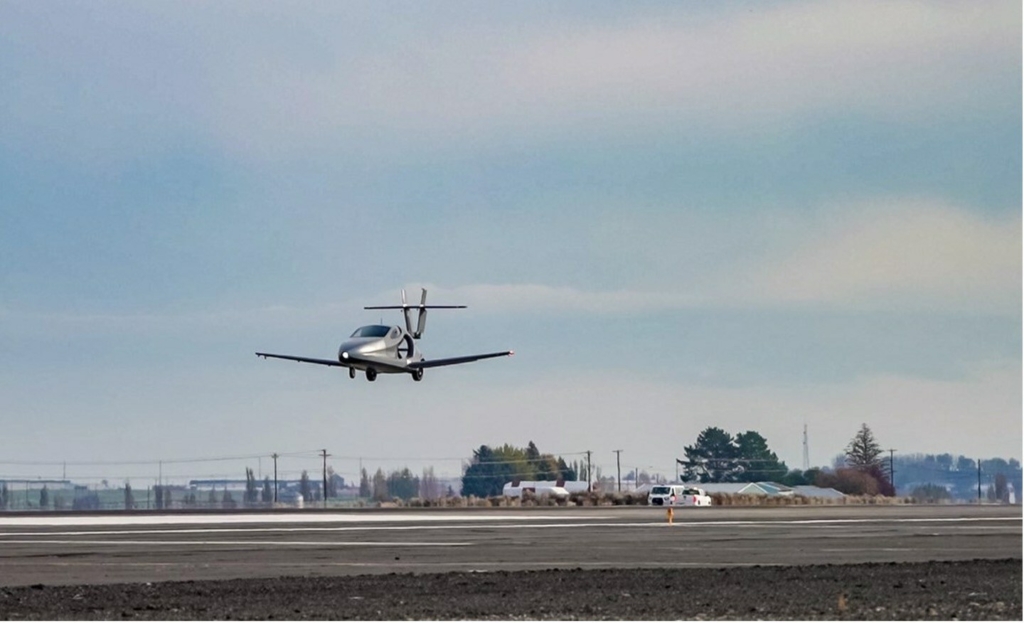
Bousfield believes the United States’ extensive general aviation airport network makes this model particularly attractive. He pointed out that the country has thousands of public-use airports, relatively few of which have scheduled commercial airline services.
“In the United States, for instance, there are 5,000 public-use airports in the country. There are only 330 that have commercial service,” he said. “And so with the Switchblade, you can utilise not only the 5,000 public airports, but the 8,000 private airports, if they’ll allow you to land or take off from there, and greatly expand the places that you can get to.”
This network could let Switchblade owners fly closer to their destinations than scheduled airline services allow, then complete the final part of their journey by road.
Samson Sky is targeting regional journeys of approximately 200 to 500 miles (320 to 800km), with a flying speed of around 160mph (257km/h).
Who would buy a flying car?
Bousfield believes the first customers will primarily be people who want greater flexibility for business and leisure travel.
“Our customers have told us that their biggest use is both personal and pleasure,” he said.
He gave the example of someone operating several businesses in different locations who could fly between them without relying on airline schedules or spending long periods driving.
“So, it allows him to travel on his terms, wherever he wants, whenever he wants, and be like a personal airline for him.”
Bousfield also sees a potential corporate market for the Switchblade, particularly among businesses employing specialist staff who regularly travel between distant work sites. He suggested that a roadable aircraft could allow employees to fly to a regional airport, drive between nearby appointments and return home the same evening.
“And then they fly home for dinner,” he said. “I think that’s going to be a really key thing for businesses to benefit from and retain their key staff and their ability to provide the service that they need.”
Could the Switchblade eventually become electric?
Although the Switchblade’s current propulsion approach uses automotive gasoline, Bousfield said the aircraft was originally conceived with hybrid-electric technology in mind.
“It was originally conceived to be at least a hybrid-electric. That’s what my first design was,” he said. “We went with gasoline to start with and then are circling back now to hybrid because it’s now making sense, and we figured out how we can do it.”
Bousfield said the company chose gasoline because burning leaded aviation fuel in residential neighbourhoods would be unacceptable, making automotive fuel a more practical solution. He acknowledged that battery weight remains a significant obstacle to fully electric regional aircraft.
“The batteries are basically dead weight for us at this point,” he said. “But being hybrid electric, we’re setting ourselves up to be able to convert to full electric in the future, which is ideal as soon as battery technology allows us to do that.”
Switchblade production target follows 18 years of development
Samson Sky’s route towards production has not been straightforward. The company flew an earlier Switchblade prototype but discovered that it did not meet its intended maximum speed.
Bousfield said the setback came as the company prepared to enter production about three years ago.
“We met everything else, all our performance requirements for the ground. It flew well, but we didn’t hit our top speed with that design,” he said. “We promised high performance. People are expecting that, and we have to give it to them.”
Samson Sky returned to the drawing board, undertaking further design and wind tunnel work to address the shortfall.
Bousfield said the experience was a difficult lesson after years of development.
“Even when you think you’re done, sometimes it doesn’t work 100%.” He credits the company’s investors and supporters with helping sustain the programme through its lengthy development.
“If it were just me, I would have given up, but I had investors. I had people counting on it and people who looked at us and liked the product, and I just didn’t want to give up on that dream of people and my own dream.”
How soon will flying cars be common?
The company is now targeting an assembly line and the start of production within approximately 18 months.
Bousfield also identified PAL-V and Slovakia’s Klein Vision among the manufacturers working to bring flying cars into production. He does not expect flying cars to become as commonplace as conventional automobiles immediately. Instead, he believes they will gradually enter everyday use and gain wider acceptance.
“It’s like the first electric cars when they came out. It’s like, oh, there’s one, and then you wait another day and a half. Oh, there’s one,” he said. “So it takes seeing them and knowing that they’re real for it to be something that really takes hold of the imagination of most people.”
Tesla’s hovering Roadster demonstration may have helped revive public interest in flying cars. Still, Bousfield’s experience suggests that getting these vehicles into regular use will depend on solving the less visible problems of manufacturing, regulation, insurance and practical operation.


