Tesla flying Roadster takes off as Alef claims it is the ‘second flying car’

4 min read
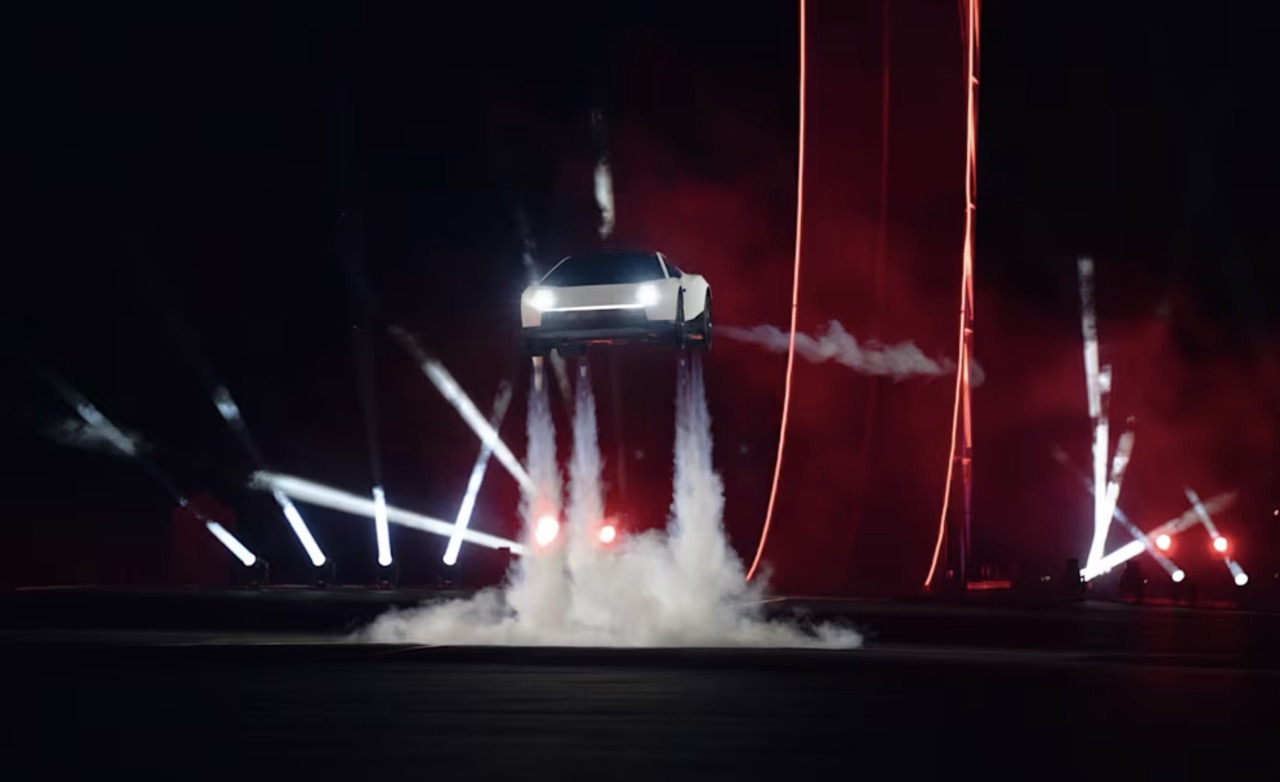
Tesla has unveiled a redesigned version of its second-generation Roadster, a sports car that can briefly lift off the ground, perform aerial manoeuvres and drive upside down.
The demonstration took place on 15 October at a SpaceX facility near Waco, Texas, almost nine years after Tesla first announced the Roadster in 2017.
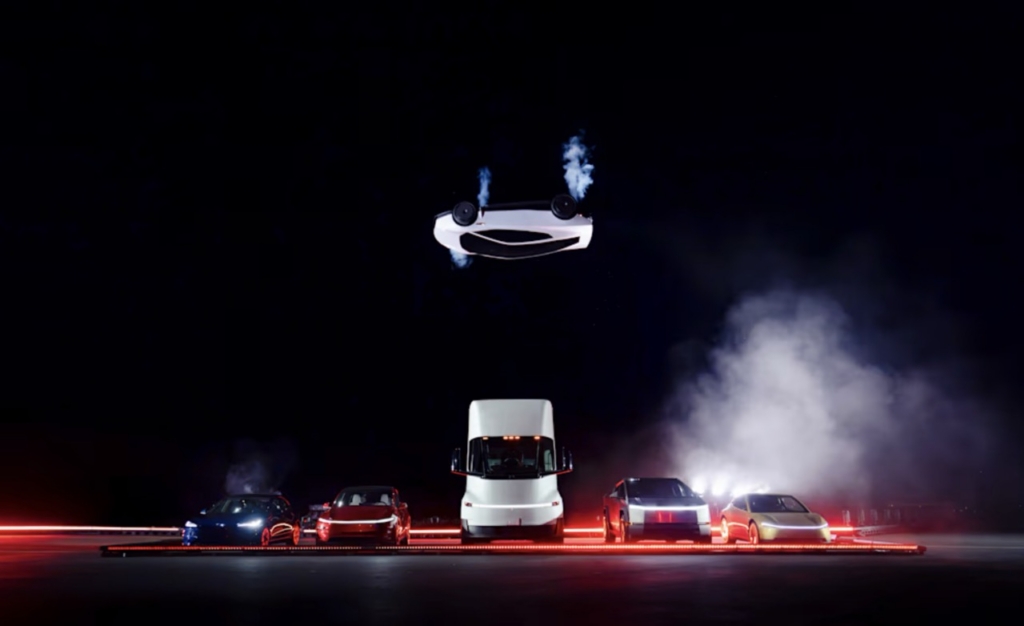
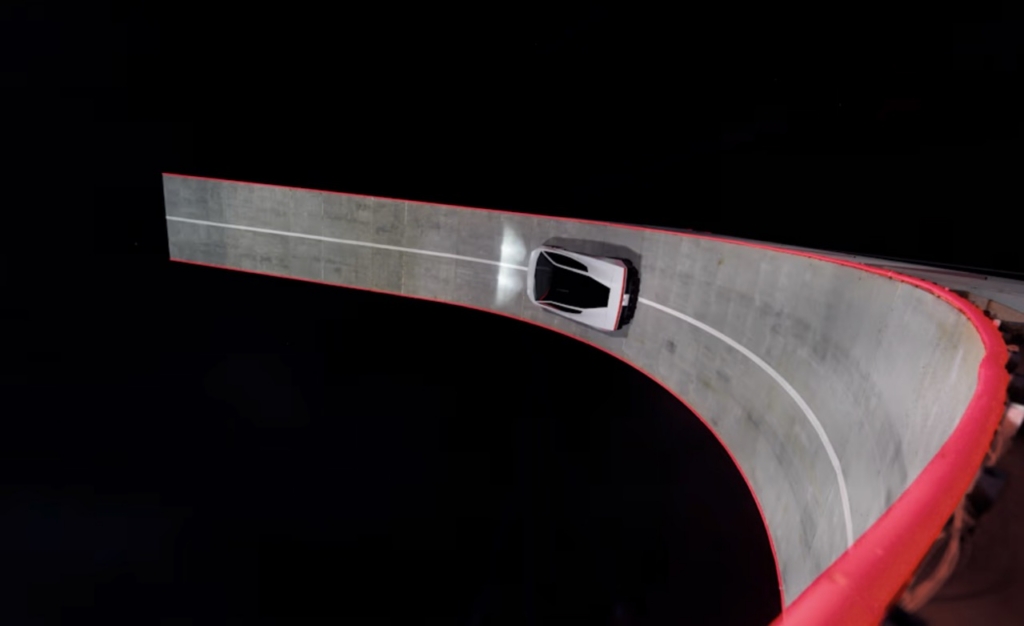
The prototype uses compressed-air thrusters developed with SpaceX engineers to generate lift and control its movement. During the event, it flew over several Tesla vehicles, including a Cybertruck, Cybercab and Model Y.
Tesla also demonstrated acceleration from 0-60mph in approximately 0.81 seconds.
The flying Roadster is only an experimental prototype for now, though the company announced a production target of 2028.
How Tesla’s flying Roadster uses SpaceX thrusters
Unlike conventional electric vertical take-off and landing (eVTOL) aircraft, Tesla’s Roadster does not use wings or propellers to generate lift. Instead, it relies on high-pressure compressed-air thrusters that release bursts of gas to produce thrust.
The prototype incorporates two air tanks with a combined capacity of 600 litres, storing approximately 250kg of compressed air.
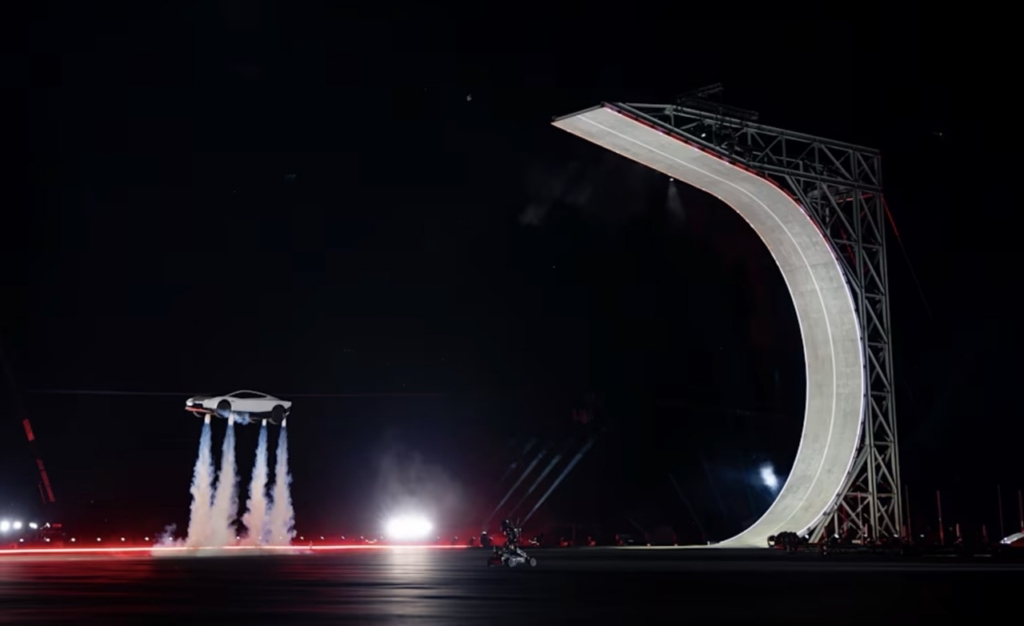
Ten thruster nozzles control the vehicle’s movement. A separate fan-based suction system beneath the chassis generates downforce, allowing the Roadster to travel upside down along an inverted ramp.
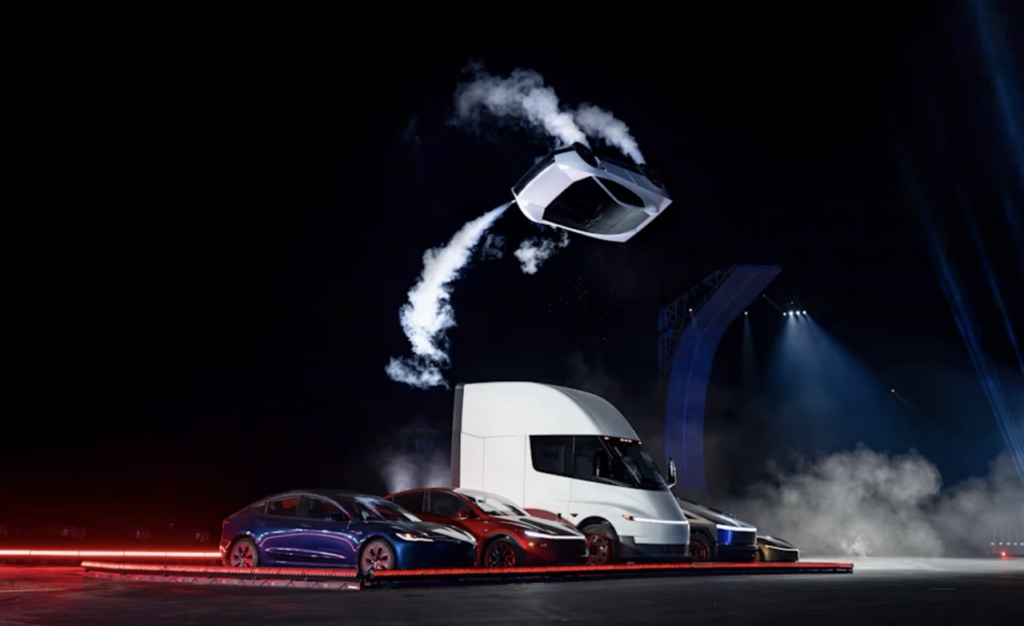
It is still unclear when it would be useful or desirable for an automobile to fly upside down, but Batman might be interested.
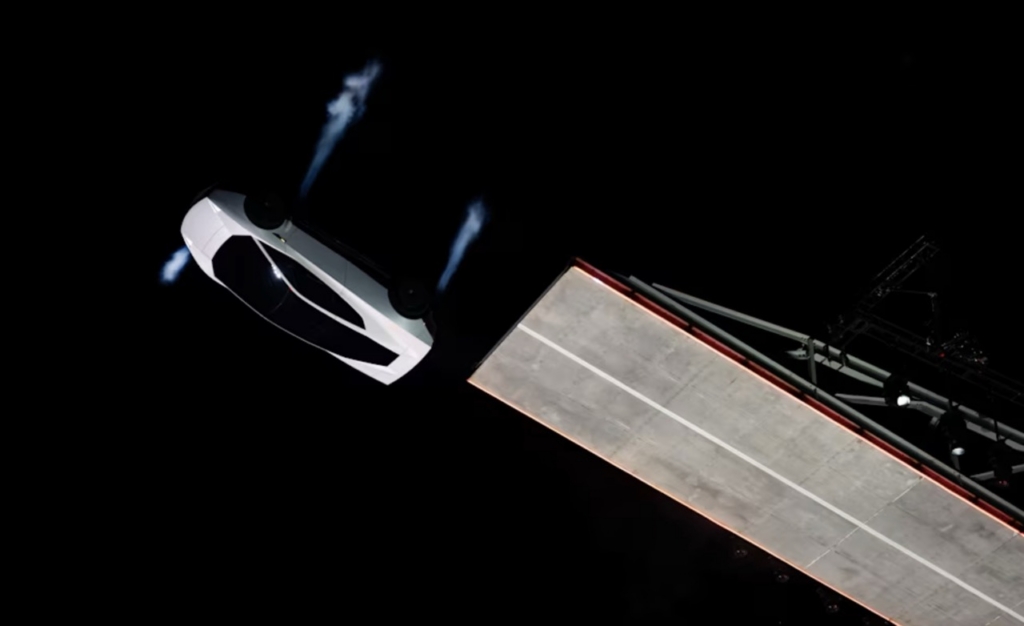
However, Tesla has not demonstrated sustained flight between destinations or disclosed the vehicle’s maximum flight endurance, altitude or operating range.
Alef flies its own car over a Tesla Roadster
Alef’s Model A is one of the most closely watched electric flying car programmes in development.
California-based Alef Aeronautics responded by releasing footage of its electric flying car taking off vertically and passing over a Tesla Roadster.
Alef described Tesla’s vehicle as the “second flying car in history, following Alef”, claiming its demonstration marked its 1,000th logged flight.
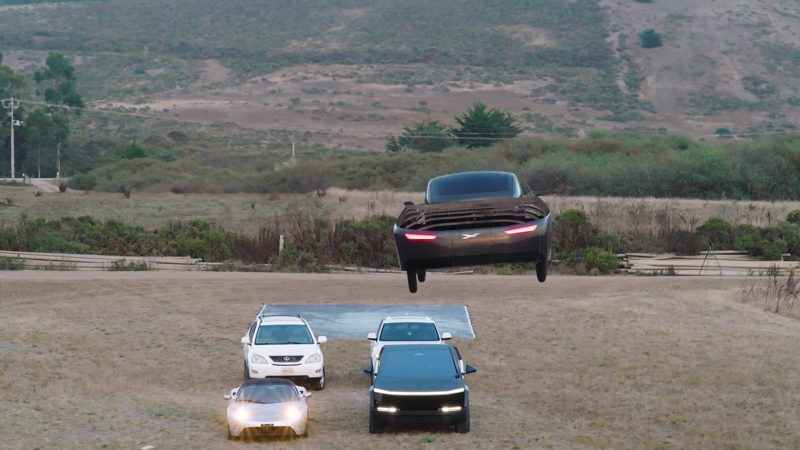
“Welcome, Tesla, to the flying car race; we’ve been here alone for eleven years,” said Alef CEO Jim Dukhovny.
The two flying car rivals share an early investor, venture capitalist Tim Draper.
Tesla flying Roadster vs Alef Model A: What’s the difference?
Alef’s vehicle uses eight electrically powered rotors integrated into its body to generate vertical lift.
Its proposed Model A is designed to drive on roads, take off vertically and transition into forward flight, with the body rotating while the passenger cabin remains upright.
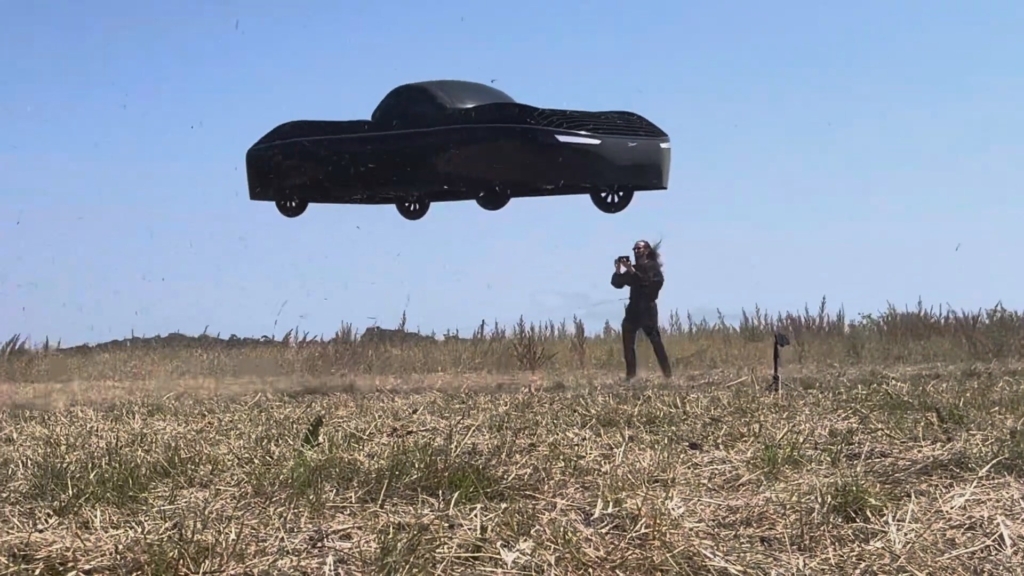
Alef advertises a driving range of approximately 220 miles and a flight range of 110 miles, with a target price of around $300,000.
The company has received a Special Airworthiness Certificate from the US Federal Aviation Administration (FAA) for limited prototype testing, but not full certification for unrestricted passenger operations.
AGN previously covered Alef’s urban flying car demonstration in February 2025, when a modified Model Zero prototype took off vertically after driving along a closed road.
In August 2025, AGN also reported on Alef’s plans for flight operations at two Silicon Valley airports, Half Moon Bay and Hollister.
Is Tesla’s Roadster really a flying car?
Tesla’s demonstration proves the prototype can briefly become airborne, but its compressed-air system has a limited operating duration.
Though Tesla pulled off some pretty neat stunts in its demonstration, the company has not demonstrated sustained, controlled flight comparable to a conventional aircraft.
Alef’s claim to have produced the first flying car also requires qualification.
Roadable aircraft prototypes predate both companies, including the Convair Model 118 ConvAirCar, which flew in 1947, and the Taylor Aerocar, which first flew in 1949 and received aircraft type certification in 1956. More recently, the Terrafugia Transition completed its first flight in 2009.
No flying vehicle has yet received full aviation certification for unrestricted public use.
Despite the popularity of The Jetsons and hair-raising flying car chases in science fiction films like The Fifth Element, flying cars have yet to find their place in daily transport.
Tesla is targeting Roadster production in 2028, while Alef continues developing its Model A for eventual customer deliveries.
Until then, we will have to settle for cars that keep their wheels firmly on the ground – which has served us remarkably well for 140 years.