


How NASA astronauts vote from space: Three ISS crew members cast ballots in US midterm elections

6 min read
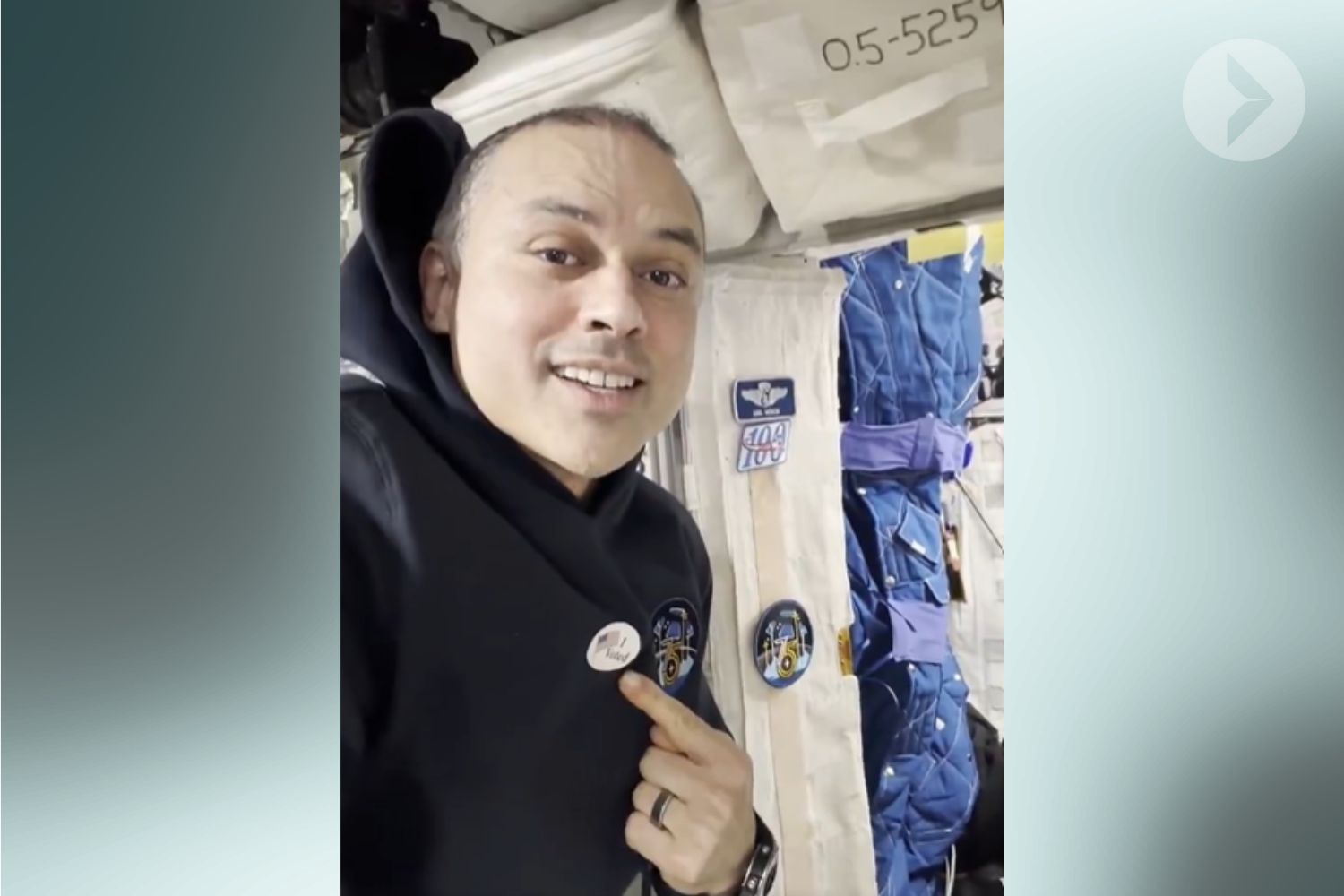
There was no queue, polling official or ballot box when NASA astronaut Anil Menon voted in the US midterm elections on Tuesday. His polling booth was a small compartment aboard the International Space Station, orbiting Earth at roughly 28,000 kilometres per hour.
Menon was one of three American astronauts who cast their ballots from space on 3 November, using an electronic voting system that allows eligible crew members to participate in elections without returning to Earth.
The other two were NASA astronauts Luke Delaney and Jessica Watkins.
“Yes, you can even vote from space!” Menon wrote in a social media post. “All three US crew members had the privilege of voting from space station. We filled out an electronic ballot and sent it securely to the election officials.”
Yes, you can even vote from space! All three US crew members had the privilege of voting from space station. We filled out an electronic ballot and sent it securely to the election officials. https://t.co/hJCExQ2nKr
— Anil Menon (@astro_anil) November 3, 2026
The astronaut also shared a short video showing how he voted, offering a rare glimpse of an everyday civic responsibility being carried out in an extraordinary setting.
Wearing an “I voted” sticker, Menon showed viewers the personal crew compartment he had used as his polling booth.
“Inside of it is my computer, where I was able to fill out an electronic form and send it to Harris County so I could vote today,” he explained.
The process took place hundreds of kilometres above the United States, but the ballot was destined for the same election authorities responsible for votes cast by residents of Harris County, Texas.
It was a small personal moment in a mission devoted largely to scientific research, spacecraft operations and maintaining the orbiting laboratory.
The first ballot from space
Voting from space is not a new privilege. Its origins go back to 1997, when American astronauts began spending extended periods aboard Russia’s Mir space station.
At the time, astronauts assigned to long-duration missions faced a problem that most voters never encounter. They could be away from Earth for months, with no practical means of visiting a polling station or returning an absentee ballot through ordinary postal services.
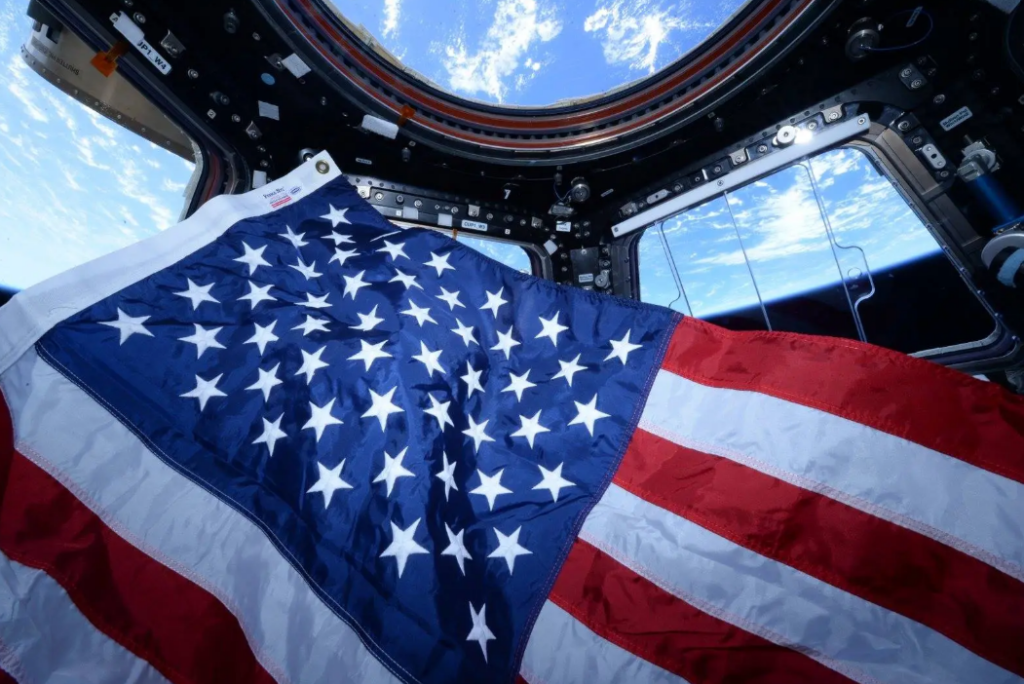
Texas lawmakers addressed the issue by passing legislation allowing eligible residents travelling in space to vote while in orbit.
The connection with Texas was important. NASA’s Johnson Space Center, the principal training and mission-control facility for American astronauts, is in Houston. Many astronauts live in the surrounding area.
The legislation provided a way for those residents to exercise their voting rights even when their work took them far beyond the planet.
Later that year, NASA astronaut David Wolf became the first American to cast a ballot from space.
Wolf was aboard Mir, the Russian station that preceded the International Space Station as a major destination for long-duration human spaceflight.
His vote established a precedent that has continued through successive generations of astronauts.
When the ISS began supporting a permanent human presence in November 2000, the same basic principle carried over: an astronaut’s absence from Earth should not prevent participation in an election.
How does a ballot travel from space to Earth?
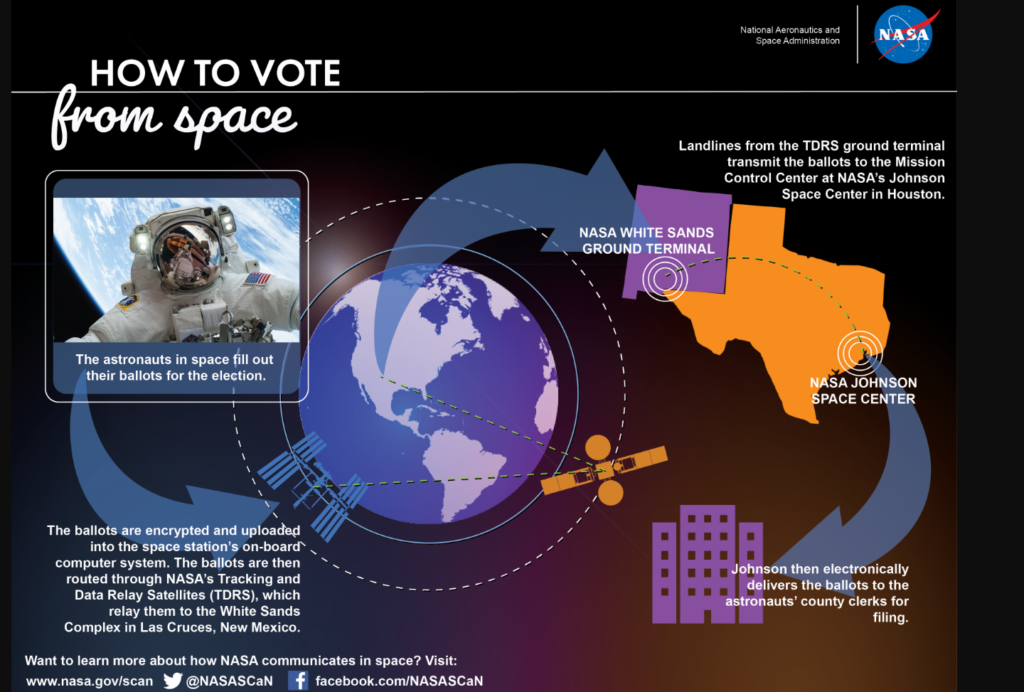
Although the voting process appears simple from the astronaut’s perspective, delivering the ballot requires several stages of communication.
The astronaut first arranges to vote absentee, working with the election authorities in the county where they are registered.
As with other Americans who are away from home, astronauts can use a Federal Post Card Application to request an absentee ballot. Election officials prepare an electronic ballot, which is made available to the astronaut through NASA’s communications systems.
The astronaut accesses the ballot using individual credentials, makes the selections and sends the completed document back to Earth.
NASA says the process is supported by its Space Communications and Navigation programme, known as SCaN.
The ballot travels through the agency’s Near Space Network, which provides communication and navigation services for spacecraft operating relatively close to Earth.
From the ISS, the electronic document is transmitted through NASA’s Tracking and Data Relay Satellite System.
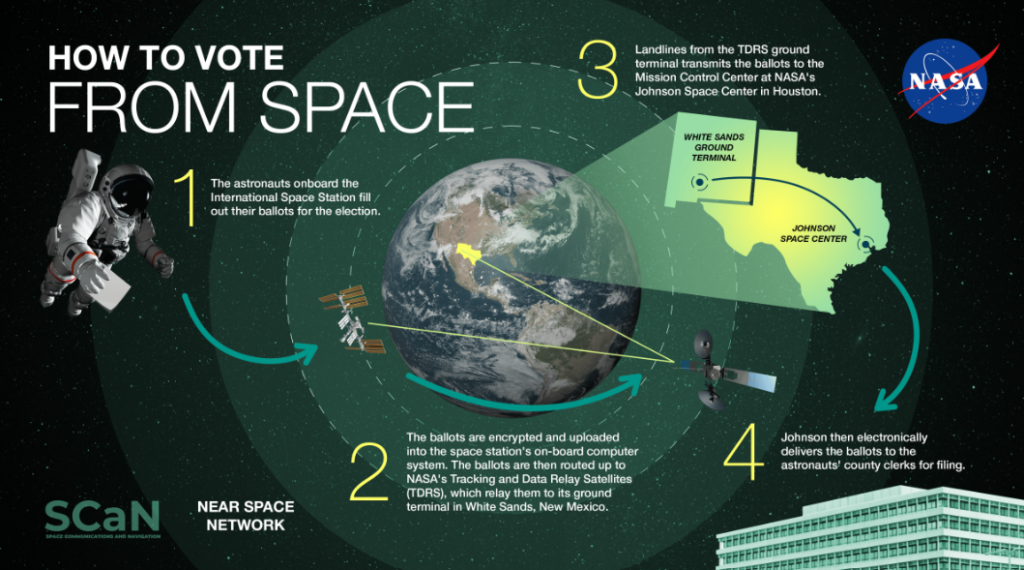
These satellites allow the space station to exchange information with ground facilities without having to wait until it passes directly over a particular receiving station.
The ballot is relayed to a ground antenna at NASA’s White Sands Test Facility in New Mexico. It then travels to Mission Control at Johnson Space Center in Houston before being forwarded to the appropriate county election official.
Security is an essential part of the arrangement.
NASA says the ballot is encrypted and accessible only to the astronaut and the county clerk, protecting the confidentiality and integrity of the vote during transmission.
The system does not mean astronauts can simply vote in any election by sending an email from orbit. They must meet the normal eligibility requirements and complete the necessary absentee-voting arrangements.
The difference is that their ballot travels through a spacecraft communications network rather than a postal system.
A tradition that has continued for decades
Several NASA astronauts have exercised their voting rights during missions since Wolf’s pioneering ballot in 1997.
Kate Rubins voted from the International Space Station during the 2016 presidential election and again in 2020.
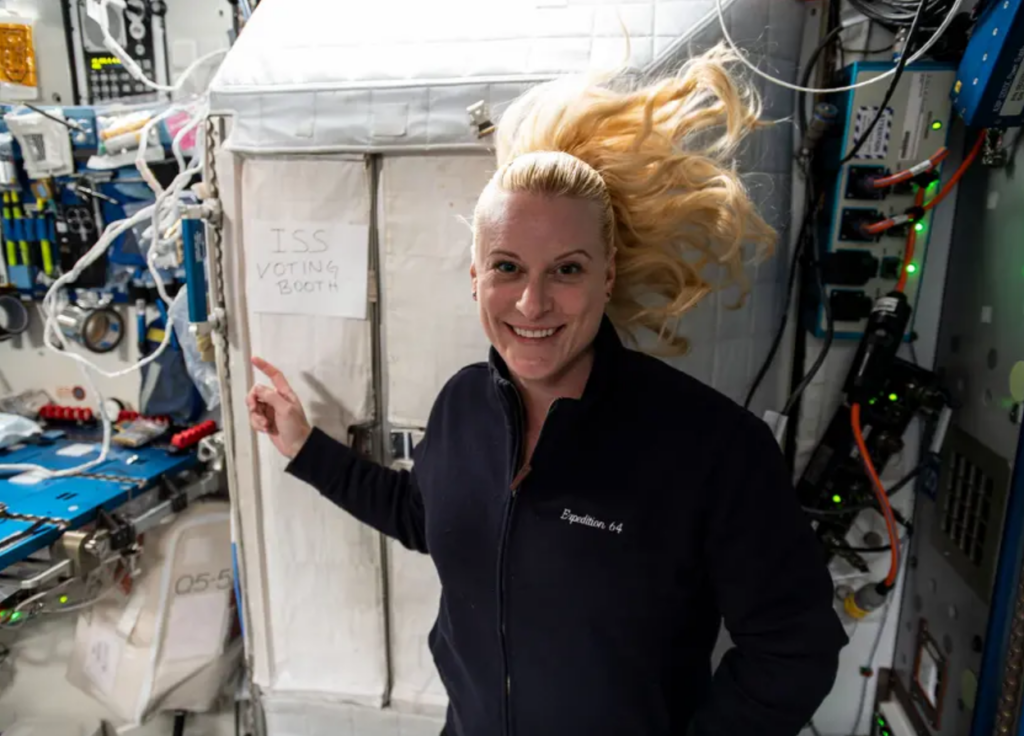
During the 2020 election, Rubins was photographed beside a makeshift voting booth aboard the station.
The photograph captured an unusual contrast: an American election being observed from a spacecraft surrounded by scientific equipment, cables and the machinery needed to sustain human life in orbit.
The Smithsonian’s National Air and Space Museum later highlighted her experience as an example of how astronauts remain connected with ordinary life while living and working far from home.
More recently, NASA astronauts Loral O’Hara and Jasmin Moghbeli cast electronic absentee ballots from the station in March 2024 while registered as Texas voters.
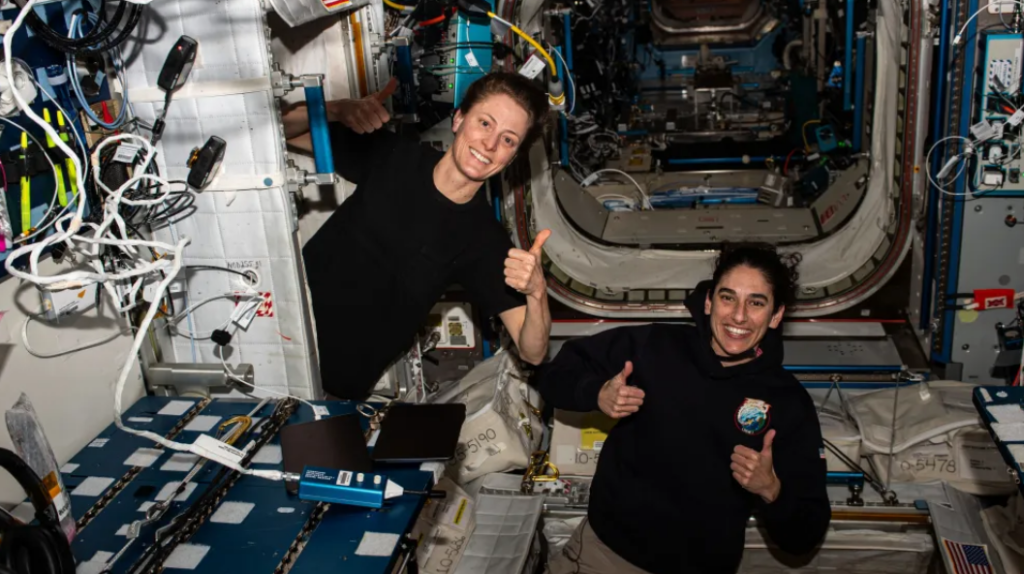
Their completed ballots were transmitted to Mission Control and passed to local election officials.
Menon’s vote in the 2026 midterms continues that tradition, but his video offers a more personal look at the process.
Instead of focusing on the communications infrastructure or the legislation behind the system, he showed viewers the place where he sat to make his choices.
The voting booth was simply his room aboard the station.
Three votes from the same spacecraft
Menon arrived at the ISS in July aboard a Russian Soyuz spacecraft.
Delaney and Watkins joined the orbiting laboratory in October on SpaceX‘s Crew-13 mission.
Their election-day participation meant all three American crew members aboard the station were able to vote despite being away from their home country.
Sign up for our newsletter and get our latest content in your inbox.


More from


November 4, 20264 min read


