


Man sets up website that tracks private jets to predict the apocalypse

4 min read

A new website tracking private jet movements is drawing attention across aviation and tech circles after its creator claimed spikes in business aviation traffic could serve as an “early warning system” for global catastrophe.
Kyle McDonald has a plan to predict Doomsday using planes
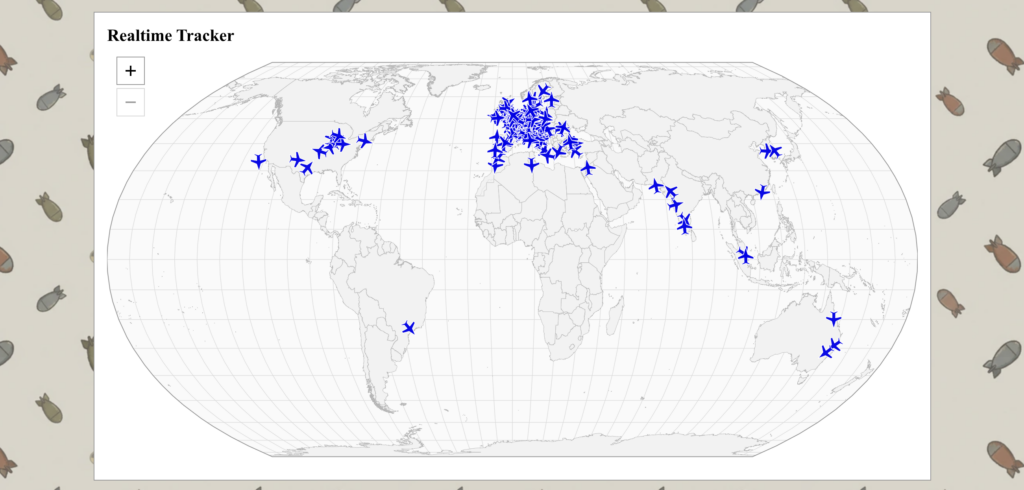
The project, called the Apocalypse Early Warning System, was created by artist and programmer Kyle McDonald. It uses live ADS-B aircraft-tracking data to monitor private jet activity worldwide.
McDonald’s premise is simple — if somewhat tongue-in-cheek. When billionaires, political insiders, or corporate elites suddenly begin leaving major cities en masse aboard private aircraft, the website assumes something serious may be about to happen.
The ADS-B apocalypse alert level
At its heart, the private jet predictor of imminent doom is an aviation data project built on the same open flight-tracking infrastructure used by online aircraft trackers. The system compares real-time business jet departures against historical averages for the same day and time to determine the potential threat of a world-ending event.
If traffic surges beyond expected levels, the site raises its “alert level” on a scale ranging from 1 to 5, with 1 representing a fairly normal day and 5 considered “an indicator of a likely imminent apocalypse.” The site also suggests that a level 5 could appear during a major sports event, peak holiday traffic, or due to a data processing glitch. In other words, the end of the world as forecast by private jets is all a bit relative and subject to change.
Built on business aviation data
McDonald’s project focuses specifically on aircraft commonly associated with private and corporate aviation.
The tracking system relies on open ADS-B broadcasts, the aircraft-tracking technology that supports modern air traffic management, industry platforms such as ADS-B Exchange, and public platforms like Flightradar24.
On the project’s methodology page, McDonald says the system tracks about 11,000 aircraft worldwide using publicly available ADS-B data feeds and ICAO hex to identify potential private jets by type.

“The original version used an FAA-only business-jet list,” McDonald writes in the documentation. “The current tracker builds a broader global aircraft metadata table by merging ADS-B Exchange aircraft records, Mictronics/tar1090 records, and FAA registry data by ICAO hex.”
The importer classifies metadata into business jets, military aircraft, large airliners, regional airliners, non-jet aircraft and other defined aircraft types. It then “applies a practical business-jet filter. Each tracked aircraft is matched in live data by its ICAO hex identifier.”
Aircraft categories that hint at Armageddon
The site references aircraft from major private aircraft manufacturers, including Gulfstream Aerospace, Bombardier, Dassault Aviation and Textron Aviation.
The platform excludes military aircraft and airliners from its calculations, including Boeing and Airbus commercial aircraft, CRJs, ERJs, and other transport category aeroplanes.

It’s unclear whether Boeing Business Jets and Airbus Corporate Jets—aircraft frequently used as government transports and by ultra-high-net-worth individuals—are included in the possible apocalypse jet data. Presumably, individuals who regularly fly on these large private airliners would be among the first to head for luxury bunkers.
Why private jet tracking has become controversial
The Nostradamus of flights joins a troubling trend for those who rely on private aviation, as publicly accessible flight data has become an issue for several influential jet owners.
Private jet tracking of aircraft linked to celebrities, oligarchs, and tech executives, including Elon Musk, has been widely shared on social media.

This phenomenon has sparked debate across the business aviation sector over the balance between operational transparency, public accountability, and personal security. Some private jet operators have sought ways to obscure aircraft ownership and movement data through FAA privacy programs and registration trusts.
Yet ADS-B transmissions remain publicly receivable unless operators qualify for specific blocking or privacy measures.
The US Congress is currently reviewing a “Pilot and Aircraft Privacy Act” bill, which would “establish requirements and limitations regarding the use of automatic dependent surveillance-broadcast data.”
McDonald’s website relies on anonymised operational data, but even that can reveal useful geopolitical or economic patterns when aggregated at scale.
Aviation data meets billionaire survivalism
McDonald told The Washington Post that the site is partly social satire and a commentary on the growing public fascination with “billionaire survivalism” — the notion that wealthy elites have secret escape plans in place for when society collapses amid climate disasters, pandemics or geopolitical conflict.
McDonald’s argument has some merit. Aircraft like the Gulfstream G700 and Bombardier Global 7500 can fly more than 7,000 nautical miles nonstop, enabling direct routes between financial centres, global metropolises, and remote island residences or mountain hideouts. The very wealthy and powerful could easily hop on their jet to safety, without relying on the complex and time-consuming logistics of commercial aviation.

There is a precedent. During the COVID-19 pandemic, private aviation demand surged as airline networks collapsed. Of course, in that case, private jet activity was more a symptom of the crisis, rather than a predictor.
The Apocalypse Early Warning System is a curious ADS-B application, but it could prove useful. If the world’s wealthiest people suddenly start flying out all at once, people on the ground might get advanced notice thanks to aviation data.
But it leaves a lingering question of a looming apocalypse unanswered: when all the private jets start taking off, where will we go?
Featured Image: Icarus Jet


