


Swiss to scrap 2 Airbus A220-100s to provide spare engines for its A220-300 fleet

4 min read
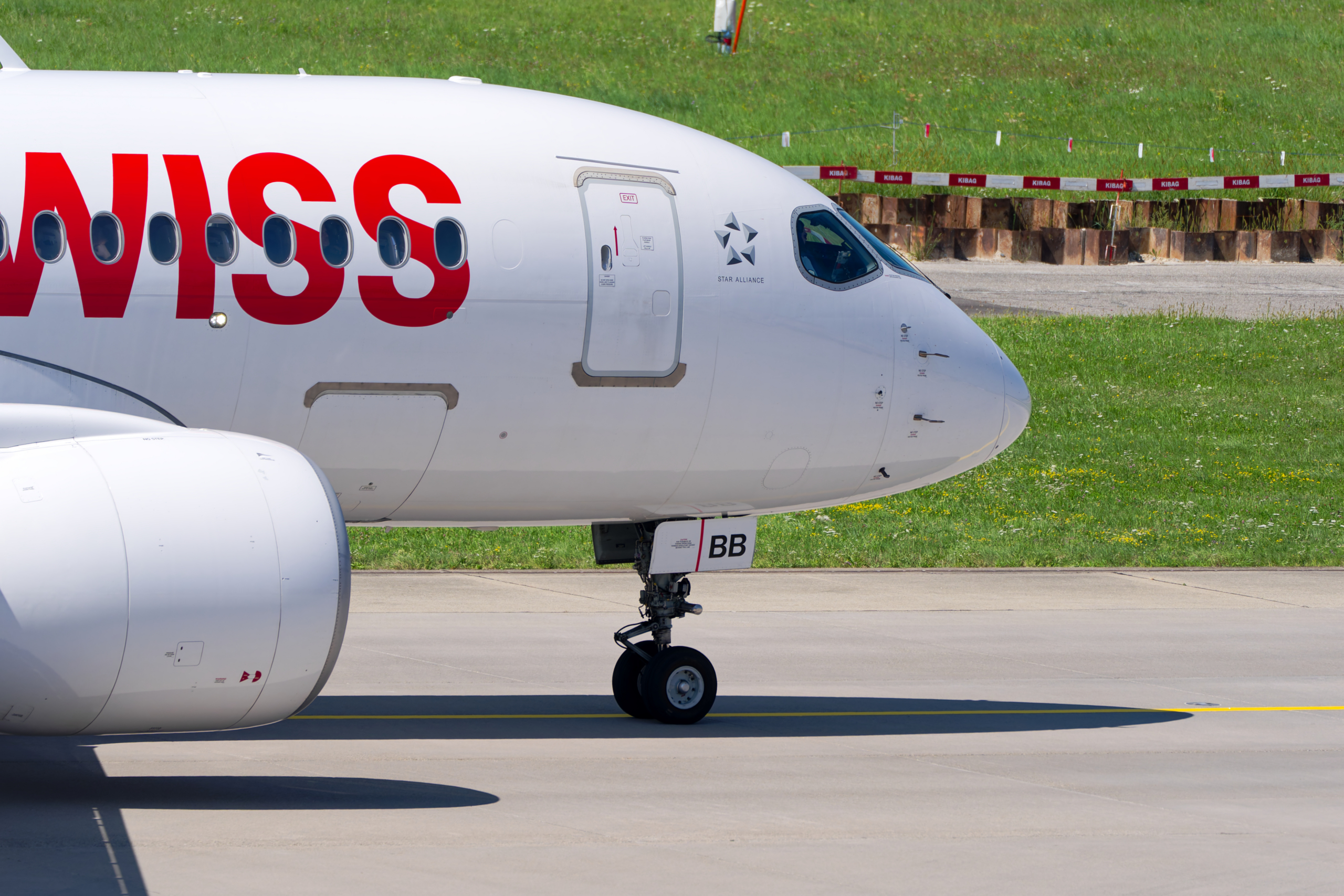
Swiss International Air Lines has announced that it intends to scrap two of nine Airbus A220-100s that have been temporarily removed from service. The decommissioned aircraft will provide much-needed spare engines along with other components for its larger A220-300 fleet, of which the carrier operates 21 of the type.
Swiss to scrap two A220s-100s to support A220-300 fleet
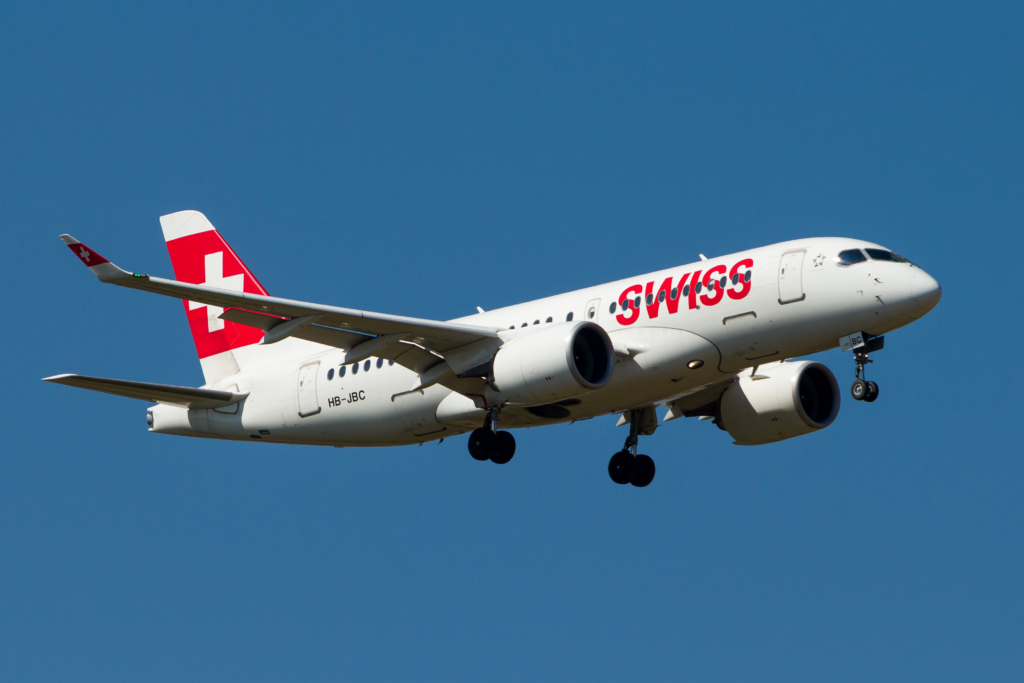
As reported by Aviation Week, amid ongoing delays to the supply of spare Pratt and Whitney GTF engines to the airline customers, Swiss has decided to scrap two of its A220-100s (registered HB-JBC and HB-JBD) and use the powerplants to support its larger A220-300 fleet.
The carrier’s nine-strong fleet of A220-100s is currently in temporary storage, having been removed from service as the airline seeks to save costs as fuel prices and other charges rise across Europe.
The two A220-100s earmarked for parting out were placed in storage at Toulouse Francazal Airport (QYF) in January of this year and will not be reactivated, the airline has confirmed. Under the plan, Swiss will transfer four Pratt & Whitney PW1500G geared turbofan (GTF) engines from the two cannibalised A220-100s to its 21 A220-300s. “By dismantling these two aircraft, we are specifically securing components for our own use,” a Swiss official said.
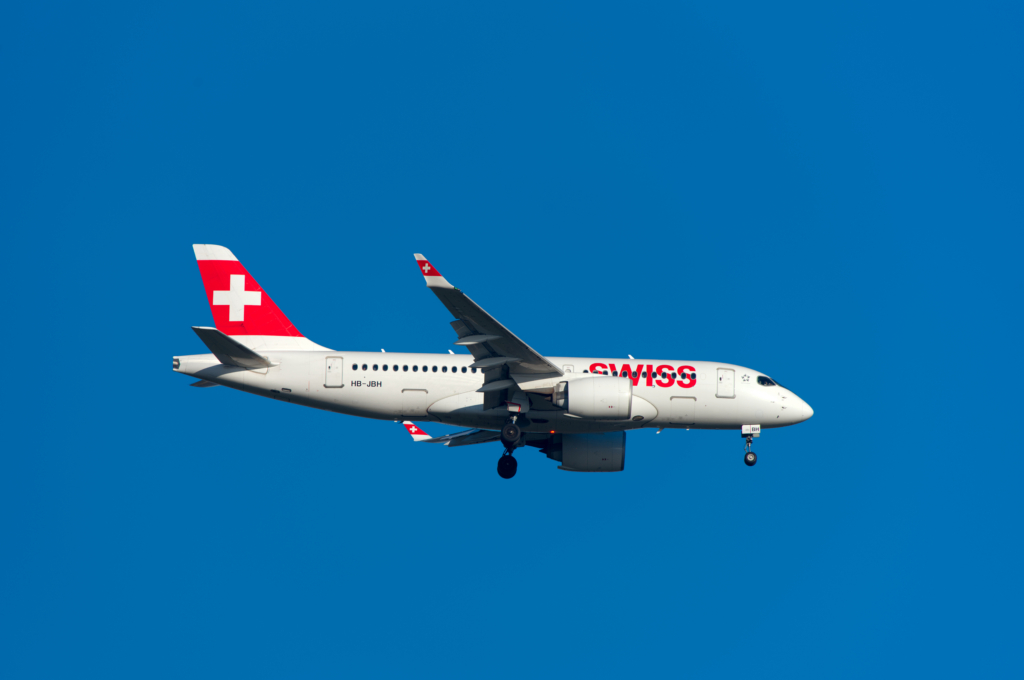
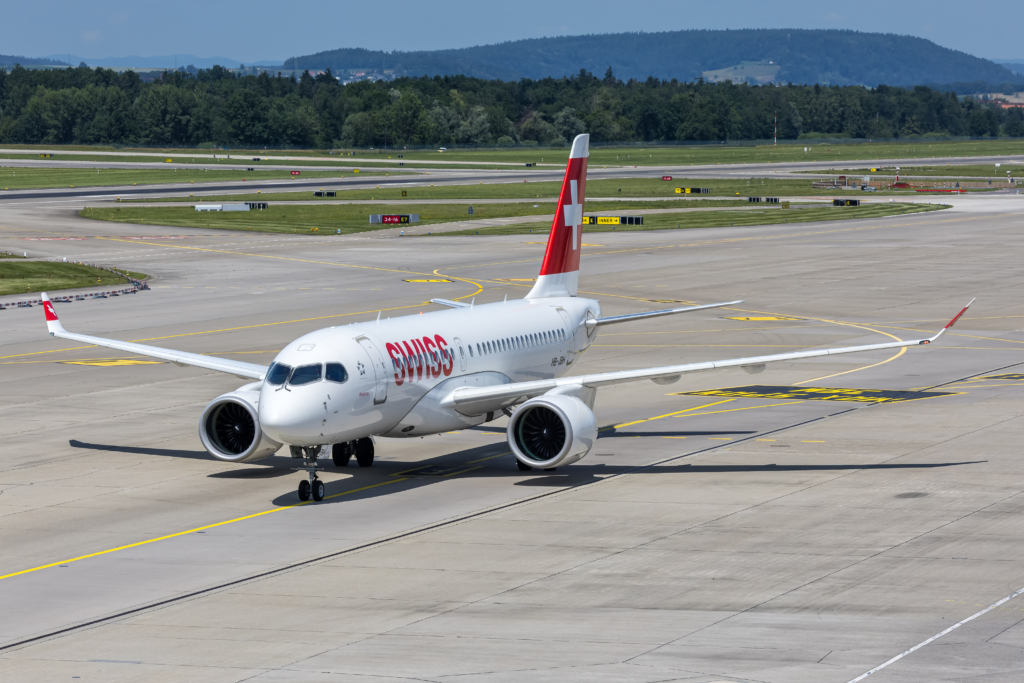
The larger variant of the Airbus regional twinjet has become more popular with operators as operating costs have risen. In Swiss configuration, its smaller A220-100s seat 125 passengers, while its A220-300s seat 145 passengers, both in a single-class layout. This provides for greater revenue-earning potential while incremental costs are minimised between the two types.
According to Planespotters.net, both aircraft being dismantled by Swiss were delivered to the carrier in 2016 when the carrier became the launch operator of the type, then known as the Bombardier CSeries.
Of the airline’s seven remaining A220-100s, these aircraft are currently being held in temporary storage in several airports across Europe and are expected to remain out of service for at least 18 months, the airline added. “We are continuously adjusting the exact schedule to the current operational situation. The goal of this measure remains to utilise the resources freed up for the reliable operation of the A220-300 fleet,” the official added.
Engine issues continue to plague the Swiss A220 fleet
While Swiss insists it has not made any decision as to the long-term future of its A220 fleet, in recent months, the carrier has been prioritising A220 operations around the A220-300, which offers better economics and cost efficiencies over its smaller sister.
The average age of the airline’s A220 fleet is 8.4 years, with the newest aircraft (A220-300 HB-JCU) having been delivered in May 2021.
Like many other airlines, Swiss has been affected by issues with the Pratt and Whitney GTF engine family, with both the PW1100G and PW1500G series of engines suffering from technical issues. Pratt & Whitney discovered that some high-pressure turbine (HPT) disks and compressor components manufactured between roughly 2015 and 2021 contained defects related to the powdered-metal manufacturing process.
This meant that tiny material anomalies can create cracks much earlier than expected, potentially leading to component failure. Because these are highly stressed rotating parts, Pratt & Whitney had to launch a massive inspection and replacement program affecting hundreds of engines worldwide.
This has led to a general shortage of spare GTF engines across the industry, with hundreds of aircraft (both A220S and the larger A320neos) being grounded as a consequence, and with longer engine maintenance timelines.
Swiss itself has reported that four of its 11 A320neo-family aircraft are also temporarily out of service due to ongoing engine maintenance issues.
Swiss has had a chequered recent history with the A220
It was first announced in October 2025 that Swiss would be grounding its A220-100 fleet for at least 18 months while the carrier dealt with the Pratt and Whitney GTF engine issues.
The carrier had been facing significant disruption to its A220 operations up until this point, causing the airline to lease several examples from Latvian-based carrier airBaltic to fill the gaps in its flying programme as a consequence.
Although by no means an isolated example of airline operators of the A220 that have faced ongoing technical issues, Swiss has been affected more than most.
As reported by Simple Flying, in 2022, at least two Swiss flights operated by A220 had to be diverted due to unusual odours in the cabin. In 2023, the airline reported that as many as eight of its 30 A220s were out of service with engine-related issues.
However, the airline’s relationship with the A220 attracted further scrutiny in December 2024 when the cabin of one of its A220s filled with toxic fumes and had to make an emergency landing. As a result of this incident, sadly, one member of the cabin crew lost their life.
Featured image: Michael Derrer Fuchs / stock.adobe.com


