


Boeing validates stealth performance of MQ-28 Ghost Bat collaborative combat aircraft

5 min read
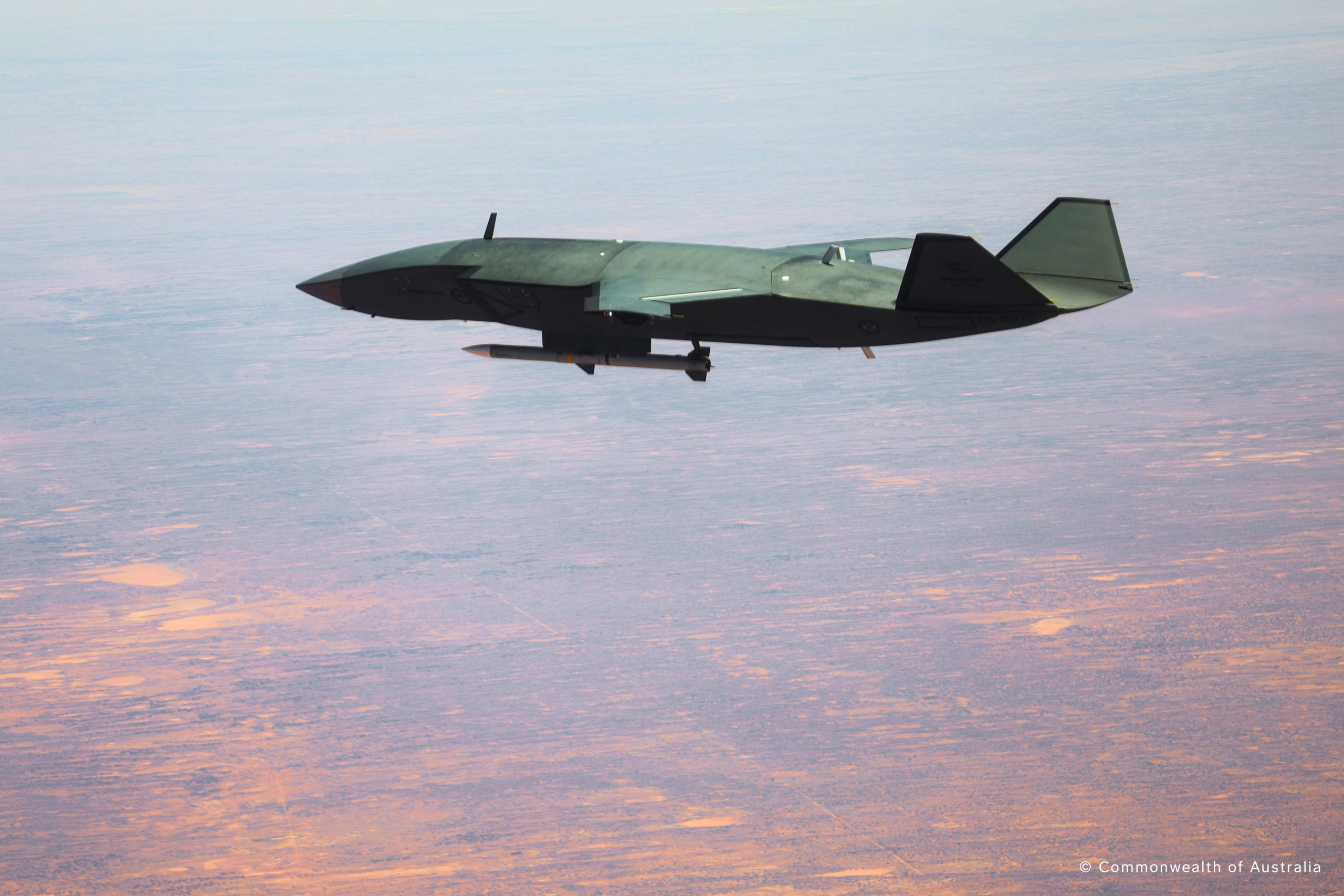
Boeing has validated the stealth performance of its MQ-28 Ghost Bat collaborative combat aircraft.
Developed by Boeing Australia, the uncrewed aircraft is designed to complement traditional fighter jets as a force multiplier. While it’s proven itself in over 150 flights so far, this is the first confirmation Boeing has offered of its stealthy attributes.
“The combination of a highly capable platform, stealth features, advanced autonomy and artificial intelligence provides unprecedented ability for air forces to extend their mission effectiveness and operational flexibility,” said Brad Thompson, director for Phantom Works Australia.
Measuring stealth on the MQ-28 Ghost Bat
Radar cross section (RCS) is one measure of how ‘stealthy’ an aircraft is. It assesses how visible an aircraft may be to radar.
According to Boeing, the MQ-28’s RCS reduces the range at which enemy radars can detect and engage the aircraft, improving its ability to operate in contested environments. It added that the testing would provide customers with objective, repeatable data on survivability and detection risks.
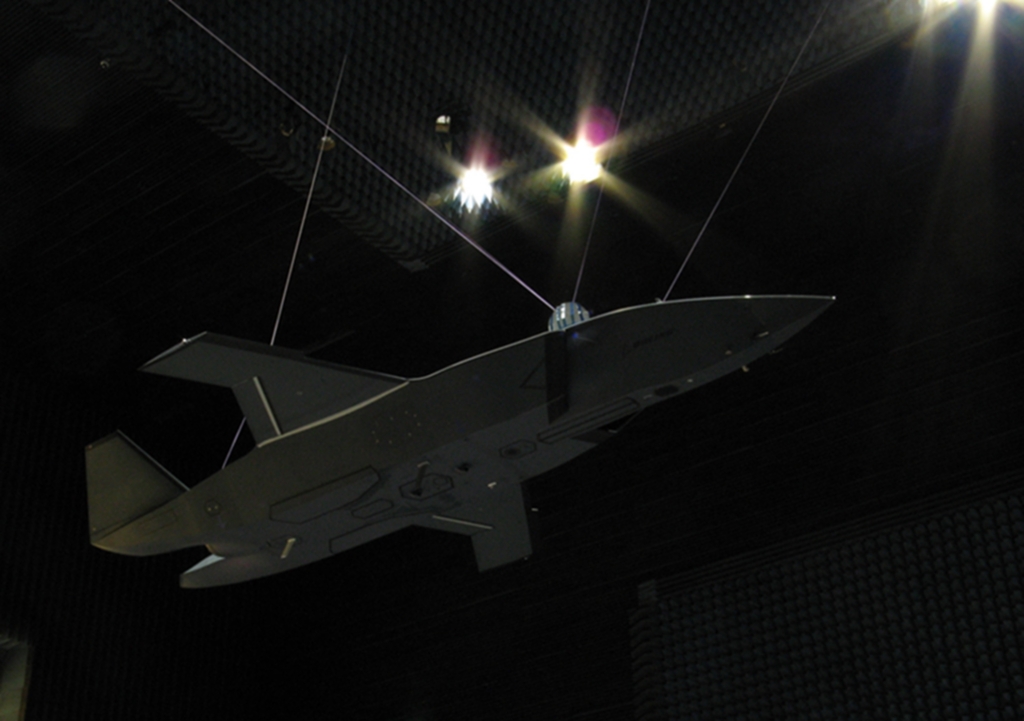
The company did not disclose the MQ-28’s RCS figure, the radar bands used during testing, the angles from which the aircraft was assessed, or any comparison with crewed stealth aircraft such as the F-22 or F-35. Such figures are highly sensitive and vary with radar frequency, aspect angle, configuration and payload.
While that means the Ghost Bat cannot be meaningfully ranked against fifth-generation fighter jets, validating its low-observable design through repeatable testing is an important milestone for the aircraft.
Ghost Bat moves beyond the loyal wingman label
The stealth validation comes as Boeing continues to move the MQ-28 beyond its original loyal wingman framing and position it more firmly as a collaborative combat aircraft.
The aircraft began development in 2017, first flew in 2021 and has now completed more than 150 flights. Boeing says recent demonstrations have included multi-aircraft teaming, daily flight operations during test blocks, deployment to an unfamiliar Royal Australian Air Force base at Tindal, and integration with crewed aircraft.
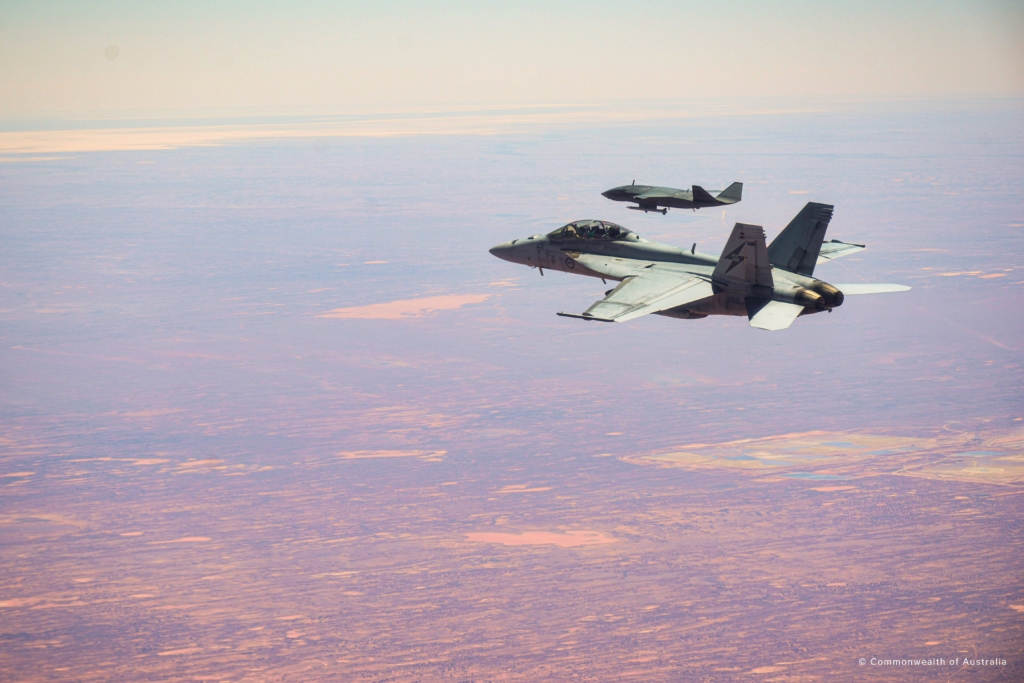
In one trial, two in-flight MQ-28s and a third digital aircraft teamed with an airborne E-7A Wedgetail to complete a mission against an airborne target. And in December, an MQ-28 teamed with a Royal Australian Air Force E-7A Wedgetail and F/A-18F Super Hornet to autonomously fire at and shoot down an airborne target.
The CCA concept depends on more than simply adding uncrewed aircraft to a formation. Future systems will need to sense, communicate, take direction from crewed platforms, carry useful payloads and survive long enough to affect the fight. These demonstrations are intended to show that the MQ-28 can do just that.
Boeing’s MQ-28 Ghost Bat flies in the USA
The stealth validation also follows the MQ-28’s first international operational flight tests from Point Mugu, California.
Boeing said the aircraft completed three operational flight tests in the United States to validate autonomous operations and demonstrate rapid deployment and sustained operations from an allied location.
MQ-28 just went international! 🌏✈️
— Boeing Defense (@BoeingDefense) May 27, 2026
Three flights from Point Mugu proved rapid allied deployment, autonomous ops and payload integration — paving the way toward exportable uncrewed capability. pic.twitter.com/TpvvLtfnZ0
Boeing is working to demonstrate that Ghost Bat can operate away from its Australian test environment and allied facilities, key considerations for potential export customers.
Boeing is one of the companies involved in conceptual design work for the US Navy’s emerging carrier-based collaborative combat aircraft. Other companies linked to that effort include General Atomics, Anduril and Northrop Grumman, with Lockheed Martin working on a common control architecture.
However, the MQ-28 is not part of the US Air Force’s funded first CCA increment, which is centred on General Atomics’ YFQ-42A and Anduril’s YFQ-44A. Boeing’s opportunity is more likely to sit with future US, allied or export requirements rather than the current USAF downselect.
Australia remains the Ghost Bat’s launch customer
Australia remains the MQ-28’s launch customer and has moved the aircraft into a formal programme of record.
Boeing is also looking beyond Australia. In March, Boeing Australia and Rheinmetall announced a strategic partnership to offer the MQ-28 for Germany’s planned collaborative combat aircraft requirement, with the companies targeting a potential capability by 2029.
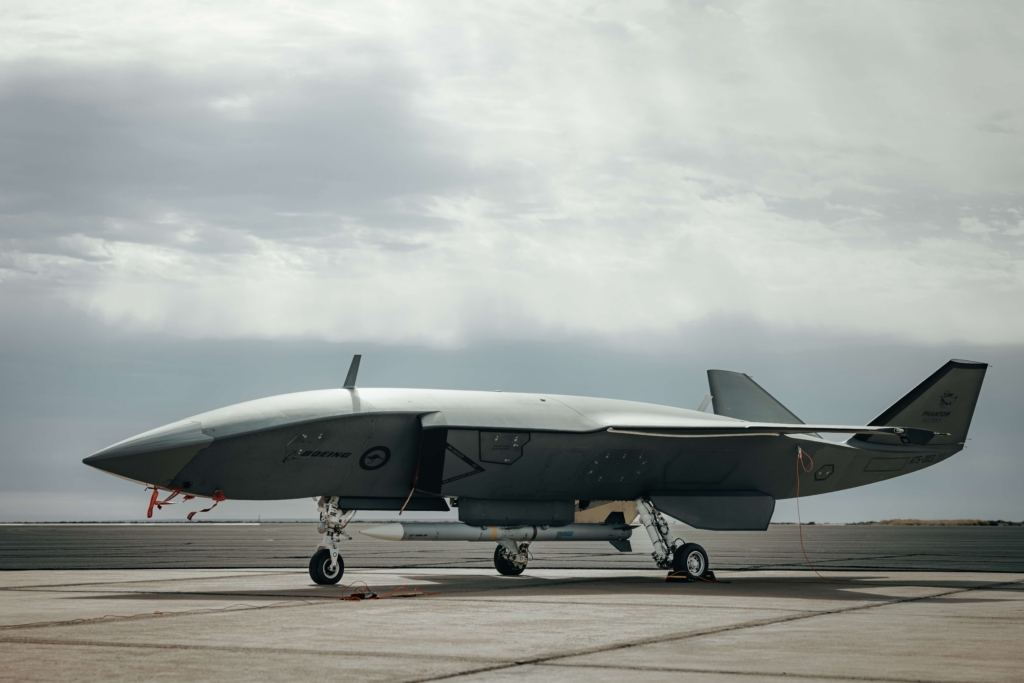
Rheinmetall said it would act as system manager for the aircraft in Germany, supporting integration into command and weapons systems, adaptation to national requirements, and maintenance and logistics.
That partnership gives the Ghost Bat a route into Europe at a time when air forces are examining how uncrewed aircraft could add mass, distribute risk and extend the reach of existing fighter fleets.
Stealth validation strengthens Boeing’s CCA pitch
Boeing describes the MQ-28 as an open, modular platform designed to support country-specific mission systems and sovereign capability.
The aircraft is 38ft long, has a wingspan of 24ft, a range of more than 2,000 nautical miles and is designed to fly at fighter-compatible speeds of up to Mach 0.9. Its modular nose section can be adapted for different mission payloads, including intelligence, surveillance and reconnaissance, electronic warfare and sensing roles.
The aircraft is designed to be portable, too. It can be broken down, packed into a transporter, moved and reassembled in a matter of hours.
While the RCS testing does not make the MQ-28 combat-proven, it does give Boeing another tangible milestone as the Ghost Bat competes for attention in a rapidly developing CCA market.
Featured image: Boeing


