


Dark Merlin vs Fury: comparing the two CCA vying to join the US Air Force

6 min read
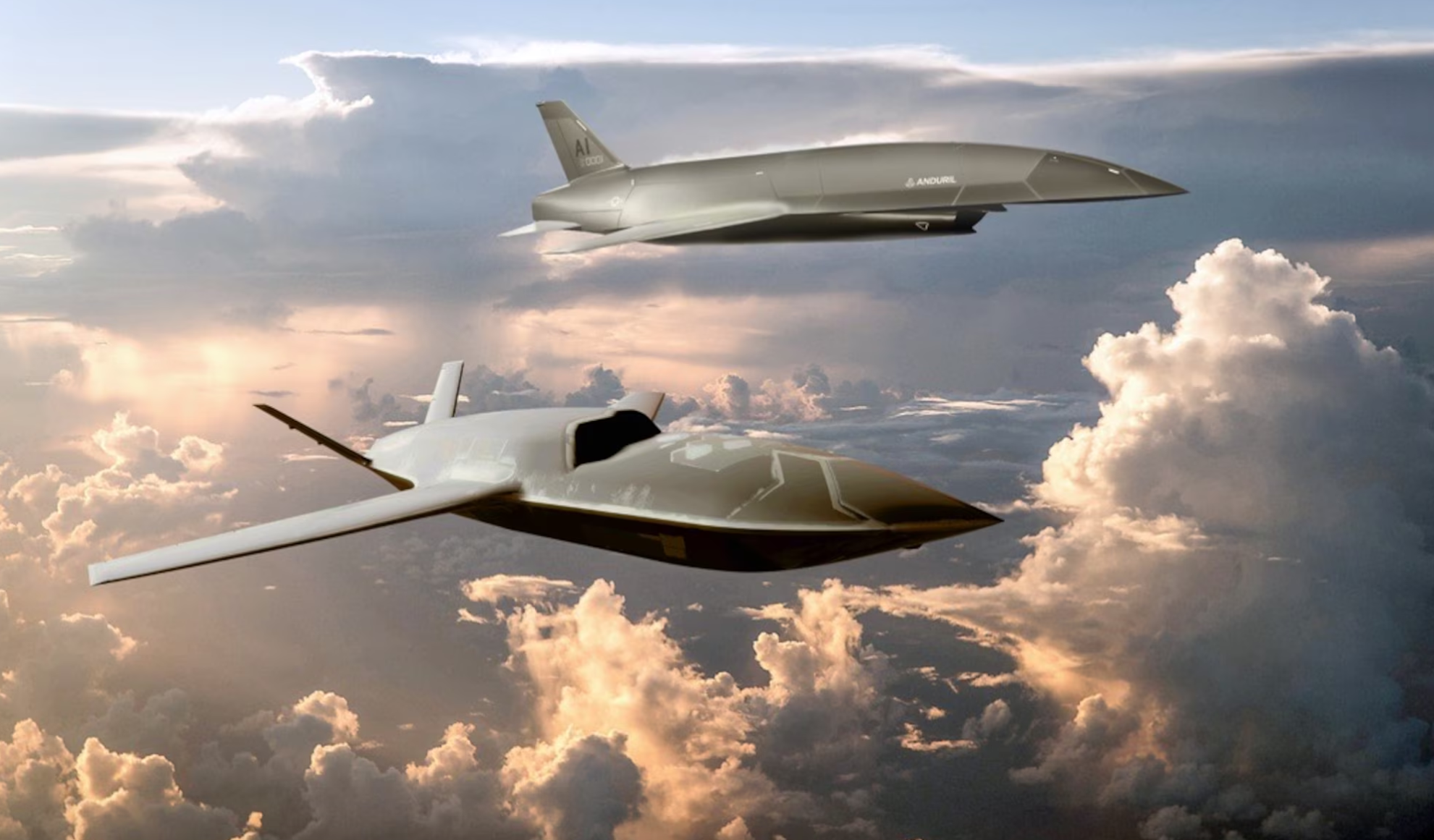
The United States Air Force (USAF) has designated two different aircraft for its Collaborative Combat Aircraft (CCA) program: the General Atomics YFQ-42A Dark Merlin and Anduril YFQ-44A Fury.
The two aircraft are the winning designs for Increment I of the USAF CCA development program. The new generation of uncrewed combat vehicles will offer autonomous capabilities to operate alongside crewed fighters.
As the complexity of aerial warfare increases, the USAF aims to have approximately 1,000 autonomous “wingmen” by 2030. The manned-unmanned teaming in military operations is expected to enhance mission effectiveness. It remains crucial for the manufacturers to secure the contract to provide air superiority for the Joint Force.
| Aircraft designation | |
|---|---|
| Y | Prototype (The “Y” will be dropped upon entering production) |
| F | Fighter aircraft |
| Q | Uncrewed aircraft |
| 42/44 | Design Number |
| A | Series A (first version) |
USAF CCA contenders race towards production
Both contenders have hit key milestones on the road to production, but they reflect two distinct approaches to the USAF’s Collaborative Combat Aircraft vision.
The General Atomics YFQ-42A Dark Merlin leans towards a more traditional, survivability-focused design, with internal weapons carriage and an emphasis on operating alongside crewed fighters in contested airspace.
By contrast, the Anduril YFQ-44A Fury is built around affordability and scalability, favouring a modular architecture and external payloads to deliver “affordable mass” at speed.
| Attribute | General Atomics YFQ-42A Dark Merlin | Anduril YFQ-44A Fury |
|---|---|---|
| Role | Autonomous CCA, air-to-air “missile truck” | Multi-mission CCA, combat support and strike |
| Manufacturer | General Atomics | Anduril Industries |
| Programme status | Flight-tested prototype, Increment I contender | Flight-tested prototype, early production prep |
| First flight | August 2025 | October 2025 |
| Range | ~700+ nm (estimated) | Not disclosed |
| Payload | Internal bay, ~2× air-to-air missiles | External hardpoints for weapons |
| Payload capacity | ~1,500 kg (unofficial) | Not disclosed |
| Speed | High subsonic (unconfirmed) | Up to Mach 0.95 |
| Design philosophy | Low observable, survivability-focused | Affordable, modular, scalable |
| Autonomy system | Open architecture autonomy | Hivemind AI system |
| Weapons carriage | Internal | External |
| Operational concept | Escort, sensing, air combat support | Distributed ops, strike, teaming |
| Production outlook | Competing for USAF contract | Competing, focus on rapid manufacturing |
General Atomics YFQ-42A Dark Merlin
The GA YFQ-42A Dark Merlin is an Autonomous Air Vehicle (AAV) intended to support crewed combat jets in a collaborative combat environment.
The Dark Merlin is a hunting machine that is designed to showcase superiority in speed and aerodynamics. It combines agility, lethality, and survivability to fulfil the USAF’s objectives of the CCA program.
Moreover, the use of advanced technology is established from design and manufacturing to testing and operations. In April 2024, the USAF selected GA to build a flight test prototype for the CCA program.
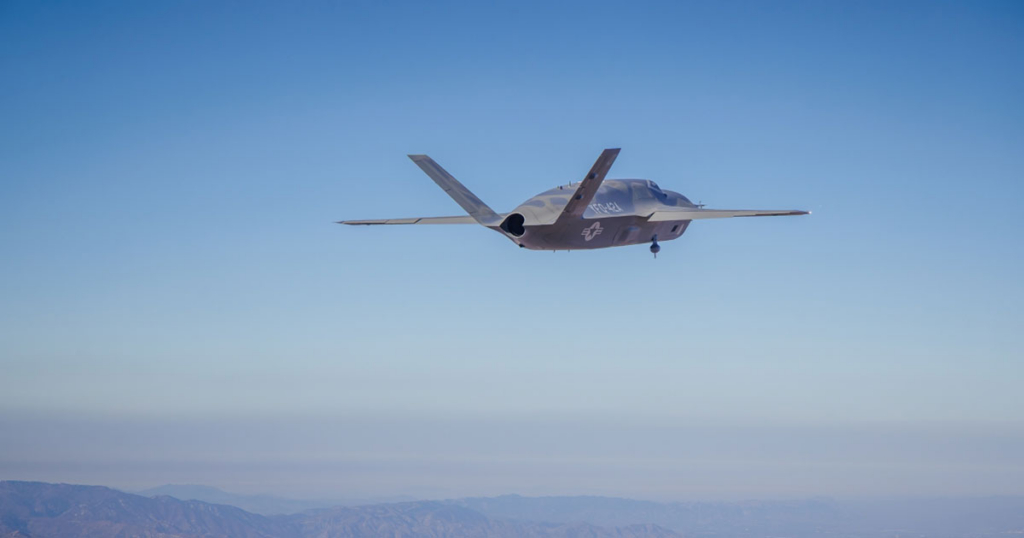
The member of the Gamit family of UAVs is derived from the XQ-67A Off-Board Sensing Station demonstrator built for the Air Force Research Laboratory (AFRL).
The Dark Merlin mockup was modified for greater speed and agility, aligning with the Air Force’s goals. The internal weapon bay can carry two advanced armaments for air-to-air missions.
The YFQ-42A features a modular design that enables rapid integration of mission systems, including radio and communication.
Anduril YFQ-44A Fury
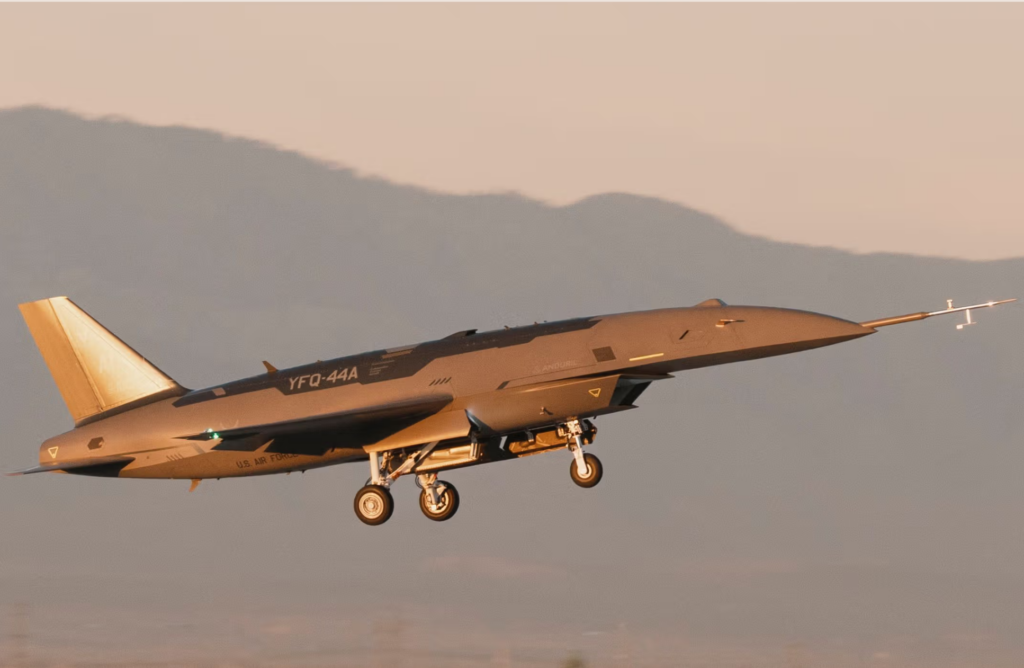
The Anduril YFQ-44A Fury is a high-performance, multi-mission semi-autonomous CCA built for the high-end fight.
Under development by Anduril Industries, the type performed its first flight in October
2025. It is approximately half the size of an F-16 Fighting Falcon, and is capable of carrying weapons on external hardpoints.
With the capability to achieve Mach 0.95 at 50,000 feet (15,200 m), the Fury will be powered by one Williams FJ44-4M turbofan engine. The highly affordable and scalable design would augment USAF crewed fighters in contested environments.
| Anduril Fury design achievements | |
|---|---|
| Accelerated Fielding | Rapid prototyping, digital engineering, and a modular system design |
| High-Performance, Multi-Mission Platform | Next-generation flight performance with integrated systems and capabilities |
| Model-Driven, Field-Tested | Rapidly tested, validated, and iterated through intelligent flight simulation techniques |
| Affordable Mass | Commercial subsystems and digital workflow to reduce production cost |
The operation of the YFQ-44A differs from that of traditional UAVs, which are remotely operated throughout all phases of flight. All taxi and flight tests are semi-autonomous, where automated mission plans are combined with intermittent human operations.
Anduril states that “it executes a mission plan on its own, manages flight control and throttle adjustment independent of human command, and returns to land at the push of a button, all under the watchful eye of an operator on the loop but not in it.”
Integrated software systems power the UAV, meeting combat demands of lethality, survivability, and effectiveness of the combined team. The ArsenalOS software manages aircraft trend monitoring, health, and maintenance to enable mission readiness.
Anduril states that it is much more than a flying machine; it is ready to fight when in the air.
Flight testing ramps up for USAF CCA aircraft YFQ-42A and YFQ-44A
General Atomics performed its first flight of the autonomous Dark Merlin in August 2025. Multiple Dark Merlins have been built and flown, conducting autonomous takeoffs and landings.
“What a great moment for the U.S. Air Force and for GA-ASI,” said GA-ASI President David Alexander. “It’s been the collaboration that enabled us to build and fly the YFQ-42A in just over a year. It’s an incredible achievement, and I salute the Air Force for its vision, and I salute our development team for delivering yet another historic first for our company.”
The aerodynamic and stability characteristics were demonstrated through a range of tests, showcasing human-machine teaming scenarios. Moreover, complex combat schedules are also tested to simulate real-world environments.
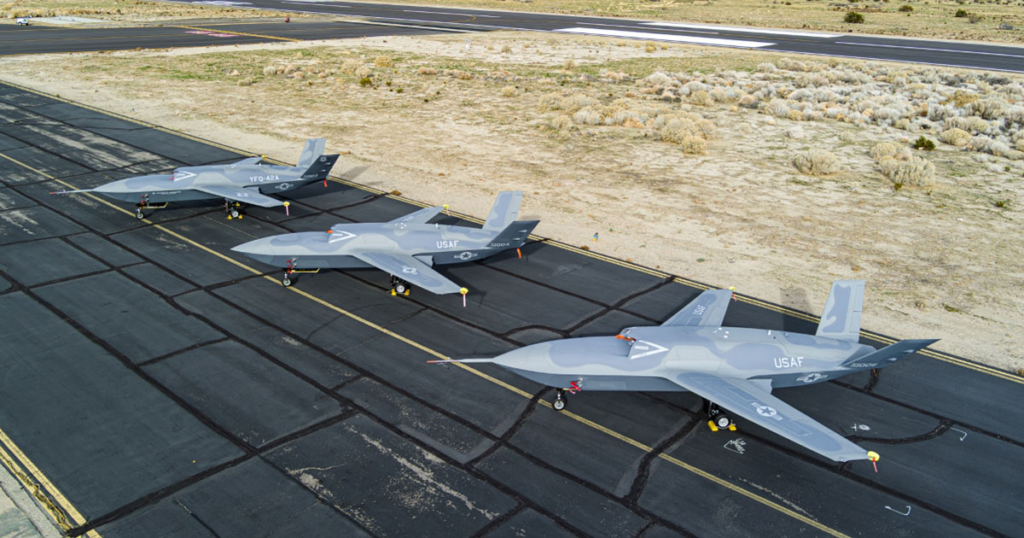
General Atomics temporarily paused flight tests following the April 6 incident, where a YFQ-42A crashed following takeoff from a company-owned airport.
“The jets fly regularly at company-owned facilities as part of their operational test and evaluation program. These flight operations will resume when deemed appropriate,” GA added.
Anduril began flight testing of its YFQ-44A CCA in October 2025. A comprehensive test campaign is designed to meet the demands of the USAF. The initial flight tests speed, manoeuvrability, autonomy, stealth, range, and weapons systems integration.
Moreover, the autonomy and collaborative operation of the aircraft in mission-specific environments are tested to accomplish mission objectives.
USAF Collaborative Combat Aircraft programme moves towards large-scale deployment
The integration of autonomy and control is what the USAF is demanding out of these CCA programs.
With its adversaries evolving at a record pace, the ability to achieve affordable, scalable, and easily configurable mass is essential for the Air Force. The Air Force Chief of Staff Gen. David W. Allvin states,
“For the first time in our history, we have a fighter designation in the YFQ-42A and YFQ-44A. It may be just symbolic, but we are telling the world we are leaning into a new chapter of aerial warfare. It means collaborative combat aircraft; it means human-machine teaming. We are developing those capabilities, thinking, ‘mission first.”
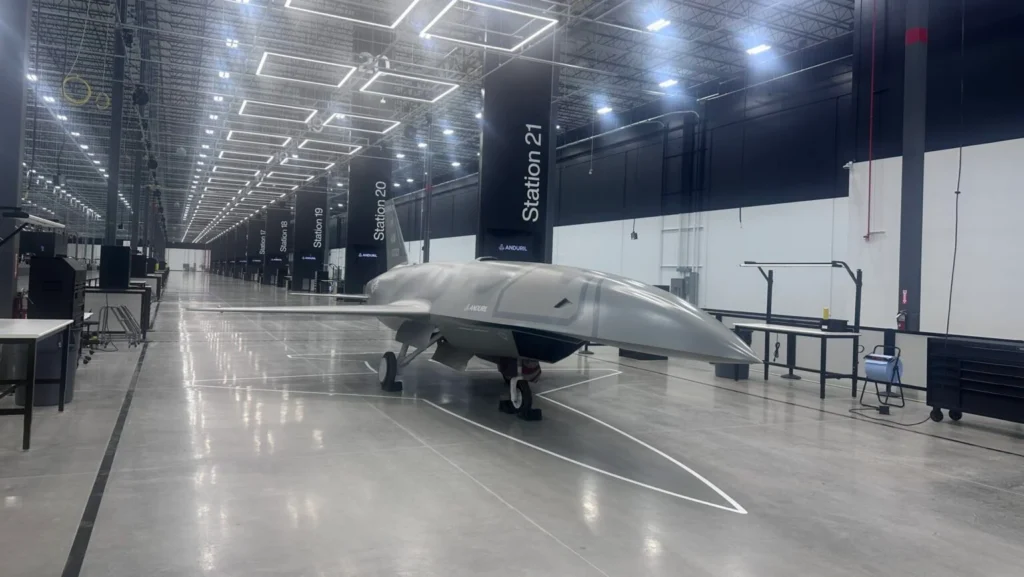
Both manufacturers are testing their respective aircraft to ensure decisive capability in contested mission environments. Both designs aim to enhance the survivability, lethality, and mission effectiveness of manned-unmanned teaming concepts.
The Anduril Fury went into production last month in Columbus, Ohio. The company continues flight tests and optimises its manufacturing processes and workflows.
The Air Force continues to work closely with GA and Anduril to mature the YFQ-42A and YFQ-44A prototypes. The aircraft are designed to achieve rapid production, in large quantities, at an affordable price.
It will be some time until the USAF decides which design serves the CCA mission best. Meanwhile, the
Featured Image: USAF
Sign up for our newsletter and get our latest content in your inbox.


More from

October 11, 20263 min read


