The airlines with the lowest emissions in 2025, from Scoot to Virgin Atlantic

4 min read

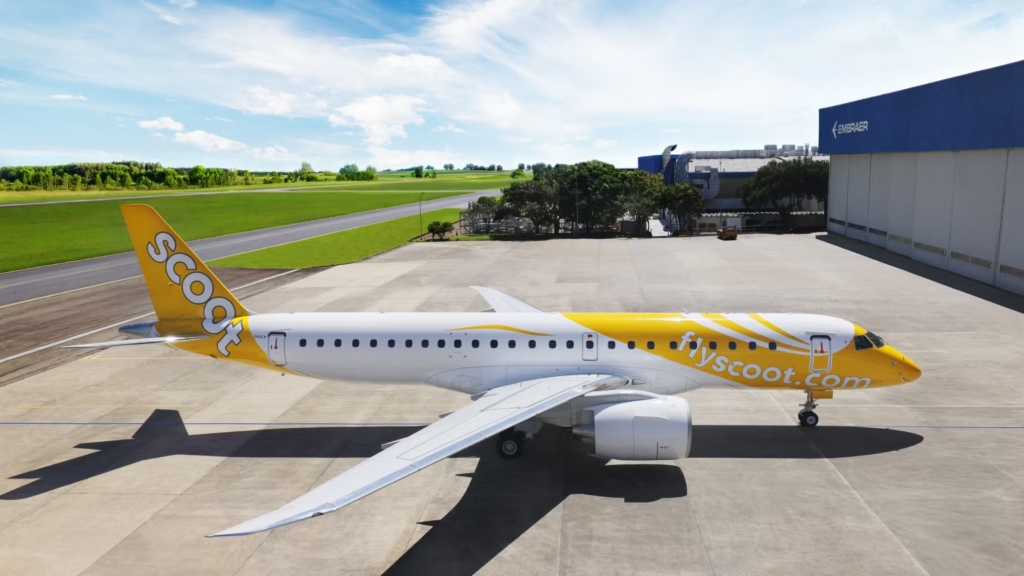
Singapore-based Scoot has been named the world’s most emissions-efficient airline in Cirium’s 2025 EmeraldSky Review, taking the top spot with 51 grams of CO₂ per available seat kilometre (ASK).
The low-cost carrier’s performance is driven by a combination of relatively young aircraft, high seat density and longer average sector lengths, which together reduce emissions per passenger kilometre.
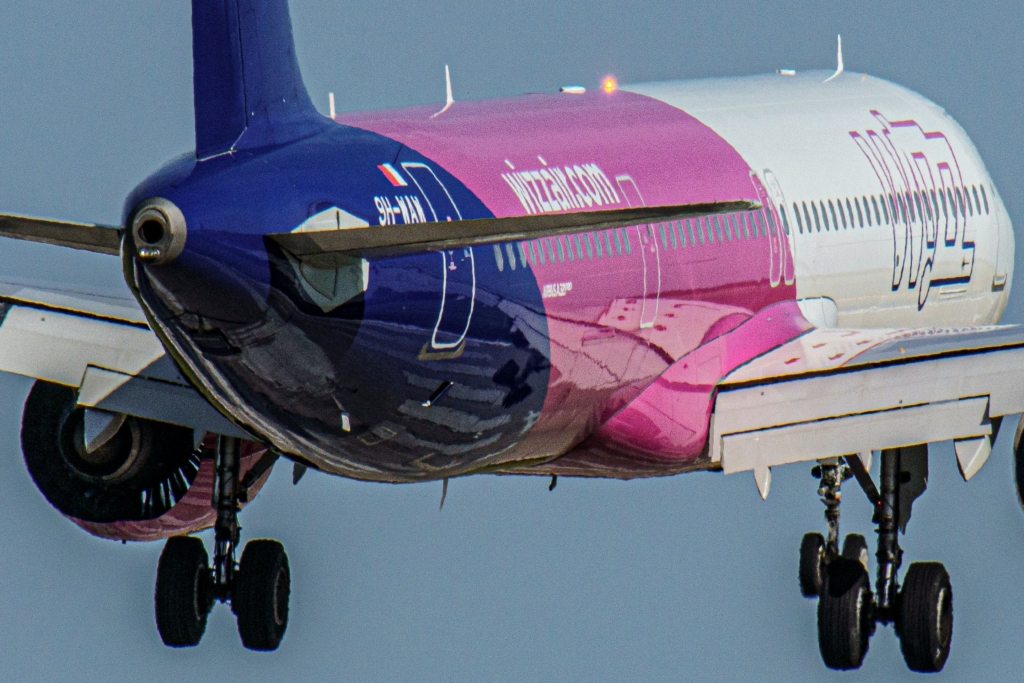
Its average configuration of more than 240 seats per aircraft and sector lengths of over 2,000km helped it edge ahead of European rival Wizz Air, which placed second.
UK-based TUI Airways ranked third globally, followed by Air Europa and Frontier Airlines, completing a top five dominated by carriers operating efficient narrowbody fleets at high utilisation.
| Rank | Airline | Country | CO₂ per ASK (g) | Fleet age (years) | Avg. distance (km) |
|---|---|---|---|---|---|
| 1 | Scoot | Singapore | 51.0 | 6.7 | 2,157 |
| 2 | Wizz Air | Hungary | 52.9 | 4.7 | 1,547 |
| 3 | TUI Airways | UK | 53.6 | 9.7 | 2,862 |
| 4 | Air Europa | Spain | 53.9 | 10.0 | 2,023 |
| 5 | Frontier Airlines | USA | 54.1 | 4.8 | 1,470 |
The results reinforce a consistent pattern across the industry, with emissions performance closely tied to decisions airlines can directly control, including fleet composition, cabin configuration and route deployment.
Which long-haul airlines are the most emissions efficient?
While short-haul operators dominate the top tier, the 2025 rankings show long-haul airlines increasingly closing the gap.
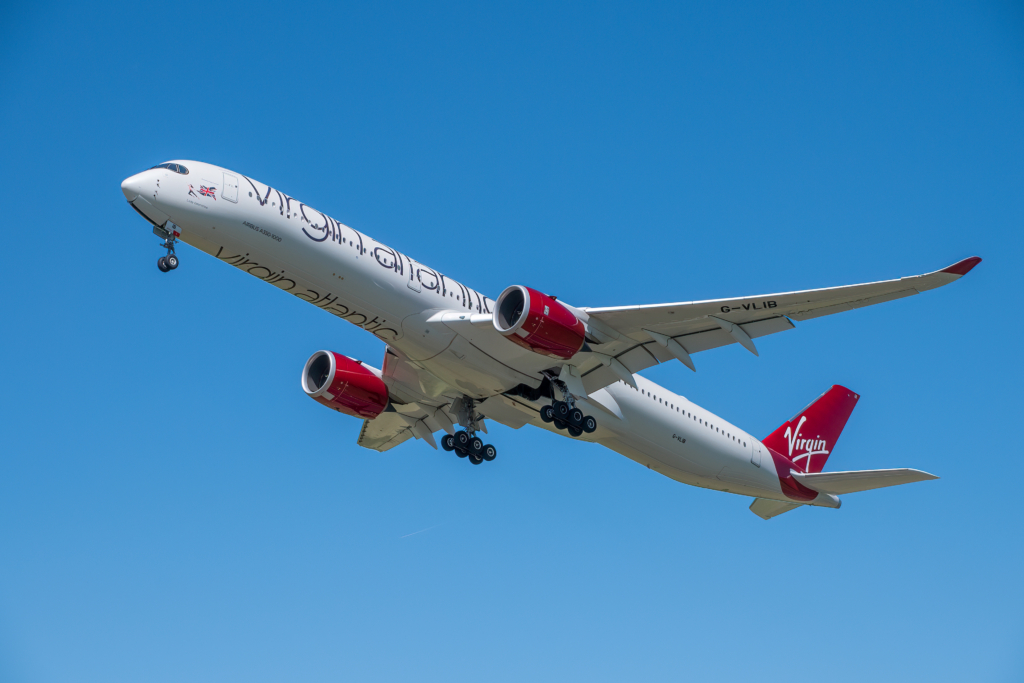
Virgin Atlantic emerged as the most efficient transatlantic carrier and ranked seventh globally, achieving emissions of 54.5 grams of CO₂ per ASK despite operating average sector lengths of more than 6,500km.
Air Canada led the transpacific category, ahead of Delta Air Lines and Cathay Pacific, reflecting the growing impact of fleet renewal on long-haul efficiency.
| Market | Rank | Airline | CO₂ per ASK (g) | Avg. distance (km) |
|---|---|---|---|---|
| Global (long-haul operator) | 7 | Virgin Atlantic | 54.5 | 6,566 |
| Transatlantic | 1 | Virgin Atlantic | 53.7 | 6,759 |
| Transatlantic | 2 | Air Canada | 54.9 | 6,108 |
| Transatlantic | 3 | Aer Lingus | 56.2 | 5,793 |
| Transpacific | 1 | Air Canada | 56.2 | 10,178 |
| Transpacific | 2 | Delta Air Lines | 57.5 | 9,945 |
| Transpacific | 3 | Cathay Pacific | 59.8 | 11,933 |
These results highlight how newer widebody aircraft, including Airbus A350s and Boeing 787s, combined with higher-capacity cabin layouts, are enabling long-haul carriers to compete more closely with short-haul operators on emissions intensity.
Which low-cost airlines have the lowest emissions?
Low-cost carriers once again dominate the global rankings, accounting for the majority of airlines in the top tier.
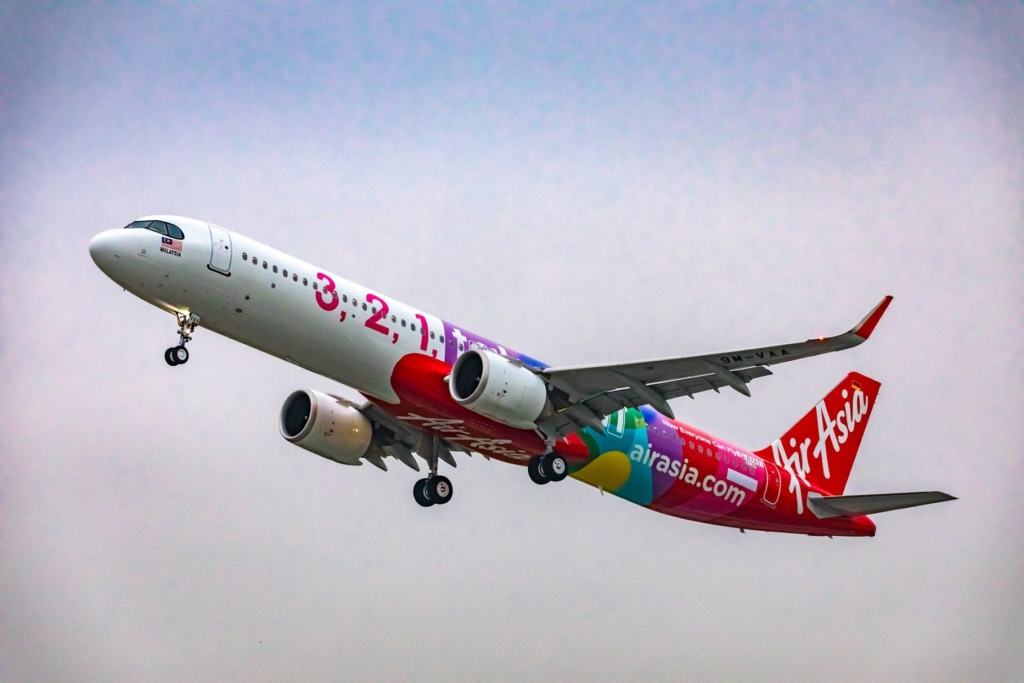
Wizz Air, Frontier Airlines, AirAsia X and Pegasus all featured prominently, reflecting the structural advantages of the low-cost model. Younger fleets, higher seat densities and simplified operations allow these airlines to maximise the number of passengers carried per flight, reducing emissions per seat kilometre.
In Europe, Wizz Air led intra-regional rankings, followed by Jet2 and Transavia, while Ryanair, despite its scale, remained among the stronger performers on emissions intensity.
| Rank | Airline | Region | CO₂ per ASK (g) | Fleet age (years) | Avg. distance (km) |
|---|---|---|---|---|---|
| 1 | Scoot | Asia-Pacific | 51.0 | 6.7 | 2,157 |
| 2 | Wizz Air | Europe | 52.9 | 4.7 | 1,547 |
| 3 | Frontier Airlines | North America | 54.1 | 4.8 | 1,470 |
| 4 | AirAsia X | Asia-Pacific | 54.8 | 14.0 | 4,177 |
| 5 | Pegasus Airlines | Europe / Middle East | 55.9 | 5.0 | 1,372 |
| 6 | Jetstar | Asia-Pacific | 56.0 | 11.1 | 1,623 |
The data confirms that, at present, the most effective route to lower emissions is not new fuel technology, but efficient use of existing aircraft.
Which airlines are cutting emissions the fastest?
Beyond the headline rankings, Cirium’s route-level analysis highlights where airlines are making the fastest progress in reducing emissions intensity.
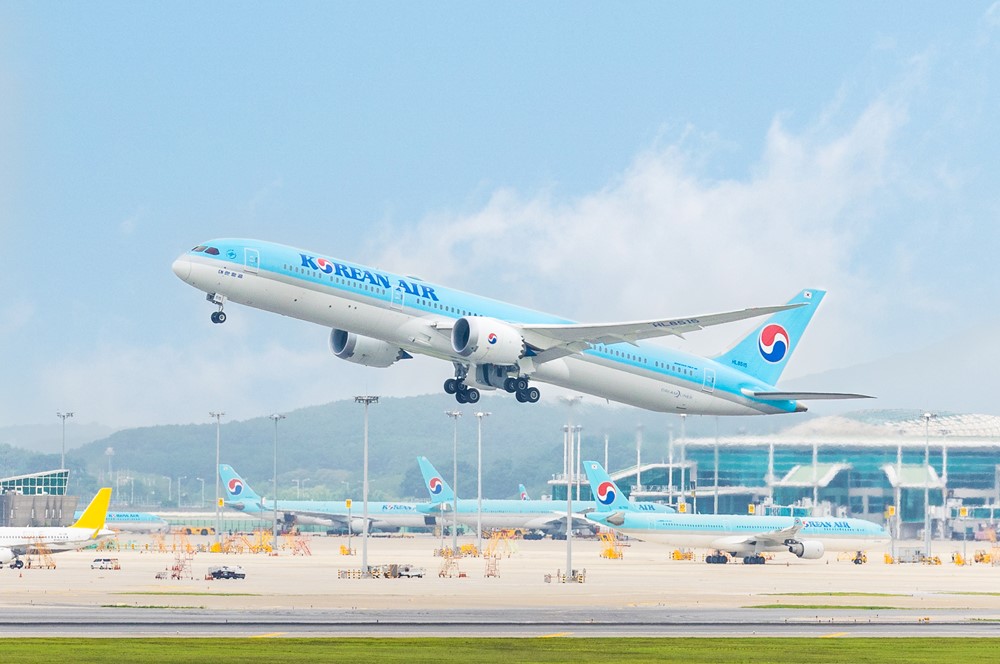
Korean Air recorded the largest improvement globally on long-haul routes, cutting CO₂ per ASK by more than 27% on its Incheon–Seattle service after transitioning from older Boeing 777 aircraft to newer 787 variants.
“That’s exciting, that changing the aircraft can have that much effect on emissions,” noted Cirium CMO Mike Malik.
Similar gains were recorded across multiple airlines, with American Airlines, Icelandair and British Airways all achieving double-digit reductions on key routes following fleet upgrades.
| Rank | Route | Airline | CO₂/ASK improvement | Aircraft transition |
|---|---|---|---|---|
| 1 | Seoul Incheon – Seattle | Korean Air | -27.4% | B777-300ER → B787-9/10 |
| 2 | Seoul Incheon – Honolulu | Korean Air | -22.4% | B747-8 / B777 → B787-10 |
| 3 | New York JFK – Delhi | American Airlines | -20.4% | B777-300ER → B787-9 |
| 4 | Reykjavík – Seattle | Icelandair | -20.3% | B757-200 → A321neo |
| 5 | New York JFK – São Paulo | American Airlines | -19.3% | B777-200ER → B787-9 |
| 6 | London Heathrow – Hong Kong | British Airways | -18.1% | B777/787 → A350-1000 |
These findings underline the outsized impact of aircraft replacement, with next-generation models delivering significant efficiency gains without changes to fuel type or operations.
How EmeraldSky measures airline emissions
The EmeraldSky methodology underpinning the rankings is based on CO₂ emissions per available seat kilometre, a metric that reflects how much fuel an airline burns relative to the passenger capacity it operates.
Unlike traditional carbon calculators, which often rely on simplified assumptions such as distance alone, EmeraldSky uses detailed flight-level data, including aircraft type, engine performance, utilisation, taxi time and seating configuration.
The methodology also adjusts for cargo carried on passenger aircraft, ensuring emissions are allocated more accurately between freight and passengers.
“As the industry faces continued pressure to decarbonise, accurate and independent emissions data is no longer nice to have; it’s become absolutely essential,” explained Cirium CEO Jeremy Bowen. “And at Cirium, we believe progress starts with visibility, and that’s why we developed this review to give stakeholders across aviation a clear data-backed view of emissions performance built on the most accurate information available.”
Independently assured by PwC under ISAE 3000 standards, the framework is designed to provide a consistent, comparable benchmark across the global airline industry.
Featured image: Scoot