


Fighter jet generations explained: What 4th, 5th and 6th gen really mean

7 min read
The discourse on fighter jet generations has been mixed up with history, doctrine, marketing, prestige, and clickbait headlines. Generations are useful to describe the evolution of fighter jets, but they must be understood with some nuance.
The tale of fighter jet generations
What are fighter jet generations? The first proposed classification of fighter jets into generations was published in 1990 by air historian Richard P. Hallion.
At the time, he came up with six generations that could be broadly considered subsonic, transonic, supersonic, Mach 2, multi-mission, and high-maneuverability.
Hallion’s exact fighter jet breakdown didn’t stick, but the broader concept did. It soon became useful to describe fighter jets historically, retroactively assigning them to categories.
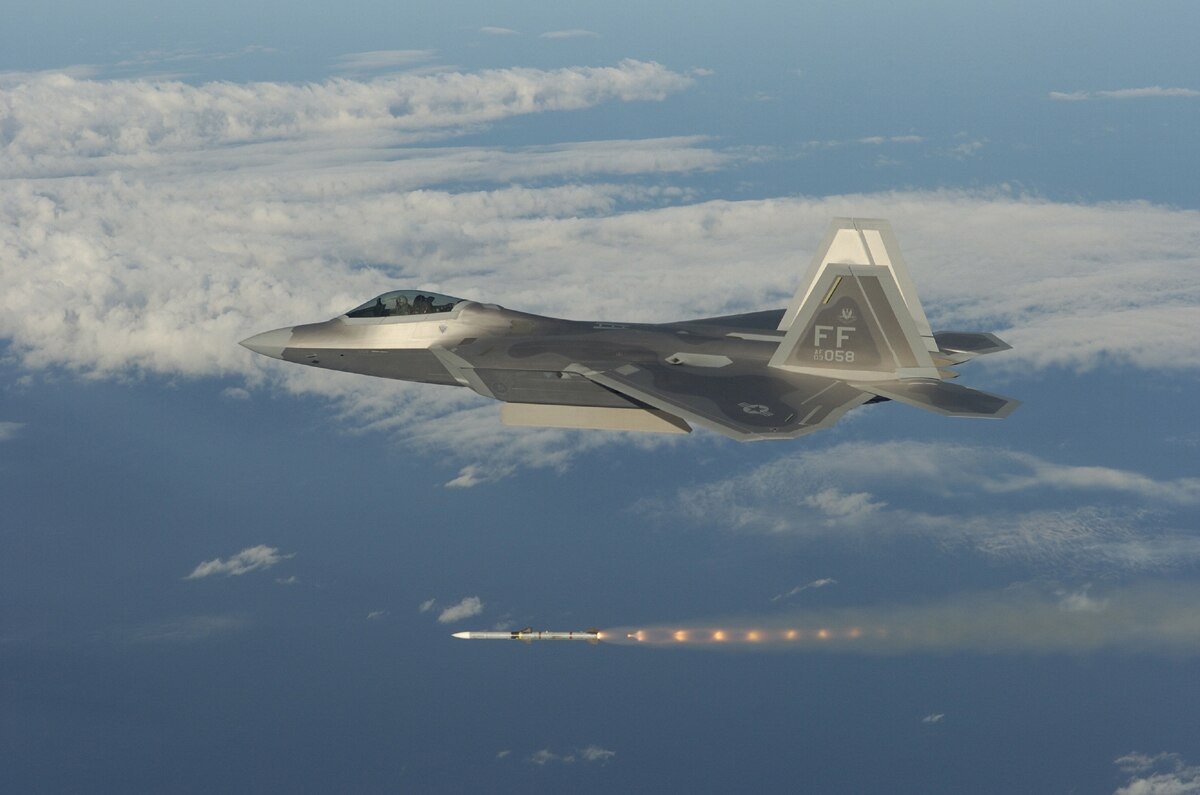
Then came the F-22 Raptor programme, which was unlike anything before it. For the first time, a fighter was used to define a generation in its own right.
Calling the jet the world’s “first 5th-gen fighter” became a useful way to justify its enormous cost to Congress while also highlighting just how advanced it was.
At first, countries like Russia resisted the concept of fighter jet generations before embracing it, seeing marketing and propaganda value in the vaguely defined, but impressive-sounding labels.
The early fighter jet generations
While there are multiple competing ways to classify aircraft into their generations, this will focus on NATO-aligned analysis.
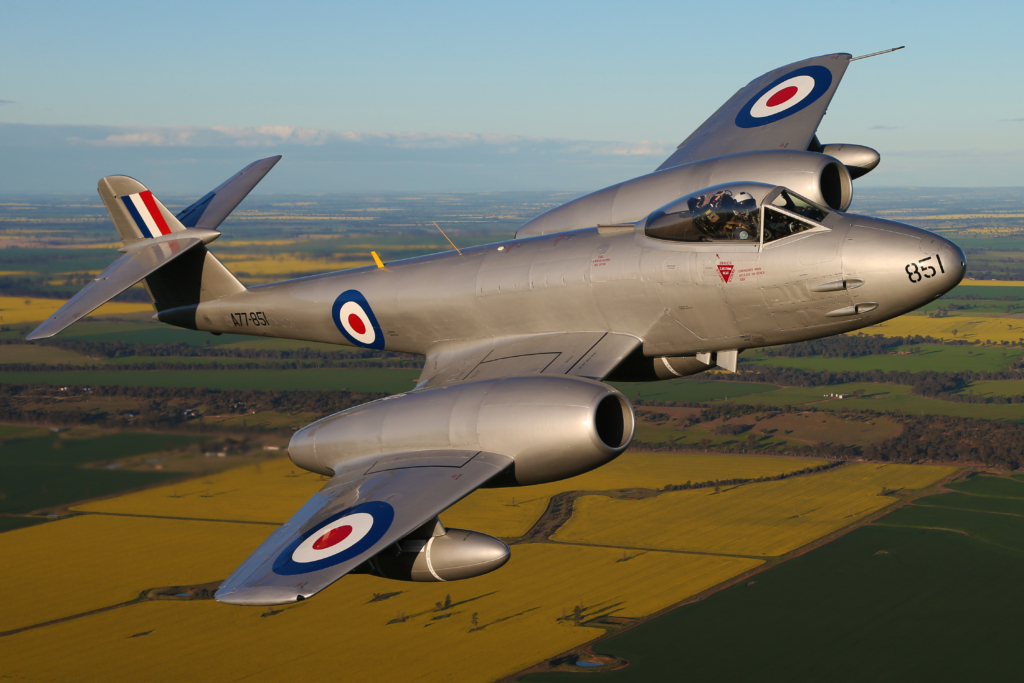
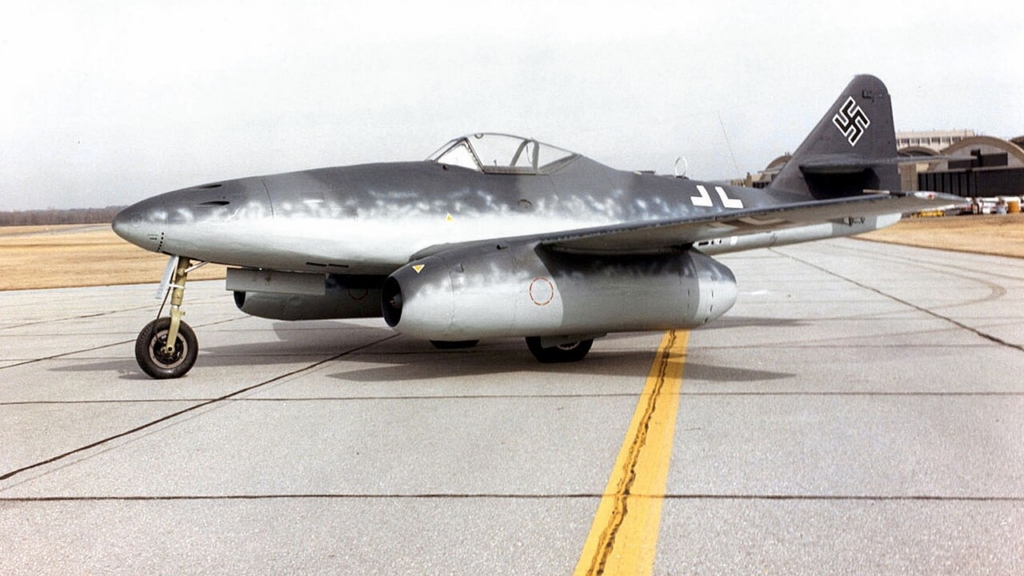
The first generation (late 1940s to early 1950s) had jet fighters with early jet engines, no radar (or very primitive ranging radar), only a gun armament, and straight or mildly swept wings.
Examples included the German Messerschmitt Me 262, the Gloster Meteor, the F-86 Sabre, and the MiG-15.
Fighter jet generations example aircraft:
- 1st Generation: Me 262, Gloster Meteor, F-86, MiG-15
- 2nd Generation: MiG-21 English Electric, Mirage III, F-104
- 3rd Generation: F-4, Mirage F1, MiG-23
- 4th Generation: F-16, F-14, F-15, MiG-29, Su-27
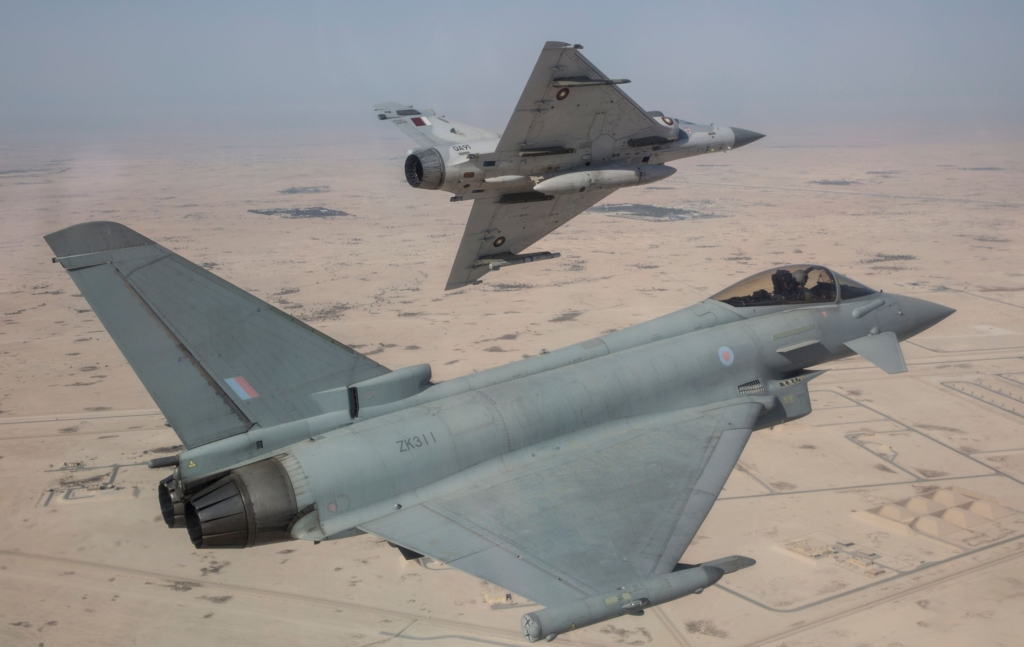
- 4.5th Generation: F-15EX, Eurofighter, Rafale, Su-30MS, J-15T
- 5th Generation: F-22, F-35, J-20, J-35, Su-57
- 6th Generation: F-47, F/A-XX, J-36, Tempest, FCAS
The second generation persisted from the mid 1950s to the early 1960s. These had swept wings for supersonic flight, early air-to-air radar, infrared-guided missiles, and their drone was interceptor-focused.
Examples include the MiG-21, English Electric Lightning, Mirage III, and F-104 Starfighter. These fighters were often focused on nuclear bomber interception more than dogfighting.

Third-generation fighters were built from the mid-1960s to the 1970s. These came with improved radars, semi-active radar missiles, and improved maneuverability. They were still generally specialized in roles, but multirole capability was starting to come in.
The most successful 3rd-gen fighter was the F-4 Phantom II. Other notable jets included the Mirage F1 and MiG-23.
4th-generation fighter jets
4th-generation fighter jets remain the backbone of the world’s fighter jet fleets. The initial stage of the 4th-gen fighter was from the late 1970s to the 1990s.
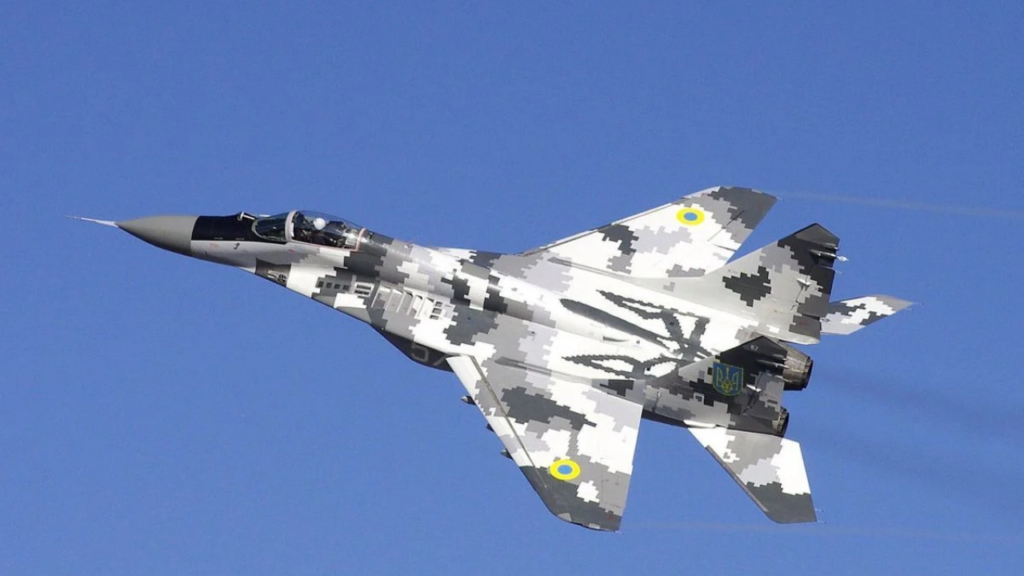
Their core defining features include fly-by-wire, high maneuverability, beyond-visual-range combat, Pulse-Doppler radars, and multirole designs.
Most fighter jet types flying today are 4th-gen, including the F-15, F/A-18, F-16, MiG-29, Mirage 2000, and Su-27. Some, like the F-14 Tomcat, have been retired.
Since the 1990s, these jets have been progressively and substantively upgraded, and the labels “4.5th” or “4.5th++” are often assigned.
These improved 4th-generation fighters come with AESA radars, advanced electronic warfare suites, partial sensor fusion, reduced radar cross-section (although not stealth), and networked operations.
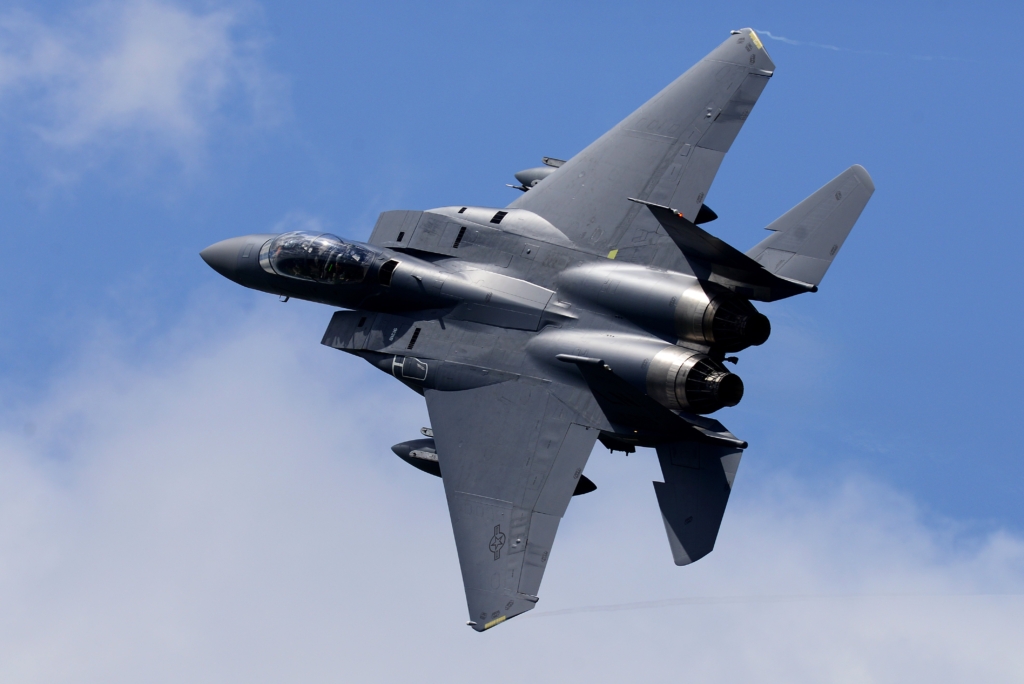
Fighter jets considered modern 4th-generation fighters include the F-15EX, F/A-18 Super Hornet, Eurofighter Typhoon, Gripen E, J-10C, Su-30SM, Su-35, and Rafale.
“4.5th” is often more of a marketing term or a propaganda one (e.g., Pakistan with the JF-17 Block III); it’s not a term normally used by the US military.
5th-generation fighter jets
5th-generation fighter jets were originally defined by the Lockheed Martin F-22 Raptor. As such, they are expected to be built from the ground up as a very low-observable platform.

They are expected to have internal weapons bays, full-spectrum sensor fusion, network-centric operations, and high survivability against modern Integrated Air Defense Systems (IADS.
Not all the F-22’s attributes ultimately got to define the generation. For example, the F-22 can supercruise, but the F-35 can’t.
5th-gen is when fighter jets really came into their own as highly-networked, stealthy, flying super-sensing supercomputers, more than fighter jets in a traditional sense.
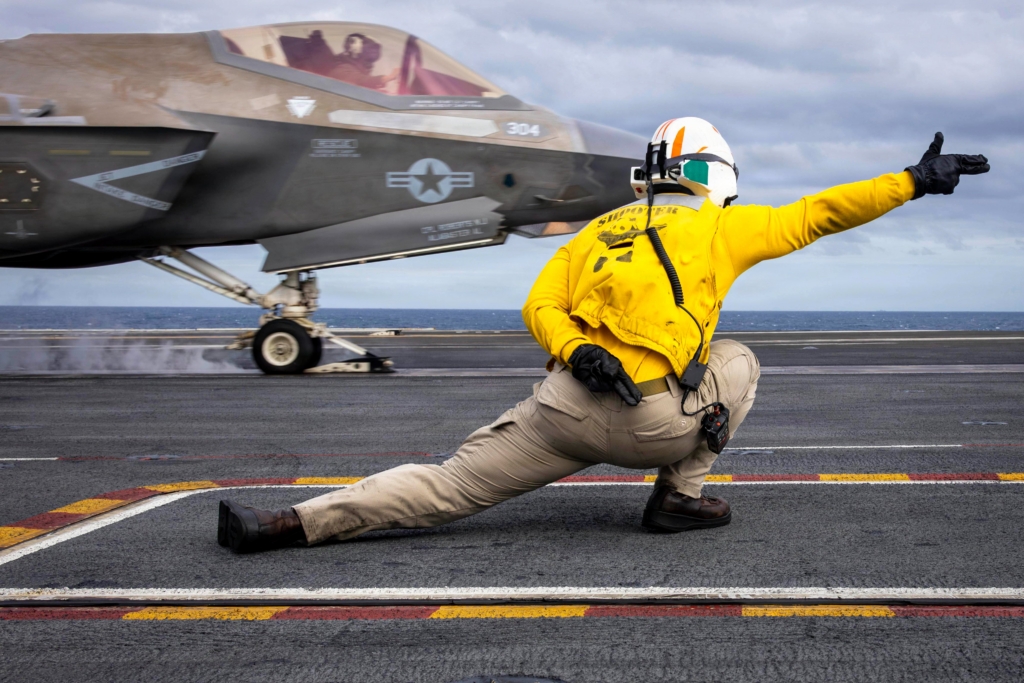
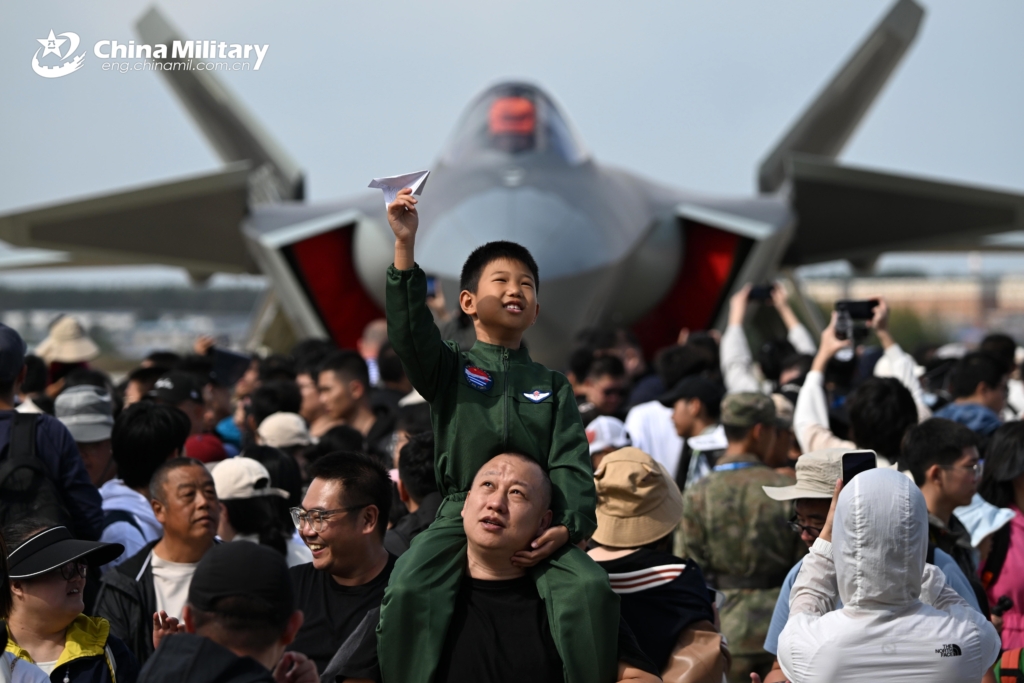
The four fighter jets are more or less universally considered 5th-gen: the US F-22 and F-35, and the Chinese J-20 and new J-35.
The iffy fighter jet that typically makes the list is the Russian Su-57 Felon. Some US analysts consider the Su-57 as a 4++ generation fighter with selective 5th-gen features or a transitional design.
It is perhaps better thought of as a generational leap over the older Flanker series, but that doesn’t land it in F-35 territory.
According to Rand, writing in 2020, the extent of its sensor fusion is suspect, while its radar cross section is both much better than modern 4th-gen fighters, but much worse than that of the US and Chinese 5th-gen fighters.
Fuzziness of 6th-generation fighter jets
The definitions of what a 6th-gen fighter will be are still being formed. They are generally expected to incorporate all-aspect stealth, be built around manned-unmanned teaming, have AI-assisted decision-making, have very long-range sensors, very long-range weapons, adaptive engines, and extreme networking.

They are to take the flying supercomputer concept to the next level as a type of command platform.
Perhaps as a sign of how multirole next-gen combat aircraft will be, Northrop Grumman is marketing the B-21 Raider as the first 6th-gen combat aircraft.
Generations have only been used for fighter jets, not bombers. This could point to the convergence of fighter jet and bomber roles, or it could be classic marketing on Northrop’s part.
Perhaps it’s reasonable to say that the current gold standard for 6th-gen fighters is whatever the Boeing F-47 will be, kind of like the F-22 before it.

Other aircraft considered 6th-gen in the works include the GCAP/Tempest, FCAS, F/A-XX, and Chinese concepts. The Chinese prototypes seen flying are often termed more tailless stealth combat jets than 6th-gen jets by analysts, partly due to uncertainty.
Get the latest aerospace defence news here on AGN.
Higher gen jets don’t automatically beat lower gen jets
Naunce is important, and there are many aspects to fighter jets, and these can’t be just boiled down to a neat and easy generation label.
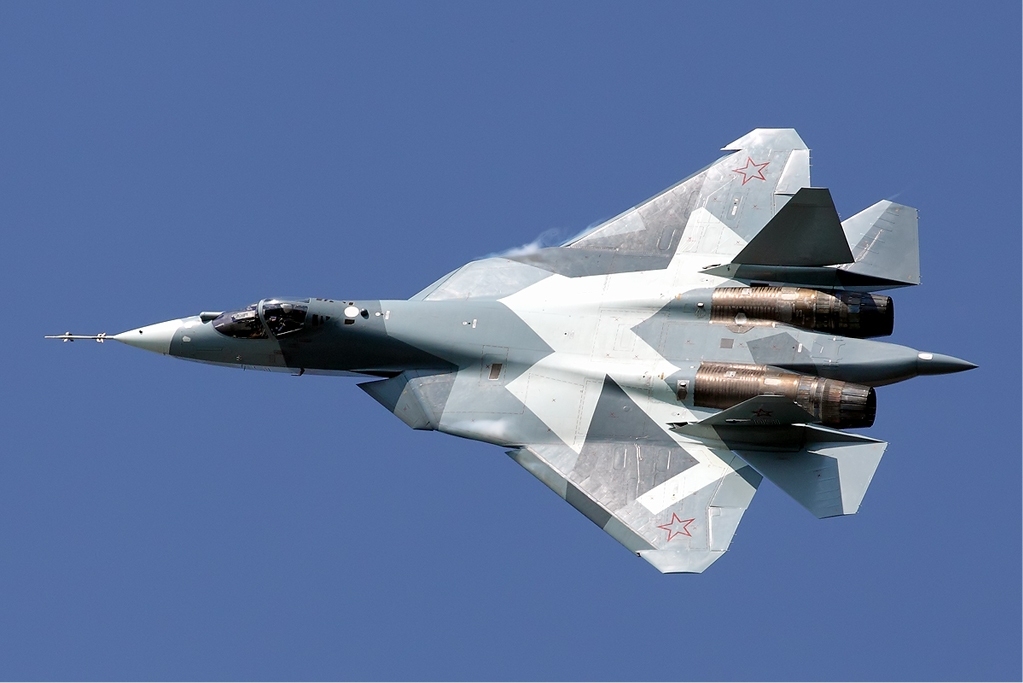
For example, the Russian Su-57 is considered to have superior low-observability compared to modern Western 4.5th gen jets, and it can be armed with very long-range air-to-air missiles (e.g., R-77M).
In a clean one-on-one engagement, this may mean the Su-57 would be able to detect Eurofighters, F-15EX, and Rafales first, although this is unclear. Analysts consider the jet to be at least on par with those 4.5th Western jets.
However, this all breaks down when it’s considered that Western jets are built as nodes, not solo knights. This is highlighted by Rusi’s Justin Bronk and other analysts.
Justin Bronk and Dr Sophy Antrobus (a fellow of the Royal Aeronautical Society) also explained the expected roles of European fighter jets in a confrontation with Russia in a recent testimony before the UK Parliament’s International Relations and Defence Committee.
Rafales, etc., operate with the aid of AWACS support, space-based ISR cueing, sensor fusion across platforms, and more.

This means a F-15EX might not even need to turn its radar on; it can fire its missiles cued by offboard sensors alone. This is where the Russian Su-57 breaks down, as there just isn’t a comparable level network ecosystem made up of force-multiplier systems to back it up.
Put another way, a lost solo 4.5th-gen Western jet would be somewhat matched by a similarly solo Felon. A 4.5th operating in its designed environment would overmatch an Su-57.
This highlights that a more capable fighter jet is not just what “generation” it belongs to, but also what ecosystem it is able to be plugged into.
Featured Image: United States Air Force
Sign up for our newsletter and get our latest content in your inbox.


More from


October 17, 20264 min read





