


No tail rotor, overlapping blades: How the Kaman K-MAX works

3 min read
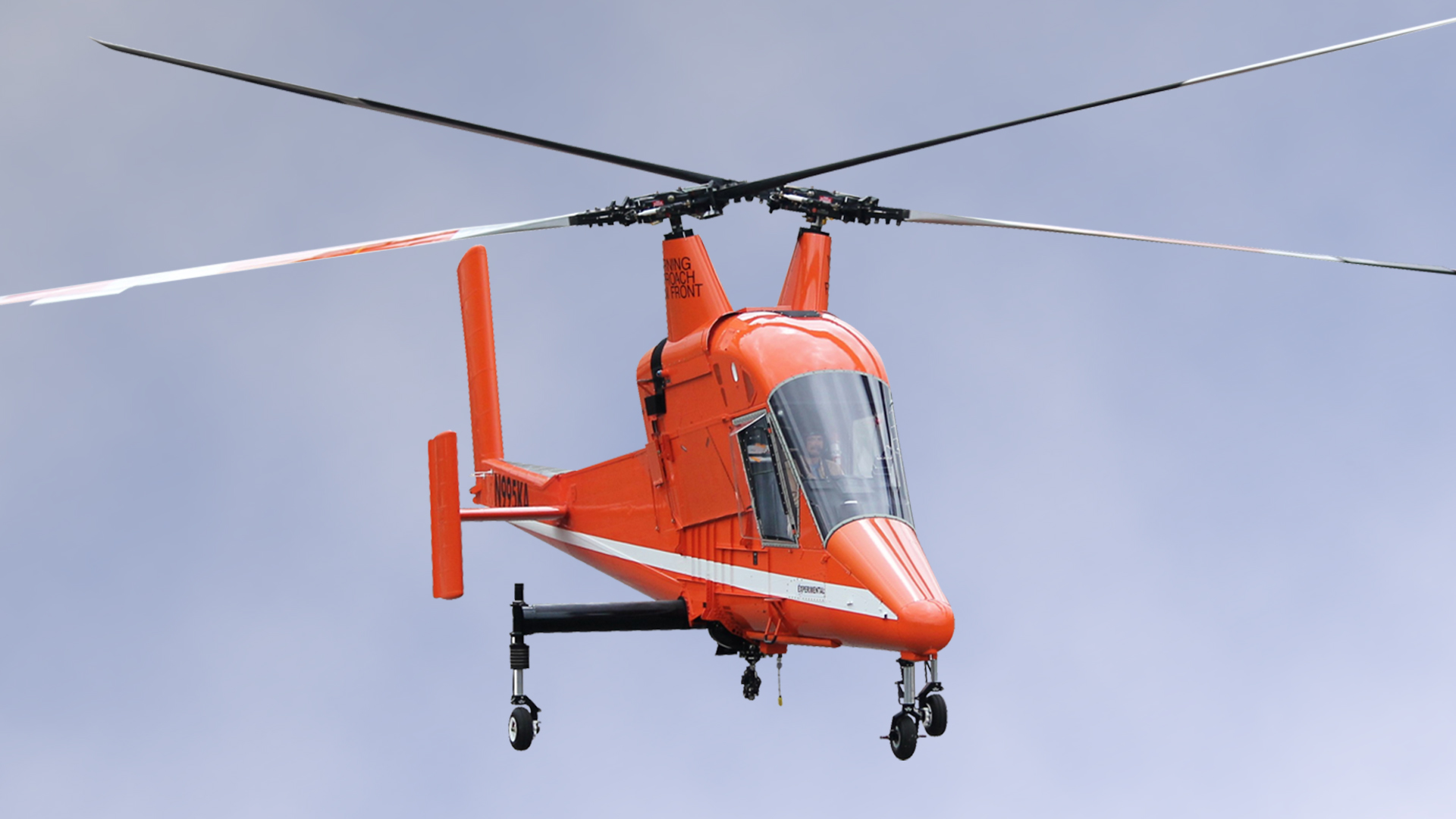
The Kaman K-MAX is one of the strangest-looking helicopters ever built — and also one of the most efficient heavy-lift rotorcraft ever designed.
Unlike conventional helicopters, the K-MAX uses an unusual intermeshing rotor system, also known as a synchropter design. Instead of a single main rotor and tail rotor, the aircraft uses two large angled rotors that overlap without colliding while spinning in opposite directions.
The Kaman K-Max isn’t just unique for its intermeshing rotors; its blades use spruce wood spars, often sourced from the same tree to ensure identical resonance and balance. These are paired with fiberglass on the trailing edges. pic.twitter.com/Lc37Vg3E2A
— Turbine Traveller (@Turbinetraveler) May 1, 2026
The result is a helicopter with enormous lifting power, exceptional hovering stability and no need for a tail rotor.
That unusual design has made the K-MAX highly effective for precision lifting missions ranging from firefighting and logging to military cargo resupply and humanitarian operations.
How the K-MAX’s intermeshing rotors work
The K-MAX’s defining feature is its twin intermeshing rotor system.
The two rotor masts are mounted at outward angles, allowing the blades to overlap while remaining precisely synchronised through a complex gearbox system. Because the rotors spin in opposite directions, their torque cancels out naturally.
That eliminates the need for a conventional tail rotor.
Without a tail rotor consuming engine power, nearly all available power can instead be directed into lift generation.
The design also creates exceptional low-speed stability and precision control while hovering, particularly when carrying suspended external loads.
One of the K-MAX’s more unusual design features is hidden inside the rotor blades themselves. The blades use spruce wood spars — often sourced from the same tree to ensure identical resonance and balance characteristics — combined with fibreglass trailing edges.
The aircraft was purpose-built for repetitive lifting operations and performs especially well in “high and hot” environments where conventional helicopters often struggle.

Its compact footprint also makes it highly effective in confined operating areas such as forests, mountainous terrain and disaster zones.
According to Kaman Aerospace: “Quick to launch and cost-effective to fly, the K-MAX is a reliable responder in any situation.”
Why the K-MAX became popular for heavy lifting
The K-MAX was originally developed primarily for external load operations rather than passenger transport.
That specialisation helped it become popular in industries such as:
- logging
- construction
- firefighting
- hydro-seeding
- utility work
- disaster relief
The helicopter can carry loads of up to 6,000 lb (2,722 kg) on its cargo hook while maintaining impressive stability during precision lifting operations.
| Kaman K-MAX | |
|---|---|
| Max gross weight (with external load) | 12,000 lb (5,443 kg) |
| Max take-off weight | 7,000 lb (3,175 kg) |
| Empty weight | 5,145 b (2,334 kg) |
| Useful load | 6,855 lb (3,109 kg) |
| Cargo hook capacity | 6,000 lb (2,722 kg) |
| Airspeed without external load | 100 kt (185.2 kph) |
| Airspeed with external load | 80 kt (148.2 kph) |
| Power plant | Honeywell T53-17 gas turbine |
| Thermodynamic rating | 1,800 shaft horsepower 100 kt |
The K-MAX was later transformed into an autonomous military drone
Kaman Aerospace later partnered with Lockheed Martin to develop an autonomous version of the helicopter for military cargo resupply missions.
The uncrewed K-MAX was designed to transport supplies into dangerous battlefield environments without risking aircrew.
The aircraft gained widespread attention during operations in Afghanistan, where the US Marine Corps used autonomous K-MAX helicopters to deliver cargo to remote forward operating bases.
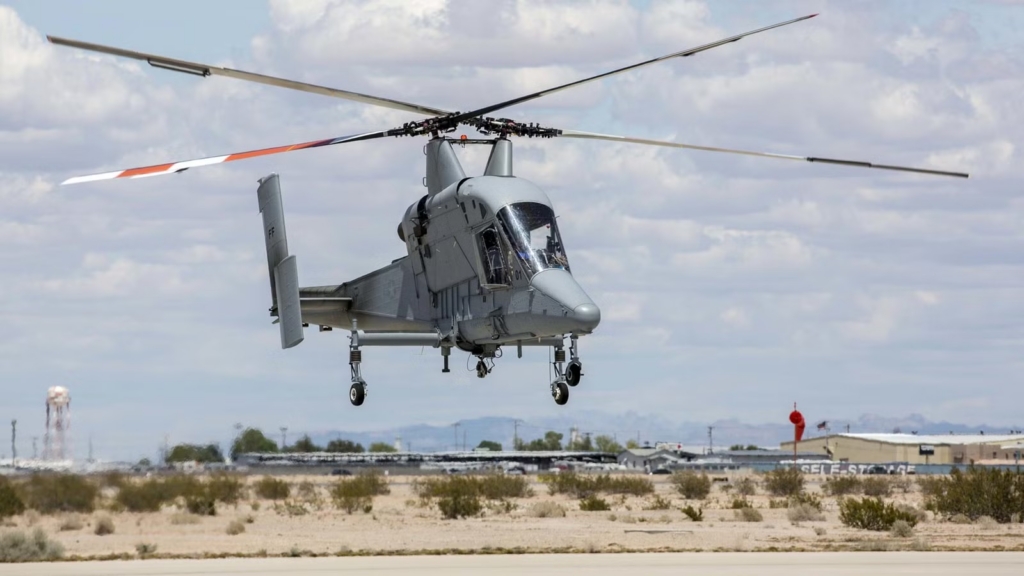
Lockheed Martin said the aircraft’s autonomous flight system allowed it to deliver sling loads to multiple beyond-line-of-sight locations with minimal operator oversight.
The autonomous system uses a Mission Management Computer and redundant Flight Control Computers linked to a ground control station via two-way datalinks.
The aircraft can execute pre-programmed missions while operators monitor and adjust flight operations remotely.
The programme demonstrated how an aircraft originally designed for civilian heavy lifting could also become a highly capable autonomous battlefield logistics platform.
Featured Image: Kaman
Sign up for our newsletter and get our latest content in your inbox.


More from

October 17, 20265 min read


October 17, 20264 min read





