India’s first home-built Airbus C295 takes flight ahead of delivery to the IAF

6 min read
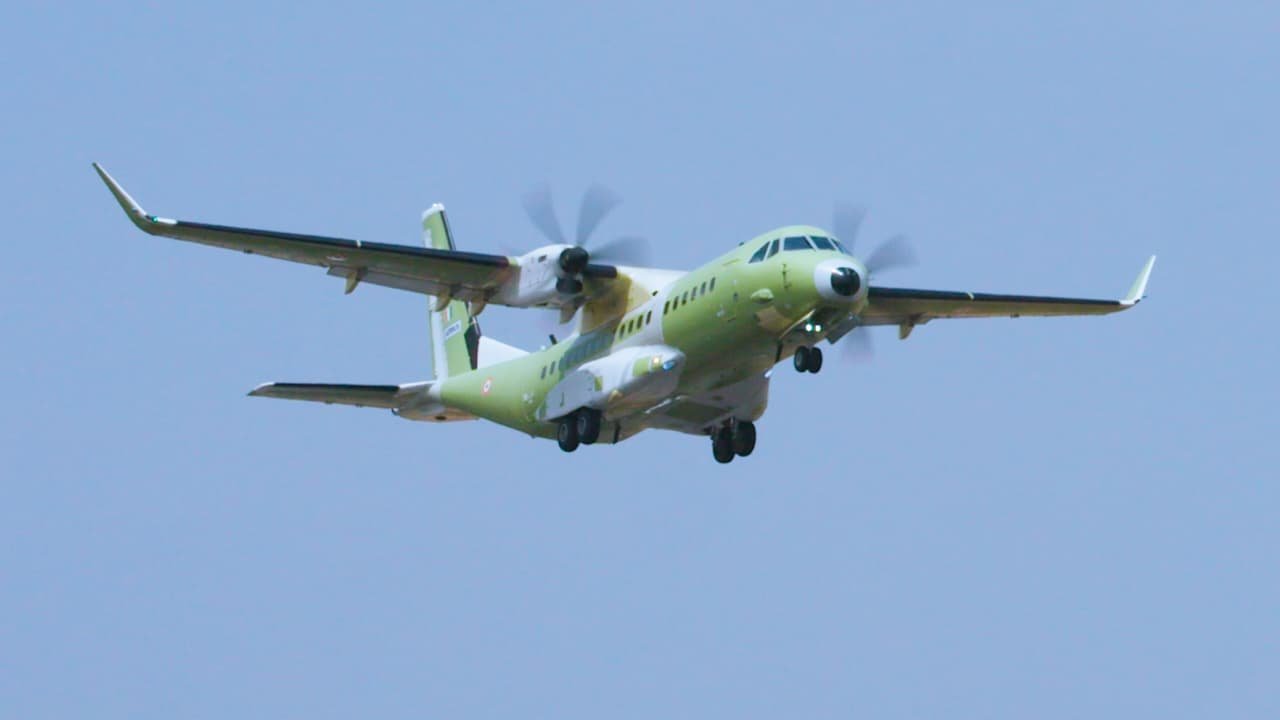
India’s first domestically made Airbus C295 military transport aircraft has completed its maiden test flight, moving the country’s most ambitious private-sector military aerospace programme from the assembly line to the skies.
The successful sortie marks the first time a military transport aircraft built by a private Indian company has entered the flight-testing phase, a milestone that both Airbus and Tata Advanced Systems (TASL) believe will help reshape India’s aerospace manufacturing landscape.
The aircraft is the first of 40 C295s that will be produced in India for the Indian Air Force (IAF) under a programme that has become a flagship example of New Delhi’s effort to build advanced defence manufacturing capabilities at home.
Airbus Defence confirmed that the aircraft conducted its first test flight as part of the post-production validation process.
“The first ‘Made in India’ Airbus C295 military transport aircraft has conducted its first test flight, marking a milestone for Indian aviation and defence,” Airbus Defence said. “The test flight advances the programme’s objective of delivering the first ‘Made in India’ C295 aircraft this year to the Indian Air Force.”
The first 'Made in India' Airbus C295 military transport aircraft has conducted its first test flight from the Final Assembly Line in Vadodara 🇮🇳, marking a milestone for Indian aviation and defence. This maiden test flight is a crucial step in the aircraft's post production… pic.twitter.com/nPkjpIENkD
— Airbus Defence (@AirbusDefence) June 10, 2026
The maiden flight is not the culmination of the programme but the beginning of its most demanding phase, as the aircraft now enters a series of tests that must be completed before delivery to the IAF later this year.
India’s Airbus C295 will replace a Cold War-era workhorse
The C295 programme stems from India’s September 2021 contract with Airbus Defence and Space for 56 aircraft intended to replace the Indian Air Force’s ageing Avro HS-748 fleet.
Under the agreement, the first 16 aircraft have been delivered directly from Airbus’ production line in Spain, while the remaining 40 are being manufactured in India by TASL.
The aircraft fills an important capability gap in the IAF’s transport fleet. Positioned between the smaller Dornier 228 and larger C-130J Super Hercules, the C295 is designed for tactical airlift missions, troop transport, medical evacuation, logistics support and special operations.
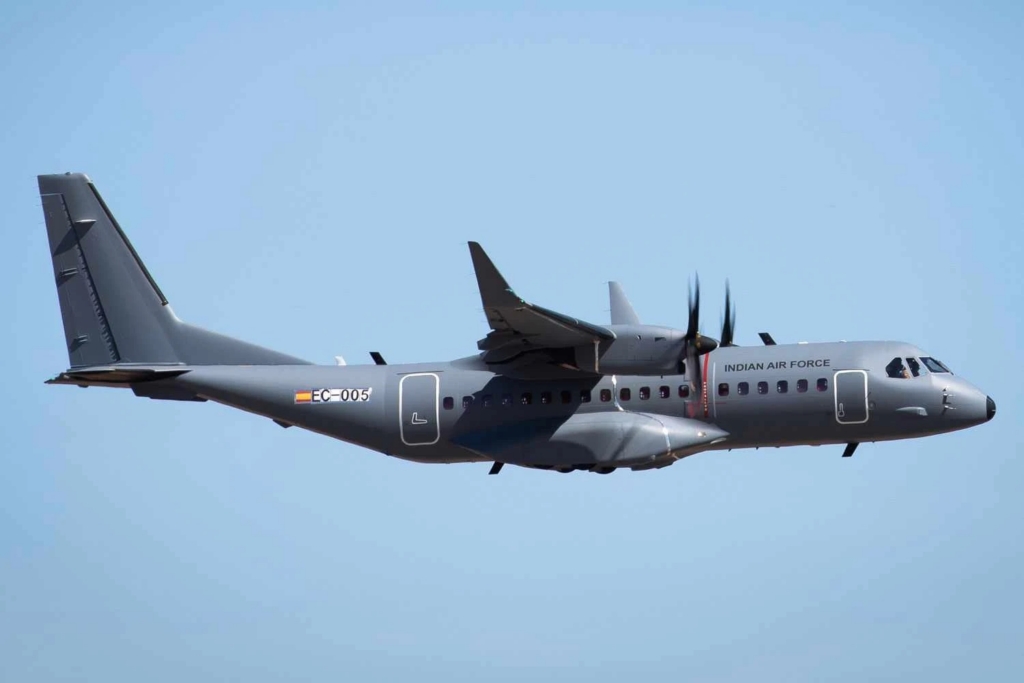
Its ability to operate from short and semi-prepared airstrips makes it particularly valuable for operations along India’s northern borders, in the North-East and across island territories where infrastructure remains limited.
The Indian Air Force said the successful test flight “reinforces India’s growing aerospace capabilities” and underscores the service’s commitment to supporting indigenous defence manufacturing under the Atmanirbhar Bharat (self-reliant India) vision.
The aircraft being produced for India will also incorporate an indigenous self-protection suite comprising radar warning systems, missile warning sensors and countermeasure dispensing systems.
How the C295 is made in India
What sets the programme apart is not the aircraft itself but how it is being built.
For decades, military aircraft production in India was largely the preserve of state-owned Hindustan Aeronautics Limited. The C295 programme has introduced a different model, placing a private-sector company at the centre of aircraft manufacturing, integration and testing.
The industrial chain begins long before final assembly.
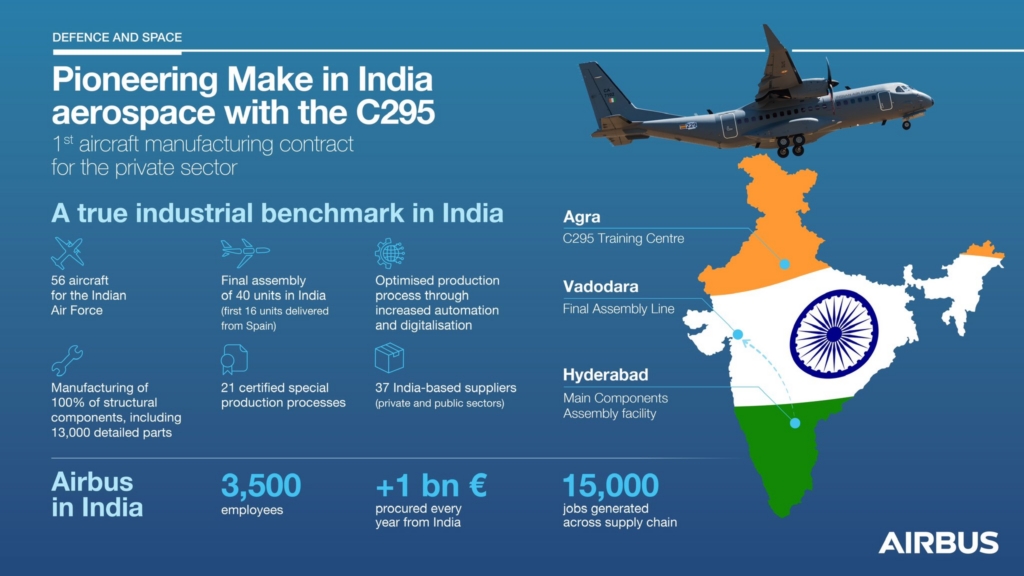
Detailed parts and aerostructures are manufactured at facilities in Nagpur, Bengaluru and Hyderabad before larger assemblies are transported to the final assembly line in the western town of Vadodara.
According to programme figures, more than 13,000 individual parts are being produced in India, supported by a network of 37 suppliers from both the public and private sectors.
Airbus says more than 85 per cent of the aircraft’s structural work and final assembly activities are now being undertaken in India.
“Of approximately 14,000 detailed parts used in each aircraft, around 13,000 are now being produced in India from the raw material stage onwards,” a person closely associated with the programme told AGN. “The significance is not only the aircraft itself but the industrial capability that is being developed across the supply chain.”
The programme has also required the certification of 21 specialised manufacturing processes in India, helping establish capabilities that did not previously exist in the country’s aerospace sector.
India is growing its aircraft-building capabilities beyond the C295
Industry officials involved with the programme argue that its long-term value extends well beyond the delivery of 40 aircraft.
Under its role as Indian Aircraft Contractor, Tata Advanced Systems is responsible not only for manufacturing and assembly but also for systems integration, avionics installation, engine installation, ground testing, flight testing and long-term fleet support.
Those activities represent capabilities normally associated with established aerospace manufacturers rather than traditional licence-production arrangements.
Airbus and @tataadvanced have inaugurated the Final Assembly Line (FAL) for the #C295 military aircraft in Vadodara, India. 🇮🇳
— Airbus Defence (@AirbusDefence) October 28, 2024
To the full press release: https://t.co/zLmt4vYzsb pic.twitter.com/BCgs6atHY3
“We are delivering critical capabilities to the Indian Air Force,” Udbhav Sharma, C295 Make in India Programme Manager at Airbus Defence and Space, said previously. “At the same time, Airbus is building up the skills and the industrial ecosystem to deliver an aircraft end-to-end, from component manufacturing to delivery.”
The programme also marks the first occasion on which Airbus has deployed its complete aircraft production system outside its home countries.
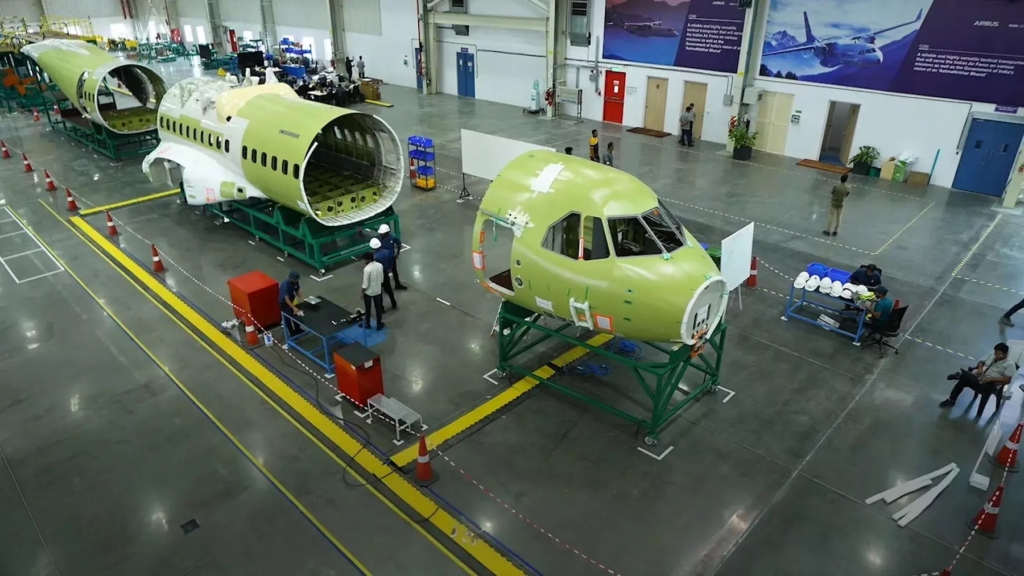
A fully digital manufacturing environment has been established for the Indian production line, with engineering models, tooling and assembly processes designed to mirror Airbus standards elsewhere in the world.
The final assembly line itself follows a pulse-line manufacturing concept similar to that used in modern automotive production, allowing aircraft to move through fixed stages of assembly and testing before delivery.
India is looking beyond the first 56 C295 aircraft
India has become the largest customer for the C295, with 56 aircraft on order. Once deliveries are complete, the IAF will be among the world’s largest operators of the type.
A defence ministry official told AGN that the programme remains on schedule.
“The current plan is to complete deliveries from the Indian production line by 2031,” the official said. “The focus now is on successfully completing flight testing and establishing a sustainable production rhythm for the remaining aircraft.”
The official added that the broader objective extends beyond the immediate requirement of replacing the Avro fleet.
“This programme is creating capabilities in manufacturing, integration, testing and long-term support that did not previously exist at this scale in the private sector. That will be important for future aerospace programmes.”
That may ultimately prove to be the programme’s most significant achievement.
The first flight of the Indian-built C295 is an important milestone in itself. But the infrastructure, workforce and supplier network created to support it could have a longer-lasting impact on India’s aerospace ambitions.
Featured image: Airbus
Sign up for our newsletter and get our latest content in your inbox.


More from


October 17, 20264 min read