Air India Flight 171: One year on, aviation’s deadliest crash in a decade remains unexplained

5 min read

Twelve months after Air India Flight 171 crashed shortly after take-off from Ahmedabad in western India, investigators are still working to determine exactly what caused the world’s deadliest air disaster in a decade.
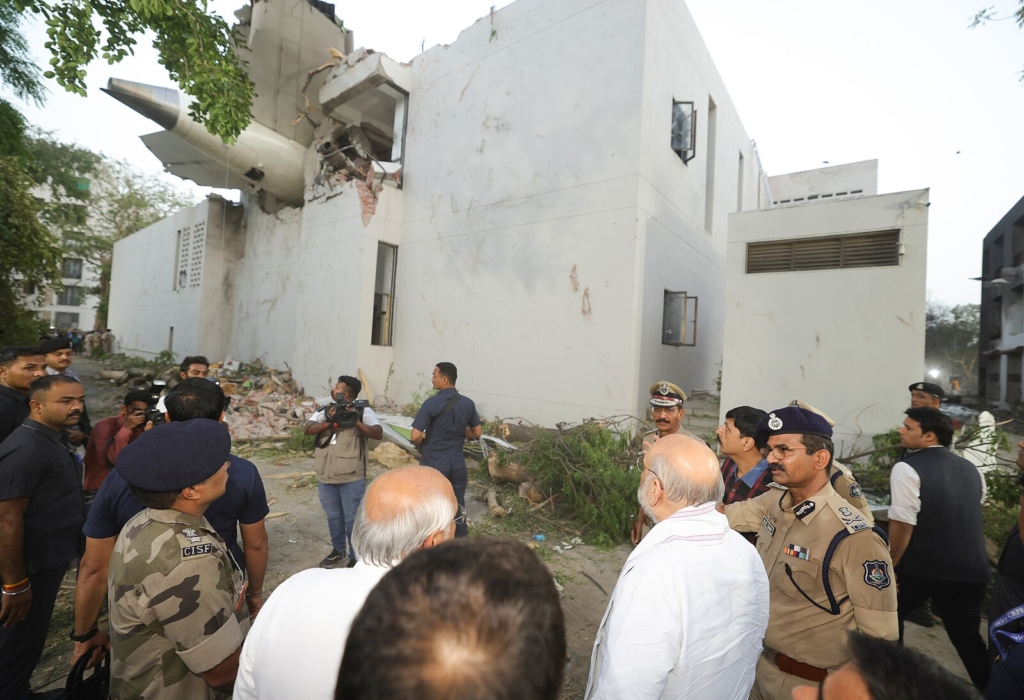
The Boeing 787-8 Dreamliner, operating from Ahmedabad to London Gatwick on June 12, 2025, came down moments after departure, killing 241 of the 242 people on board. A further 19 people on the ground lost their lives when the aircraft crashed into a residential area, bringing the total death toll to 260.
The sole survivor, a British national of Indian origin, was pulled from the wreckage and treated in hospital. Among the passengers were 169 Indian nationals, 53 British nationals, seven Portuguese nationals and one Canadian national.
As families mark the first anniversary, Indian investigators are preparing an interim update rather than a final report, with the full conclusions now expected to come later.
Air India Flight 171 investigation continues as engine analysis delays final report
Under international accident investigation rules, authorities aim to publish a final report within a year where possible. When that is not achievable, investigators are expected to provide an interim statement outlining progress.
As reported by Reuters, sources familiar with the investigation have indicated that India’s Aircraft Accident Investigation Bureau (AAIB) is still awaiting the completion of detailed studies involving the aircraft’s GE Aerospace engines and associated systems.

Investigators carried out engine testing earlier this year and have also examined components linked to the engine management system as part of a broader technical review.
According to reports, the final report could be issued within months once that work is completed.
The continuing analysis reflects the complexity of an investigation that has attracted attention across the global aviation industry.
Air India Flight 171 preliminary report raised key fuel switch questions
The first major breakthrough came with the publication of the preliminary report last year.
Investigators disclosed that the aircraft’s engine fuel control switches moved almost simultaneously from the “RUN” position to “CUTOFF” shortly after take-off, starving both engines of fuel at a critical stage of flight.
The finding immediately became the focus of the investigation because the loss of fuel supply to both engines would explain the aircraft’s sudden loss of thrust.
@stigaviation B787 fuel switch’s explained. Shoutout to @mfahadnaimb for the images and details Thank you for watching and learning #stigaviation #boeing #b787 #b787dreamliner #aircraftmaintenance #learnontiktok #wefixyoufly ♬ original sound – Stig Aviation
However, the preliminary report stopped short of assigning responsibility or identifying a definitive cause.
Importantly, investigators issued no safety recommendations to either Boeing or GE Aerospace at that stage, suggesting no immediate technical deficiency had been identified in the aircraft or its engines.
The AAIB also cautioned against drawing conclusions before the investigation was complete.
Boeing 787 faces scrutiny one year after Air India Flight 171 crash
The accident marked the first fatal crash involving a Boeing 787 Dreamliner since the type entered commercial service in 2011.
For Boeing, the loss represented a major moment for an aircraft family that had accumulated millions of flight hours across airlines worldwide.

The investigation has also been closely watched because of the aircraft’s role in long-haul international operations and the absence of any previous fatal accidents involving the type.
At the same time, the probe has become one of the most closely scrutinised aviation investigations in recent years, drawing interest from regulators, manufacturers, pilots and safety specialists around the world.
Air India Flight 171 interim report debate adds pressure on investigators
The prospect of an interim report has generated debate within parts of the aviation community.
The Federation of Indian Pilots has argued that releasing additional interim findings before the investigation is complete could lead to misunderstanding and further speculation. The organisation has also called for investigators to continue gathering technical evidence before reaching final conclusions.
Meanwhile, relatives of those involved continue to seek clarity over the circumstances that led to the crash.
The father of the aircraft’s captain has petitioned India’s Supreme Court seeking an independent investigation that considers all possible causes rather than focusing on any single theory.
Those competing viewpoints underline the challenges facing investigators as they work towards a final determination.
Families mark first anniversary of Air India Flight 171 crash
Across India and overseas, commemorations are planned to remember those who lost their lives.
Air India employees observed a two-minute silence at their workstations between 1:39 pm and 1:41 pm IST on 12 June. Memorial events are also expected at the airline’s headquarters, training academy and facilities in Delhi, Mumbai, Ahmedabad, London Heathrow and London Gatwick.
Marking the anniversary, India’s Civil Aviation Minister Ram Mohan Naidu Kinjarapu said the country remembered those who died with “profound sorrow” and extended condolences to their families and loved ones.
“The investigation continues with diligence and professionalism in accordance with established national and international procedures,” he said. “We remain committed to a thorough and objective determination of the causes of the accident and to further enhancing aviation safety.”
Today, as we mark one year since the tragic Air India Flight AI-171 accident, we remember with profound sorrow those who lost their lives and extend our heartfelt condolences to their families and loved ones.
— Ram Mohan Naidu Kinjarapu (@RamMNK) June 12, 2026
The investigation continues with diligence and professionalism in…
For Air India, the anniversary comes during a period of transformation following its return to Tata Group ownership. The crash struck at a critical moment in the carrier’s efforts to rebuild and modernise its operations.
Yet one year on, the central question remains unanswered.
The preliminary findings helped investigators narrow the focus of the inquiry, but the final report is expected to determine whether the tragedy was the result of a technical malfunction, human action, system failure or a combination of factors.
Until that report is released, one of aviation’s most consequential accident investigations remains unfinished, leaving families, regulators and the wider industry waiting for the conclusions that may finally explain what happened to Flight 171 on that June afternoon.
Featured image: Government of India
Sign up for our newsletter and get our latest content in your inbox.


More from


October 17, 20264 min read