


India’s first locally built Airbus C295 prepares for maiden flight

5 min read
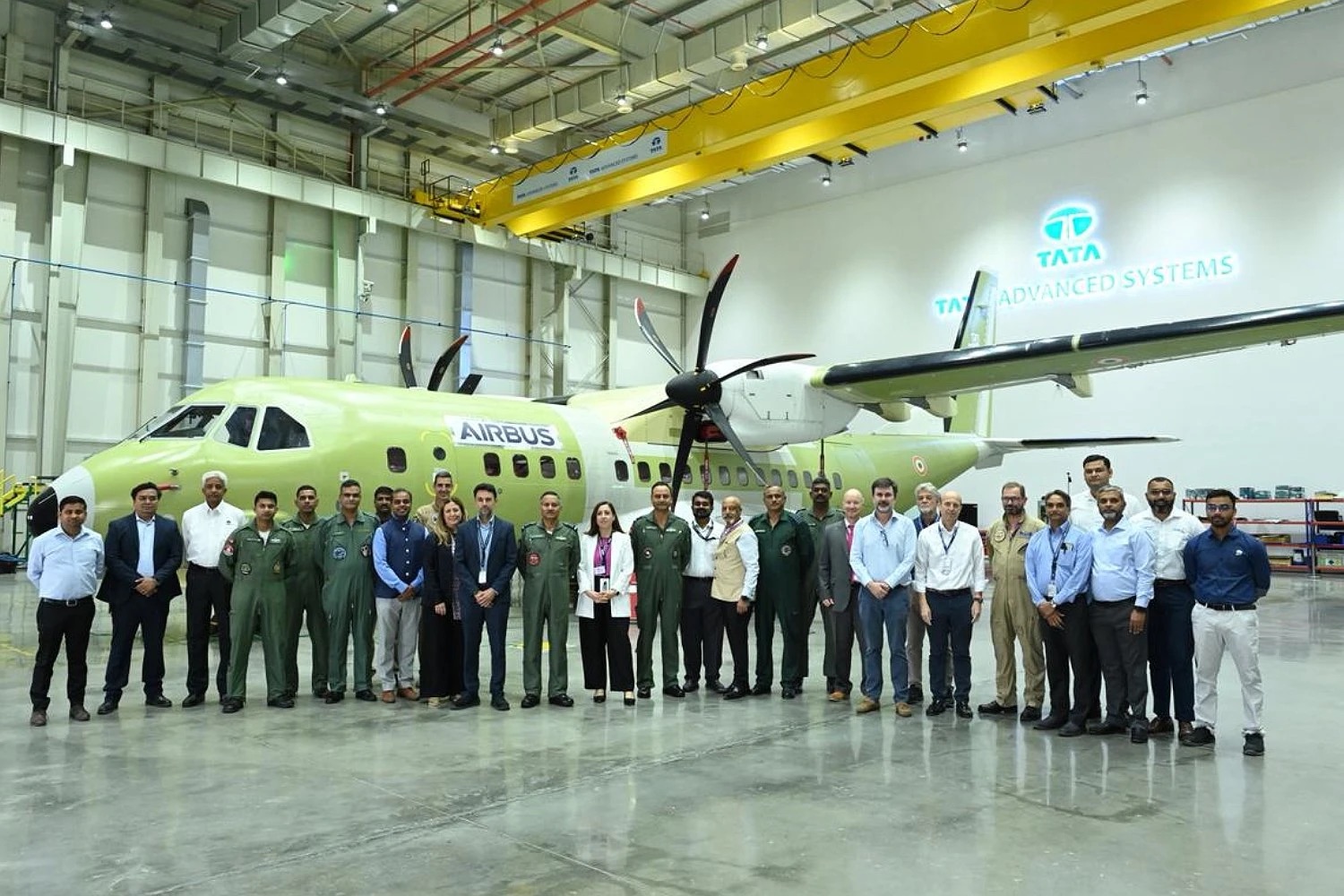
India’s first locally manufactured Airbus C295 military transport aircraft is preparing for its maiden flight from the Tata-Airbus final assembly line in western India, marking a major milestone in the country’s push to develop a private-sector military aerospace industry.
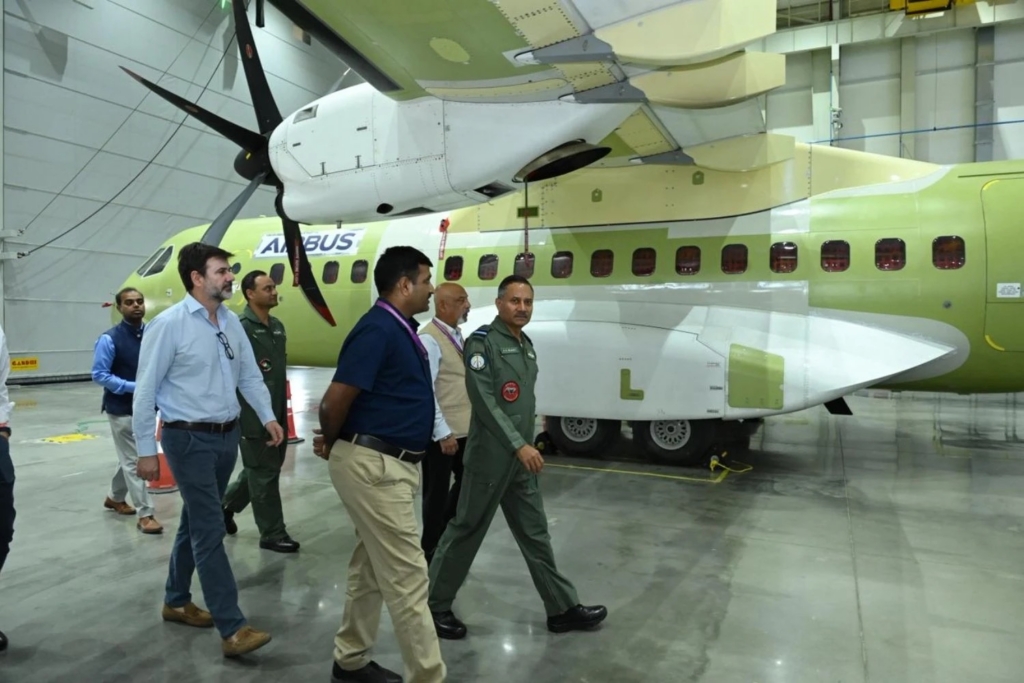
The twin-engine turboprop aircraft, assembled by Tata Advanced Systems Limited (TASL) in partnership with Airbus, is now in the final stages of production and flight readiness checks ahead of its first test sortie, according to recent visuals from the Vadodara facility.
Indian Air Force Deputy Chief of Air Staff Air Marshal Awadhesh Kumar Bharti visited the Gujarat facility last week to review progress on the programme and inspect the aircraft ahead of flight trials.
Tata Advanced Systems Limited has rolled out the first Airbus C295 aircraft from its Final Assembly Line facility in Vadodara, Gujarat. #Airbus #TataAdvancedSystemspic.twitter.com/aNiZAS27xw
— OSINT Spectator (@osintspectator) May 11, 2026
The development marks the first time a private Indian company has manufactured a military transport aircraft at this scale inside the country, in what officials see as one of the clearest examples so far of India’s “Make in India” and “Atmanirbhar Bharat” (self-reliant India) defence manufacturing strategy.
“We plan to roll out the first Made in India C295 out of the Vadodara FAL before our scheduled September 2026 target, which will be a milestone for the Indian aerospace industry, and shall ramp up to deliver 40 aircraft to the IAF by August 2031, as required by the IAF contract,” a person familiar with the programme’s progress told AGN.
Tata-Airbus partnership reshapes India’s military aircraft industry
The programme represents a significant shift in how India builds military aircraft.
For decades, aircraft manufacturing for the Indian armed forces was dominated by state-owned Hindustan Aeronautics Limited (HAL). The C-295 project is the first major military aircraft programme in which a private Indian company is handling large-scale aircraft assembly and industrial integration.
The Vadodara final assembly line was jointly inaugurated in October 2024 by Prime Minister Narendra Modi and Spanish Prime Minister Pedro Sánchez, underlining the strategic importance both governments attach to the programme.
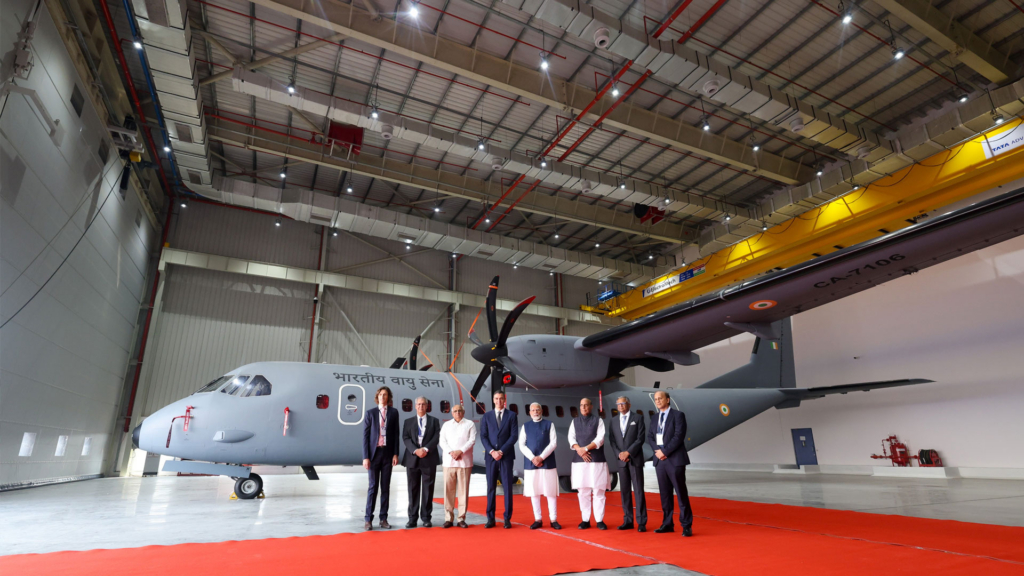
India signed a INR219 billion ($2.3 billion) contract with Airbus Defence and Space in 2021 for 56 C-295 aircraft to replace the Indian Air Force’s ageing Avro HS-748 transport fleet, much of which entered service nearly six decades ago.
Under the agreement, the first 16 aircraft are being delivered directly from Airbus’ Seville production line in Spain, while the remaining 40 are being manufactured and assembled in India.
Six aircraft delivered from Spain have already entered IAF service.
C-295 set to become backbone of India’s tactical airlift fleet
The C-295 is designed as a medium tactical transport aircraft capable of carrying troops, cargo, medical evacuation payloads and special operations teams.
The aircraft can transport around 70 troops, 48 paratroopers or 24 stretchers for casualty evacuation missions.
Powered by two Pratt & Whitney PW127G turboprop engines, the aircraft is capable of operating from short and semi-prepared runways, including forward landing grounds in mountainous terrain and remote border sectors.
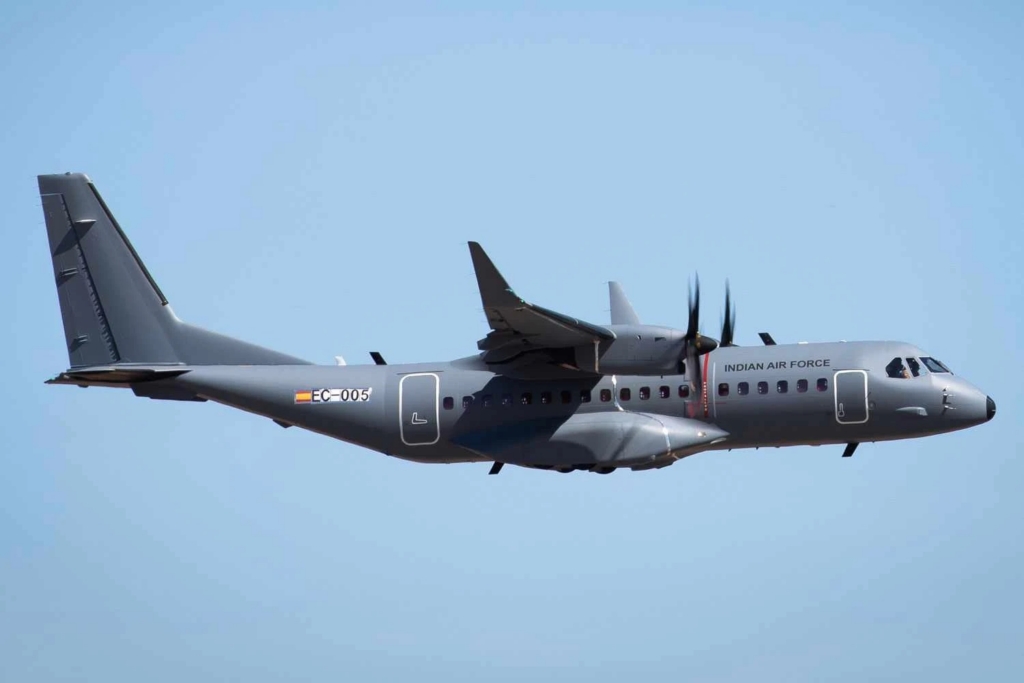
That capability is considered particularly important for Indian military operations in the Himalayas and along remote northern and northeastern regions.
Apart from troop movement and logistics, the aircraft can also support disaster relief, maritime surveillance and medical evacuation missions.
The Indian Navy and Coast Guard have already shown interest in maritime variants of the aircraft as part of wider fleet modernisation plans.
More than 13,000 aircraft parts now produced in India
The industrial scale of the programme extends far beyond final assembly.
According to programme details released by Airbus and Tata, more than 13,000 aircraft parts and over 4,000 sub-assemblies are now being manufactured in India through a growing domestic aerospace supply chain.
A total of 37 Indian suppliers from both the public and private sectors have been integrated into the programme so far, while 21 specialised manufacturing processes have already been certified locally.
Officials say more than 85% of the aircraft’s structural work and final assembly for the Indian-built fleet will eventually take place domestically.
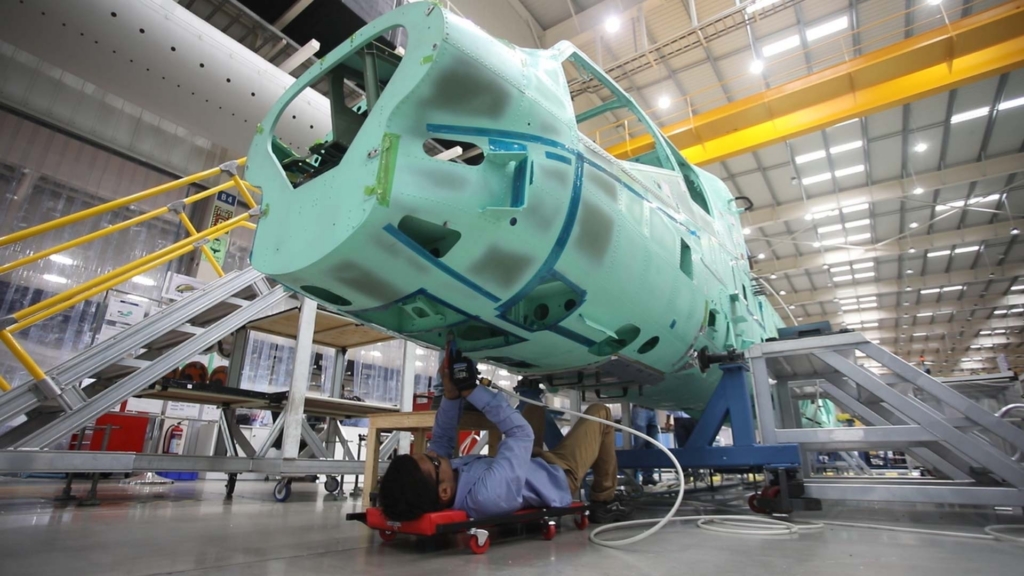
“Other than the aero-engine and avionics, which are sourced by Airbus from other OEMs, most structural parts will be made in India,” official sources said. “Of 14,000 detailed parts used in one aircraft, 13,000 are being made in India from raw material.”
The programme is also helping India build aerospace manufacturing capability in areas such as tooling, aircraft assembly, systems integration, testing and long-term maintenance support.
Under the industrial arrangement, Tata acts as the Indian Aircraft Contractor responsible for detailed parts production, assembly integration, engine and avionics installation, flight testing and future fleet support activities.
Indigenous systems are being integrated into the C295 aircraft
The Indian version of the C295 is also being fitted with locally developed electronic warfare systems.
According to programme details released during the IAF inspection visit, each aircraft will carry an indigenous electronic warfare suite developed by Bharat Electronics Limited and Bharat Dynamics Limited.
The addition reflects India’s broader effort to increase indigenous content across major defence programmes rather than limiting local participation to structural manufacturing alone.
Officials expect indigenous content levels to continue rising in future production batches as more suppliers and systems are absorbed into the programme.
C295 programme seen as test case for India’s aerospace ambitions
The significance of the C295 programme now extends beyond the aircraft itself.
For India’s defence planners, the project is increasingly being viewed as a template for how future military aircraft programmes could be structured between global aerospace manufacturers and Indian private industry.
Airbus already sources more than $1 billion worth of components and services annually from India and employs large engineering teams in Bengaluru supporting global commercial and military programmes.
The C-295 programme substantially expands that footprint into full aircraft production.
Featured image: Indian Air Force
Sign up for our newsletter and get our latest content in your inbox.

More from

October 11, 20263 min read


