Collins brings electric thrust reverser test facility online as it looks beyond Airbus A350

3 min read
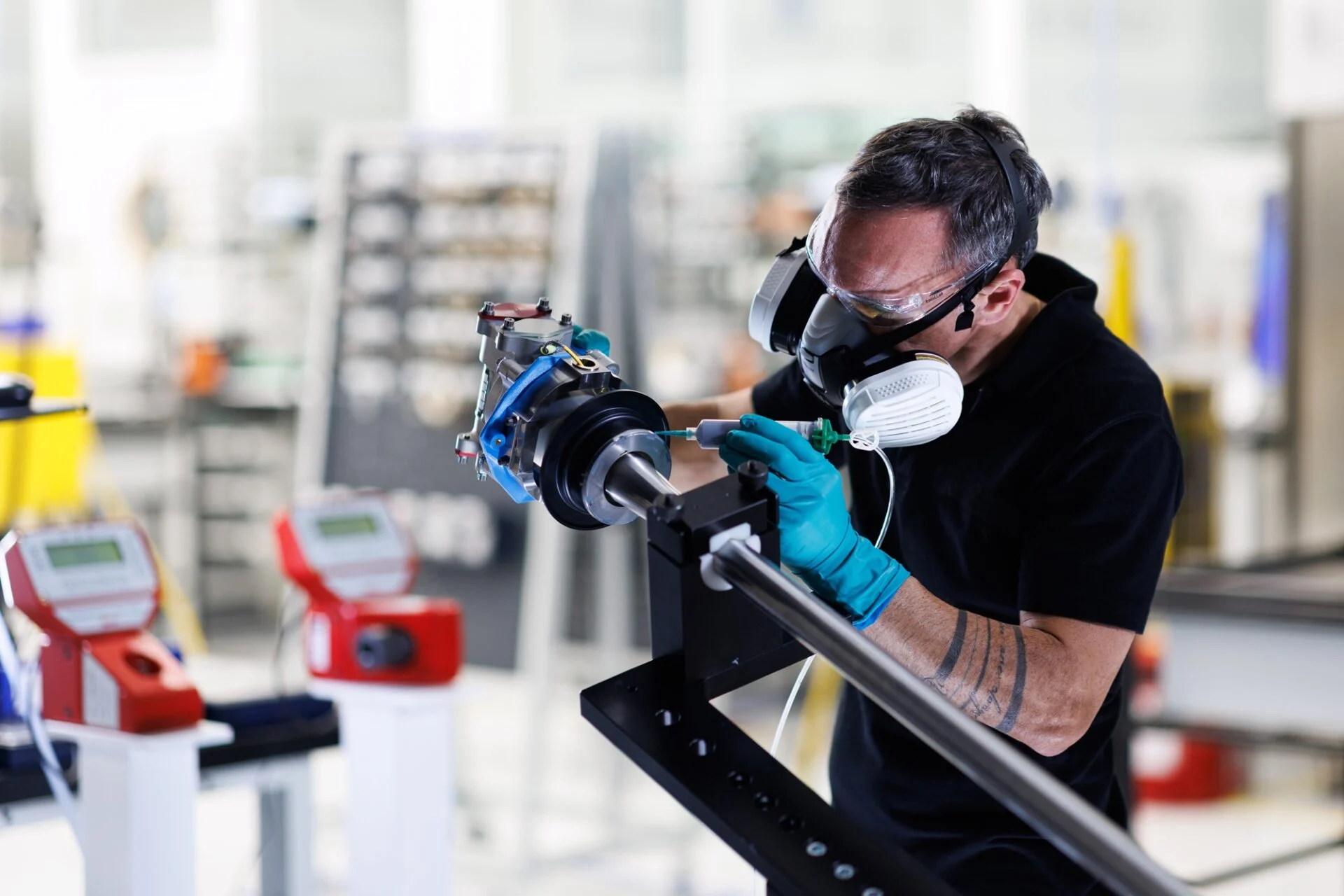
Collins Aerospace has brought a specialist test centre in Wolverhampton into full operation as it looks to take electric thrust reverser technology beyond the Airbus A350 and into future generations of aircraft.
Collins established the Wolverhampton Engineering Centre of Excellence in 2023, but the site has now reached a new milestone with the completion of its modular test facility. The new capability gives engineers a dedicated environment in which to develop, integrate and certify electric aircraft actuation systems.
At the heart of the work is elecTRAS, Collins’ electric thrust reverser actuation system. The technology is already used across the Airbus A350 family, with more than 700 aircraft collectively accumulating over 15 million flight hours and 2.2 million flight cycles by the end of 2025.
How an electric thrust reverser works
A thrust reverser helps slow an aircraft after landing by redirecting engine airflow. Traditional systems generally rely on hydraulic or pneumatic equipment to move the doors or translating structures inside the nacelle.
elecTRAS replaces those hydraulic interfaces, fluids and associated hardware with electric motors, actuators and controllers. It does not generate reverse thrust electrically. Instead, it changes how the thrust reverser mechanism is operated.
Removing pipes, hoses and other hydraulic equipment can simplify installation and maintenance while reducing weight. Collins says the system can cut nacelle actuation weight by 15–20% at the integrated aircraft system level.
Ajay Mahajan, president of Advanced Structures at Collins Aerospace, said the A350 had already demonstrated that the fundamental technology worked.
“The technology now is working pretty well on A350,” he said during a media briefing. “The big thrust and focus is going to come from: how do you make the system more cost competitive?”
That question is important if electric actuation is to move from one widebody aircraft family into a broader range of commercial aircraft.
Modular test facility designed to reduce development time
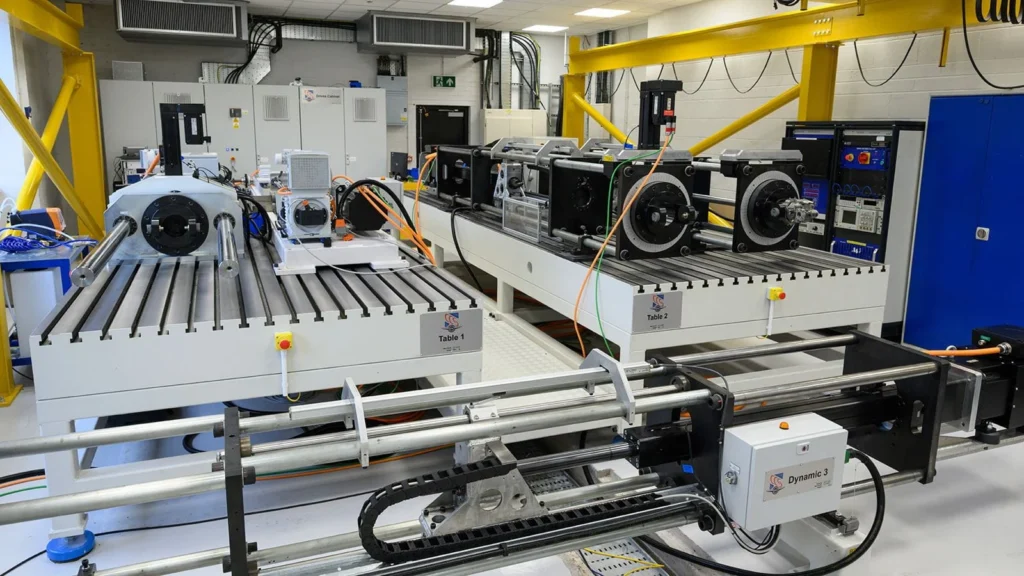
The Wolverhampton facility is intended to avoid the need for engineers to create a completely bespoke test rig for every new aircraft program.
Instead, Collins can combine reusable modules to test individual components, actuators, subsystems or a complete integrated system. Those modules can be rearranged as designs change or as the company moves between aircraft applications.
Mahajan described it as “a flexible, reusable, real-world test environment” that provides a controlled setting for aircraft integration and acts as “a one-stop shop for testing multiple systems and components.”
Collins Aerospace enhances aircraft electrification in Europe with a new engineering center focused on next-gen electric thrust reverser systems. The center will offer advanced design and testing for future electric thrust reversers. Read more: https://t.co/xbUBFkrWrr pic.twitter.com/oKzuwARNXS
— RTX (@RTX_News) June 9, 2025
Engineers can also examine several system characteristics simultaneously and feed results into digital analysis earlier in the development process. Collins believes that will help identify problems sooner, reduce the number of dedicated test rigs required and shorten both development and certification timelines.
The centre brings together expertise in nacelle actuation, motor controllers, electric systems and software algorithms. Around 30 engineers and other specialists are currently associated with the test operation, with further growth planned.
Collins looks beyond the Airbus A350
The A350 remains the only disclosed aircraft program using elecTRAS, although Mahajan confirmed that the forthcoming A350 freighter would also use the system.
Collins is now considering how the technology could be adapted for next-generation single-aisle aircraft and other more-electric platforms.
Mahajan said the architecture was intended to be both platform-agnostic and propulsion-agnostic. Collins currently works with Rolls-Royce through the A350 program, but is also discussing future applications with Pratt & Whitney and could work with other engine manufacturers.
No new customer or aircraft application was announced in Wolverhampton. The centre nevertheless gives Collins the infrastructure it needs to determine whether electric thrust reverser actuation remains largely associated with the A350 or becomes a standard feature of future commercial aircraft.
Featured image: RTX