SWISS to retire remaining Airbus A220-100 airliners by end of 2027

6 min read
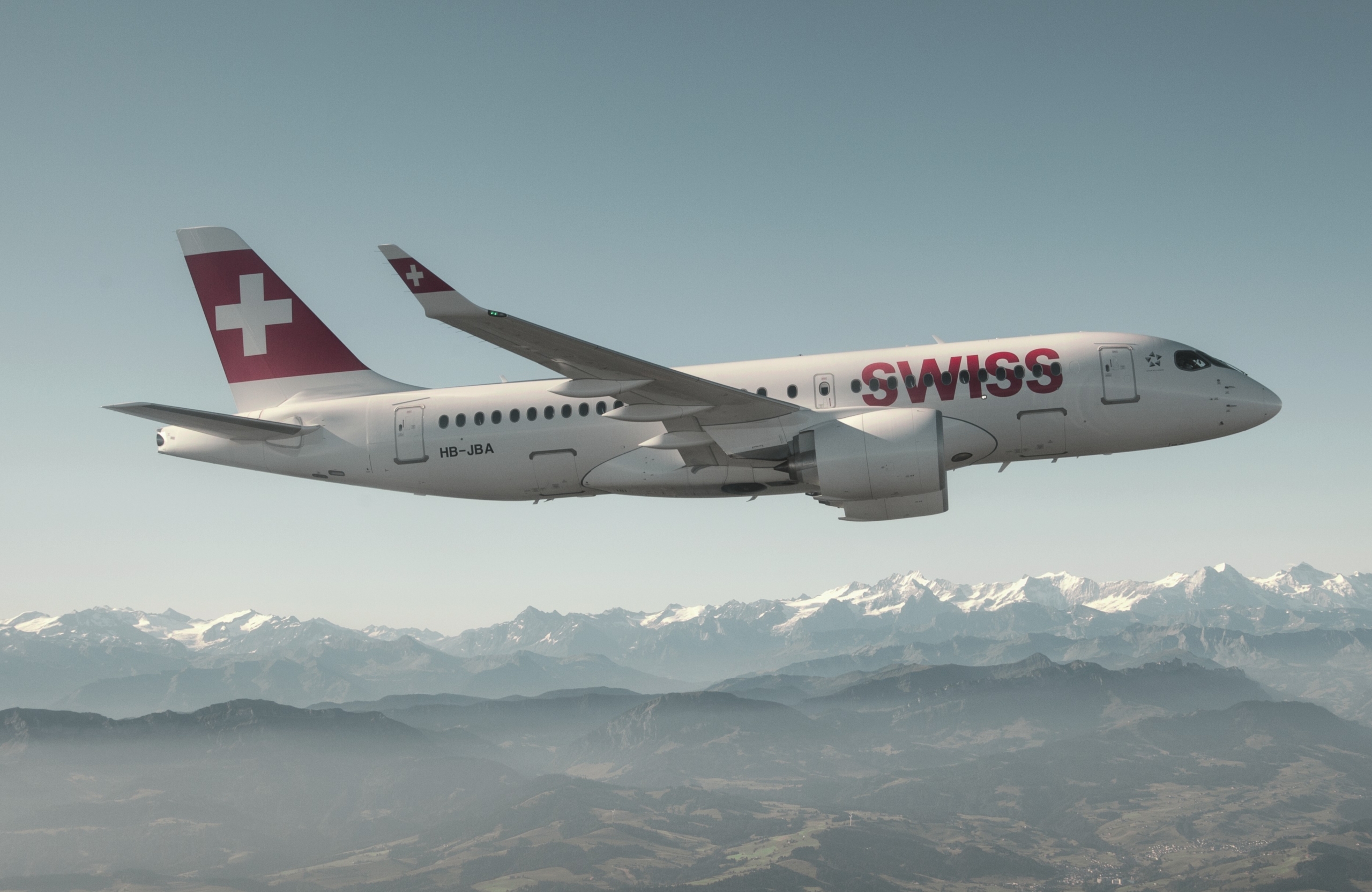
SWISS is preparing to close the chapter on one of the most significant aircraft fleets in its modern history, with Switzerland’s national flag carrier announcing plans to withdraw its Airbus A220-100 narrowbody airliner fleet – of which it was the launch customer – after a decade of operations.
The airline has already removed five of its nine A220-100s from service, with the remaining four airframes set to be withdrawn by the end of 2027 as SWISS transitions to an all-A220-300 operation.
This decision reflects a broader industry trend as global airlines are increasingly moving to simplify their fleets, prioritise larger platforms and variants and respond to the ongoing maintenance, repair and overhaul (MRO) and supply chain pressures that continue to plague newer-generation aircraft.
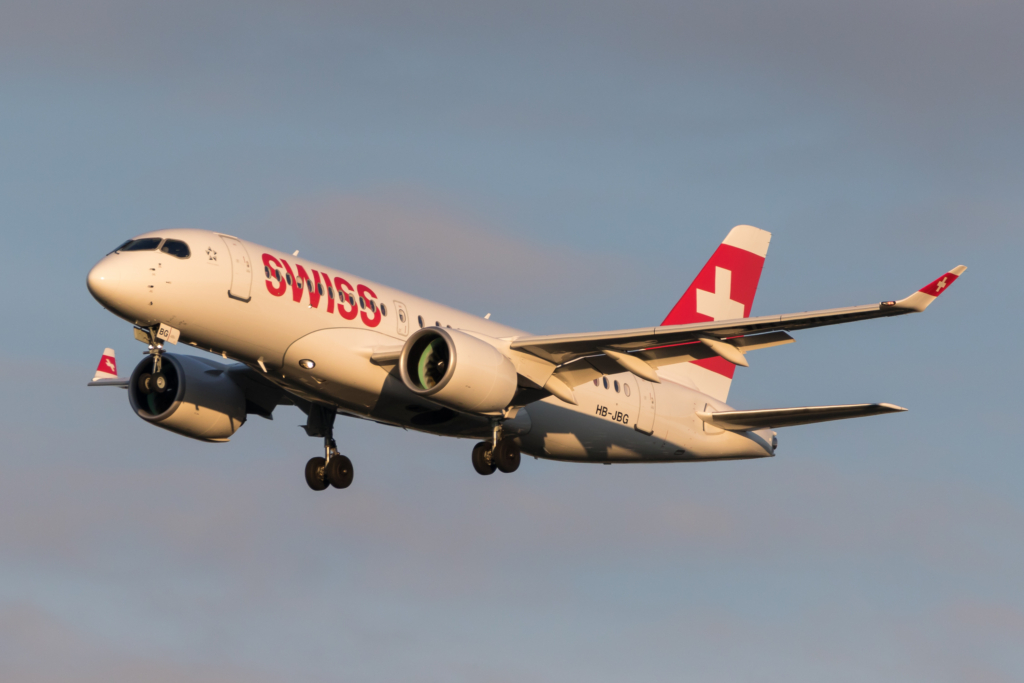
SWISS became the global launch customer of the A220-100 – which was then known as the Bombardier CSeries CS100 – in July 2016.
With its arrival, the A220-100 represented a major step in the airline’s fleet renewal strategy, replacing its ageing fleet of Avro RJ100 regional airliners with a clean-sheet design that leveraged advanced aerodynamics, composite materials and was driven by a pair of Pratt & Whitney PW1500G geared turbofan engines.
The arrival of the A220 was closely watched across the global commercial aviation industry. At the time, the platform offered a new solution for airlines seeking efficiency in the 100-seat market segment, positioned between traditional regional jets and larger narrow-body airliners, such as the Airbus A319 and Boeing 737-700.
SWISS shifts focus to A220-300 operations amid engine availability woes
For SWISS, the A220-100 became a key enabler for operating thinner European routes while maintaining passenger comfort and improving overall efficiency. The type’s 3,600 nmi (6,670 km) range, respectable fuel performance and ability to operate from airports with challenging infrastructure allowed the airline to serve markets that did not always justify a larger aircraft.
The airliner was particularly associated with SWISS operations at London City Airport, where its steep approach capability and high-performance characteristics made it well-suited to the airport’s demanding operating environment.
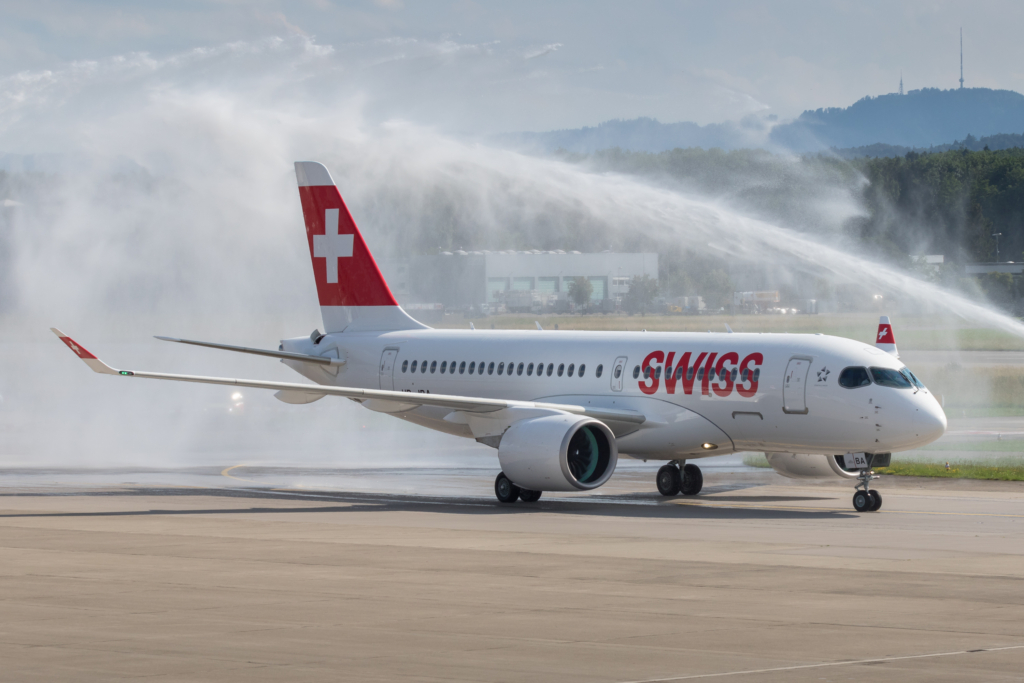
However, as the airline’s network evolved and alternative aircraft gained approval for operations at London City, the unique advantage of the smaller A220-100 became less central to fleet planning.
In all, SWISS acquired nine smaller A220-100s alongside a fleet of 21 larger A220-300s. While these two variants share a common design philosophy, the larger A220-300 has increasingly become the preferred option because of its increased capacity and improved economics on a wider range of routes.
The A220-300 can accommodate around 145 passengers in its SWISS configuration, while the airline’s smaller A220-100s only have 125 seats available. In an environment where airlines continue to face pressure from rising costs and capacity constraints, the extra seats offered by the -300 variant provide a stronger commercial proposition while retaining much of the efficiency of the A220-100.
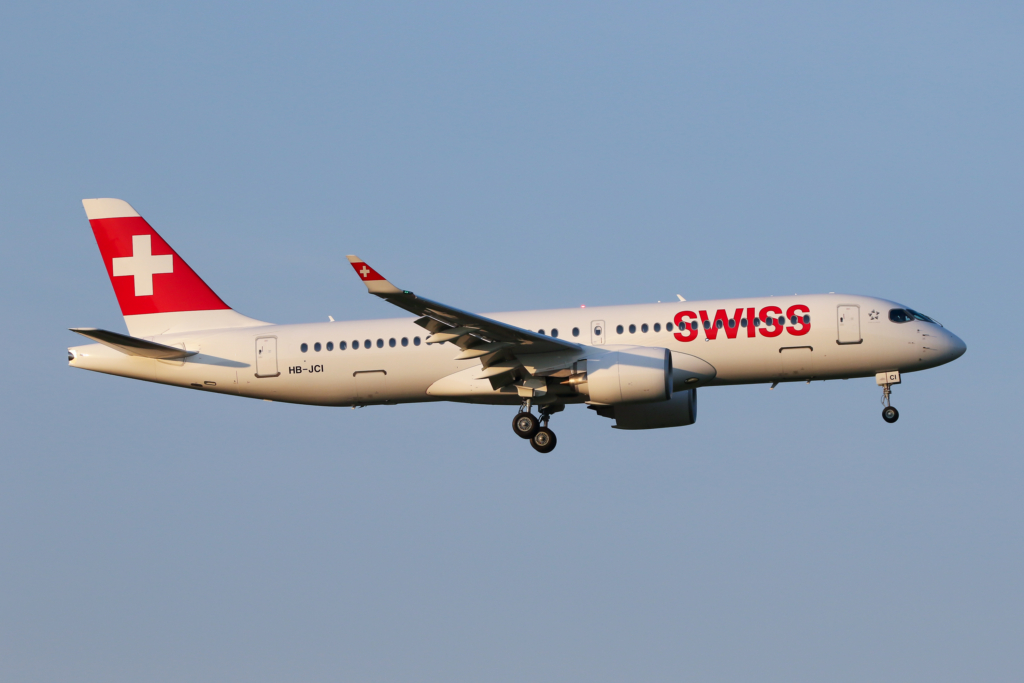
The retirement of the A220-100 fleet also comes as SWISS manages the continued impact of Pratt & Whitney engine availability issues that have affected the A220 family and other aircraft powered by the firm’s geared turbofan. Maintenance delays, spare-part shortages and longer-than-expected engine shop visits have created operational challenges for airlines across the globe.
During this saga, SWISS prioritised the availability of its larger A220-300s by sacrificing its smaller -100s. While this initially started as a temporary measure in response to the engine shortages, SWISS has since concluded that its limited engines, components and MRO resources prove more valuable when focused on the -300 fleet.
SWISS begins cannibalising -100s to sustain its A220-300 fleet
Five A220-100s have already been withdrawn from operational service, three of which have been placed into long-term storage. The remaining two (registration HB-JBC and HB-JBD) were stored at Francazal Airport in Toulouse, France, but are now being dismantled after being earmarked for part-out activities.
This means their engines and components are being cannibalised to provide additional parts and support for SWISS’s remaining A220-300s to bolster their operational availability and reliability.
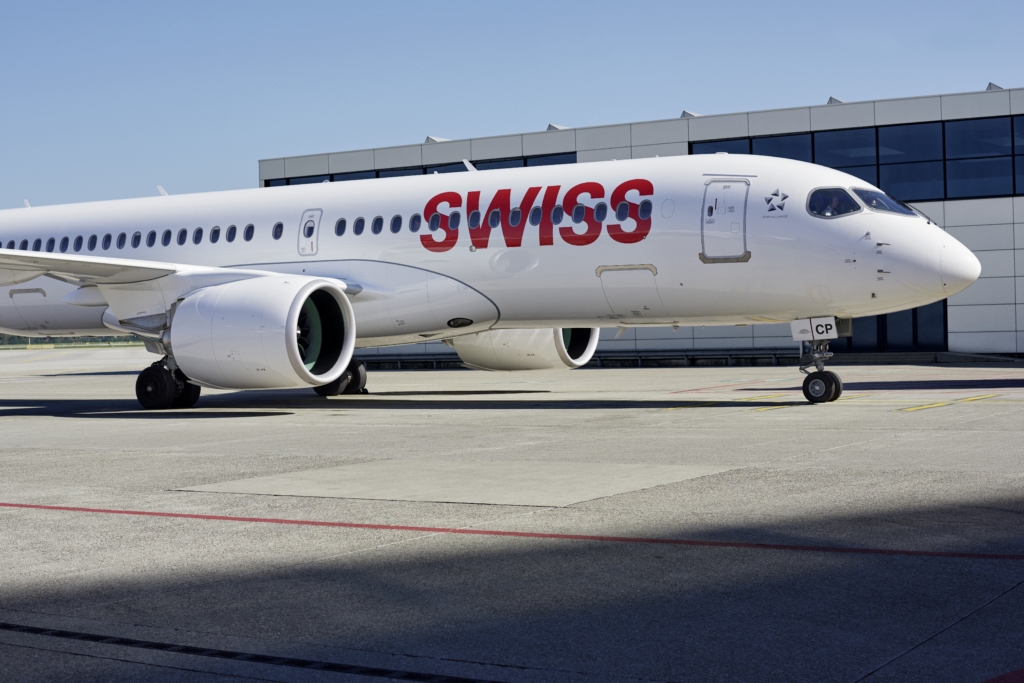
The four remaining -100s are expected to be withdrawn from use by the end of 2027 and will subsequently be placed into long-term storage. Following their retirement, they will likely be kept as a source of spare parts for the airline’s 21-strong A220-300 fleet.
The move highlights a key challenge facing global airlines operating modern aircraft families. While commonality can reduce costs, maintaining multiple variants can still create complexity when fleets are relatively small. A nine-aircraft subfleet may require separate MRO planning, training considerations and spare-parts support compared with a larger, standardised fleet.
How does the SWISS A220-100 retirement reflect changing civil market dynamics?
For Airbus, SWISS’s withdrawal of the A220-100 is a reminder that the smallest variant of the A220 family has occupied a relatively niche position within the commercial aviation market. The -300 variant has proven to be the stronger commercial performer, attracting significantly more orders and becoming the dominant variant of the family.
Despite the A220-100’s upcoming retirement, SWISS remains committed to the A220 family. The airline’s fleet strategy continues to rely on the aircraft’s efficiency advantages, with the A200-300 playing an important role in European operations alongside the larger Airbus A320 family of narrow-body airliners.
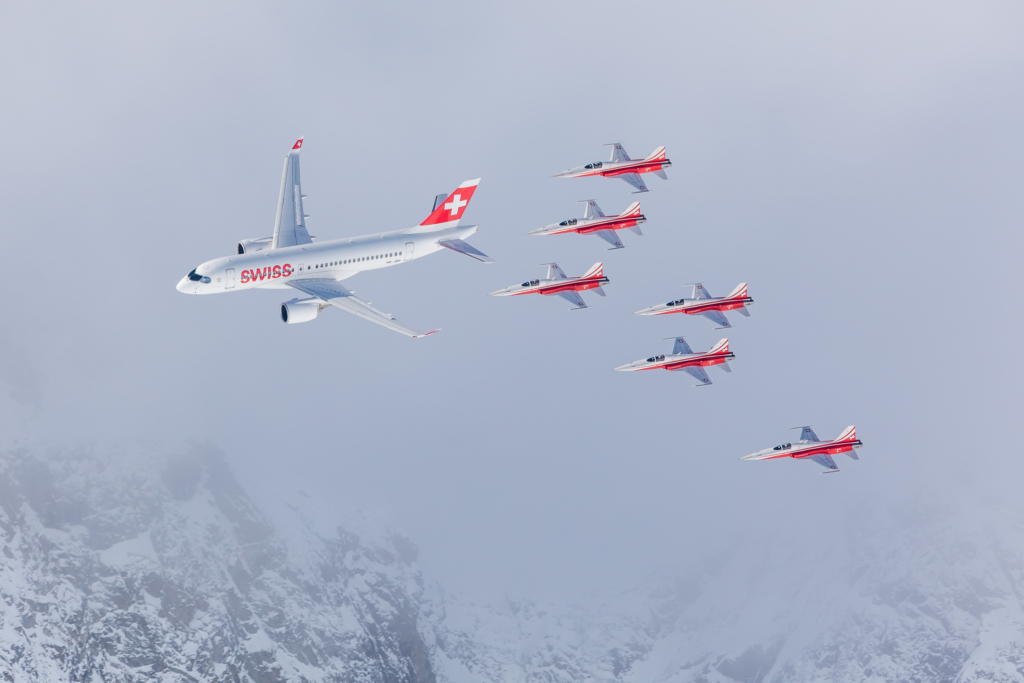
The end of A220-100 operations at SWISS concludes a pioneering period for the Swiss flag carrier. The type helped launch a new generation of regional-capacity airliners and gave the airline a first-mover role in adopting the platform.
After a decade of operations, however, changing economics, maintenance realities and fleet optimisation have led SWISS to a different conclusion: fewer variants, larger aircraft and greater operational consistency.
For an aircraft that once represented the future of small narrow-body aviation, the A220-100’s departure from SWISS service is less a reflection of failure than a sign of how quickly airline strategies evolve. Regardless of its short operational history, the aircraft helped define one era of SWISS fleet renewal, with the larger -300 variant now set to shape the next.