Bristow selects five Norwegian sites for hybrid-electric aircraft demonstrations in 2027

5 min read

Bristow Group, Electra, Avinor and the Civil Aviation Authority of Norway (CAA Norway) have selected five locations across Norway for a series of hybrid-electric aircraft demonstrations planned for 2027, marking the next stage in the country’s efforts to develop lower-emission aviation.
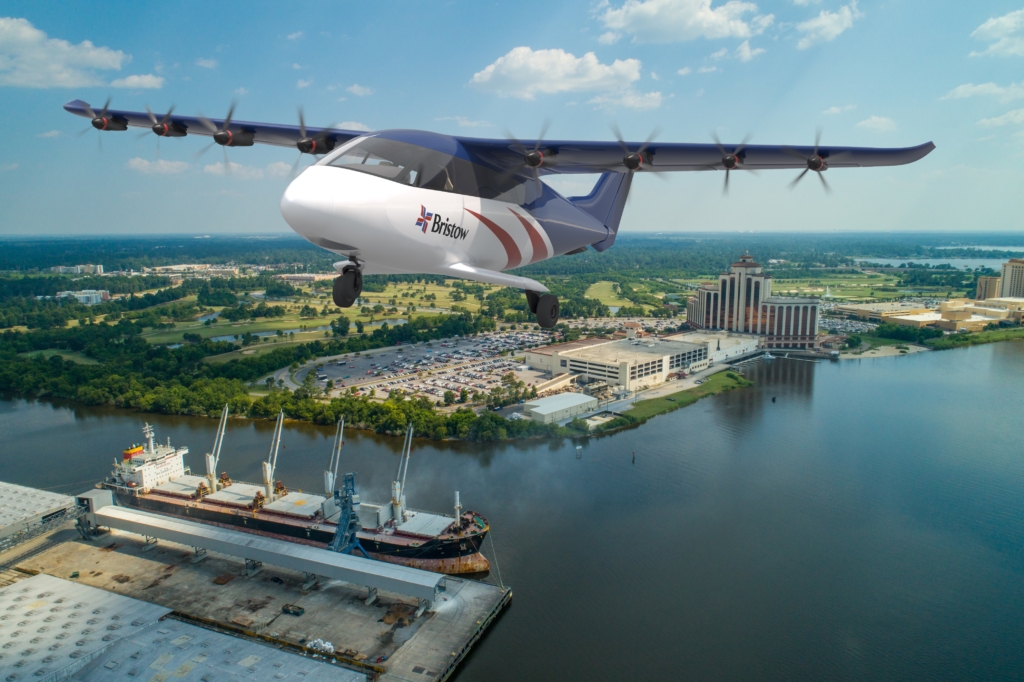
The programme will use Electra’s EL2 technology demonstrator to explore how hybrid-electric aircraft could operate across different aviation environments, from established international airports to short-runway facilities and locations without conventional runways. The first demonstration flight is planned for the third quarter of 2027.
The aircraft combines electric propulsion with a turbogenerator powered by sustainable aviation fuel (SAF). Its ultra-short take-off and landing (Ultra-STOL) capability lets it take off and land in about 50 metres, potentially opening new options for regional connectivity and access to communities beyond the reach of traditional airport infrastructure.
Five sites, three operating environments
The selected locations have been chosen to provide a broad assessment of the aircraft’s operational capabilities and the infrastructure, procedures and regulatory arrangements needed to support future hybrid-electric operations.
Horvnes Quay near Sandnessjøen and Kongsbergporten Business Park will be used to investigate operations at novel landing sites where established runways are not currently available.
Trondheim and Oslo airports will provide opportunities to assess how the aircraft could be integrated into larger airport environments and existing air traffic systems. Mosjøen Airport, in northern Norway, will serve as an example of a short-runway airport, allowing the partners to examine the aircraft’s capabilities and assess new approach procedures.

Together, the five locations will help demonstrate how hybrid-electric aircraft might operate in different settings and what would be required to introduce them safely into Norway’s aviation network.
Karianne Helland Strand, executive vice president of sustainability and infrastructure at Avinor, said the programme would help establish the infrastructure, airspace procedures and regulatory requirements needed when new aircraft technologies are ready to enter service.
For Bristow, the demonstrations will provide an opportunity to evaluate Electra’s ultra-short take-off and landing technology under a range of operational conditions.
Dave Stepanek, Bristow’s executive vice president and chief transformation officer, said the selected sites would support detailed planning for the 2027 demonstrations while helping the partners understand how such aircraft could be integrated safely into future operations.
Building on Norway’s electric-aircraft trials
The new programme builds on experience gained during Bristow’s 2025 collaboration with BETA Technologies, which saw the company operate the manufacturer’s all-electric ALIA CX300 aircraft in Norway.
Announced in March 2025, the earlier initiative formed part of Norway’s international test arena for zero- and low-emission aviation, established by Avinor and CAA Norway. The programme aimed to move beyond theoretical assessments by testing new aircraft technology in a real operational environment.
Bristow operated the ALIA CX300 on simulated cargo missions, initially focusing on the route between Stavanger and Bergen. The aircraft carried no passengers or actual freight; instead, the flights recreated cargo operations to generate practical data and experience.
The first flight took place from Stavanger Airport on 8 August 2025. On 4 September, the aircraft completed the full Stavanger–Bergen route for the first time, covering approximately 160 kilometres in 55 minutes.

The six-month programme subsequently expanded its operational experience across Norway. It concluded in January 2026 after 126 flights, covering 16,201 kilometres and using approximately 12 megawatt-hours of charging energy.
In addition to Stavanger and Bergen, the aircraft visited Haugesund, Stord, Kristiansand, Arendal and Florø.
The trials provided practical insights into electric-aircraft performance, charging infrastructure, winter operations, air traffic coordination and the regulatory requirements associated with introducing new propulsion technologies.
They also demonstrated the importance of collaboration between aircraft manufacturers, operators, airports and regulators when assessing the feasibility of future low-emission aviation services.
From electric testing to hybrid-electric operations
Although the two programmes involve different aircraft and propulsion systems, they share a common objective: establishing what is needed to bring emerging aviation technologies into practical use.
BETA’s ALIA CX300 is an all-electric conventional take-off and landing aircraft. Electra’s EL2 demonstrator, by contrast, combines electric propulsion with a turbogenerator powered by sustainable aviation fuel.
The hybrid-electric approach is intended to support ultra-short take-off and landing performance while providing a different operational proposition from a battery-only aircraft.
The 2027 demonstrations will therefore broaden the knowledge gained through Norway’s earlier electric-aircraft programme. By testing at established airports, short-runway facilities and novel landing sites, the partners aim to examine a wider range of potential applications for advanced regional aviation.
Jan Petter Steinland, director of innovation, research and sustainability at CAA Norway, said testing aircraft with different characteristics in varied scenarios would help determine whether existing regulatory frameworks are suitable and how new technologies could be integrated safely with other air traffic.
Preparing for the next phase
With the locations selected, the partners will now develop the detailed test programme, secure the necessary approvals and prepare the sites ahead of the planned first demonstration flight in the third quarter of 2027.
The initiative forms part of Norway’s broader effort to accelerate the introduction of zero- and low-emission aviation through practical testing and the development of appropriate regulatory frameworks.
For Bristow, the programme represents a continuation of its involvement in advanced air mobility and emerging aircraft technologies.
The experience gained from both the BETA electric-aircraft trials and the forthcoming Electra demonstrations will help build a more detailed understanding of how new propulsion systems and aircraft designs could fit into existing aviation operations.
The results are expected to inform future decisions on infrastructure, operating procedures and regulation, helping establish the conditions needed for the safe introduction of hybrid-electric aircraft in Norway and potentially other markets.
Sign up for our newsletter and get our latest content in your inbox.


More from


October 17, 20264 min read