Gulfstream and Rolls-Royce show 100% SAF cuts contrails at 50,000 feet

4 min read
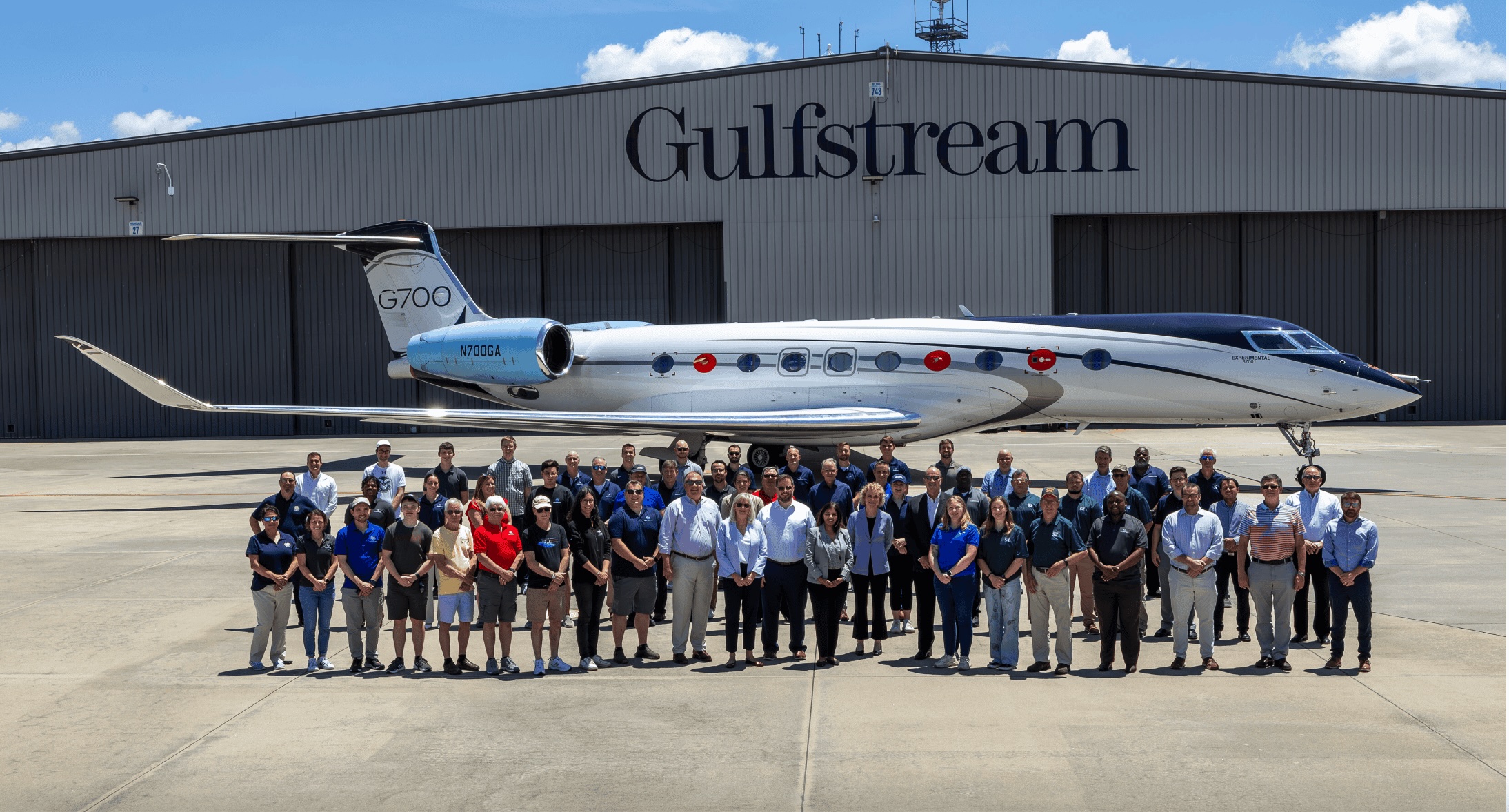
A high-altitude flight test campaign conducted by Rolls-Royce and Gulfstream has set a new benchmark for sustainable aviation.
As part of Gulfstream’s flight test campaign, the US business jet manufacturer has collaborated with Rolls-Royce to demonstrate that 100% neat sustainable aviation fuel (SAF) can reduce contrail-forming particle emissions at altitudes up to 50,000 feet.
Why high-altitude tests are key to understanding the future of sustainable aviation
At 50,000 feet, the operating ceiling of business jets is higher than most commercial jets. In addition, it is increasingly recognised that contrails, not just CO2, are a major driver of aviation’s climate impact.
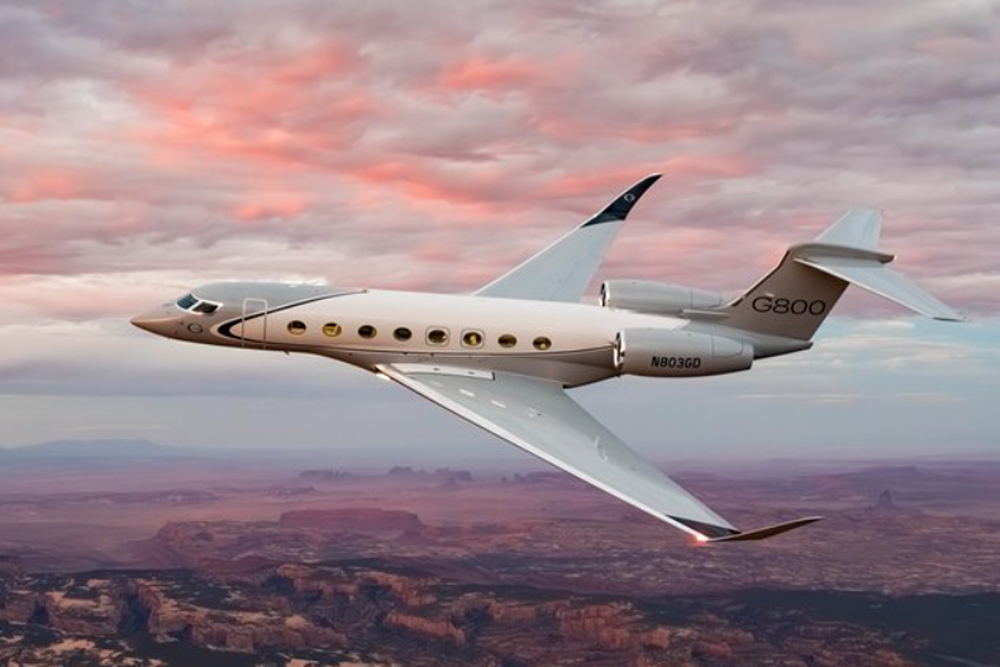
Rolls-Royce’s Pearl 700 engines powered the Gulfstream G800’s first 100% SAF flight. Meanwhile, pilots trained extensively in simulators for months in advance of the test campaign to execute complex formation profiles required to capture both near-field emissions and contrail evolution several miles in-trail.
Go behind the scenes of a first-of-its-kind flight test. ✈️
— Gulfstream Aerospace (@GulfstreamAero) July 7, 2026
Gulfstream recently completed a groundbreaking flight test campaign demonstrating the potential for 100% neat SAF to reduce contrail-forming particles.
Tap here to watch our documentary:
📹: https://t.co/Lx4yraR27g pic.twitter.com/6koHmPMKWQ
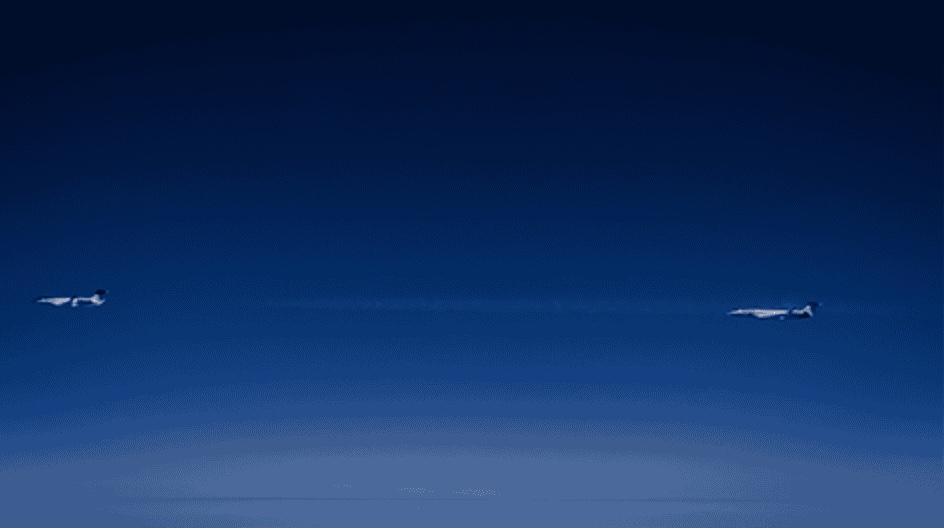
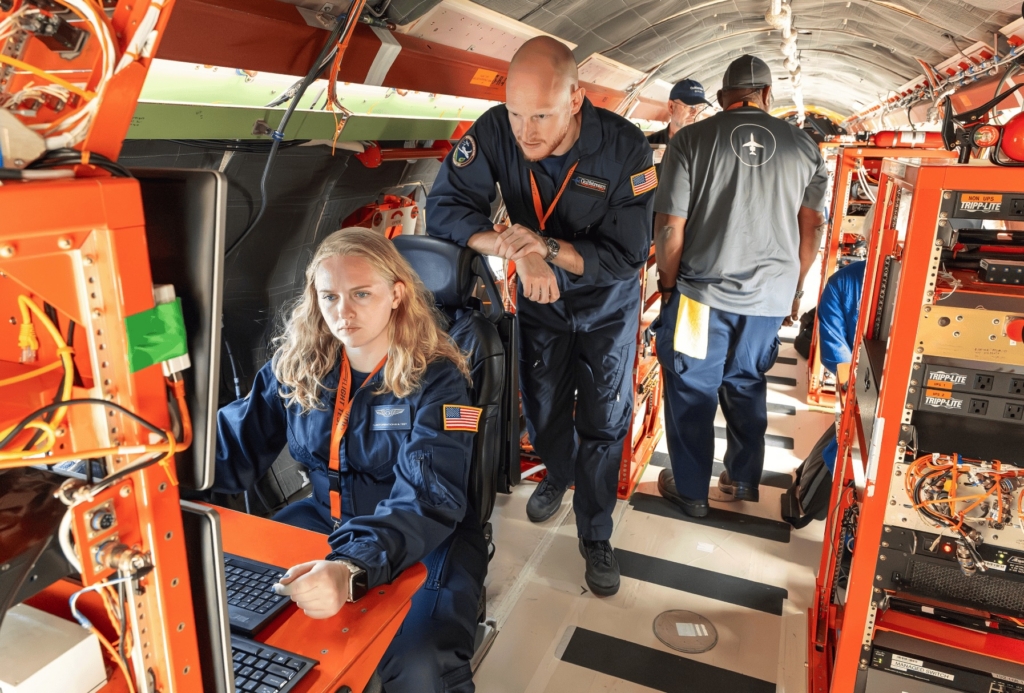
The G800 was paired with a specially modified Gulfstream G700, which was transformed into a flying emissions measurement lab. Operating in close formation, the aircraft enabled researchers to capture precise real-world measurements of particulate matter and contrail-forming characteristics at higher altitudes.
How Gulfstream is leading the way for sustainable aviation
Gulfstream is already a front-runner in advancing sustainable aviation. It flew the industry’s first transatlantic flight using SAF in one engine in 2011 and the world’s first transatlantic flight operating on 100% SAF in 2023. To date, Gulfstream aircraft have flown more than 3.5 million nautical miles on SAF blends.
“As aviation continues its work in optimising environmental efficiencies, this campaign reflects our strategy to lead with advanced technology, real-world testing and meaningful collaboration to better understand and reduce aviation’s environmental impact,” said Mark Burns, president, Gulfstream.
The role of SAF in reducing non-CO2 emissions
Burns was joined by Alan Newby, director of research and technology at Rolls-Royce, who underlined that in combination with ultra-efficient aero engines, SAF has a vital role to play not only in decarbonising aviation, but also in reducing certain non-CO2 emissions.

The collaboration builds on scientific groundwork Rolls-Royce laid in 2021 through the Emission and Climate Impact of alternative Fuels – phase 3 (ECLIF3) project. That earlier research saw the engine manufacturer partner with Airbus, the German Aerospace Center (DLR) and SAF producer Neste to conduct a series of inflight and ground emissions tests examining how 100% SAF affects aircraft emissions and contrail formation.
While ECLIF3 was based on a commercial widebody aircraft – the A350 – this latest campaign is focused on business aviation.
“The valuable insights we have gained from these latest tests at high altitudes, as well as the data from projects like ECLIF3 are driving real progress in understanding aviation’s non-CO2 climate impacts and potential mitigation options,” Newby said.
For this latest study led by Gulfstream, Rolls-Royce also collaborated with the Federal Aviation Administration (FAA), NASA, DLR, Missouri University of Science & Technology, Aerodyne Research, Montana Renewables and World Fuel Services.
What do the early findings show?
The campaign was designed to isolate how different fuel compositions influence non-CO2 emissions. To achieve this, conventional Jet-A aviation fuel was compared with low-sulfur Jet-A and neat Hydro-processed Esters and Fatty Acids (HEFA) SAF. The latter contains no sulfur or aromatics.
Preliminary findings show a measurable reduction in the particulate emissions that contribute to contrail formation when operating on neat SAF. They also show that while industry standards currently certify SAF blends of up to 50%, Rolls-Royce Trent and business aviation engines can operate with 100% SAF.
Next steps to certifying 100% SAF for industry-wide use
Beyond the test flights, the data gathered will be shared with various associations and trade bodies, including the FAA and NASA, to refine climate models and support the case for certifying the industry-wide use of 100% SAF.
“Partnering with Gulfstream was an excellent opportunity that will help inform and quantify our efforts to mitigate the impact of persistent contrails,” commented Julie Marks, executive director of the FAA’s Office of Environment and Energy. She added that the collaboration with industry partners will support the FAA as it “continues to evaluate how SAF may help reduce persistent contrails.”