


Swiss student team prepares its 125-mile hydrogen fuel-cell aircraft for maiden flight

4 min read
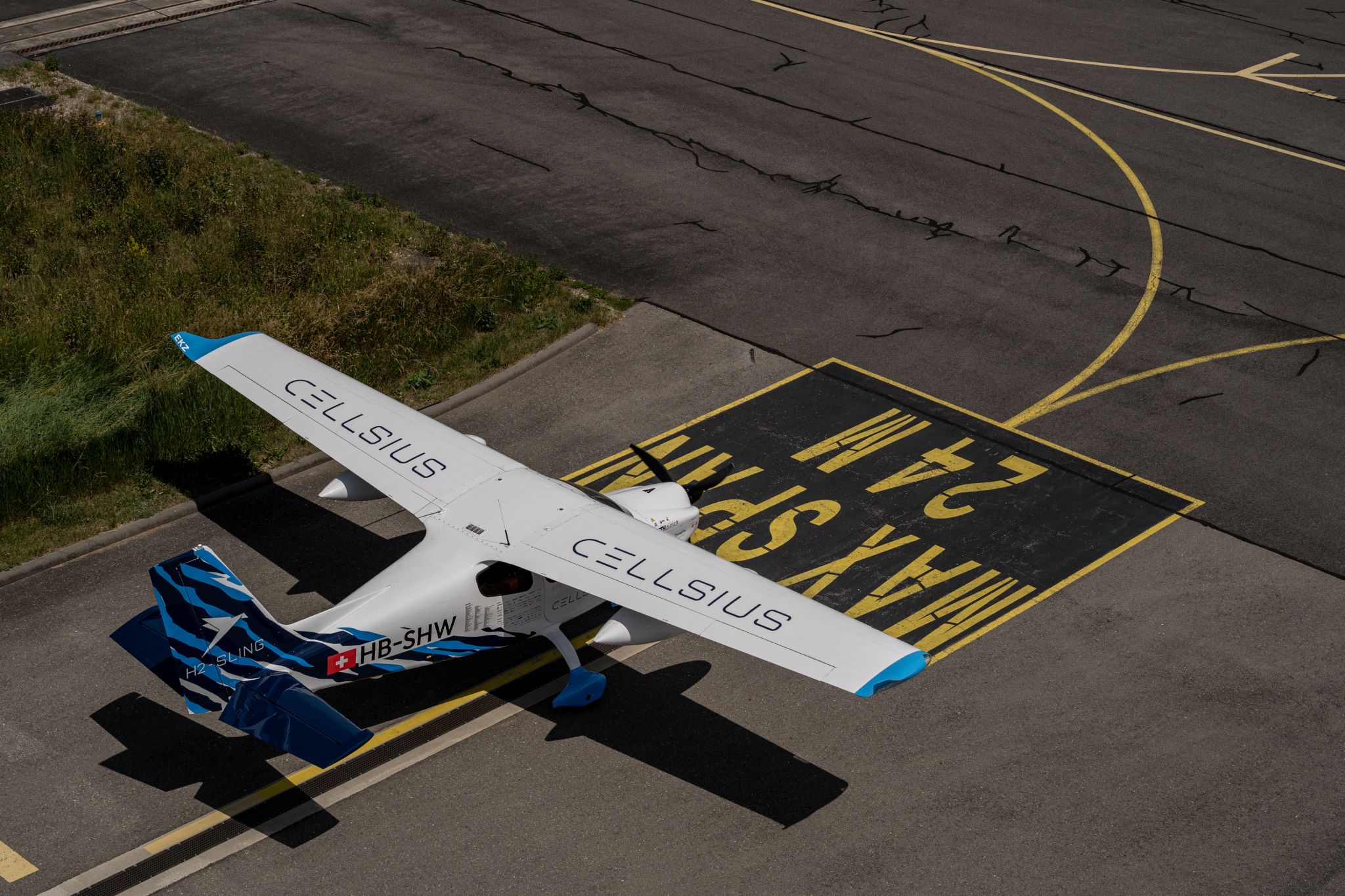
A Swiss student engineering team has moved another step closer to flying its hydrogen fuel-cell aircraft after moving its H2-Sling demonstrator plane to Payerne Airport (VIP) in Switzerland for final preparations ahead of its first flight.
The transfer means the project has now entered the final stage of preparations before the student team can attempt to demonstrate its aircraft in actual flight safely. The H2-Sling is based on a Sling High Wing airframe and uses a hydrogen-electric powertrain instead of an internal-combustion engine for propulsion.
CELLSIUS prepares for the first flight of its H2-Sling aircraft
The aircraft was developed and built by CELLSIUS Aero, a multi-skilled student organisation affiliated with ETH Zurich, a higher education institution based in Zurich, Switzerland. The H2-Sling is designed to demonstrate that hydrogen-electric propulsion can expand the capabilities of small zero-emission aircraft beyond what the team previously achieved using batteries alone.
As reported by Fuel Cell Works, the team’s H2-Sling was first unveiled in late 2025 as a fully integrated hydrogen-electric aircraft capable of carrying two people across a range of 125 miles (200km).
During 2026, members of the CELLSIUS team at ETH Zurich have been conducting ground tests with the aircraft, while other members have been working through the legal, organisational and regulatory requirements needed for a maiden flight to proceed.
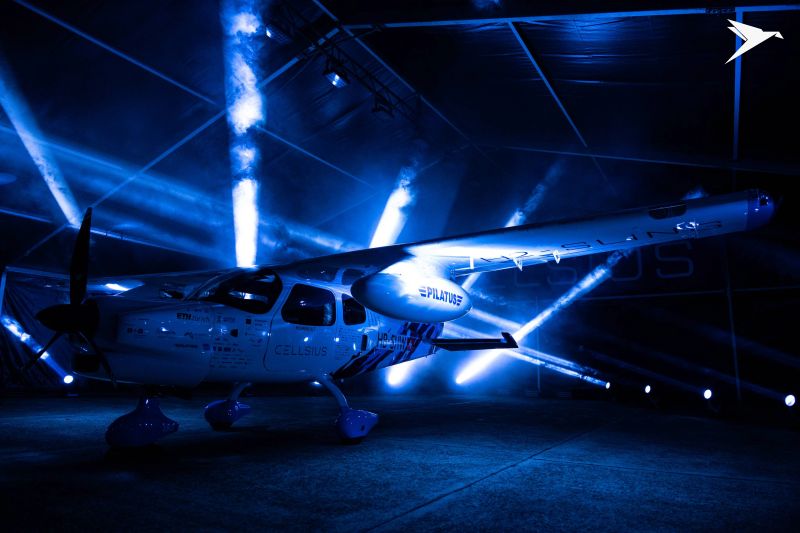
Earlier in August, the team announced on social media that the aircraft had been transferred from its construction site at Dübendorf to Payerne Airport near Lausanne, where final preparations for the H2-Sling’s maiden flight would be completed.
Although ETH Zurich has not confirmed the timing, local media reports suggest that the first flight could happen by the end of August. With the aircraft now based at an active airfield, observers suggest that this could be a realistic timescale.
The H2-Sling uses fuel cells rather than batteries for propulsion
The H2-Sling has been developed around a Sling high-wing airframe. Its fuel-cell system is rated at 100kW, although CELLSIUS gives maximum propulsion power as 105kW following testing.
Alongside the fuel cells, the aircraft also carries a small 5.6kWh battery, which provides a buffer for changing power requirements instead of acting as the primary energy source.
According to CELLSIUS, hydrogen capacity is 5.2kg, divided between two high-pressure tanks beneath the wings.
The storage pressure is 700 bar. CELLSIUS is targeting a 125-mile (200 km) range, around two hours of flight time and a cruise speed of 100 miles per hour (162km/h). The H2-Sling’s maximum take-off weight is listed at 1,050kg.
The technological architecture of the H2-Sling mirrors that being considered for larger hydrogen-electric aircraft now under development. The fuel cells provide sustained energy production, while the battery manages short-duration changes in power demand, including the greater power requirements during take-off.
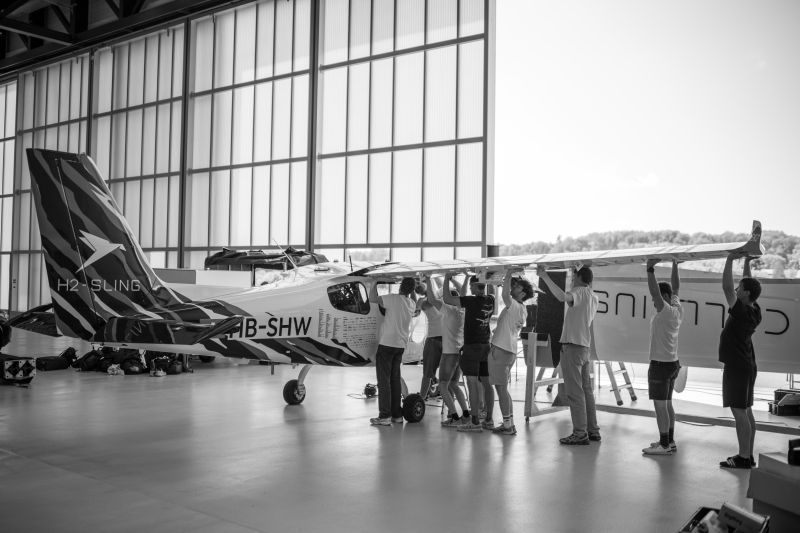
The H2-Sling is also providing engineers and regulators with experience using systems that are uncommon in conventional light aviation. These include high-pressure hydrogen storage, leak detection, fuel-cell thermal management, hydrogen shut-off systems and cockpit monitoring of a hybrid fuel-cell/battery drivetrain.
This new propulsion arrangement represents a shift from the team’s earlier efforts to achieve sustainable flight with its fully electric e-Sling aircraft.
That aircraft first flew in 2022 using a fully battery-electric powertrain, which could allow the aircraft to fly 112 miles (180km). The H2-Sling programme became the team’s next challenge, after it said hydrogen offered a way to carry more usable energy without simply adding larger, heavier battery packs.
The H2-Sling recirculates hydrogen to increase range and duration
One technological development of the H2-Sling created by the CELLSIUS team ensures that the aircraft does not waste its limited hydrogen supply. The fuel cell has been designed to receive deliberately more hydrogen than it consumes during each pass, helping maintain stable operating conditions.
Rather than venting unused hydrogen from the anode outlet, the H2-Sling recirculates it through the system.
According to Fuel Cell Works, a TÜV-certified Busch Mink MH blower performs this task, sending unreacted hydrogen back to the fuel-cell inlet, where it mixes with fresh gas from the tanks.
The system is intended to reduce hydrogen consumption and therefore avoid carrying additional storage capacity and weight.
While reducing hydrogen waste, CELLSIUS explained that thermal management created another challenge for the team.
Its fuel cell operates at roughly 50% efficiency, meaning a system producing around 100kW of electricity can also generate roughly 100kW of heat, which must be removed while keeping weight and aerodynamic penalties under control.
The next step for the H2-Sling will be the first flight
According to ETH Zurich, the H2-Sling is the world’s first fully functional student-built hydrogen aircraft. The project won the Swiss Association of Aeronautical Sciences’ Jakob Ackeret Prize for 2025. However, the ultimate test of any aircraft development programme remains its first flight.
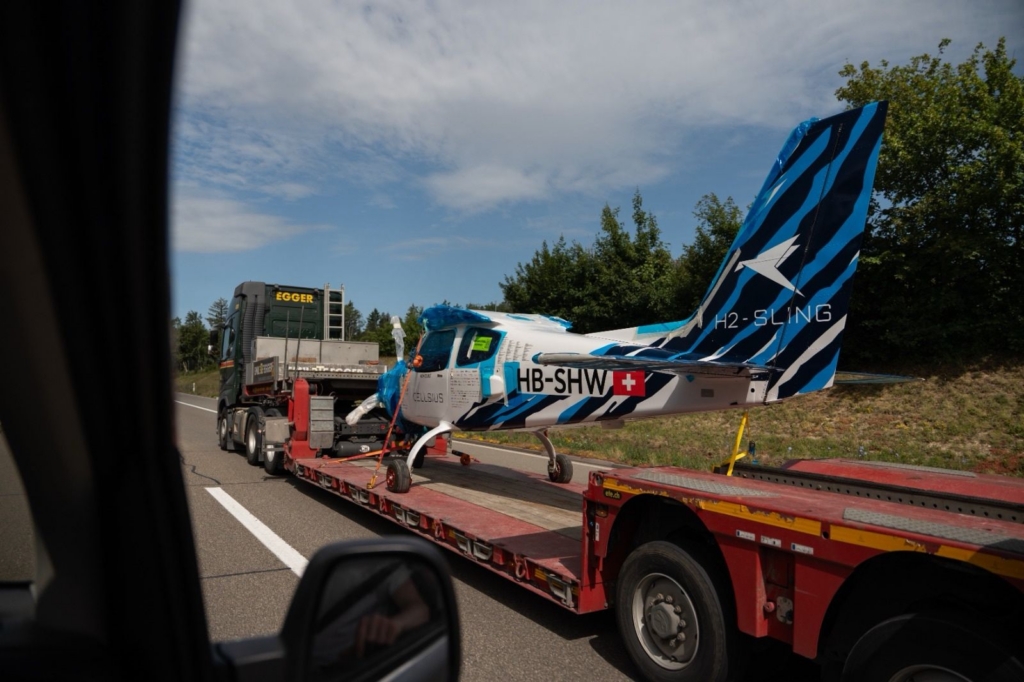
The move to Payerne represents the transition towards that milestone. The aircraft was transported by road with its wings removed rather than flown there because development aircraft of this type still require extensive ground testing, preparation, and regulatory approval before flight.
If the aircraft completes a successful first flight, CELLSIUS has said it has a more ambitious demonstration planned. The organisation intends to fly the H2-Sling across the Swiss Alps, using the flight to demonstrate that gaseous-hydrogen fuel cells can deliver useful performance in a real aviation environment.


