Rescue mission for ageing NASA space observatory fails, leaving Swift facing fiery return to Earth

5 min read
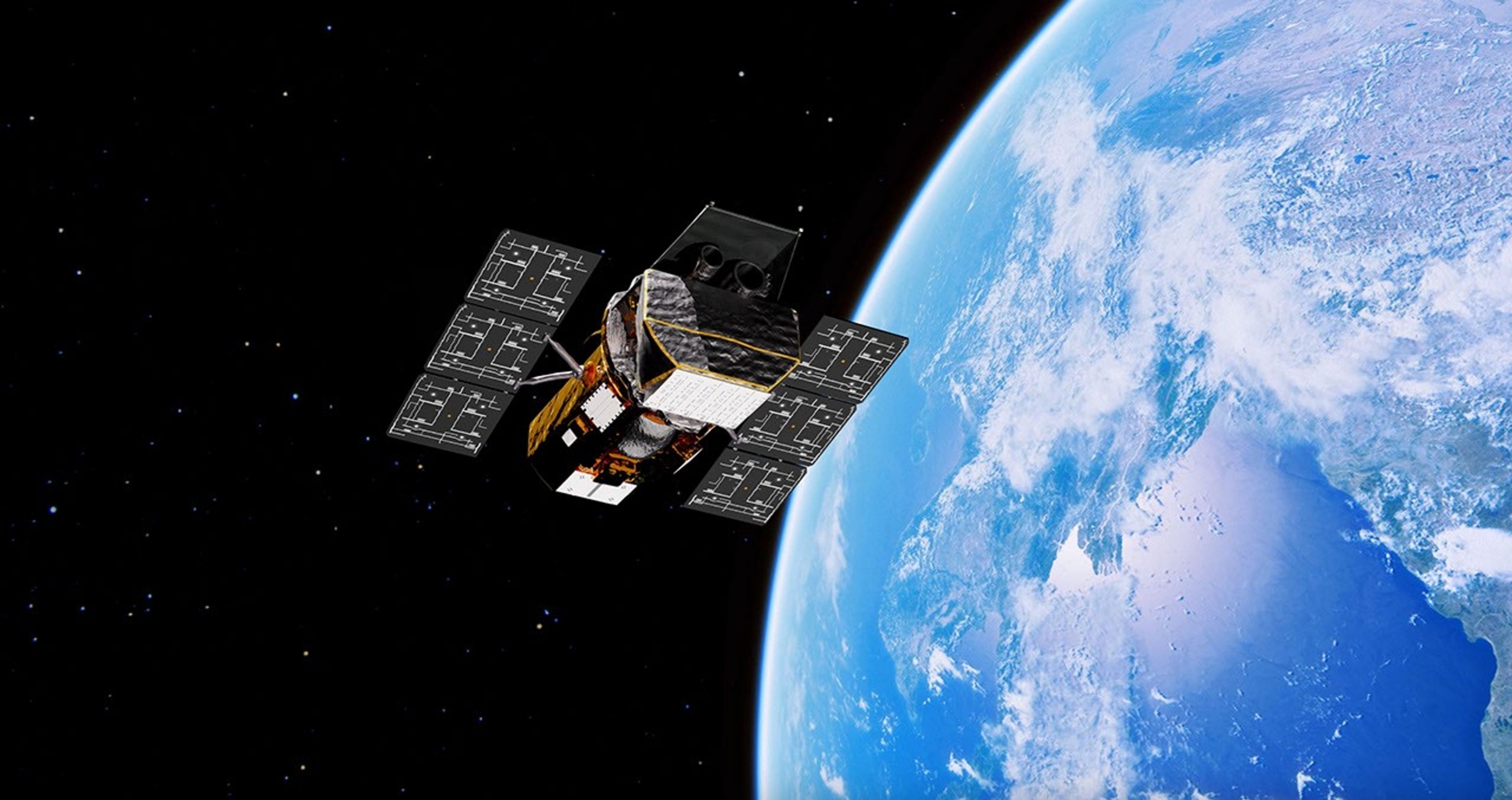
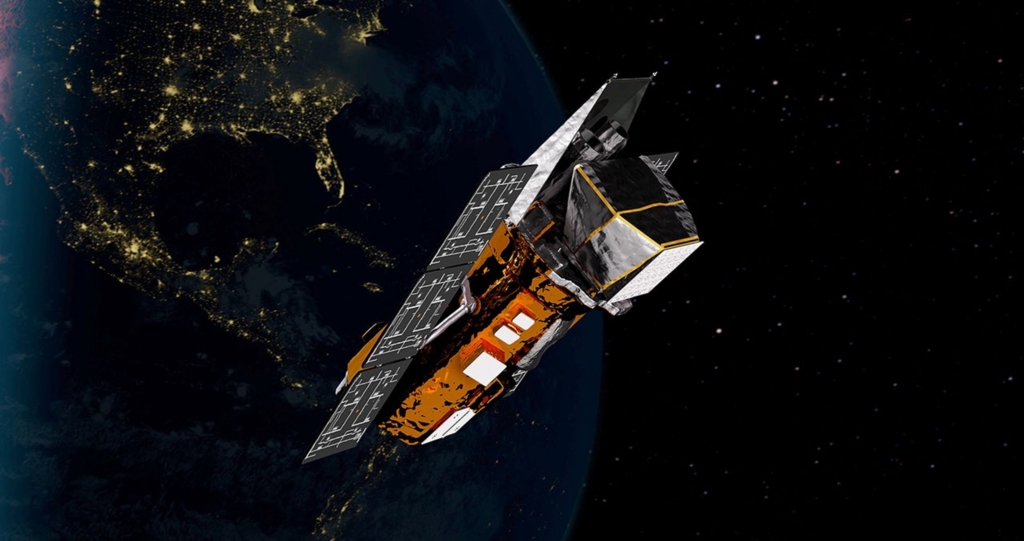
NASA’s attempt to rescue one of its longest-serving space observatories has failed, leaving the 21-year-old Neil Gehrels Swift Observatory likely to fall back to Earth and burn up in the atmosphere later this year.
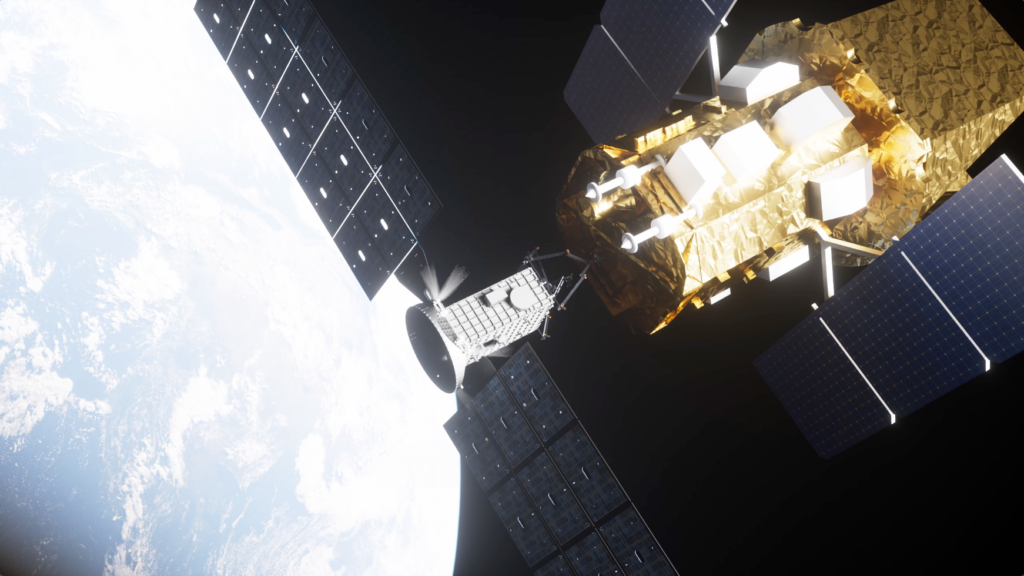
The plan had been unusually bold. A purpose-built commercial spacecraft called Lightweight In-Space Navigation and Kinematics (LINK) was supposed to chase down the Swift Observatory in low Earth orbit, manoeuvre alongside a satellite never designed to be serviced, grab it and lift it hundreds of kilometres higher. That could have bought the observatory several more years of science.
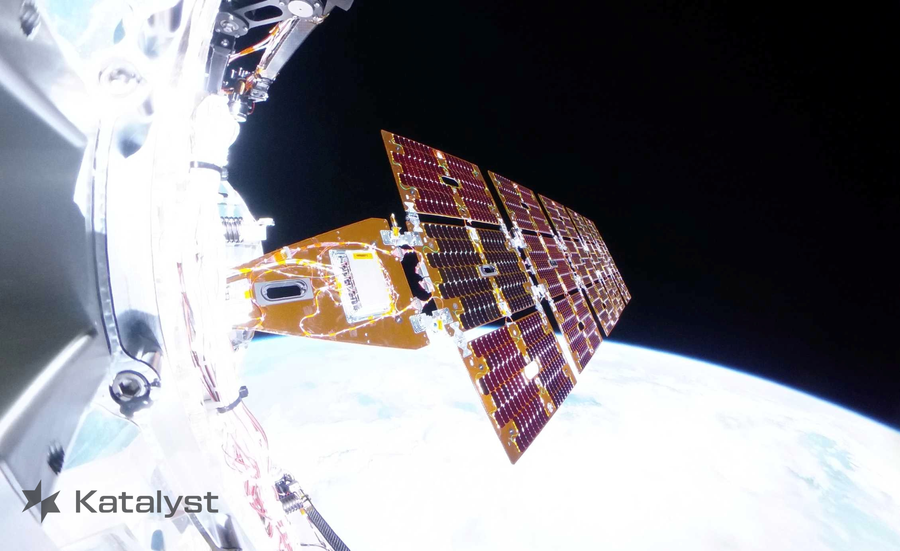
Instead, NASA and Arizona-based Katalyst Space called off the capture and boost on 19 August after weeks of trying to overcome attitude-control problems aboard LINK. The servicing spacecraft had entered a multi-axis spin during commissioning, temporarily lost communications and suffered the loss of two of its three reaction wheels.
The decision leaves Swift itself functioning but running out of something NASA cannot replenish remotely: altitude.
NASA now expects the observatory, which has spent more than two decades chasing some of the most violent explosions in the universe, to re-enter the atmosphere naturally later in 2026. The $500 million spacecraft is expected to burn up during re-entry.
There is an important distinction, however. LINK’s original rescue mission is over, but LINK itself is not.
NASA and Katalyst intend to use the spacecraft for rendezvous and proximity operations with Swift if its condition allows, turning what was meant to be a rescue into an experiment in how future satellites might be inspected and serviced in orbit.
“NASA should be willing to move quickly and take smart risks when the potential return is worth it, and that is exactly what we did with this mission,” NASA Administrator Jared Isaacman said.
“This is not the outcome we were working toward, but it does not change why this mission was worth attempting.”
Swift is still working, its orbit is the problem
Swift was launched in November 2004 with a prime mission planned for just two years. More than two decades later, it remains an unusually useful astrophysics observatory because of the way it combines three instruments and can rapidly turn towards a newly detected event.
Its speciality is gamma-ray bursts, immensely energetic flashes associated with some of the most extreme events in the cosmos. Swift can detect a burst and rapidly reposition itself so that the event can also be studied at X-ray and ultraviolet/optical wavelengths.
The problem threatening the spacecraft is not primarily its scientific hardware. It is orbital drag.
Even hundreds of kilometres above Earth, there is still a trace of atmosphere. Satellites travelling through it lose orbital energy and gradually descend unless they have sufficient propulsion to raise their orbit.
Swift has no propulsion system capable of maintaining its altitude. Increased solar activity has made matters worse by heating and expanding Earth’s upper atmosphere, increasing the drag acting on the spacecraft.
NASA engineers changed the way Swift was operated to reduce that drag and slow its descent. As recently as 11 August, NASA put the observatory at about 216 miles, or 347km, above Earth. The agency said attempting the rescue would become considerably harder once its average altitude fell below about 185 miles, or 300km.
That shrinking window was why NASA moved with extraordinary speed.
A rescue spacecraft built against the clock
NASA awarded Katalyst the Swift servicing contract in September 2025. LINK was designed, built, tested and launched in less than a year, an unusually compressed timetable for a spacecraft expected to perform delicate autonomous operations around another satellite. Katalyst describes LINK as America’s first commercial space robot.
Under a $30 million contract Katalyst produced the spacecraft on a nine-month schedule. The objective was to raise Swift from roughly 216 miles to around 373 miles, or 600km, extending its life by years.
LINK finally launched from Kwajalein Atoll on 3 July aboard a Northrop Grumman Pegasus XL, the air-launched rocket carried aloft beneath an L-1011 Stargazer aircraft.
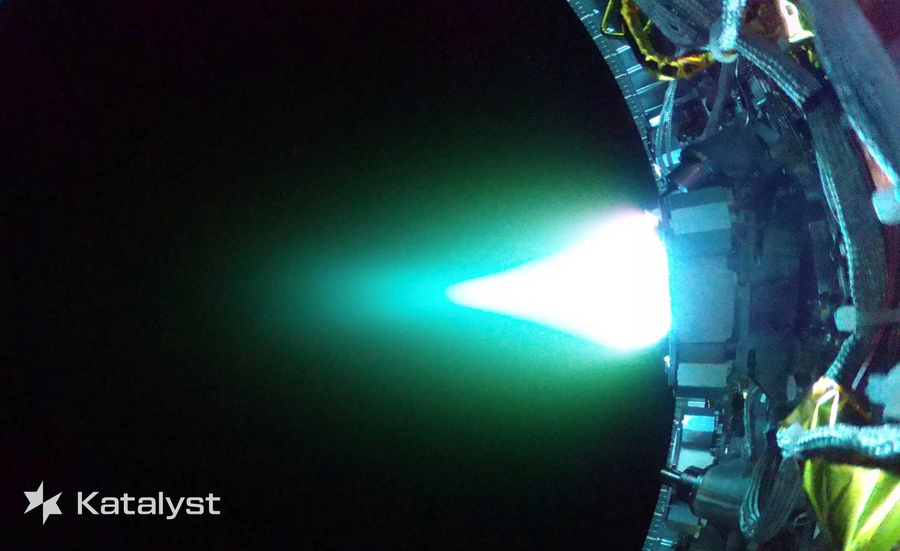
At first, things went largely to plan. LINK deployed its solar arrays, established routine communications and began checking out the Hall-effect thrusters intended to take it towards Swift. Its reaction-control thrusters were supposed to provide the finer movements needed for the eventual capture.
Then the trouble started.
By 28 July, Katalyst disclosed that LINK had entered a multi-axis spin. Two reaction wheels had been disabled because of problems associated with the spacecraft’s upstream electrical power system, while its reaction-control system had only partial functionality. Other major systems, including electric propulsion, robotics and rendezvous sensors, were still working.
Engineers used LINK’s gimballed electric propulsion system to slow the rotation. By 5 August, the spin rate had been cut from about nine degrees per second to 1.47 degrees per second, using less than 100 grams of propellant.
A new flight-software package followed. On August 11, NASA said updated attitude-control algorithms had been uploaded to make use of the actuators that remained available. At that point, the agency still believed LINK could continue towards Swift.
Eight days later, that hope was gone.
What happens to Swift now?
Barring another intervention and with NASA announcing no replacement rescue mission, Swift is heading towards the end of its operational life.
The observatory can continue collecting science while its orbit and spacecraft condition permit. But without the planned boost, atmospheric drag will continue pulling it lower.
The agency has also been preparing for that eventuality. NASA says it will look for new ways of responding rapidly to transient cosmic events and use existing missions to cover as much of the resulting observational gap as possible.
That matters because Swift’s value lies not simply in taking astronomical images, but in reacting quickly when something happens.
The failed rescue therefore closes off the hoped-for extension of Swift’s life, rather than ending its science mission on 19 August. The telescope will keep working for as long as its declining orbit allows.
For LINK, meanwhile, the mission has changed rather than ended. Katalyst wants to bring the spacecraft close enough to Swift to practise rendezvous and proximity operations and gather data that could feed into future servicing missions.
“We took on this high-risk, high-reward challenge and are proud of the milestones we reached along the way,” Katalyst chief executive Ghonhee Lee said.
The company said it now wants to turn what it learnt into a repeatable approach for future rendezvous, proximity operations and satellite servicing.
Lee said, “We have already learned a tremendous amount, and now our job is to turn those lessons into something durable – building a repeatable playbook to inform future rendezvous and proximity operations and satellite servicing.”