


Cosmic One: Why Cosmic Aerospace is starting small to electrify aviation

8 min read
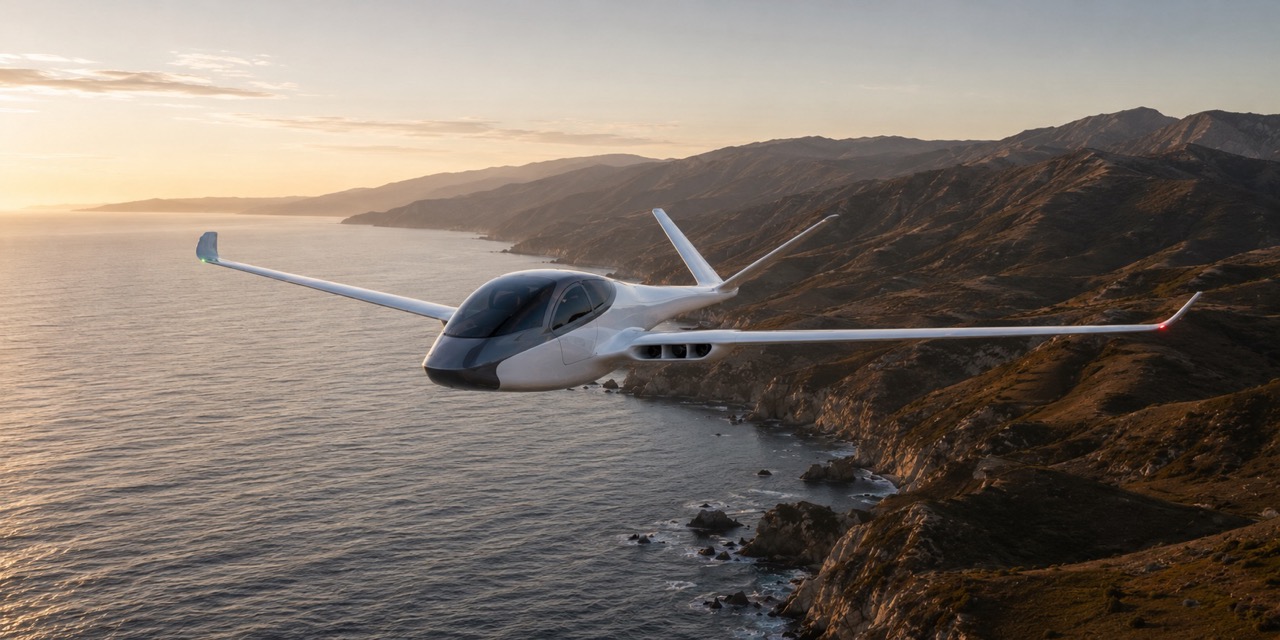
Cosmic Aerospace has set its sights on electrifying commercial aviation with its planned Skylark regional aircraft. But the Denver-based US start-up has decided that the quickest route to that lofty goal starts with something smaller.
In an interview with Aerospace Global News, Cosmic Aerospace’s Head of Strategy Chris Palmer and Co-Founder and CEO Christopher Chahine explain why the company is prioritising development of Cosmic One – a four-seat all-electric aircraft aimed at private owners, flight clubs and training operators.
Cosmic plans to fly its prototype in 2028 and begin deliveries in 2029. The first 100 aircraft will form a Founder Series, and production will continue beyond those initial examples.
And they reveal that the aircraft is more than an entry into the general aviation market. It is intended to put Cosmic’s electric propulsion technology into service while building the manufacturing and certification experience needed as a foundation to build the commercial Skylark electric regional aircraft.
The opportunity, they said, has been created by the FAA’s new Modernisation of Special Airworthiness Certification (MOSAIC) regulatory framework.
Why Cosmic Aerospace is prioritising Cosmic One
Palmer said the arrival of the FAA’s MOSAIC framework prompted Cosmic to reconsider the fastest way to advance its electric aviation technology.
MOSAIC expands certification parameters in the Light Sport Aircraft category. It eliminates the previous weight limit, increases the maximum speed to 250 knots and allows four-seat aircraft. It also permits alternative propulsion systems, which is crucial for Cosmic.
“We knew this was coming about a year ago and then ultimately we said, ‘Hey, like what’s the best thing that we could do to get our mission accomplished here with basically decarbonising aviation and to get to Skylark?’” Palmer said.
The answer, in his words, was to “get our tech stack up in the air flying.”
Chahine described MOSAIC as particularly important for new manufacturers attempting to introduce unconventional propulsion systems.
“MOSAIC is the missing puzzle piece that we needed to bring new and innovative technology to the aviation market and then scale it up,” Chahine said.
Cosmic One will help pave the way for Skylark
Cosmic believes successfully developing and certifying Cosmic One will make the step up to a larger commercial aircraft easier.
Chahine pointed to precedents in aerospace where manufacturers started with smaller aircraft before moving into more demanding certification categories. This approach would allow the company to build production processes, supplier relationships and regulatory experience before tackling a larger programme.

“We think this is still the best way for new aircraft companies to actually build credibility and certification — build the certification muscle, really — to advance towards larger aircraft eventually,” he said.
In that sense, Cosmic One is both a commercial product and a technology platform for the company’s longer-term ambitions.
Who will buy an electric four-seat aircraft?
Cosmic says the early response to the Cosmic One suggests there is a significant market to pursue.
The company had already received deposits from private owner-operators at the time of the interview, around three weeks after the aircraft’s launch. Flying club Centennial Flyers is its launch fleet customer, and Cosmic says other fleet operators are also interested.
Palmer believes there is an emerging generation of pilots for whom the technology inside many existing general aviation aircraft feels out of place.
“We’ve spoken to so many pilots over the last, let’s say, seven, eight months,” he said.
He described prospective customers whose cars, tools and other equipment are already electric, only to arrive at an aircraft powered by decades-old engine technology.
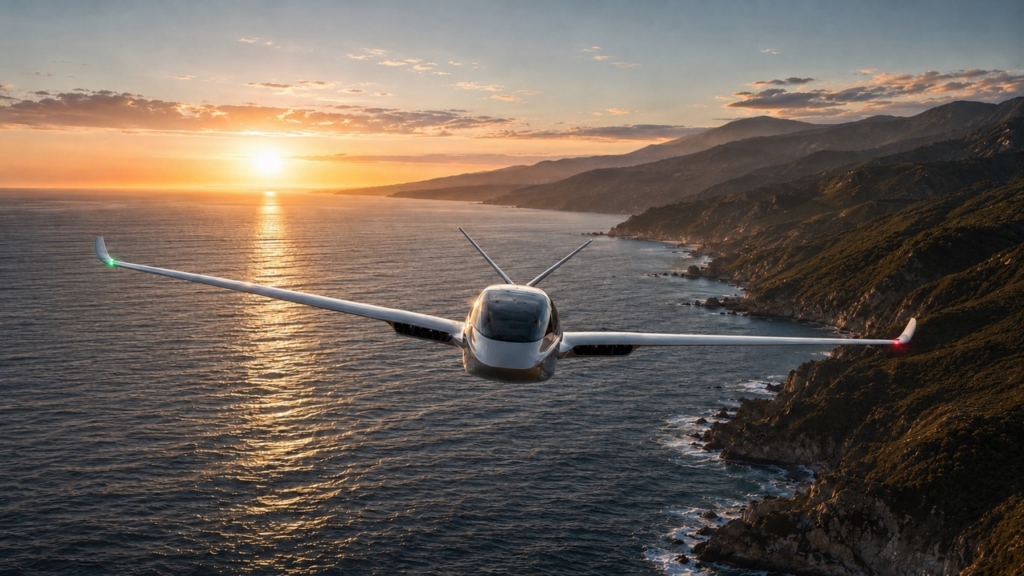
“Their entire life is like modern technology, but [they say] ‘When I get to my plane, it’s just 1960s technology’,” Palmer said. “We believe that there is definitely this cohort of pilots that are up and coming [who] say, ‘Hey, I want the latest technology in my aircraft.’”
Chahine argues electrification can also make aircraft ownership simpler.
“You know, no oil changes, significantly lower maintenance overhead, lower energy cost… and just an aircraft that’s designed around the joy of flying, making the pilot workload also significantly lower,” he said.
The company’s launch customer agrees.
“Every day, we see firsthand what legacy aircraft cost in fuel, maintenance, and downtime. It’s even worse for multi-engine aircraft, where even new ones on the production line are running with 75-year-old engine technology. That’s why we’re proud to be the launch customer for the Cosmic One, an all-electric multi-engine aircraft designed for lower operating costs, built-in redundancy, and exceptional performance in the high-density altitudes we deal with here in Colorado,” said Scott Smith, President at Centennial Flyers in the company’s announcement.
Cosmic is betting on conventional takeoff, not eVTOL
Cosmic One is taking a more direct approach than other startups to advanced air mobility.
Rather than trying to create an entirely new market around electric vertical takeoff and landing (eVTOL) aircraft, Cosmic is building an electric aircraft that can use existing aviation infrastructure.
Chahine said Cosmic is developing “a new technology platform for high-performance electric flight”, but believes conventional takeoff and landing provides a faster route into service.
“We are convinced that it’s mostly conventional takeoff and landing where the biggest market is and where it’s a much faster operational and certification pathway,” he said.
Cosmic One is expected to operate from the large majority of regional airports and runways. The company is not targeting ultra-short takeoff and landing performance, but Chahine said it should have “a reasonably short takeoff and landing distance”.
The Colorado-based firm notes that electric propulsion is an advantage at high-altitude airports. Electric motors are less affected by density altitude than naturally aspirated piston engines, potentially improving performance from airports in mountainous or hot environments.
Charging Cosmic One in as little as 30 minutes
Electric aviation also requires airports to provide charging infrastructure.
Cosmic expects the aircraft to be capable of charging overnight using a conventional Level 2 automotive charger. With a Level 3 DC fast charger, Chahine said a recharge could take around 30 minutes.
The company is already working with 18 partner airports across the US and Europe on electrification, including discussions involving fixed-base operators (FBOs).
Taking advantage of existing infrastructure is ultimately less challenging than building an entirely new operating network, and electricity is already widely available.
“Wherever you have an outlet, theoretically you could charge this aircraft,” Chahine said, although he acknowledged that fast charging requires considerably higher electrical power.
Fly-by-wire controls and a ballistic parachute
Cosmic also intends to use electric propulsion and full fly-by-wire controls to reduce pilot workload.
“The short answer is yes,” Chahine said when asked whether Cosmic One would be easier for enthusiast pilots to fly. “We will utilise the benefits of the electric propulsion system to make the flight controls and the overall, again, pilot workload much, much easier.”
The company is examining how fly-by-wire and the electric powertrain could also support flight training, including simulating certain system failures.
The company has also considered passive safety. Chahine said Cosmic One will have a strong glide ratio, allowing it to glide efficiently following a complete loss of propulsion.
Cosmic One will also follow the whole-aircraft parachute approach popularised in modern general aviation by Cirrus.
“In the worst-case scenario, it also has a ballistic parachute,” he said.
Cosmic One targets first deliveries in 2029
Cosmic’s schedule is ambitious by conventional standards for aircraft development. The company aims to fly the first Cosmic One prototype in 2028, followed by initial deliveries in 2029.
“It might seem like a really short window, but under the MOSAIC rules we think this is a realistic time window to get this aircraft into initial production and then obviously also certified,” Chahine said. “It’s certainly ambitious, but we think it is a possible time frame.”
Cosmic is already in talks with key systems suppliers. It is developing some composite manufacturing capabilities internally while also working with outside manufacturers on aerostructures.
US is a launch market, but Cosmic sees global demand
The immediate market for Cosmic One will be the US because MOSAIC is an FAA framework. However, Cosmic says it is already seeing demand in Europe and has a launch partner for a European fleet. Bremen-based aviation company EVIA AERO will help introduce Cosmic One into European flight training and clubs.
“Cosmic One aligns with our mission to accelerate Europe’s transition to zero-emissions aviation,” said Florian Kruse, founder and CEO of EVIA AERO, in the company’s announcement. “Its projected efficiency, redundancy, and lower operating costs make it a compelling aircraft for flight schools, clubs, and operators preparing for the next generation of sustainable aviation.”
However, EASA would need to adopt a certification framework similar to the FAA’s MOSAIC, and a clear certification route outside the US still needs to emerge for other markets.
Palmer also sees potential in the Middle East, particularly in markets where jet fuel is readily available but Avgas infrastructure is comparatively limited.
For Cosmic, however, the significance of Cosmic One extends beyond the four-seat aircraft market. It provides an opportunity to prove electric propulsion, establish suppliers, develop production capabilities and navigate certification with a real product before attempting the considerably harder task of bringing an electric regional airliner to market.
And Palmer believes pilots are ready for something new.
“The reception even in the first three weeks since launch has been extremely positive,” he said. “I think the world really wants some new technology into this space.”


