Where is Voyager 2 now? NASA extends mission as spacecraft nears 49 years in space

5 min read
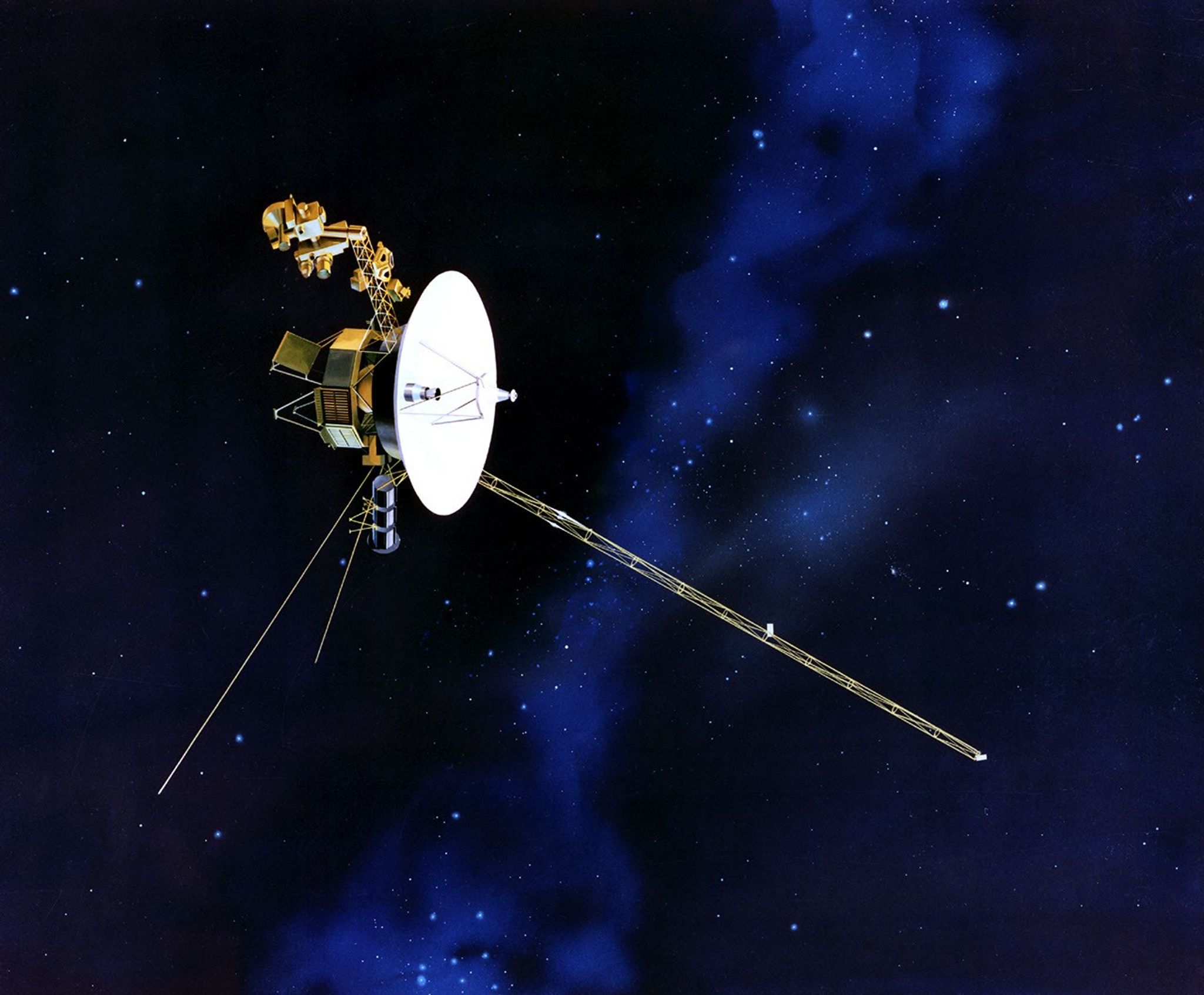
NASA has found a new way to keep Voyager 2 operating as the spacecraft approaches a milestone few missions ever achieve.
On 20 August, Voyager will mark 49 years in space. Now more than 13.2 billion miles from Earth and travelling through interstellar space, the iconic probe is still returning scientific data nearly half a century after launch.
Engineers at NASA’s Jet Propulsion Laboratory (JPL) have now freed enough electrical power aboard the ageing probe to keep its three remaining science instruments operating for at least an additional year.
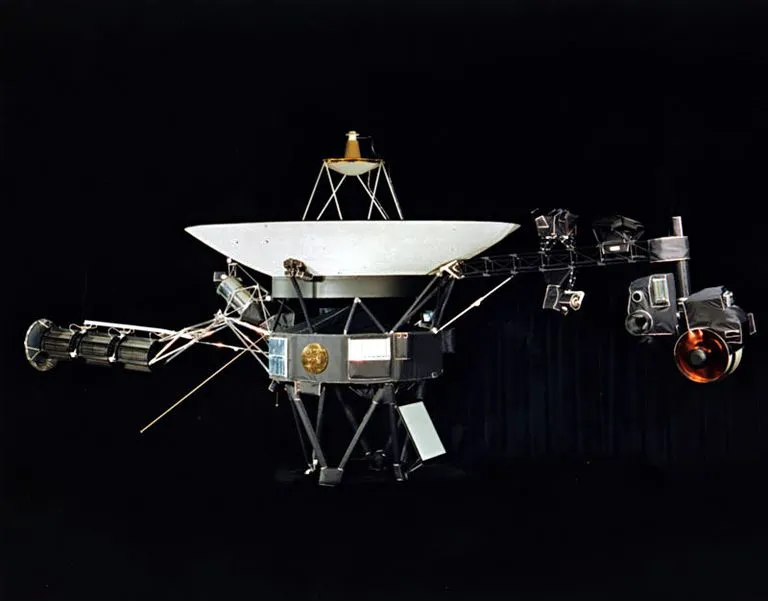
The intervention, nicknamed the “Big Bang”, involved switching off selected powered devices and replacing their functions with alternatives that consume less electricity. Without the change, NASA would have had to shut down another Voyager 2 science instrument before the end of 2026.
It is the latest exercise in careful engineering to keep alive a machine that was never expected to be working this far into the 21st century.
Where is Voyager 2 now, 49 years after launch?
Voyager 2 is now more than 13.2 billion miles, around 21.4 billion kilometres, from Earth, or roughly 143 astronomical units away. An astronomical unit is the average distance between Earth and the Sun.
At that distance, a signal travelling at the speed of light takes nearly 20 hours just to reach the spacecraft. A command sent by controllers therefore cannot produce a response on Earth for almost 40 hours.
Voyager 2 is travelling at around 34,000 mph relative to the Sun and continues to head away from the solar system. NASA classifies it as being in interstellar space, beyond the heliopause, the boundary of the Sun’s protective bubble of particles and magnetic fields.
Voyager 2 crossed that boundary on 5 November 2018, at about 119.7 AU from the Sun. It became only the second spacecraft to enter interstellar space, following Voyager 1.
That does not mean it has escaped the Sun’s gravitational influence or left the solar system in every sense of the term. Rather, it has travelled beyond the heliosphere and is now directly sampling the environment between the stars.
That is precisely why keeping its instruments alive remains scientifically valuable.
How NASA is keeping Voyager 2 alive in interstellar space
Voyager 2 does not have solar panels. At its distance from the Sun, they would be of little practical use.
Instead, the spacecraft is powered by radioisotope thermoelectric generators, or RTGs, which turn heat produced by the decay of plutonium into electricity. Three RTGs mounted on a boom have supplied the spacecraft since launch.
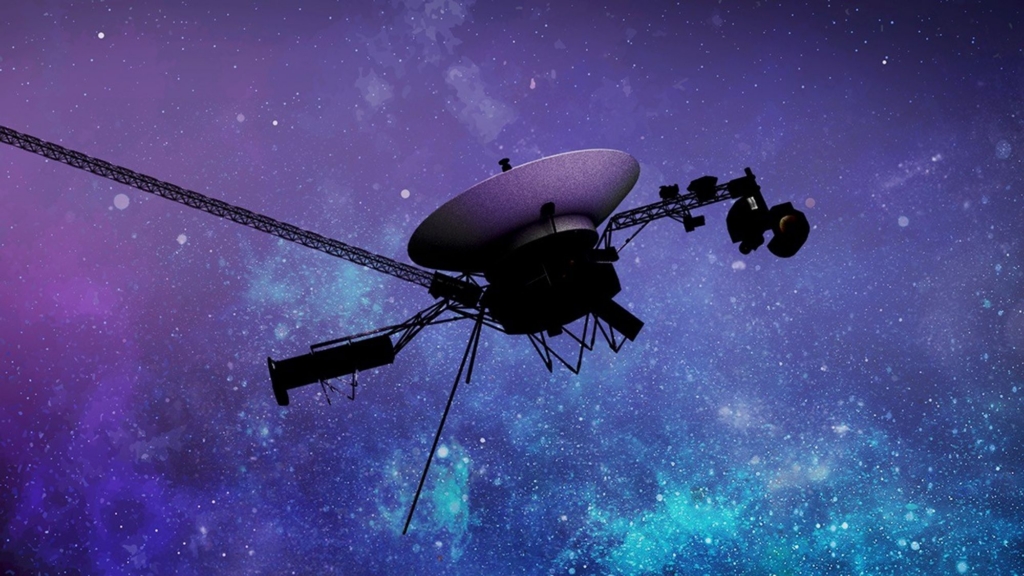
But that source is steadily weakening.
Voyager loses about four watts of available electrical power each year. That sounds insignificant until almost every remaining watt is needed simply to keep an extraordinarily old spacecraft warm, communicating and conducting science.
Over the years, engineers have progressively shut down heaters, instruments and other equipment that was no longer essential. Since 2024, dwindling power has forced the Voyager programme to turn off two more science instruments on each spacecraft. Three continue operating on Voyager 2.
The Big Bang effort buys time rather than solving the underlying problem. The plutonium will continue to decay and available electrical power will continue to fall.
But on Voyager, another year matters. NASA intends to carry out a similar power-saving change aboard Voyager 1 in the coming months.
From Jupiter to Neptune: Voyager 2’s 49-year journey
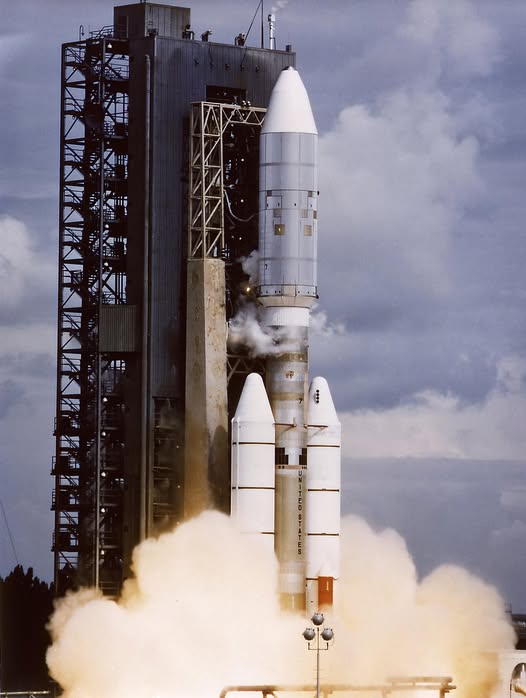
Voyager 2 lifted off from Cape Canaveral aboard a Titan IIIE-Centaur on 20 August 1977.
Its original assignment centred on Jupiter and Saturn. But mission planners had spotted an extraordinary opportunity: a rare alignment of the outer planets, occurring roughly once every 175 years, could allow a spacecraft to use successive gravity assists to continue towards Uranus and Neptune.
Voyager 2 flew past Jupiter in July 1979 and Saturn in August 1981. NASA then sent it onwards.
It reached Uranus in January 1986, becoming the first spacecraft to visit the planet. The encounter transformed scientists’ understanding of the distant world, its atmosphere, rings and moons. Voyager returned more than 7,000 images from the Uranus encounter alone.
Then came Neptune.
On 25 August 1989, Voyager 2 passed about 4,800km above Neptune’s cloud tops, becoming the first and so far only spacecraft to visit the planet.
The encounter revealed a far more active world than scientists had expected, including powerful winds and the enormous storm system known as the Great Dark Spot. Voyager also explored Neptune’s moon Triton and discovered previously unknown moons and rings.
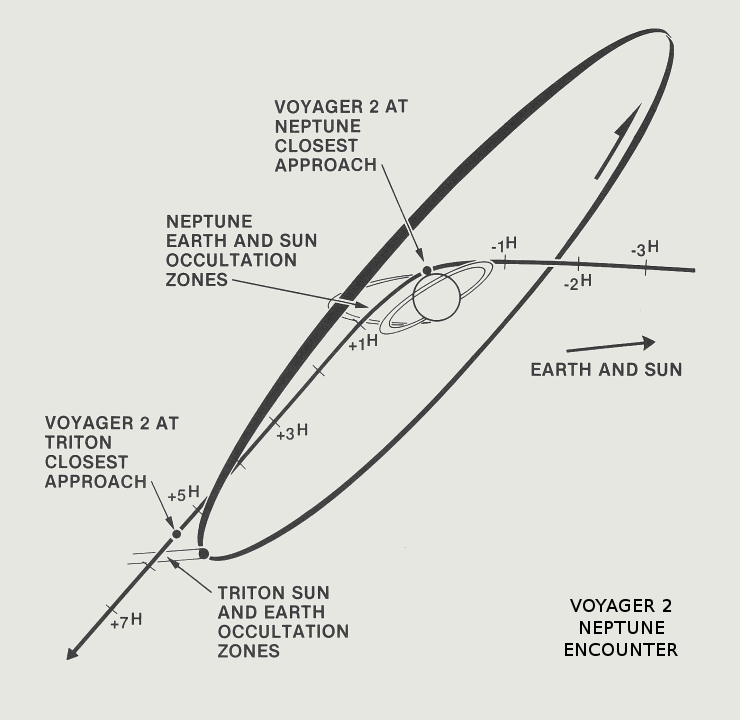
Its planetary mission was over. NASA renamed the programme the Voyager Interstellar Mission and allowed the spacecraft to keep going.
It has never stopped.
What science is Voyager 2 still doing today?
Voyager 2 originally carried a broad suite of instruments for studying planets, moons, magnetic fields, plasma and energetic particles. Many became unnecessary once the planetary encounters ended; others have since been switched off to conserve power.
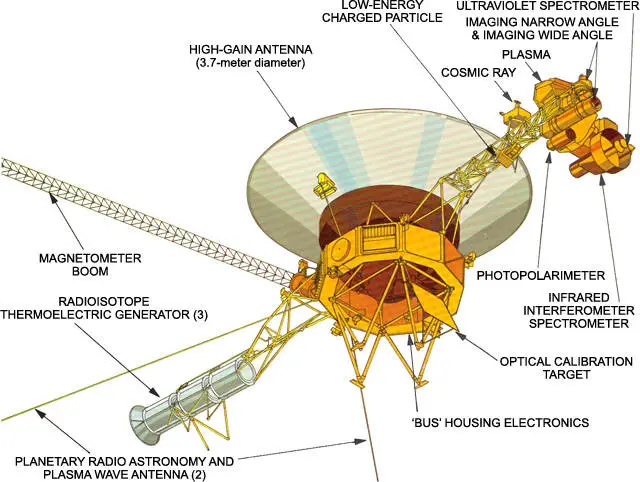
The remaining instruments have a different job. Instead of looking at planets, they are measuring conditions in a region no operating spacecraft except the two Voyagers has reached.
That makes the gradual loss of power a peculiar race against time. Engineers are no longer trying to make Voyager 2 perform as it did in 1977. They are deciding, watt by watt, what can be sacrificed so that the science that still matters can continue.
NASA has been doing this for years. Non-essential instruments were already being permanently shut down in the late 1990s, and engineers have repeatedly found new ways to extend the spacecraft’s useful life.
The latest intervention gives Voyager 2 another reprieve.
On 20 August, the spacecraft will complete its 49th year in space. There will be no landing and no journey home. Voyager 2 is travelling outward for good.
For the engineers at JPL, the objective is considerably simpler: keep three instruments alive, keep the antenna pointed towards Earth and keep listening for as long as the old spacecraft still has something to say.