Airbus says changing airline networks will reshape aircraft demand to 2045

4 min read

Airbus says the way airlines fly is changing, and that shift will have a major impact on the aircraft they choose over the next 20 years.
In its 2026 Global Market Forecast, the manufacturer argues that future demand will not simply be driven by more passengers flying between the world’s biggest airports. Instead, Airbus sees airline networks spreading further, with more direct routes, more secondary city connections and more demand for efficient aircraft that can make thinner routes commercially viable.
The aircraft market is no longer just about replacing older jets or adding capacity on busy trunk routes. Airlines are increasingly looking for aircraft that can open new city pairs, fly longer sectors efficiently, and match capacity more precisely to demand.
How airline networks are changing aircraft demand
In a major shift from the hub and spoke mentality of decades past, modern air travel growth is becoming more decentralised.
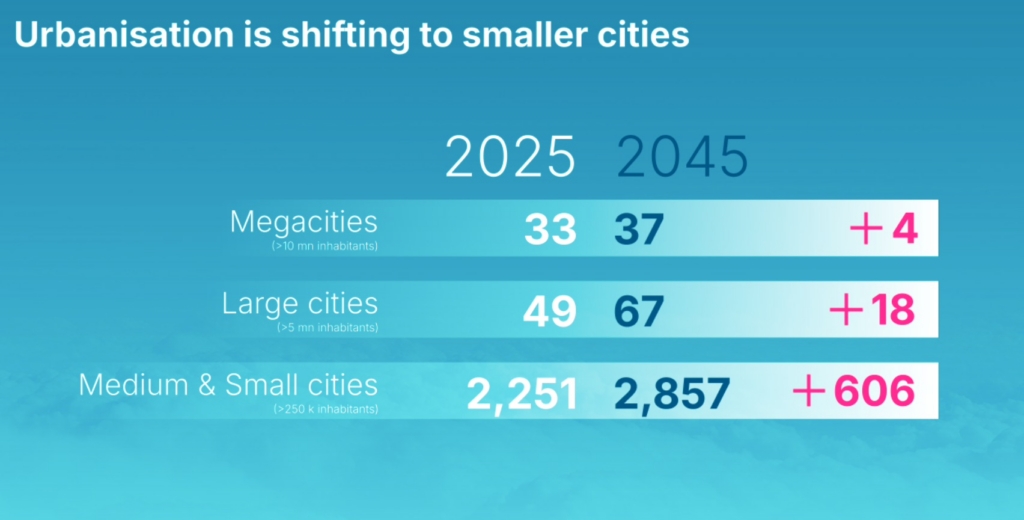
Airbus says urbanisation is shifting toward smaller cities, with medium and small cities expected to grow from 2,251 in 2025 to 2,857 by 2045. By comparison, the number of megacities is forecast to rise from 33 to 37.
That shift is already changing airline networks. Airbus says the number of city pairs has grown from 17,000 in 2005 to 28,000 in 2025, with 55% of today’s city pairs involving routes that did not exist 20 years ago. It adds that 78% of those routes involve small cities.
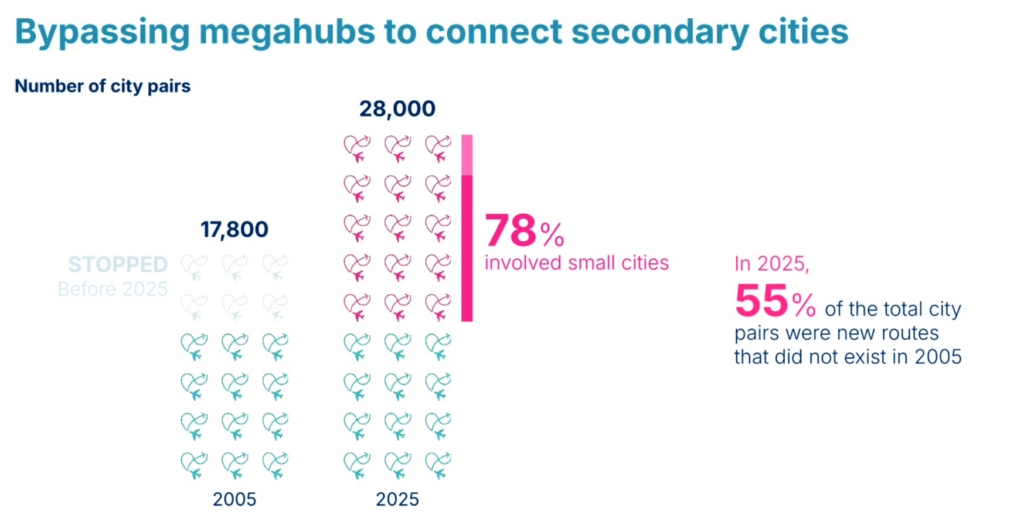
This means more airlines are looking beyond traditional hub-to-hub flying. Smaller city pairs can now work because newer aircraft offer better fuel efficiency, more range and more flexible cabin sizes.
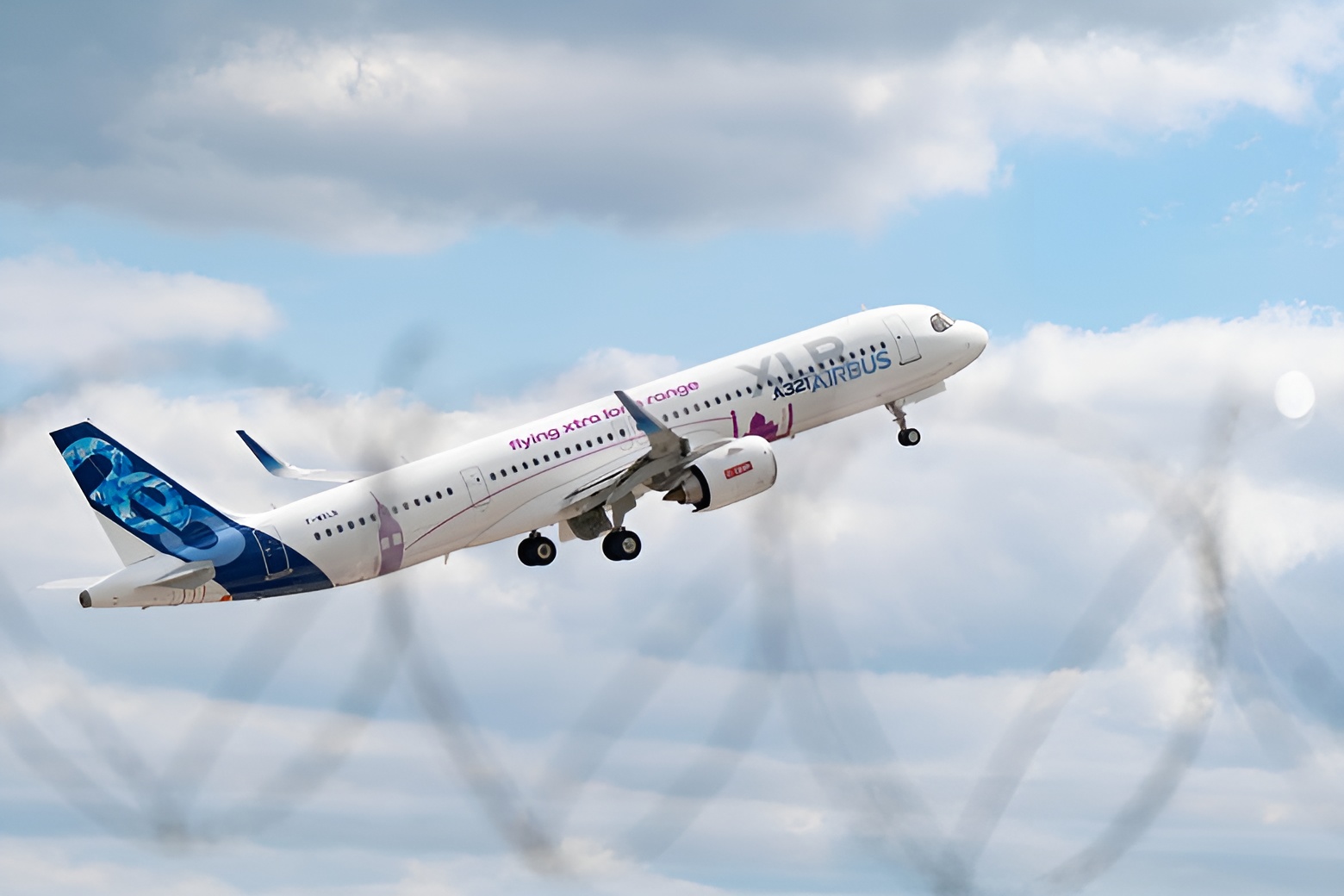
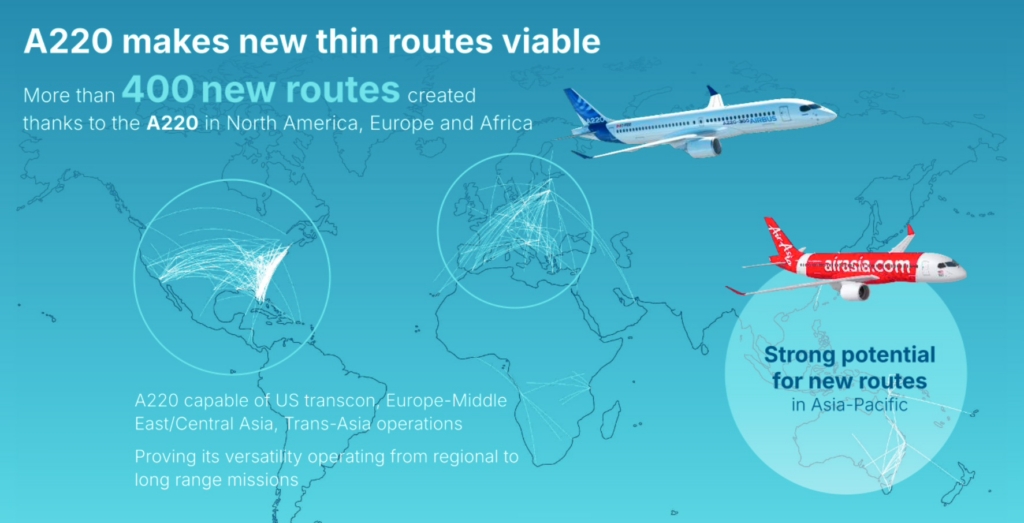
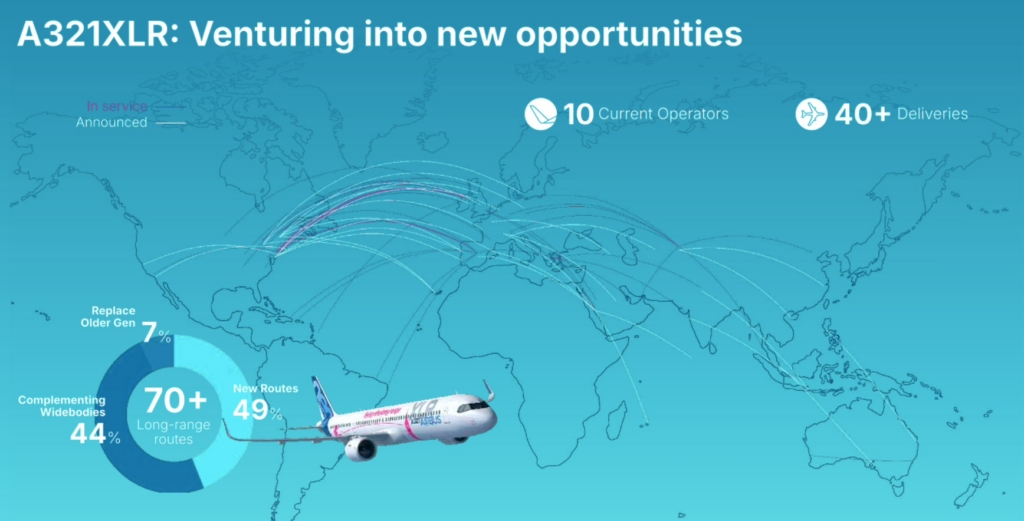
Airbus points to the A220 and A321XLR as examples of this trend. The company says the A220 has already helped create more than 400 new routes in North America, Europe and Africa, while more than 2,200 unserved routes could be suited to the aircraft.
It makes a similar case for the A321XLR, which it says has more than 2,200 potential routes.
Airbus forecasts demand for 42,060 aircraft by 2045
Despite recent geopolitical and economic disruptions, Airbus remains confident that long-term passenger demand will continue to grow.
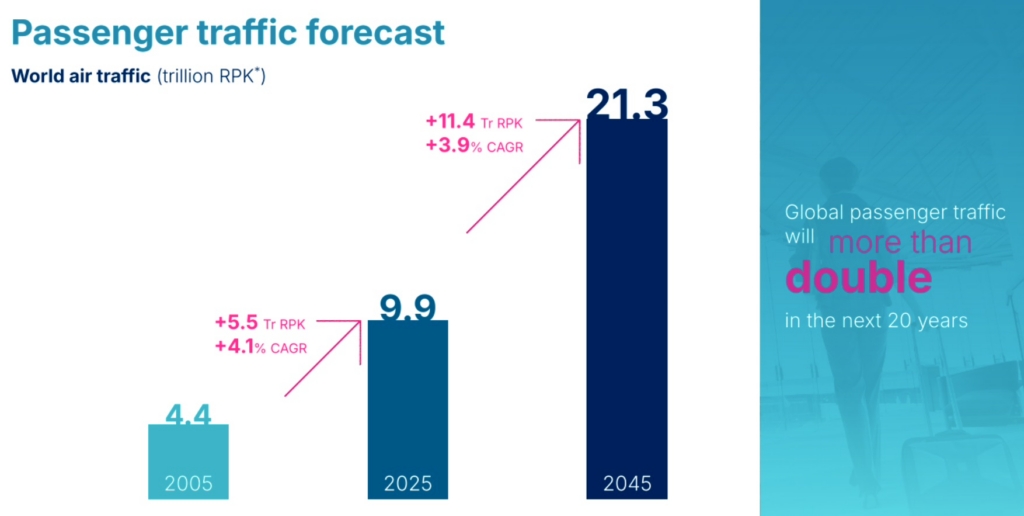
The company forecasts passenger traffic will rise by 3.9% annually between 2025 and 2045, more than doubling from 9.9 trillion revenue passenger kilometres to 21.3 trillion.
To support that growth, Airbus expects the global passenger fleet to rise from 23,310 aircraft in 2025 to 45,550 by 2045.
That creates demand for 42,060 new passenger aircraft over the next two decades. Of those, 22,240 will be needed for growth, while 19,820 will replace older aircraft.
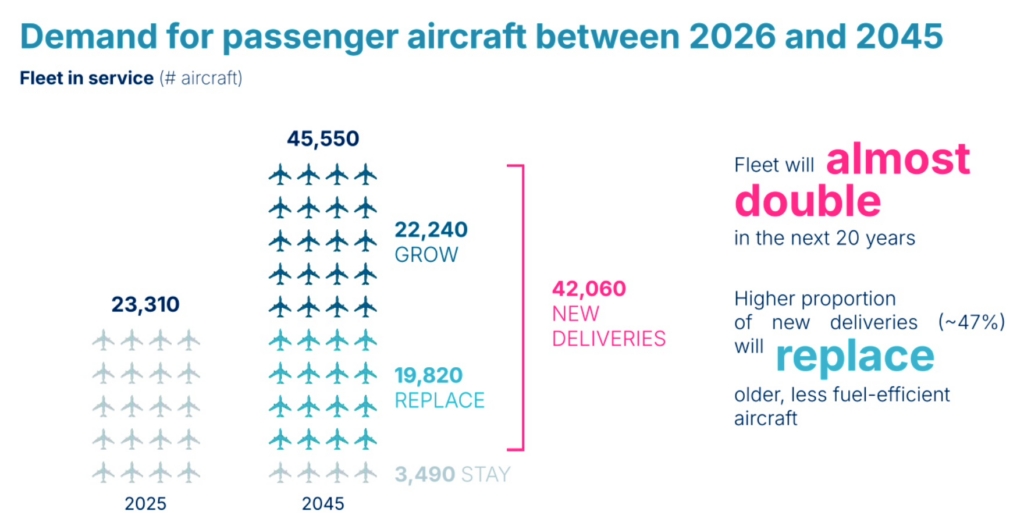
That replacement figure is important. Nearly half of future deliveries are not about adding more aircraft to the global fleet, but about replacing older, less efficient jets with newer-generation models. Airbus says this will help improve both operating economics and environmental performance.
Single-aisle aircraft dominate Airbus’s 2045 forecast
Single-aisle aircraft will account for the vast majority of future deliveries.
Airbus forecasts demand for 33,920 single-aisle aircraft by 2045, equal to around 81% of total passenger aircraft demand. That reflects the continued strength of short- and medium-haul flying, but also the growing role of larger narrowbodies on longer routes.
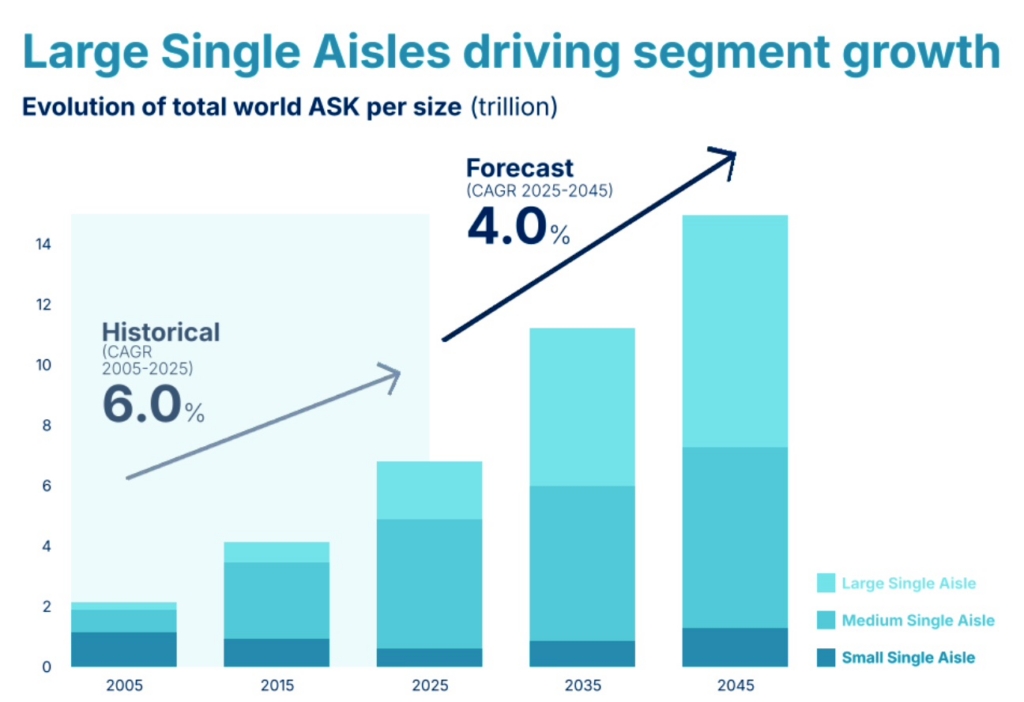
The A321 is central to Airbus’s argument. The manufacturer says the A321neo has grown from 7% to 75% of the A320neo family backlog over 15 years, reflecting airline demand for more seats, more range and lower unit costs.
Large narrowbodies are no longer just being used on dense short-haul routes. They are increasingly flying longer sectors, opening thinner long-haul markets and replacing widebodies where demand does not justify a larger aircraft.
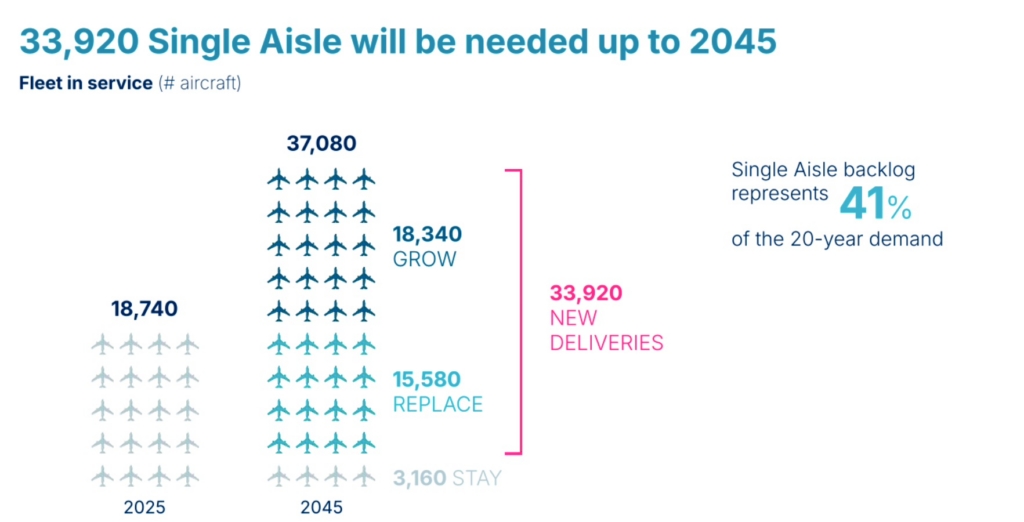
Airbus says single-aisle flights longer than five hours have increased more than threefold since 2005. That trend supports the case for aircraft such as the A321XLR, which can connect cities that previously needed either a widebody or a stopover.
Widebody demand remains strong for long-haul growth
The rise of large narrowbodies does not mean widebodies are becoming less important.
Airbus forecasts demand for 8,140 widebody aircraft by 2045, including 3,900 for growth and 4,240 for replacement. It also expects the widebody fleet in service to grow from 4,570 aircraft in 2025 to 8,470 by 2045.
Widebodies will remain essential on high-capacity and long-haul routes, particularly as airlines continue to expand premium cabins and fly longer distances.
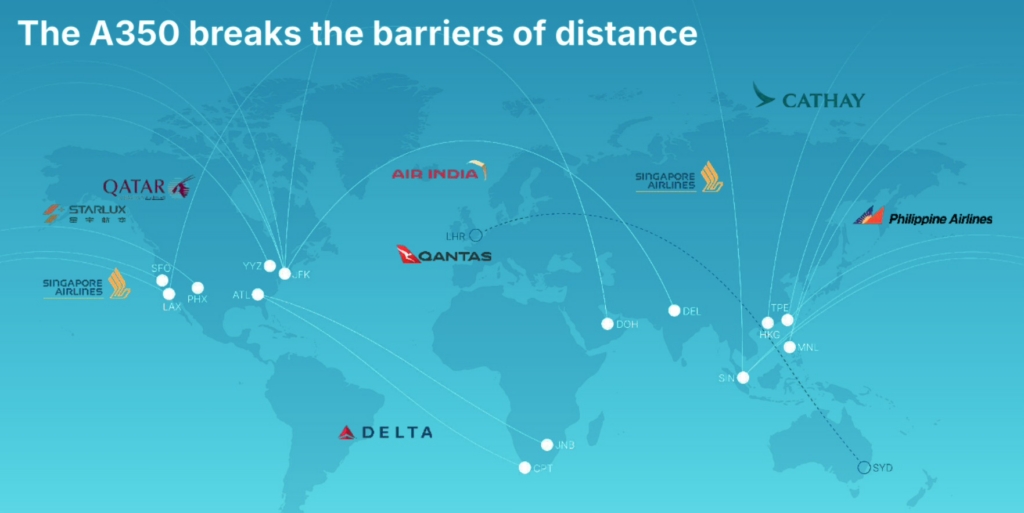
Airbus says widebody flights longer than 13 hours have quadrupled since 2005, while premium capacity has grown faster than economy capacity over the past two decades.
The manufacturer highlights the A350 as the aircraft breaking distance barriers, while positioning the A330neo as a versatile aircraft for both regional and long-haul missions.
The next 20 years are about where aircraft fly, not just how many
Airbus’s latest forecast is not just a prediction that the world will need more aircraft. It is also an argument about how airlines will use them.
The company sees future growth being driven by rising incomes, larger middle-class populations, migration, tourism and demand for more direct connections. But the shape of that growth is changing.
More passengers will fly, but not always through the biggest hubs. More routes will open, but many will be thinner. More aircraft will be needed, but airlines will increasingly choose types that can combine range, efficiency and right-sized capacity.
For Airbus, that makes the next 20 years a market not just for more jets, but for aircraft that allow airlines to build networks in different ways.
Featured image: Airbus
Sign up for our newsletter and get our latest content in your inbox.



More from


October 17, 20264 min read